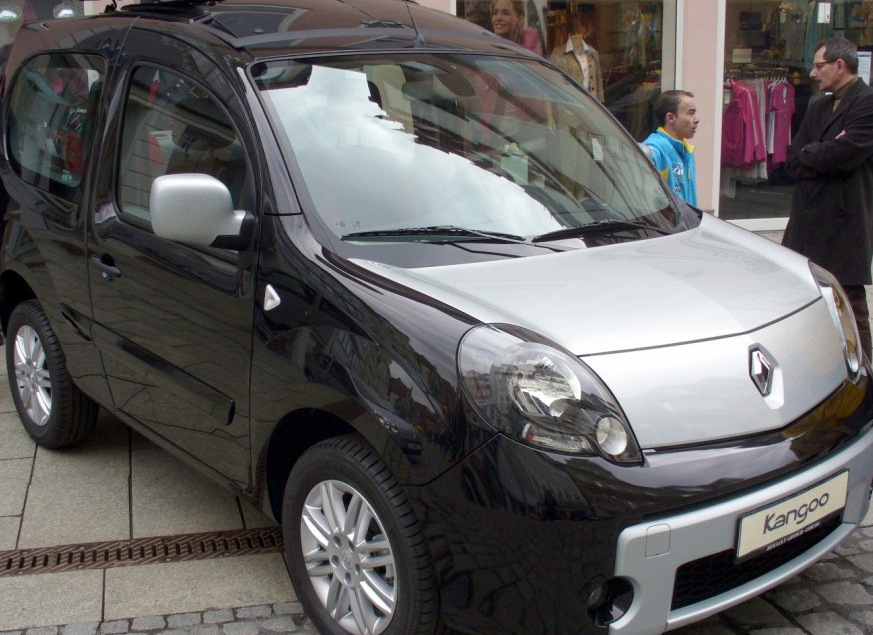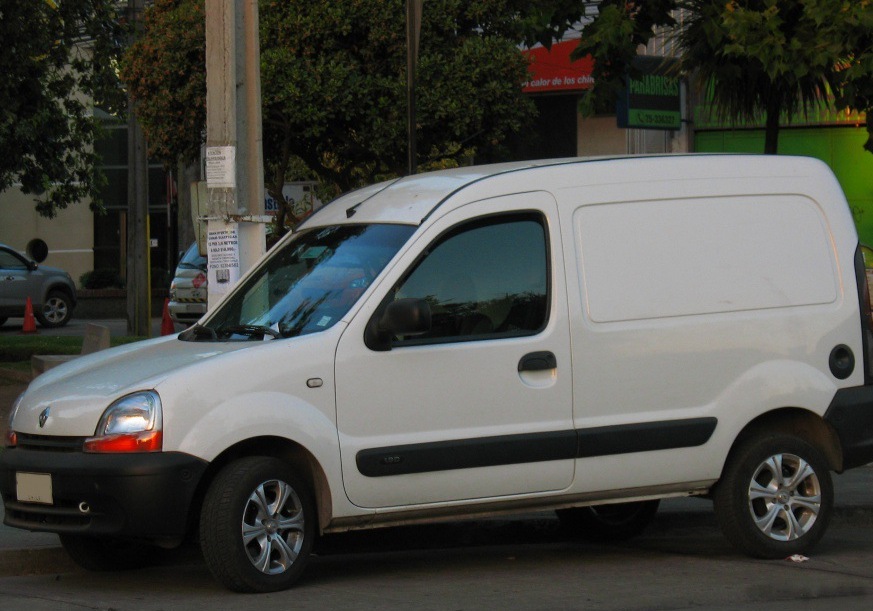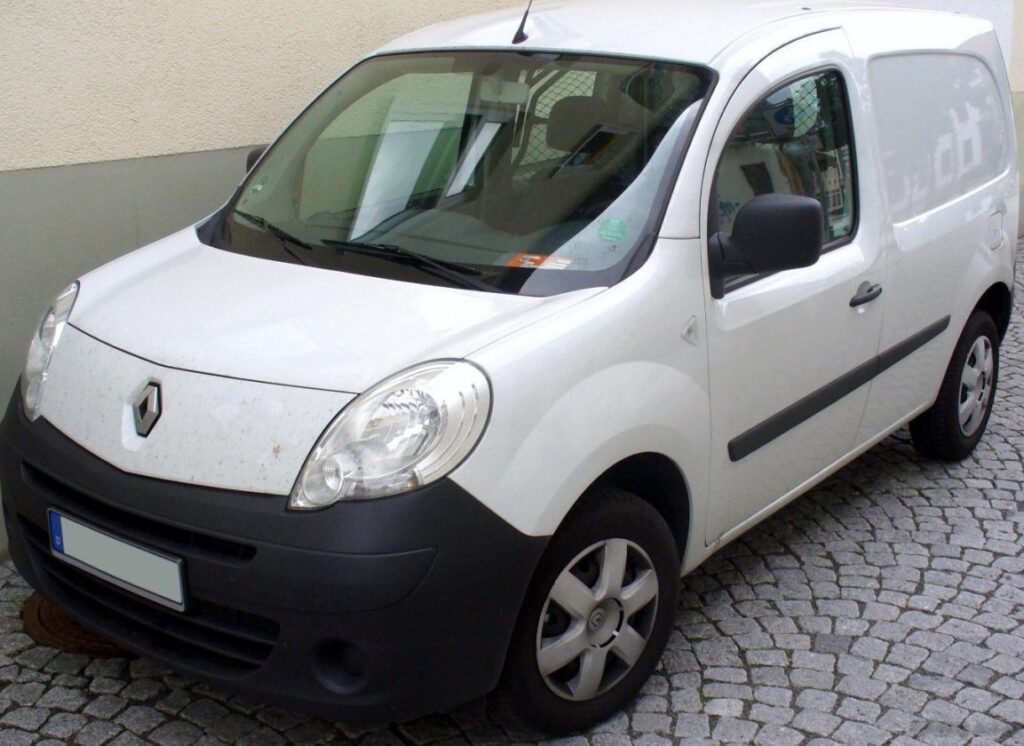
The Renault Kangoo II Express 1.5 Energy dCi (75 hp) FAP is a commercial vehicle produced by Renault from October 2012 to March 2013. Positioned as an entry-level workhorse within the Kangoo II Express range, it catered to businesses and tradespeople requiring a practical and economical van. This variant was part of the second generation Kangoo (codenamed K9K), known for its versatility and robust construction. The “Express” designation signifies a panel van configuration, prioritizing cargo space over passenger comfort, and typically featuring only two seats. It was primarily sold in European markets, where compact vans are highly popular for urban delivery and service applications.
Technical Specifications
| Brand | Renault |
| Model | Kangoo |
| Generation | Kangoo II Express |
| Type (Engine) | 1.5 Energy dCi (75 Hp) FAP |
| Start of production | October, 2012 |
| End of production | March, 2013 |
| Powertrain Architecture | Internal Combustion engine |
| Body type | Minivan |
| Seats | 2 |
| Doors | 3 |
| CO2 emissions (WLTP) | 143 g/km |
| Fuel consumption (urban) | 4.7 l/100 km (50 US mpg, 60.1 UK mpg, 21.3 km/l) |
| Fuel consumption (extra urban) | 4.2 l/100 km (56 US mpg, 67.3 UK mpg, 23.8 km/l) |
| Fuel consumption (combined) | 4.3 l/100 km (54.7 US mpg, 65.7 UK mpg, 23.3 km/l) |
| CO2 emissions (NEDC) | 112 g/km |
| Fuel Type | Diesel |
| Acceleration 0 – 100 km/h | 15.0 sec |
| Acceleration 0 – 62 mph | 15.0 sec |
| Acceleration 0 – 60 mph | 14.3 sec |
| Maximum speed | 150 km/h (93.21 mph) |
| Weight-to-power ratio | 17.1 kg/Hp, 58.6 Hp/tonne |
| Weight-to-torque ratio | 6.4 kg/Nm, 156.3 Nm/tonne |
| Power | 75 Hp @ 4000 rpm |
| Power per litre | 51.3 Hp/l |
| Torque | 200 Nm @ 1750 rpm (147.51 lb.-ft. @ 1750 rpm) |
| Engine layout | Front, Transverse |
| Engine Model/Code | K9K |
| Engine displacement | 1461 cm3 (89.16 cu. in.) |
| Number of cylinders | 4 |
| Engine configuration | Inline |
| Number of valves per cylinder | 2 |
| Fuel injection system | Diesel Commonrail |
| Engine aspiration | Turbocharger, Intercooler |
| Engine oil capacity | 4.5 l (4.76 US qt | 3.96 UK qt) |
| Coolant capacity | 7.2 l (7.61 US qt | 6.34 UK qt) |
| Kerb Weight | 1280 kg (2821.92 lbs.) |
| Max. weight | 1950 kg (4299.01 lbs.) |
| Max load | 670 kg (1477.1 lbs.) |
| Trunk (boot) space – maximum | 3000 l (105.94 cu. ft.) |
| Fuel tank capacity | 60 l (15.85 US gal | 13.2 UK gal) |
| Max. roof load | 100 kg (220.46 lbs.) |
| Permitted trailer load (braked) | 1050 kg (2314.85 lbs.) |
| Permitted trailer load (unbraked) | 675 kg (1488.12 lbs.) |
| Permitted towbar download | 75 kg (165.35 lbs.) |
| Length | 4213 mm (165.87 in.) |
| Width | 1829 mm (72.01 in.) |
| Width including mirrors | 2133 mm (83.98 in.) |
| Height | 1844 mm (72.6 in.) |
| Wheelbase | 2697 mm (106.18 in.) |
| Ride height (ground clearance) | 184 mm (7.24 in.) |
| Minimum turning circle | 10.5 m (34.45 ft.) |
| Drivetrain | Front wheel drive |
| Number of gears | 5 |
| Gearbox type | Manual transmission |
| Front brakes | Disc |
| Rear brakes | Disc |
| Assisting systems | ABS (Anti-lock braking system) |
| Tires size | 195/65 R15 |
| Wheel rims size | 15 |
Powertrain & Engine Architecture
The Kangoo II Express 1.5 dCi (75 hp) utilizes the Renault K9K engine, a widely-used 1.5-liter inline-four diesel engine. This engine is known for its relatively simple design and durability. The ‘Energy’ designation indicates Renault’s efforts to improve fuel efficiency through technologies like optimized combustion and reduced internal friction. The K9K engine in this configuration features a turbocharger with an intercooler to boost power output, and a diesel common rail fuel injection system for precise fuel delivery. The fuel injection system operates at high pressure (typically around 1600 bar) to atomize the fuel effectively, improving combustion and reducing emissions. The engine employs two valves per cylinder (SOHC) and is known for its robust bottom end. The FAP (Filtre à Particules) or Diesel Particulate Filter, is a crucial component in reducing soot emissions, making the vehicle compliant with European emission standards. This engine is paired with a five-speed manual transmission, chosen for its simplicity and cost-effectiveness in a commercial vehicle application.
Driving Characteristics
The 75 hp output and five-speed manual transmission of this Kangoo Express variant result in a utilitarian driving experience. Acceleration is modest, with a 0-60 mph time of around 14.3 seconds. The engine delivers peak torque of 200 Nm (147.51 lb-ft) at 1750 rpm, providing adequate pulling power for typical commercial loads. However, the engine can feel strained when fully loaded or climbing steep hills. The gear ratios are geared towards economy rather than performance, meaning the engine operates at relatively low revolutions per minute (RPM) during cruising. This contributes to good fuel economy but can result in a lack of responsiveness when needing to accelerate quickly. Compared to higher-powered versions of the Kangoo II, such as those with the 90 hp or 110 hp engines, this variant offers significantly less performance but prioritizes fuel efficiency and lower running costs.
Equipment & Trim Levels
As a base-level “Express” model, the Kangoo II 1.5 dCi (75 hp) FAP was typically sparsely equipped. Standard features generally included a driver’s airbag, central locking, power steering, and a basic audio system. The interior was functional and durable, with hard-wearing plastic trim and cloth upholstery. Air conditioning was often an optional extra, as were features like electric windows and a passenger airbag. The focus was on providing a practical and affordable work vehicle, rather than luxury or comfort. The cargo area was the primary focus, offering a generous 3000 liters of space with the seats folded or removed.
Chassis & Braking
The Kangoo II Express features a front-wheel-drive layout with a MacPherson strut front suspension and a torsion beam rear suspension. This setup provides a reasonable balance between ride comfort and load-carrying capacity. The braking system consists of disc brakes on all four wheels, providing adequate stopping power for the vehicle’s weight and performance. Anti-lock Braking System (ABS) was standard, enhancing safety during emergency braking. The suspension was tuned to prioritize stability when carrying a load, resulting in a slightly firmer ride when unladen.
Market Reception & Comparison
The Renault Kangoo II Express 1.5 dCi (75 hp) FAP was well-received in the commercial vehicle market as a cost-effective and reliable option. Critics praised its fuel efficiency and practicality, but noted its limited performance. Compared to other vans in its class, such as the Citroën Berlingo and Peugeot Partner, the Kangoo offered a competitive combination of price, fuel economy, and cargo space. The 75 hp engine was often seen as adequate for urban delivery work but less suitable for long-distance highway driving or carrying heavy loads. The 90 hp version offered a noticeable improvement in performance, making it a more popular choice for those requiring greater versatility.
Legacy
The K9K engine, found in this Kangoo variant, has proven to be a durable and reliable powertrain. While not without its potential issues (such as turbocharger wear and potential injector problems with age), it is generally considered a robust engine when properly maintained. In the used car market, the Kangoo II Express 1.5 dCi (75 hp) FAP remains a popular choice for small businesses and tradespeople seeking an affordable and practical van. Its simplicity and relatively low running costs make it an attractive option, although potential buyers should be aware of the need for regular maintenance and the potential for age-related wear and tear.