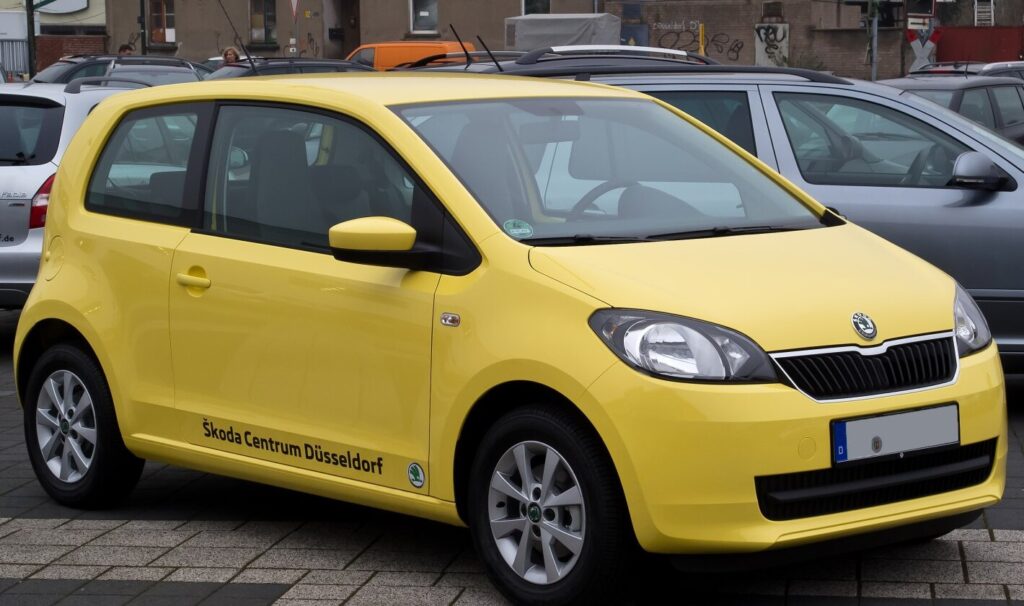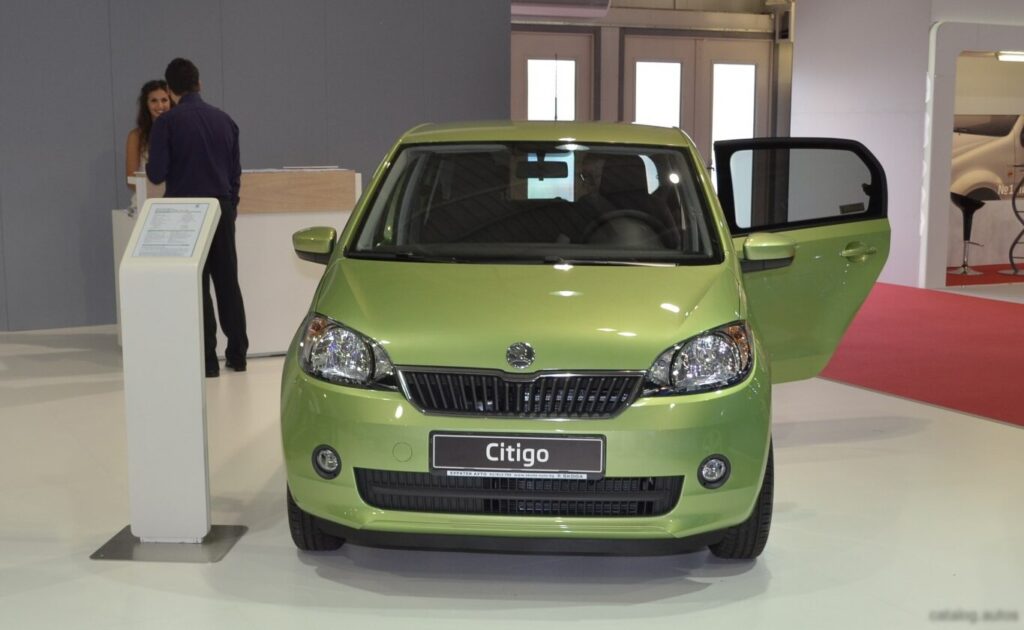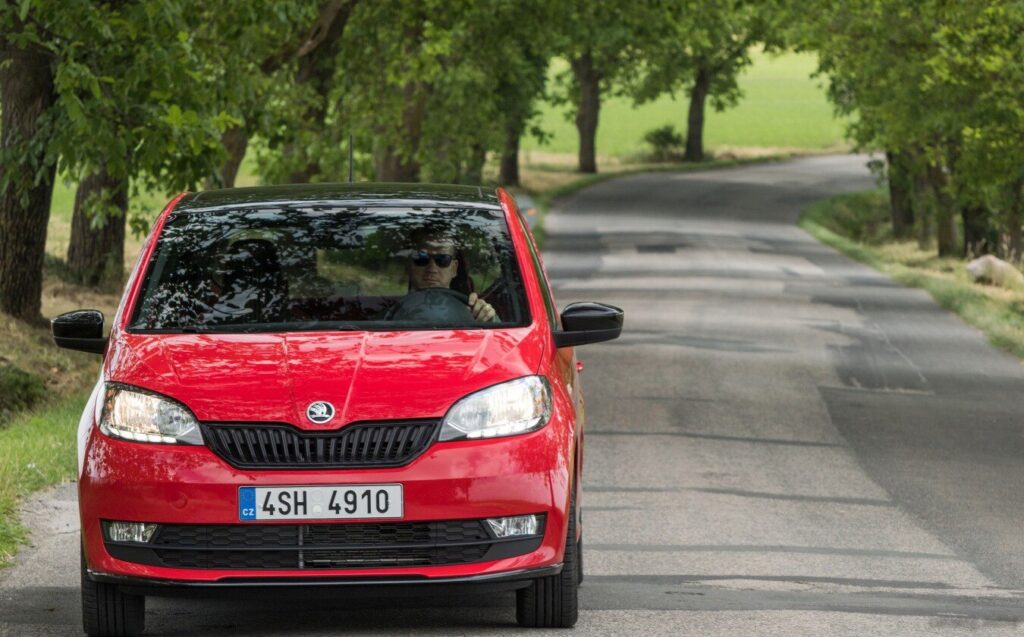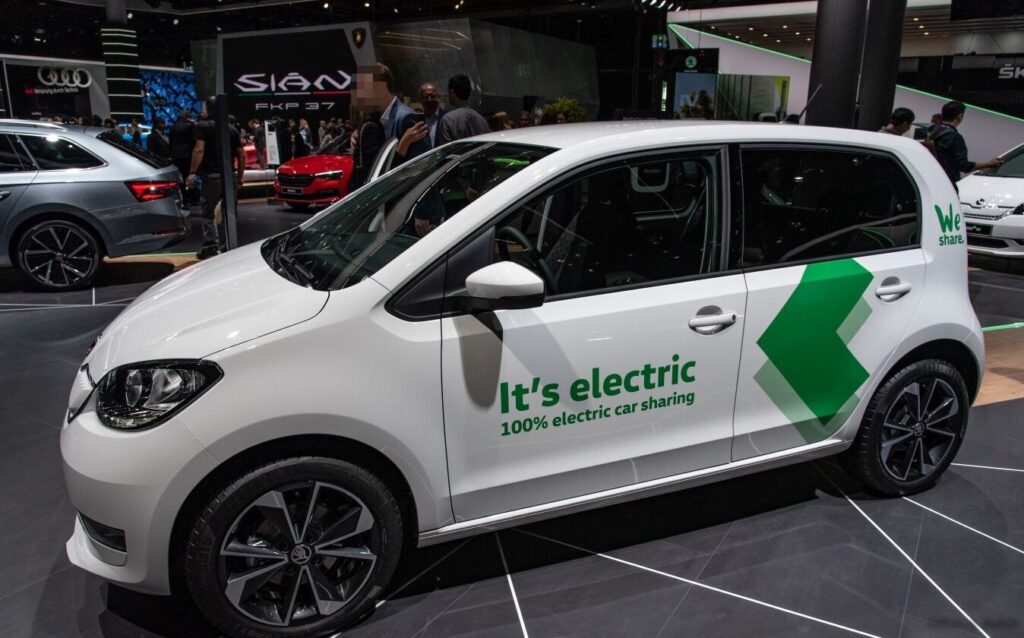
The Skoda Citigo 1.0 G-TEC (68 hp) represents a specific variant of Skoda’s city car, produced from late 2018 through 2019, following the 2017 facelift. This five-door hatchback was designed as an affordable and economical entry point into the Skoda lineup, particularly in European markets where smaller vehicles and alternative fuel options are popular. It’s built on the Volkswagen Group’s A05 (1HX0/A3) platform, shared with the Volkswagen up! and SEAT Mii. The G-TEC designation signifies the vehicle’s capability to run on Compressed Natural Gas (CNG), offering a lower carbon footprint compared to traditional gasoline engines. This variant occupied the lower end of the Citigo range, focusing on fuel efficiency and practicality rather than outright performance.
Technical Specifications
| Brand | Skoda |
| Model | Citigo |
| Generation | Citigo (facelift 2017, 5-door) |
| Type (Engine) | 1.0 G-TEC (68 Hp) CNG |
| Start of production | October, 2018 |
| End of production | 2019 |
| Powertrain Architecture | Internal Combustion engine |
| Body type | Hatchback |
| Seats | 4 |
| Doors | 5 |
| CO2 emissions | 82 g/km |
| Fuel Type | Petrol / CNG |
| Acceleration 0 – 100 km/h | 16.3 sec |
| Acceleration 0 – 62 mph | 16.3 sec |
| Acceleration 0 – 60 mph | 15.5 sec |
| Maximum speed | 165 km/h (102.53 mph) |
| Emission standard | Euro 6 |
| Weight-to-power ratio | 14.1 kg/Hp, 71 Hp/tonne |
| Weight-to-torque ratio | 10.1 kg/Nm, 99.2 Nm/tonne |
| Power | 68 Hp @ 6200 rpm |
| Power per litre | 68.1 Hp/l |
| Torque | 95 Nm @ 3000 rpm (70.07 lb.-ft. @ 3000 rpm) |
| Engine layout | Front, Transverse |
| Engine Model/Code | CPGA |
| Engine displacement | 999 cm3 (60.96 cu. in.) |
| Number of cylinders | 3 |
| Engine configuration | Inline |
| Number of valves per cylinder | 4 |
| Fuel injection system | Multi-port manifold injection |
| Engine aspiration | Naturally aspirated engine |
| Valvetrain | DOHC |
| Engine oil capacity | 3.4 l (3.59 US qt | 2.99 UK qt) |
| Coolant | 4.2 l (4.44 US qt | 3.7 UK qt) |
| Kerb Weight | 958 kg (2112.03 lbs) |
| Max. weight | 1370 kg (3020.33 lbs) |
| Max load | 412 kg (908.3 lbs) |
| Trunk (boot) space – minimum | 213 l (7.52 cu. ft) |
| Trunk (boot) space – maximum | 921 l (32.52 cu. ft) |
| Fuel tank capacity | 10 l (2.64 US gal | 2.2 UK gal) |
| CNG cylinder capacity | 11 kg |
| Max. roof load | 50 kg (110.23 lbs) |
| Length | 3597 mm (141.61 in) |
| Width | 1645 mm (64.76 in) |
| Width including mirrors | 1910 mm (75.2 in) |
| Height | 1480 mm (58.27 in) |
| Wheelbase | 2421 mm (95.31 in) |
| Front track | 1428 mm (56.22 in) |
| Rear (Back) track | 1424 mm (56.06 in) |
| Ride height (ground clearance) | 134 mm (5.28 in) |
| Drag coefficient (Cd) | 0.32 |
| Minimum turning circle | 9.8 m (32.15 ft) |
| Approach angle | 13.5° |
| Departure angle | 28.0° |
| Drivetrain Architecture | The Internal combustion engine (ICE) drives the front wheels of the vehicle. |
| Drive wheel | Front wheel drive |
| Number of gears and type of gearbox | 5 gears, manual transmission |
| Front suspension | Independent, type McPherson with coil spring and anti-roll bar |
| Rear suspension | Semi-dependent beam with stabilizer lateral stability |
| Front brakes | Ventilated discs |
| Rear brakes | Drum |
| Assisting systems | ABS (Anti-lock braking system) |
| Steering type | Steering rack and pinion |
| Power steering | Electric Steering |
| Tires size | 175/65 R14 |
| Wheel rims size | 5J x 14 |
Powertrain & Engine Architecture
The heart of the Citigo 1.0 G-TEC is the CPGA engine, a naturally aspirated, three-cylinder 1.0-liter gasoline engine modified to run on CNG. This engine utilizes a multi-point fuel injection system, delivering fuel directly into the intake ports. The engine features a double overhead camshaft (DOHC) valvetrain, optimizing valve timing for improved efficiency and power delivery. When running on CNG, the engine management system automatically adjusts the fuel mixture to suit the alternative fuel. The engine produces 68 horsepower at 6200 rpm and 95 Nm (70 lb-ft) of torque at 3000 rpm. The engine is paired with a five-speed manual transmission, chosen for its simplicity and contribution to fuel economy. An automatic transmission was not offered with this specific engine configuration.
Driving Characteristics
The 1.0 G-TEC Citigo, with its 68 hp and manual transmission, prioritizes fuel efficiency over spirited performance. Acceleration is modest, taking around 16.3 seconds to reach 62 mph. In real-world driving, the engine feels adequate for city commutes and shorter trips, but struggles when fully loaded or on inclines. The five-speed gearbox is well-matched to the engine’s characteristics, with relatively short gear ratios designed to keep the engine in its optimal power band. Compared to the standard 1.0-liter gasoline version, the G-TEC model offers similar performance but with the added benefit of lower running costs when utilizing CNG. It’s noticeably slower than higher-spec Citigos equipped with the 1.0 TSI turbocharged engine.
Equipment & Trim Levels
The 1.0 G-TEC trim typically came with a reasonable level of standard equipment, focusing on practicality and safety. Features included central locking, electric front windows, a basic audio system, and ABS brakes. Safety equipment included driver and passenger airbags. Higher trim levels, available as options, added features like air conditioning, alloy wheels, and a more advanced infotainment system. Interior upholstery was typically cloth, with a functional and durable design. The dashboard layout was simple and straightforward, prioritizing ease of use.
Chassis & Braking
The Citigo’s chassis is designed for nimble handling in urban environments. It features a McPherson strut front suspension and a semi-independent torsion beam rear suspension. The front suspension incorporates an anti-roll bar to reduce body roll during cornering. Braking duties are handled by ventilated discs at the front and drum brakes at the rear. The braking system is assisted by ABS (Anti-lock Braking System) to enhance safety. The relatively light weight of the vehicle (around 958 kg or 2112 lbs) contributes to its agility.
Market Reception & Comparison
The Skoda Citigo 1.0 G-TEC was generally well-received by critics as an affordable and economical city car. Its ability to run on CNG was a significant selling point for environmentally conscious buyers and those seeking to reduce fuel costs. Compared to the standard gasoline-powered Citigo, the G-TEC model offered comparable practicality but with lower running costs when CNG was readily available. However, the limited availability of CNG refueling stations in some regions was a drawback. Compared to other small cars in its class, the Citigo offered a good balance of price, fuel efficiency, and practicality.
Legacy
The Skoda Citigo 1.0 G-TEC, while a relatively short-lived variant, represents Skoda’s commitment to alternative fuel technologies. The CPGA engine, while not known for exceptional performance, proved to be reasonably reliable. On the used car market, these models are often sought after by buyers looking for an economical and environmentally friendly city car. Maintenance costs are generally low, and parts availability is good due to the shared platform with Volkswagen and SEAT models. The longevity of the CNG system depends on regular maintenance and the quality of the CNG fuel used.