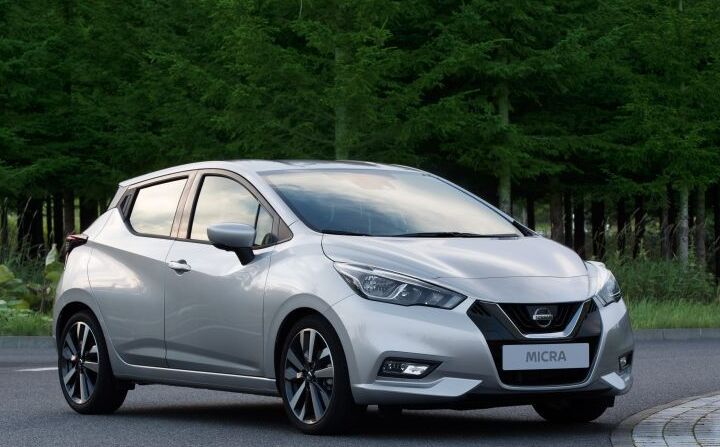
The Nissan Micra K14 0.9 IG-T (90 hp) represents a significant step in the revitalization of Nissan’s supermini, launched in March 2017 and continuing through August 2018. This variant, powered by Nissan’s innovative three-cylinder turbocharged engine, was positioned as a fuel-efficient and modern option within the K14 Micra lineup, aimed at buyers prioritizing economy and ease of driving. It served as the entry point to the K14 range in many European markets, offering a compelling alternative to naturally aspirated competitors. The K14 generation itself marked a departure from previous Micra models, adopting a more European-focused design and engineering approach, largely developed with Renault collaboration, and built primarily in Flins, France.
Technical Specifications
| Brand | Nissan |
| Model | Micra |
| Generation | Micra (K14) |
| Type (Engine) | 0.9 IG-T (90 Hp) |
| Start of production | March, 2017 |
| End of production | August, 2018 |
| Powertrain Architecture | Internal Combustion engine |
| Body type | Hatchback |
| Seats | 5 |
| Doors | 5 |
| Fuel consumption (urban) | 5.6-5.8 l/100 km (42 – 40.6 US mpg) |
| Fuel consumption (extra urban) | 3.7-3.9 l/100 km (63.6 – 60.3 US mpg) |
| Fuel consumption (combined) | 4.4-4.6 l/100 km (53.5 – 51.1 US mpg) |
| CO2 emissions | 99-104 g/km |
| Fuel Type | Petrol (Gasoline) |
| Acceleration 0 – 100 km/h | 12.1 sec |
| Acceleration 0 – 62 mph | 12.1 sec |
| Acceleration 0 – 60 mph | 11.5 sec |
| Maximum speed | 175 km/h (108.74 mph) |
| Emission standard | Euro 6b |
| Power | 90 Hp @ 5500 rpm |
| Torque | 140 Nm @ 2250 rpm (103.26 lb.-ft. @ 2250 rpm) |
| Engine layout | Front, Transverse |
| Engine Model/Code | HR09DET |
| Engine displacement | 898 cm3 (54.8 cu. in.) |
| Number of cylinders | 3 |
| Engine configuration | Inline |
| Cylinder Bore | 72.2 mm (2.84 in.) |
| Piston Stroke | 73.1 mm (2.88 in.) |
| Compression ratio | 9.5:1 |
| Number of valves per cylinder | 4 |
| Fuel injection system | Multi-port manifold injection |
| Engine aspiration | Turbocharger, Intercooler |
| Valvetrain | SOCH |
| Engine oil capacity | 4.1 l (4.33 US qt | 3.61 UK qt) |
| Coolant | 5.9 l (6.23 US qt | 5.19 UK qt) |
| Max. weight | 1530 kg (3373.07 lbs.) |
| Trunk (boot) space – minimum | 300 l (10.59 cu. ft.) |
| Trunk (boot) space – maximum | 1004 l (35.46 cu. ft.) |
| Fuel tank capacity | 41 l (10.83 US gal | 9.02 UK gal) |
| Permitted trailer load with brakes (12%) | 1200 kg (2645.55 lbs.) |
| Permitted trailer load without brakes | 525 kg (1157.43 lbs.) |
| Length | 3999 mm (157.44 in.) |
| Width | 1743 mm (68.62 in.) |
| Width including mirrors | 1935 mm (76.18 in.) |
| Height | 1455 mm (57.28 in.) |
| Wheelbase | 2525 mm (99.41 in.) |
| Front track | 1510 mm (59.45 in.) |
| Rear (Back) track | 1520 mm (59.84 in.) |
| Minimum turning circle | 10.3 m (33.79 ft.) |
| Drivetrain Architecture | Front wheel drive |
| Number of gears and type of gearbox | 5 gears, manual transmission |
| Front suspension | Independent type McPherson |
| Rear suspension | Semi-independent, coil spring |
| Front brakes | Ventilated discs |
| Rear brakes | Drum |
| Assisting systems | ABS (Anti-lock braking system) |
| Steering type | Steering rack and pinion |
| Power steering | Electric Steering |
| Tires size | 185/65 R15; 195/55 R16; 205/45 R17 |
| Wheel rims size | 6J x 15; 6J x 16; 6.5J x 17 |
Powertrain & Engine Architecture
The heart of the Micra K14 0.9 IG-T is the HR09DET, a 0.9-liter inline three-cylinder gasoline engine. This engine is part of Nissan’s “IG-T” (Integrated Gasoline Turbo) family, designed for efficiency and reduced emissions. The HR09DET utilizes a single-scroll turbocharger with an intercooler to boost power output. Fuel delivery is managed by a multi-point fuel injection system. The engine features a single overhead camshaft (SOCH) valvetrain operating four valves per cylinder. This configuration contributes to a relatively compact engine design. The engine’s 9.5:1 compression ratio strikes a balance between efficiency and performance. The 5-speed manual transmission was the standard offering for this variant, providing a direct connection to the engine’s power. The transmission’s gear ratios were tuned for fuel economy and urban drivability, rather than outright acceleration.
Driving Characteristics
The 90 hp output of the 0.9 IG-T engine, coupled with the manual transmission, delivers adequate performance for city driving and highway cruising. Acceleration from 0-60 mph takes around 11.5 seconds, and top speed is rated at 175 km/h (108.74 mph). While not a sporty performer, the engine provides sufficient torque (140 Nm or 103.26 lb-ft) at 2250 rpm for everyday driving situations. The turbocharger does introduce a slight amount of turbo lag, but once spooled up, it provides a noticeable boost in power. The gear ratios are relatively long, prioritizing fuel efficiency over rapid acceleration. Compared to higher-output versions of the K14 Micra, such as those with larger displacement engines, the 0.9 IG-T offers a more economical driving experience but sacrifices some performance.
Equipment & Trim Levels
The 0.9 IG-T variant typically served as a mid-range trim level in many markets. Standard equipment often included air conditioning, power steering, electric front windows, a basic audio system with USB connectivity, and ABS brakes. Higher trim levels added features such as alloy wheels, a touchscreen infotainment system with navigation, automatic climate control, and parking sensors. Interior upholstery was typically cloth, with a functional and durable design. Optional extras included metallic paint, a panoramic sunroof, and a safety pack with additional driver-assistance systems.
Chassis & Braking
The K14 Micra utilizes a front-wheel-drive layout with an independent McPherson strut suspension at the front and a semi-independent coil spring suspension at the rear. This suspension setup provides a comfortable ride quality, well-suited for urban environments. The front brakes are ventilated discs, offering good stopping power, while the rear brakes are drums, a cost-saving measure for this trim level. Electric power steering provides light and easy steering feel, making it ideal for maneuvering in tight spaces. Stabilizer bars were typically fitted to both the front and rear axles to reduce body roll during cornering.
Market Reception & Comparison
The Nissan Micra K14 0.9 IG-T was generally well-received by critics for its fuel efficiency and modern design. It offered a competitive alternative to other superminis in its class, such as the Volkswagen Polo, Ford Fiesta, and Renault Clio. However, some reviewers noted that the engine could feel strained when fully loaded or driving uphill. Compared to the 1.5-liter diesel engine option available in some markets, the 0.9 IG-T offered a smoother and quieter driving experience but lacked the diesel’s low-end torque. Fuel economy figures of 4.4-4.6 l/100 km (53.5 – 51.1 US mpg) were a key selling point, making it an attractive option for budget-conscious buyers.
Legacy
The HR09DET engine has proven to be a relatively reliable unit, with few major reported issues. Regular maintenance, including oil changes and timing chain inspections, is crucial for long-term reliability. In the used car market, the K14 Micra 0.9 IG-T represents a good value proposition, offering a modern and fuel-efficient supermini at an affordable price. Its compact size, easy handling, and low running costs make it a popular choice for city dwellers and first-time car buyers. While not a performance icon, the 0.9 IG-T variant played a vital role in the K14 Micra’s success, demonstrating Nissan’s commitment to efficient and accessible motoring.