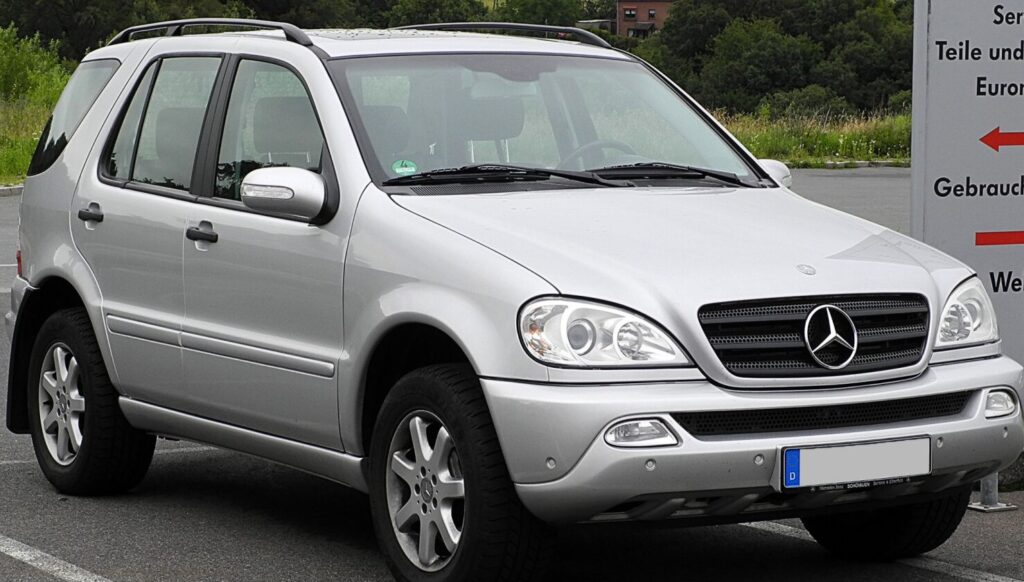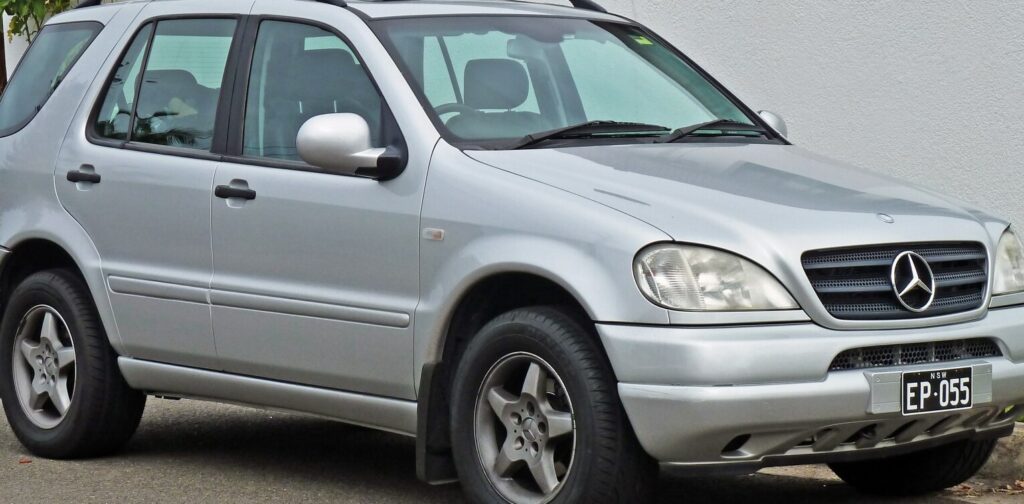
The Mercedes-Benz W163 ML 55 AMG, produced from 1999 to 2001, represented the high-performance variant of the first-generation M-Class SUV. Positioned as the flagship model, it aimed to bring AMG’s performance pedigree to the burgeoning luxury SUV market. The ML 55 was a significant step for Mercedes-Benz, marking the first SUV to receive the full AMG treatment. It was built on the 163 platform, sharing its basic structure with other M-Class models but distinguished by its powerful V8 engine and upgraded components.
Technical Specifications
| Brand | Mercedes-Benz |
| Model | M-class |
| Generation | M-class (W163) |
| Type | AMG ML 55 V8 (347 Hp) 4MATIC 5G-TRONIC |
| Start of production | 1999 |
| End of production | 2001 |
| Powertrain Architecture | Internal Combustion engine |
| Body type | SUV |
| Seats | 5 |
| Doors | 5 |
| Fuel consumption (urban) | 19.7 l/100 km (11.9 US mpg, 14.3 UK mpg, 5.1 km/l) |
| Fuel consumption (extra urban) | 11.4 l/100 km (20.6 US mpg, 24.8 UK mpg, 8.8 km/l) |
| Fuel consumption (combined) | 14.5 l/100 km (16.2 US mpg, 19.5 UK mpg, 6.9 km/l) |
| Fuel Type | Petrol (Gasoline) |
| Acceleration 0 – 100 km/h | 6.9 sec |
| Acceleration 0 – 62 mph | 6.9 sec |
| Acceleration 0 – 60 mph | 6.6 sec |
| Maximum speed | 232 km/h (144.16 mph) |
| Weight-to-power ratio | 6 kg/Hp, 166.4 Hp/tonne |
| Weight-to-torque ratio | 4.1 kg/Nm, 244.6 Nm/tonne |
| Power | 347 Hp @ 5500 rpm |
| Power per litre | 63.8 Hp/l |
| Torque | 510 Nm @ 2800 rpm (376.16 lb.-ft. @ 2800 rpm) |
| Engine layout | Front, Longitudinal |
| Engine Model/Code | M 113.989 |
| Engine displacement | 5439 cm3 (331.91 cu. in.) |
| Number of cylinders | 8 |
| Engine configuration | V-engine |
| Cylinder Bore | 97 mm (3.82 in.) |
| Piston Stroke | 92 mm (3.62 in.) |
| Compression ratio | 10:1 |
| Number of valves per cylinder | 3 |
| Fuel injection system | Multi-port manifold injection |
| Engine aspiration | Naturally aspirated engine |
| Valvetrain | DOHC |
| Engine oil capacity | 8 l (8.45 US qt | 7.04 UK qt) |
| Coolant capacity | 11 l (11.62 US qt | 9.68 UK qt) |
| Kerb Weight | 2085 kg (4596.64 lbs.) |
| Max. weight | 2750 kg (6062.71 lbs.) |
| Max load | 665 kg (1466.07 lbs.) |
| Trunk (boot) space – minimum | 633 l (22.35 cu. ft.) |
| Trunk (boot) space – maximum | 2020 l (71.34 cu. ft.) |
| Fuel tank capacity | 93 l (24.57 US gal | 20.46 UK gal) |
| Length | 4635 mm (182.48 in.) |
| Width | 1833 mm (72.17 in.) |
| Height | 1820 mm (71.65 in.) |
| Wheelbase | 2820 mm (111.02 in.) |
| Front track | 1555 mm (61.22 in.) |
| Rear track | 1555 mm (61.22 in.) |
| Drive wheel | All wheel drive (4×4) |
| Number of gears | 5 |
| Gearbox type | Automatic transmission |
| Front suspension | Double wishbone |
| Rear suspension | Double wishbone |
| Front brakes | Ventilated discs |
| Rear brakes | Disc |
| Assisting systems | ABS (Anti-lock braking system) |
| Steering type | Steering rack and pinion |
| Power steering | Hydraulic Steering |
| Tires size | 285/50 R18W |
| Wheel rims size | 9J x 18 |
Powertrain & Engine Architecture
The heart of the ML 55 AMG was the M113.989 5.4-liter naturally aspirated V8 engine. This engine, a cornerstone of AMG’s early 21st-century offerings, featured a cast-iron block and aluminum cylinder heads. It utilized a three-valve-per-cylinder design (two intake, one exhaust) and a multi-port fuel injection system. The engine produced 347 horsepower at 5,500 rpm and 376 lb-ft of torque at 2,800 rpm. The engine’s robust construction and relatively simple design (for its time) contributed to its durability. The engine was mated to a 5G-TRONIC five-speed automatic transmission, specifically tuned by AMG for quicker shifts and more responsive performance. This transmission featured a torque converter lock-up clutch to improve fuel efficiency at cruising speeds.
Driving Characteristics
The ML 55 AMG offered a noticeably different driving experience compared to the standard M-Class models. While the standard M-Class was known for its comfortable ride, the ML 55 prioritized performance. The V8 engine delivered strong acceleration, with 0-60 mph times consistently in the mid-6-second range. The 5G-TRONIC transmission, while not as quick as modern automatics, provided smooth and relatively prompt gear changes. The all-wheel-drive system (4MATIC) provided excellent traction in various conditions. However, the ML 55’s increased weight and higher center of gravity meant it didn’t handle with the same precision as a dedicated sports car. The suspension was firmer than the standard M-Class, contributing to a more controlled feel, but also a slightly less comfortable ride.
Equipment & Trim Levels
The ML 55 AMG came standard with a comprehensive list of features, befitting its flagship status. Interior appointments included leather upholstery, wood trim, and power-adjustable front seats with memory function. Standard equipment also included automatic climate control, a premium sound system, and a sunroof. Optional extras included navigation system, heated seats, and upgraded wheels. The exterior was distinguished by AMG-specific body styling, including unique front and rear bumpers, side skirts, and a rear spoiler. Larger diameter wheels and tires were also standard.
Chassis & Braking
The ML 55 AMG utilized a fully independent suspension system with double wishbones at both the front and rear. The suspension was tuned for performance, with stiffer springs and dampers compared to the standard M-Class. Braking duties were handled by ventilated disc brakes at all four corners, providing ample stopping power. The anti-lock braking system (ABS) was standard. The chassis was reinforced in key areas to handle the increased power and torque of the V8 engine.
Market Reception & Comparison
The ML 55 AMG received generally positive reviews from automotive critics. It was praised for its powerful engine, comfortable interior, and all-weather capability. However, some critics noted its relatively high fuel consumption and its lack of ultimate on-road agility compared to dedicated performance SUVs. Compared to the standard M-Class models (such as the ML 320), the ML 55 offered significantly more performance but came at a substantial price premium. Compared to other performance SUVs of the time, such as the Porsche Cayenne, the ML 55 offered a more accessible price point but lacked the Cayenne’s overall refinement and handling prowess.
Legacy
The M113 V8 engine used in the ML 55 AMG proved to be a reliable and durable powerplant. With proper maintenance, these engines can continue to provide years of service. The ML 55 AMG has become a sought-after vehicle among enthusiasts, particularly those looking for a relatively affordable entry point into the world of AMG ownership. While fuel economy is not a strong point, the ML 55’s combination of performance, luxury, and practicality has ensured its continued appeal in the used car market. The ML 55 AMG represents a pivotal moment in Mercedes-Benz’s history, marking the beginning of the company’s foray into the high-performance SUV segment.