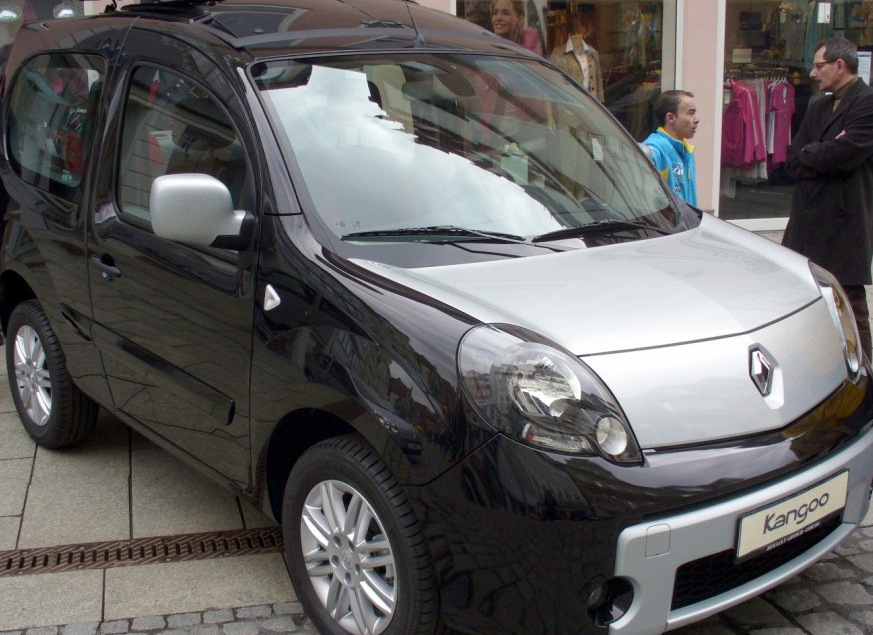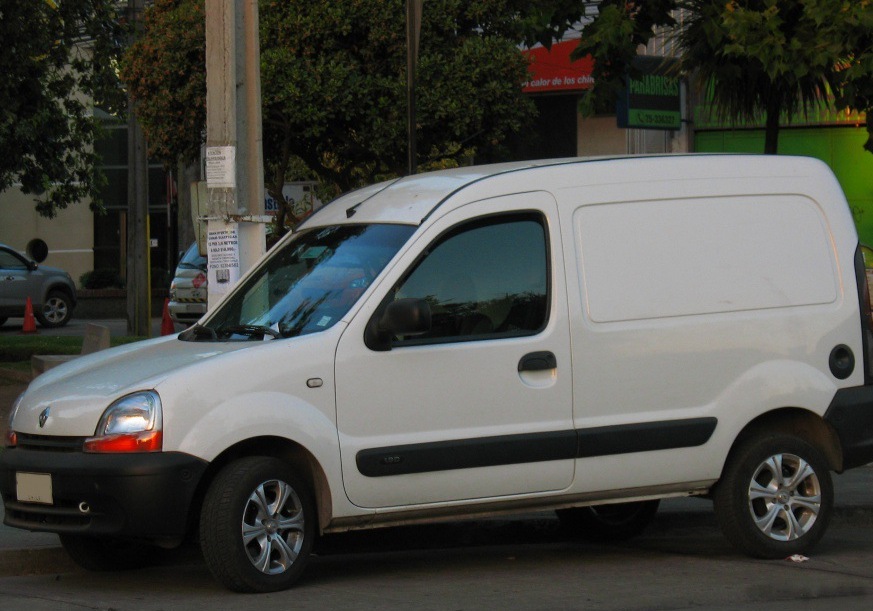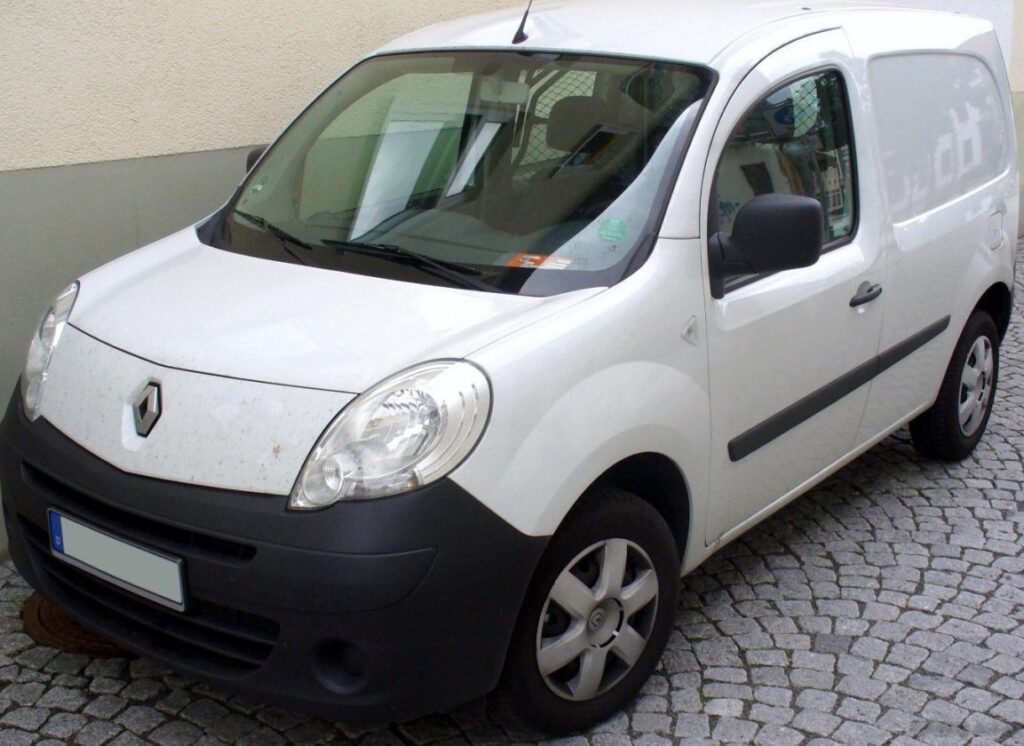
The Renault Kangoo II Express 1.6 8V, producing 90 horsepower, was a commercially-oriented panel van offered by Renault from August 2010 to October 2012. Positioned as an entry-level workhorse within the Kangoo II Express range, it served as a more affordable alternative to the diesel-powered variants and the higher-specification petrol engines. This variant was primarily aimed at businesses and tradespeople requiring a practical and economical light commercial vehicle. It falls under the broader Kangoo II generation (introduced in 2008), which shared its platform (X98) with the first generation Mercedes-Benz Citan.
Technical Specifications
| Brand | Renault |
| Model | Kangoo |
| Generation | Kangoo II Express |
| Type (Engine) | 1.6 8V (90 Hp) |
| Start of production | August, 2010 |
| End of production | October, 2012 |
| Powertrain Architecture | Internal Combustion engine |
| Body type | Minivan |
| Seats | 2 |
| Doors | 3 |
| Fuel consumption (economy) – urban (NEDC) | 10.6 l/100 km (22.2 US mpg, 26.6 UK mpg, 9.4 km/l) |
| Fuel consumption (economy) – extra urban (NEDC) | 6.7 l/100 km (35.1 US mpg, 42.2 UK mpg, 14.9 km/l) |
| Fuel consumption (economy) – combined (NEDC) | 8.1 l/100 km (29 US mpg, 34.9 UK mpg, 12.3 km/l) |
| CO2 emissions (NEDC) | 190 g/km |
| Fuel Type | Petrol (Gasoline) |
| Acceleration 0 – 100 km/h | 15.8 sec |
| Acceleration 0 – 62 mph | 15.8 sec |
| Acceleration 0 – 60 mph | 15 sec |
| Maximum speed | 158 km/h (98.18 mph) |
| Weight-to-power ratio | 13.5 kg/Hp, 74.2 Hp/tonne |
| Weight-to-torque ratio | 9.5 kg/Nm, 105.5 Nm/tonne |
| Power | 90 Hp @ 5500 rpm |
| Power per litre | 56.3 Hp/l |
| Torque | 128 Nm @ 3750 rpm (94.41 lb.-ft. @ 3750 rpm) |
| Engine layout | Front, Transverse |
| Engine Model/Code | K7M |
| Engine displacement | 1598 cm3 (97.52 cu. in.) |
| Number of cylinders | 4 |
| Engine configuration | Inline |
| Number of valves per cylinder | 2 |
| Engine aspiration | Naturally aspirated engine |
| Engine oil capacity | 3.4 l (3.59 US qt | 2.99 UK qt) |
| Coolant | 5 l (5.28 US qt | 4.4 UK qt) |
| Kerb Weight | 1213 kg (2674.21 lbs.) |
| Max. weight | 1880 kg (4144.69 lbs.) |
| Max load | 667 kg (1470.48 lbs.) |
| Trunk (boot) space – maximum | 3000 l (105.94 cu. ft.) |
| Fuel tank capacity | 60 l (15.85 US gal | 13.2 UK gal) |
| Max. roof load | 100 kg (220.46 lbs.) |
| Permitted trailer load with brakes (12%) | 1050 kg (2314.85 lbs.) |
| Permitted trailer load without brakes | 600 kg (1322.77 lbs.) |
| Permitted towbar download | 75 kg (165.35 lbs.) |
| Length | 4213 mm (165.87 in.) |
| Width | 1829 mm (72.01 in.) |
| Width including mirrors | 2133 mm (83.98 in.) |
| Height | 1844 mm (72.6 in.) |
| Wheelbase | 2697 mm (106.18 in.) |
| Ride height (ground clearance) | 184 mm (7.24 in.) |
| Minimum turning circle (turning diameter) | 10.5 m (34.45 ft.) |
| Drivetrain Architecture | The Internal combustion engine (ICE) drives the front wheels of the vehicle. |
| Drive wheel | Front wheel drive |
| Number of gears and type of gearbox | 5 gears, manual transmission |
| Front brakes | Disc |
| Rear brakes | Disc |
| Assisting systems | ABS (Anti-lock braking system) |
| Tires size | 195/65 R15 |
| Wheel rims size | 15 |
Powertrain & Engine Architecture
The Kangoo II Express 1.6 8V utilized the Renault K7M engine, a naturally aspirated, inline-four cylinder petrol engine. This engine, a staple in Renault’s lineup for many years, featured a single overhead camshaft (SOHC) and two valves per cylinder. Fuel delivery was managed by a multi-point sequential fuel injection system. The K7M is known for its simplicity and robustness, though it lacks the sophistication of more modern engines. The 90 horsepower output was achieved at 5500 rpm, with a peak torque of 128 Nm (94.41 lb-ft) delivered at 3750 rpm. The engine was transversely mounted in the front of the vehicle. The 5-speed manual transmission was the only gearbox option available with this engine configuration, prioritizing cost-effectiveness over performance.
Driving Characteristics
The 1.6 8V 90 hp engine in the Kangoo II Express provided adequate, but not exhilarating, performance. Acceleration from 0-100 km/h (0-62 mph) took approximately 15.8 seconds, and the top speed was around 158 km/h (98 mph). The relatively low power output and the van’s weight meant that it was best suited for urban and suburban driving, with limited capability for highway cruising, especially when fully loaded. The 5-speed manual transmission offered a reasonable spread of gears, but the engine felt strained at higher speeds. Compared to the diesel variants, the petrol engine was noticeably less torquey, requiring more frequent gear changes to maintain momentum. The manual transmission provided more driver control than an automatic would have, but also demanded more effort in stop-and-go traffic.
Equipment & Trim Levels
The Kangoo II Express 1.6 8V was typically offered with a basic level of equipment, reflecting its commercial focus. Standard features generally included a driver’s airbag, central locking, and power steering. The interior was functional and durable, with hard-wearing plastic trim and cloth upholstery. Optional extras included air conditioning, a radio/CD player, and electric windows. The emphasis was on practicality and affordability, rather than luxury. The van’s interior was designed for ease of cleaning and maintenance, catering to the needs of tradespeople.
Chassis & Braking
The Kangoo II Express featured a MacPherson strut front suspension and a torsion beam rear suspension. The rear brakes were typically disc brakes, providing adequate stopping power for the vehicle’s weight and intended use. Anti-lock Braking System (ABS) was standard, enhancing safety. The suspension setup prioritized ride comfort and load-carrying capacity over sporty handling. The relatively soft suspension absorbed bumps and irregularities in the road surface effectively, but it also resulted in some body roll during cornering. The 195/65 R15 tires provided a reasonable balance of grip and fuel efficiency.
Market Reception & Comparison
The Renault Kangoo II Express 1.6 8V was generally well-received as a practical and affordable light commercial vehicle. Critics praised its spacious interior, fuel efficiency (compared to larger vans), and reliability. However, the engine’s lack of power was a common criticism, particularly when compared to the more potent diesel options. The diesel variants offered significantly better fuel economy and torque, making them more suitable for long-distance driving and heavy loads. The petrol engine was favored by those who primarily used the van for short trips and did not require the extra power of the diesel models. The 1.6 8V offered a lower initial purchase price, making it an attractive option for budget-conscious buyers.
Legacy
The Renault K7M engine, while not known for its cutting-edge technology, proved to be a durable and reliable powerplant. The Kangoo II Express 1.6 8V remains a relatively common sight on European roads today, often used by small businesses and tradespeople. The simplicity of the engine makes it relatively easy and inexpensive to maintain. In the used car market, these vans are typically offered at very affordable prices, making them a popular choice for those seeking a basic and functional light commercial vehicle. While not a performance icon, the Kangoo II Express 1.6 8V served its purpose as a dependable and economical workhorse.