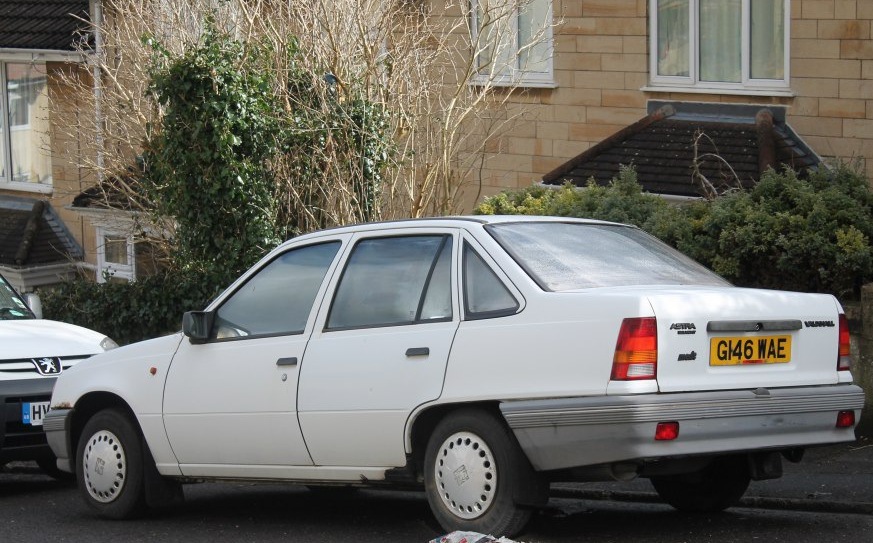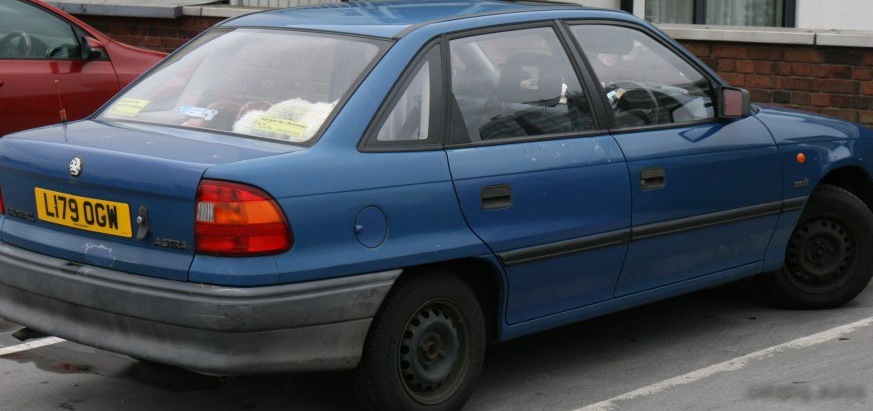
The Vauxhall Astra Mk III 1.6 iS Automatic, produced between 1992 and 1994, represented a mid-range offering within the third generation of the popular Astra compact. Positioned as a comfortable and practical option, it catered to buyers seeking an automatic transmission paired with a reasonably efficient engine. This variant was part of the larger Mk III Astra range (codenamed H), which utilized the GM T platform and shared components with other European Opel/Vauxhall models. The 1.6 iS Automatic aimed to provide a balance between affordability, convenience, and acceptable performance for everyday driving.
Technical Specifications
| Brand | Vauxhall |
| Model | Astra |
| Generation | Astra Mk III |
| Type (Engine) | 1.6 iS (100 Hp) Automatic |
| Start of production | 1992 |
| End of production | 1994 |
| Powertrain Architecture | Internal Combustion engine |
| Body type | Sedan |
| Seats | 5 |
| Doors | 4 |
| Fuel consumption (combined) | 7.8 l/100 km (30.2 US mpg, 36.2 UK mpg, 12.8 km/l) |
| Fuel Type | Petrol (Gasoline) |
| Acceleration 0 – 100 km/h | 12.5 sec |
| Acceleration 0 – 62 mph | 12.5 sec |
| Acceleration 0 – 60 mph | 11.9 sec |
| Maximum speed | 183 km/h (113.71 mph) |
| Weight-to-power ratio | 10.3 kg/Hp, 97.6 Hp/tonne |
| Weight-to-torque ratio | 7.5 kg/Nm, 132.7 Nm/tonne |
| Power | 100 Hp @ 5800 rpm |
| Power per litre | 62.6 Hp/l |
| Torque | 136 Nm @ 3400 rpm (100.31 lb.-ft. @ 3400 rpm) |
| Engine layout | Front, Transverse |
| Engine Model/Code | C16SE |
| Engine displacement | 1598 cm3 (97.52 cu. in.) |
| Number of cylinders | 4 |
| Engine configuration | Inline |
| Fuel injection system | Multi-port manifold injection |
| Engine aspiration | Naturally aspirated engine |
| Engine oil capacity | 3.5 l (3.7 US qt | 3.08 UK qt) |
| Coolant capacity | 5.7 l (6.02 US qt | 5.02 UK qt) |
| Kerb Weight | 1025 kg (2259.74 lbs.) |
| Max. weight | 1515 kg (3340 lbs.) |
| Max load | 490 kg (1080.27 lbs.) |
| Trunk (boot) space – minimum | 501 l (17.69 cu. ft.) |
| Trunk (boot) space – maximum | 1200 l (42.38 cu. ft.) |
| Fuel tank capacity | 52 l (13.74 US gal | 11.44 UK gal) |
| Length | 4239 mm (166.89 in.) |
| Width | 1689 mm (66.5 in.) |
| Height | 1389 mm (54.69 in.) |
| Wheelbase | 2520 mm (99.21 in.) |
| Front track | 1420 mm (55.91 in.) |
| Rear track | 1420 mm (55.91 in.) |
| Ride height (ground clearance) | 135 mm (5.31 in.) |
| Drag coefficient (Cd) | 0.31 |
| Drivetrain Architecture | The Internal combustion engine (ICE) drives the front wheels of the vehicle. |
| Drive wheel | Front wheel drive |
| Number of gears and type of gearbox | 4 gears, automatic transmission |
| Front brakes | Ventilated discs |
| Rear brakes | Drum |
| Steering type | Steering rack and pinion |
| Power steering | Hydraulic Steering |
| Tires size | 175/65 R14 |
| Wheel rims size | 14 |
INTRODUCTION
The Vauxhall Astra Mk III, launched in 1991, was a significant step forward for the British manufacturer. It represented a move towards more modern styling and improved build quality. The 1.6 iS Automatic variant, introduced shortly after the initial launch, offered a blend of practicality and convenience. It was aimed at buyers who preferred the ease of an automatic gearbox, particularly in urban driving conditions. Within the Mk III range, which included various engine sizes and trim levels, the 1.6 iS Automatic occupied a middle ground, offering more performance than the base models but lacking the sporting pretensions of the GSi versions.
Powertrain & Engine Architecture
The heart of the Astra 1.6 iS Automatic was the C16SE engine, a 1.6-liter inline-four cylinder unit. This engine featured multi-port fuel injection, a crucial upgrade over earlier carbureted Vauxhall engines, improving efficiency and responsiveness. The C16SE utilized a single overhead camshaft (SOHC) valvetrain, operating with two valves per cylinder. The engine produced 100 horsepower at 5800 rpm and 136 Nm (100.31 lb-ft) of torque at 3400 rpm. Paired with this engine was a four-speed automatic transmission, a common choice for drivers prioritizing comfort over outright performance. This transmission, while reliable, wasn’t known for its particularly quick shifts or sporting character. The engine’s design prioritized reliability and fuel economy over peak power output.
Driving Characteristics
The driving experience in the Astra 1.6 iS Automatic was characterized by smooth, if not particularly exhilarating, performance. The automatic transmission, while convenient, did detract from the engine’s potential. Acceleration from 0-60 mph took around 11.9 seconds, and top speed was approximately 113.71 mph. Compared to the five-speed manual version of the 1.6, the automatic suffered a slight performance penalty due to the transmission’s inherent inefficiencies. Gear ratios were optimized for comfortable cruising rather than aggressive acceleration. The car felt most at home on the open road, providing a relaxed and composed ride. The automatic transmission also impacted fuel economy, typically returning around 30.2 US mpg in combined driving.
Equipment & Trim Levels
The 1.6 iS Automatic trim level offered a reasonable level of equipment for its time. Standard features typically included central locking, power steering, and an adjustable steering column. Interior upholstery was usually cloth, with a relatively simple dashboard layout. Optional extras included electric windows, a sunroof, and upgraded audio systems. The ‘iS’ designation indicated a slightly higher level of trim compared to the base models, with some additional cosmetic enhancements. The interior was functional and well-built, though lacking the premium feel of more expensive vehicles.
Chassis & Braking
The Astra Mk III utilized a MacPherson strut front suspension and a torsion beam rear suspension. This setup provided a good balance between ride comfort and handling. The 1.6 iS Automatic models typically featured ventilated disc brakes on the front wheels and drum brakes on the rear. This braking configuration was adequate for the car’s weight and performance, but lacked the stopping power of fully disc-braked setups found on higher-spec models. Stabilizer bars were fitted to both the front and rear axles to reduce body roll during cornering. The suspension was tuned for comfort, resulting in a relatively soft ride.
Market Reception & Comparison
The Astra 1.6 iS Automatic was generally well-received by motoring journalists as a practical and comfortable family car. Critics praised its smooth ride and ease of use, but noted that the automatic transmission dulled the engine’s performance. Compared to the more powerful Astra GSi models, the 1.6 iS Automatic lacked the sporting edge. However, it offered better fuel economy and lower running costs than the GSi. Against competitors like the Ford Escort and Peugeot 305, the Astra 1.6 iS Automatic held its own in terms of value for money and overall refinement.
Legacy
The C16SE engine and the four-speed automatic transmission used in the Astra 1.6 iS Automatic proved to be relatively reliable. While not without their quirks, these components were generally durable and capable of withstanding years of use. Today, these cars are relatively affordable to purchase as used vehicles, but finding well-maintained examples can be challenging. Parts availability is generally good, thanks to the Astra Mk III’s popularity. The 1.6 iS Automatic remains a popular choice for those seeking a classic, comfortable, and affordable family car, offering a nostalgic glimpse into 1990s automotive design.