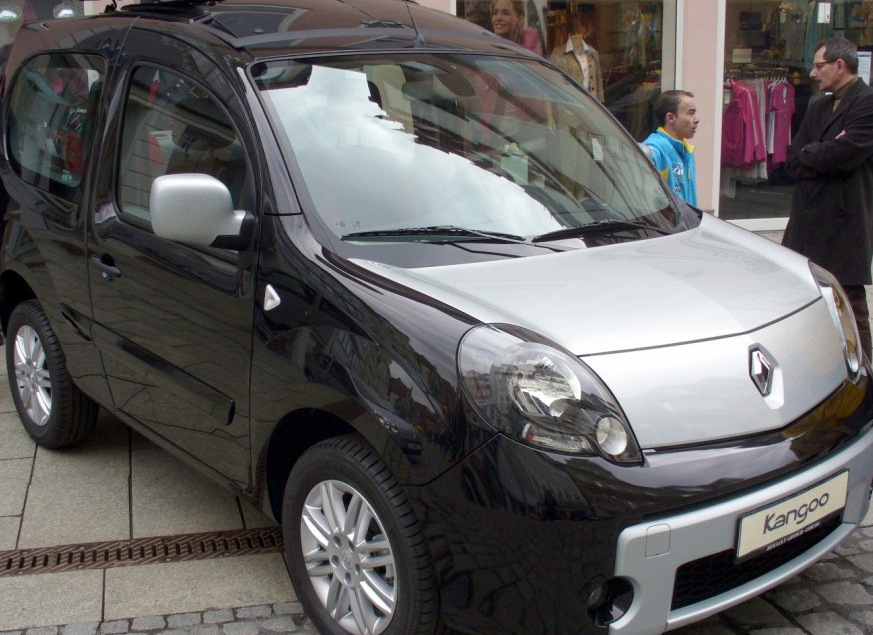
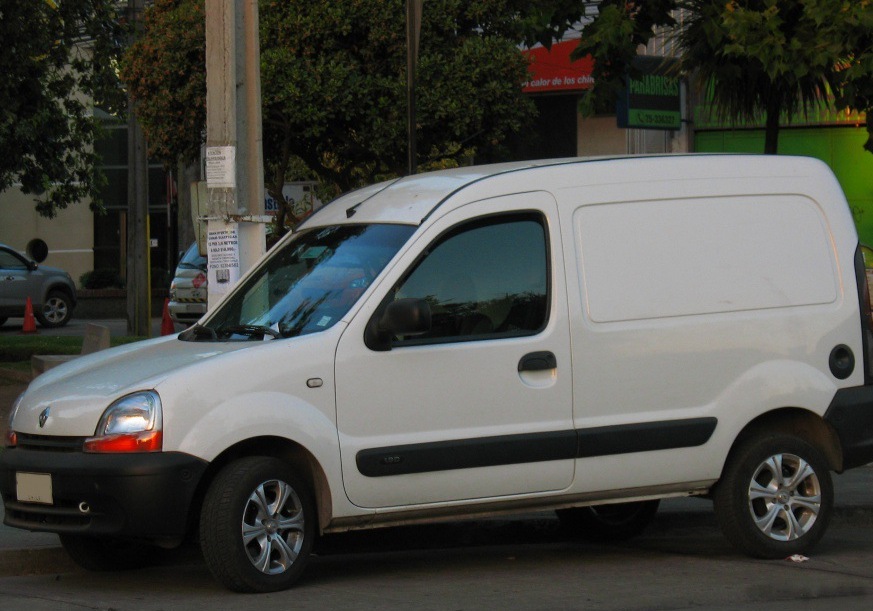
The Renault Kangoo II Express Compact, particularly the facelifted version introduced in 2013, represented a significant offering in the European light commercial vehicle (LCV) and compact van segment. This variant, equipped with the 1.5 Energy dCi engine producing 90 horsepower, and a manual transmission, was positioned as an entry-level workhorse, prioritizing fuel efficiency and practicality over outright performance. Production of this specific configuration ran from 2013 to 2019, serving as a popular choice for small businesses, tradespeople, and those needing a versatile, economical vehicle. The Kangoo II, built on the X0/B9 platform, was a key model for Renault, known for its modular interior and robust construction.
Technical Specifications
| Brand | Renault |
| Model | Kangoo |
| Generation | Kangoo II Express Compact (facelift 2013) |
| Type (Engine) | 1.5 Energy dCi (90 Hp) Stop&Start |
| Start of production | 2013 |
| End of production | 2019 |
| Powertrain Architecture | Internal Combustion engine |
| Body type | Minivan |
| Seats | 2 |
| Doors | 3 |
| Fuel consumption (combined) | 4.3 l/100 km (54.7 US mpg, 65.7 UK mpg, 23.3 km/l) |
| CO2 emissions | 112 g/km |
| Fuel Type | Diesel |
| Acceleration 0 – 100 km/h | 13.3 sec |
| Acceleration 0 – 62 mph | 13.3 sec |
| Acceleration 0 – 60 mph | 12.6 sec |
| Maximum speed | 160 km/h (99.42 mph) |
| Emission standard | Euro 5 |
| Weight-to-power ratio | 14.2 kg/Hp, 70.6 Hp/tonne |
| Weight-to-torque ratio | 5.8 kg/Nm, 172.5 Nm/tonne |
| Power | 90 Hp @ 4000 rpm |
| Power per litre | 61.6 Hp/l |
| Torque | 220 Nm @ 1750 rpm (162.26 lb.-ft. @ 1750 rpm) |
| Engine layout | Front, Transverse |
| Engine Model/Code | K9K |
| Engine displacement | 1461 cm3 (89.16 cu. in.) |
| Number of cylinders | 4 |
| Engine configuration | Inline |
| Number of valves per cylinder | 2 |
| Fuel injection system | Diesel Commonrail |
| Engine aspiration | Turbocharger, Intercooler |
| Engine oil capacity | 4.5 l (4.76 US qt | 3.96 UK qt) |
| Coolant capacity | 7.2 l (7.61 US qt | 6.34 UK qt) |
| Kerb Weight | 1275-1425 kg (2810.89 – 3141.59 lbs.) |
| Max. weight | 1785 kg (3935.25 lbs.) |
| Max load | 360-510 kg (793.66 – 1124.36 lbs.) |
| Trunk (boot) space – minimum | 2300 l (81.22 cu. ft.) |
| Trunk (boot) space – maximum | 2800 l (98.88 cu. ft.) |
| Fuel tank capacity | 60 l (15.85 US gal | 13.2 UK gal) |
| Permitted trailer load with brakes (12%) | 1050 kg (2314.85 lbs.) |
| Permitted trailer load without brakes | 670 kg (1477.1 lbs.) |
| Length | 3898 mm (153.46 in.) |
| Width | 1829 mm (72.01 in.) |
| Width including mirrors | 2138 mm (84.17 in.) |
| Height | 1783 mm (70.2 in.) |
| Wheelbase | 2313 mm (91.06 in.) |
| Front track | 1521 mm (59.88 in.) |
| Rear (Back) track | 1533 mm (60.35 in.) |
| Front overhang | 875 mm (34.45 in.) |
| Rear overhang | 710 mm (27.95 in.) |
| Minimum turning circle | 9.6 m (31.5 ft.) |
| Drivetrain Architecture | Front wheel drive |
| Drive wheel | Front wheel drive |
| Number of gears and type of gearbox | 5 gears, manual transmission |
| Front suspension | Independent type McPherson |
| Rear suspension | Torsion |
| Front brakes | Ventilated discs |
| Rear brakes | Drum |
| Assisting systems | ABS (Anti-lock braking system) |
| Steering type | Steering rack and pinion |
| Power steering | Electric Steering |
| Tires size | 185/70 R14 88 T |
| Wheel rims size | 14 |
Powertrain & Engine Architecture
The heart of this Kangoo variant is the Renault K9K engine, a 1.5-liter inline-four cylinder diesel. This engine, part of the ‘Energy’ family, was designed for efficiency and reduced emissions. The K9K utilizes a common rail direct injection system, delivering fuel at high pressure for optimized combustion. A turbocharger with an intercooler further enhances performance, providing increased power and torque. The 90 horsepower output is achieved at 4000 rpm, while the peak torque of 220 Nm (162 lb-ft) is available from just 1750 rpm, making it well-suited for hauling loads. The engine features two valves per cylinder and is known for its relatively simple, robust design. The manual transmission, a five-speed unit, was the standard offering for this trim level, prioritizing cost-effectiveness and driver control.
Driving Characteristics
The 1.5 dCi 90 hp Kangoo Express Compact, with its manual transmission, offers a practical, if not exhilarating, driving experience. Acceleration is modest, taking around 13.3 seconds to reach 62 mph. However, the engine’s strong low-end torque makes it capable of carrying loads and navigating urban environments with ease. The gear ratios are tuned for fuel economy, meaning the engine needs to be revved slightly to maintain speed on inclines. Compared to higher-powered versions of the Kangoo, this variant feels less responsive, but it compensates with significantly better fuel economy. The manual transmission provides a more engaging driving experience than the optional automated manual gearbox, offering greater control over gear selection.
Equipment & Trim Levels
The Kangoo II Express Compact 1.5 dCi 90 hp typically served as the base trim level. Standard equipment included power steering, ABS, a driver’s airbag, and a basic audio system. The interior was functional and durable, with hard-wearing plastics and cloth upholstery. The focus was on practicality rather than luxury. Optional extras included air conditioning, electric windows, a passenger airbag, and upgraded audio systems. The van’s modular interior, with its folding seats and configurable cargo area, was a key selling point. The rear doors offered wide access to the cargo bay, facilitating easy loading and unloading.
Chassis & Braking
The Kangoo II Express Compact utilizes a McPherson strut independent suspension at the front and a torsion beam suspension at the rear. This setup provides a reasonable balance between ride comfort and handling. The front brakes are ventilated discs, offering good stopping power, while the rear brakes are drums, a cost-saving measure common in this class of vehicle. The electric power steering provides light and easy steering, making it maneuverable in tight spaces. The suspension is tuned for carrying loads, meaning it can feel slightly firm when unladen.
Market Reception & Comparison
The Renault Kangoo II Express Compact 1.5 dCi 90 hp was well-received in the European market as a practical and economical work vehicle. Critics praised its fuel efficiency, spacious interior, and robust construction. Compared to other vans in its class, such as the Citroën Berlingo and Peugeot Partner, the Kangoo offered a competitive package in terms of price and features. The 90 hp engine was considered adequate for most tasks, but some reviewers noted that it could feel underpowered when fully loaded or driving on steep hills. The manual transmission was generally preferred over the automated manual option due to its smoother operation and greater reliability.
Legacy
The K9K engine, in its various iterations, has proven to be a reliable and durable powerplant. While not without its potential issues (such as turbocharger wear and injector problems), the engine is generally considered to be relatively trouble-free with regular maintenance. Today, used examples of the Kangoo II Express Compact 1.5 dCi 90 hp are readily available and represent a good value for those seeking a practical and economical van. Its simplicity and robust construction make it a relatively easy vehicle to maintain, and parts are widely available. The Kangoo II cemented Renault’s position as a leading manufacturer of light commercial vehicles in Europe.