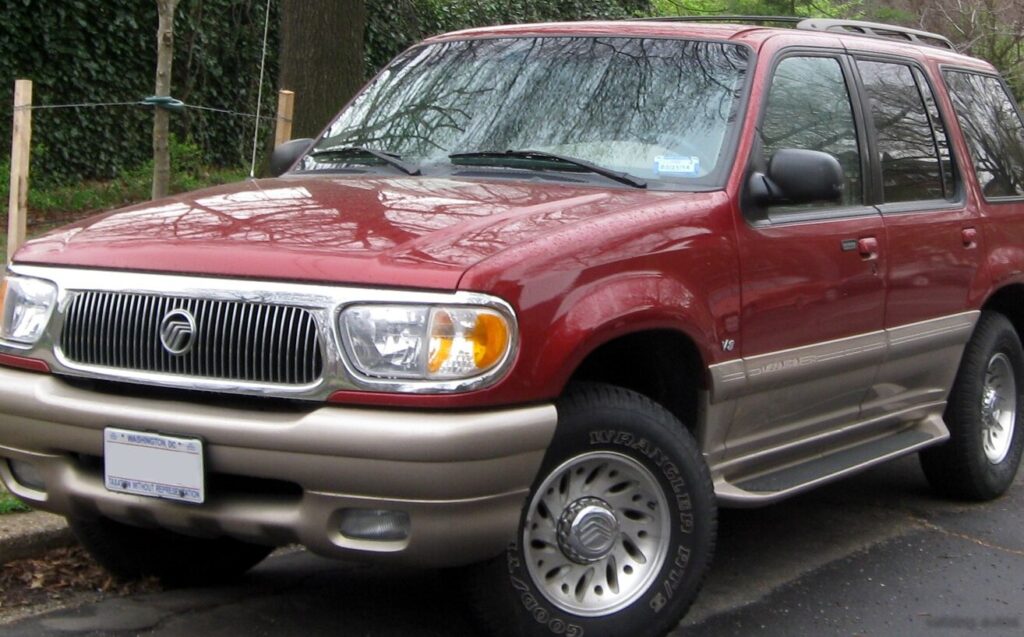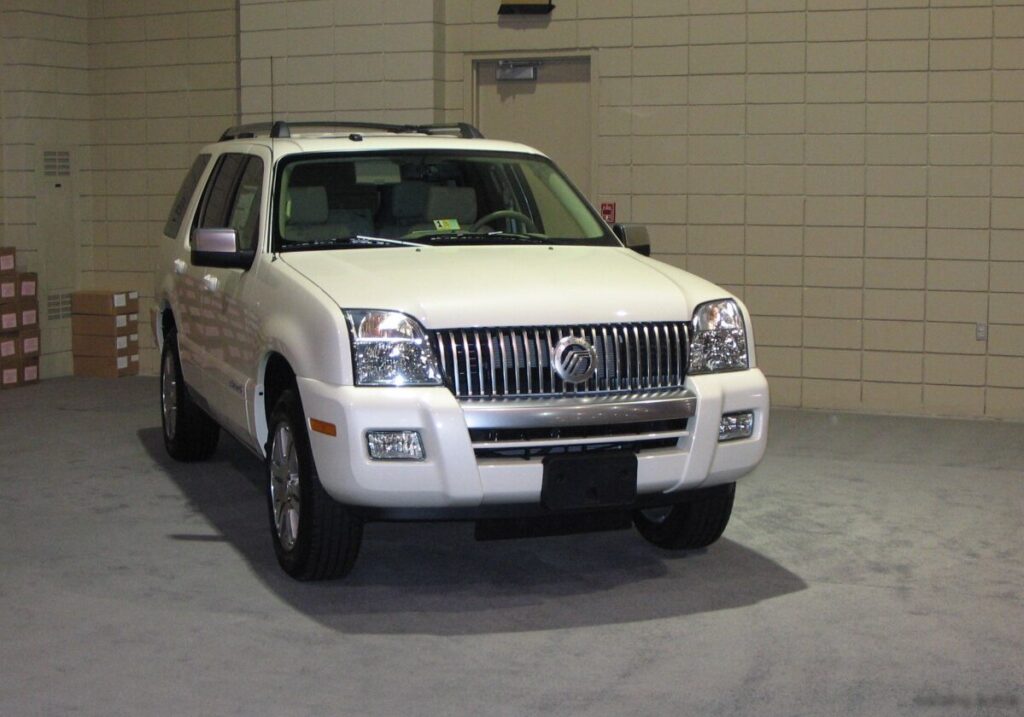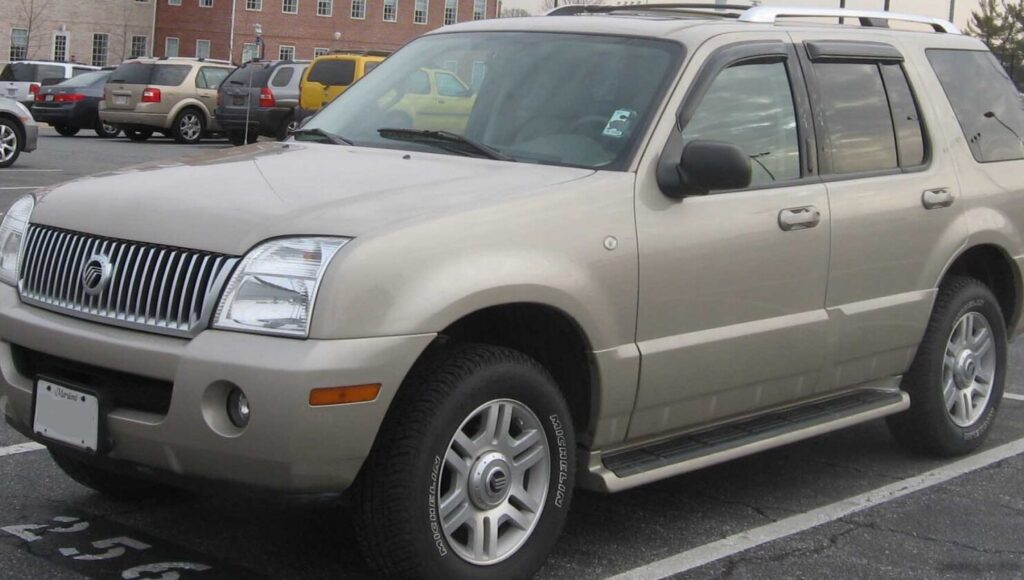
The Mercury Mountaineer II, specifically the variant equipped with the 4.0-liter V6 engine producing 210 horsepower and paired with an automatic transmission and all-wheel drive (AWD), was produced from 2001 to 2005. This model represented the second generation of the Mountaineer, a mid-size SUV positioned as Mercury’s offering in the increasingly popular SUV segment. Built on the Ford Explorer platform, the Mountaineer II aimed to provide a more upscale alternative with enhanced features and a slightly more refined driving experience. This particular 4.0L V6/Automatic combination occupied a middle ground in the Mountaineer II lineup, offering a balance between performance and fuel economy, appealing to families and drivers seeking a versatile vehicle.
Technical Specifications
| Brand | Mercury |
| Model | Mountaineer |
| Generation | Mountaineer II |
| Type (Engine) | 4.0 V6 (210 Hp) AWD Automatic |
| Start of production | March, 2001 |
| End of production | 2005 |
| Powertrain Architecture | Internal Combustion engine |
| Body type | SUV |
| Seats | 7 |
| Doors | 5 |
| Fuel consumption (economy) – urban (EPA) | 15.7 l/100 km (15 US mpg, 18 UK mpg, 6.4 km/l) |
| Fuel consumption (economy) – extra urban (EPA) | 11.8 l/100 km (19.9 US mpg, 23.9 UK mpg, 8.5 km/l) |
| Fuel Type | Petrol (Gasoline) |
| Emission standard | LEV |
| Weight-to-power ratio | 9.7 kg/Hp, 103.1 Hp/tonne |
| Weight-to-torque ratio | 5.9 kg/Nm, 168.9 Nm/tonne |
| Power | 210 Hp @ 5100 rpm |
| Power per litre | 52.3 Hp/l |
| Torque | 344 Nm @ 3700 rpm (253.72 lb.-ft. @ 3700 rpm) |
| Engine layout | Front, Longitudinal |
| Engine Model/Code | Cologne |
| Engine displacement | 4015 cm3 (245.01 cu. in.) |
| Number of cylinders | 6 |
| Engine configuration | V-engine |
| Compression ratio | 9.7:1 |
| Number of valves per cylinder | 2 |
| Fuel injection system | Multi-port manifold injection |
| Engine aspiration | Naturally aspirated engine |
| Valvetrain | SOHC |
| Engine oil capacity | 4.7 l (4.97 US qt | 4.14 UK qt) |
| Coolant | 15.4 l (16.27 US qt | 13.55 UK qt) |
| Kerb Weight | 2037-2052 kg (4490.82 – 4523.89 lbs.) |
| Max. weight | 2671 kg (5888.55 lbs.) |
| Max load | 619-634 kg (1364.66 – 1397.73 lbs.) |
| Trunk (boot) space – minimum | 391 l (13.81 cu. ft.) |
| Trunk (boot) space – maximum | 2302 l (81.29 cu. ft.) |
| Fuel tank capacity | 85 l (22.45 US gal | 18.7 UK gal) |
| Permitted trailer load with brakes (12%) | 2368 kg (5220.55 lbs.) |
| Length | 4850 mm (190.94 in.) |
| Width | 1831 mm (72.09 in.) |
| Width including mirrors | 2139 mm (84.21 in.) |
| Height | 1830 mm (72.05 in.) |
| Wheelbase | 2889 mm (113.74 in.) |
| Front track | 1547 mm (60.91 in.) |
| Rear (Back) track | 1556 mm (61.26 in.) |
| Ride height (ground clearance) | 216 mm (8.5 in.) |
| Minimum turning circle (turning diameter) | 11.2 m (36.75 ft.) |
| Drivetrain Architecture | The Internal combustion engine (ICE) drives permanently the four wheels of the vehicle. |
| Drive wheel | All wheel drive (4×4) |
| Number of gears and type of gearbox | 5 gears, automatic transmission |
| Front suspension | Coil spring, Double wishbone, Transverse stabilizer |
| Rear suspension | Double wishbone, Transverse stabilizer, Coil spring |
| Front brakes | Ventilated discs, 305 mm |
| Rear brakes | Disc, 302 mm |
| Assisting systems | ABS (Anti-lock braking system) |
| Steering type | Steering rack and pinion |
| Power steering | Hydraulic Steering |
| Tires size | 235/70 R16; 245/65 R17 |
| Wheel rims size | 16; 17 |
Powertrain & Engine Architecture
The heart of this Mountaineer II variant is the 4.0-liter Cologne V6 engine. This engine, a mainstay in Ford’s lineup for many years, is a naturally aspirated, 90-degree V6 featuring a single overhead camshaft (SOHC) design with two valves per cylinder. The engine utilizes a multi-port fuel injection system, delivering fuel directly to each intake port for improved efficiency and power delivery. The 4.0L engine produced 210 horsepower at 5100 rpm and 253 lb-ft of torque at 3700 rpm. The automatic transmission used in this model is a 5-speed unit, designed to provide smooth shifting and adequate power transfer for everyday driving. While not a performance-oriented transmission, it was well-suited to the engine’s torque curve and the vehicle’s intended use as a family SUV.
Driving Characteristics
The 4.0L V6 and 5-speed automatic combination in the Mountaineer II delivered a comfortable, if not particularly exhilarating, driving experience. Acceleration was adequate for merging onto highways and passing slower traffic, but it wasn’t a particularly quick vehicle. The automatic transmission’s gear ratios were tuned for fuel efficiency and smooth operation, rather than aggressive performance. Compared to the higher-output engines offered in the Mountaineer II (such as the 4.6L V8), this variant felt noticeably less powerful. However, it offered a more relaxed driving experience and better fuel economy. The AWD system provided enhanced traction in inclement weather conditions, making it a capable all-season vehicle.
Equipment & Trim Levels
The 4.0L V6 Automatic Mountaineer II typically came standard with features such as air conditioning, power windows and locks, a CD player, and cloth upholstery. Higher trim levels, such as the Luxury or Limited editions, added features like leather upholstery, heated seats, a premium sound system, and alloy wheels. Optional extras included a sunroof, a navigation system, and a rear entertainment system. The interior design was generally functional and comfortable, with a focus on practicality and family-friendliness.
Chassis & Braking
The Mountaineer II’s chassis featured an independent front suspension with coil springs and a double wishbone design, providing a comfortable ride. The rear suspension utilized a double wishbone setup with coil springs and a transverse stabilizer bar. Braking duties were handled by ventilated discs up front and discs in the rear. Anti-lock brakes (ABS) were standard, enhancing safety and control during emergency braking situations. The suspension tuning was geared towards providing a comfortable ride quality, rather than sporty handling.
Market Reception & Comparison
The Mercury Mountaineer II 4.0L V6 Automatic was generally well-received by critics as a practical and comfortable family SUV. It offered a good balance of features, space, and affordability. However, some reviewers noted that the 4.0L V6 engine felt underpowered compared to the available V8 option. Fuel economy was considered average for its class. Compared to other SUVs in the same segment, such as the Ford Explorer (with which it shared a platform) and the Toyota 4Runner, the Mountaineer II offered a more upscale interior and a slightly more refined driving experience.
Legacy
The 4.0-liter Cologne V6 engine, while not known for being exceptionally durable, proved to be reasonably reliable in the Mountaineer II. Common issues included oil leaks and occasional timing chain wear. The 5-speed automatic transmission was generally reliable, but required regular fluid changes to prevent issues. Today, the Mountaineer II 4.0L V6 Automatic can be found on the used car market at relatively affordable prices. It remains a viable option for buyers seeking a spacious, comfortable, and capable SUV, but potential buyers should be aware of the potential maintenance issues associated with the engine and transmission.