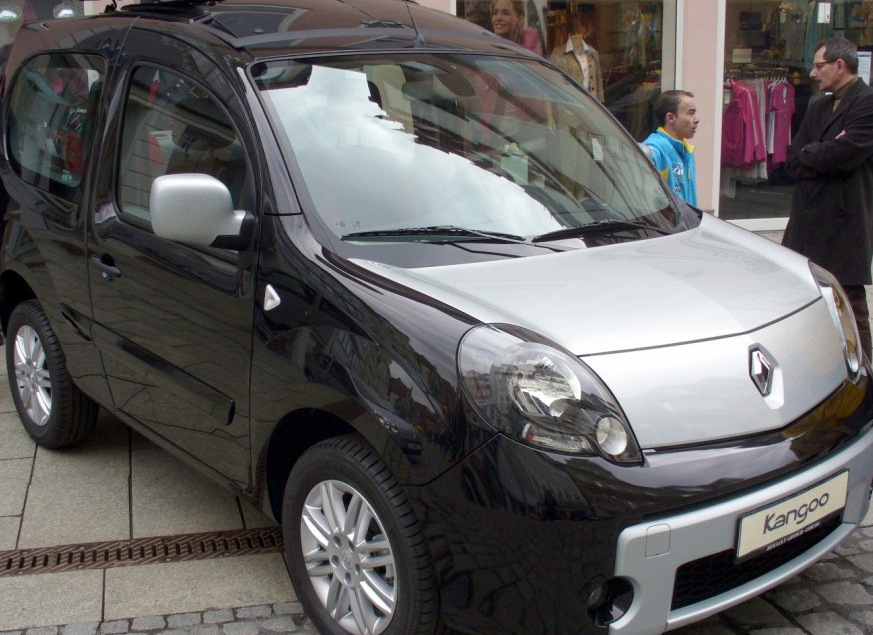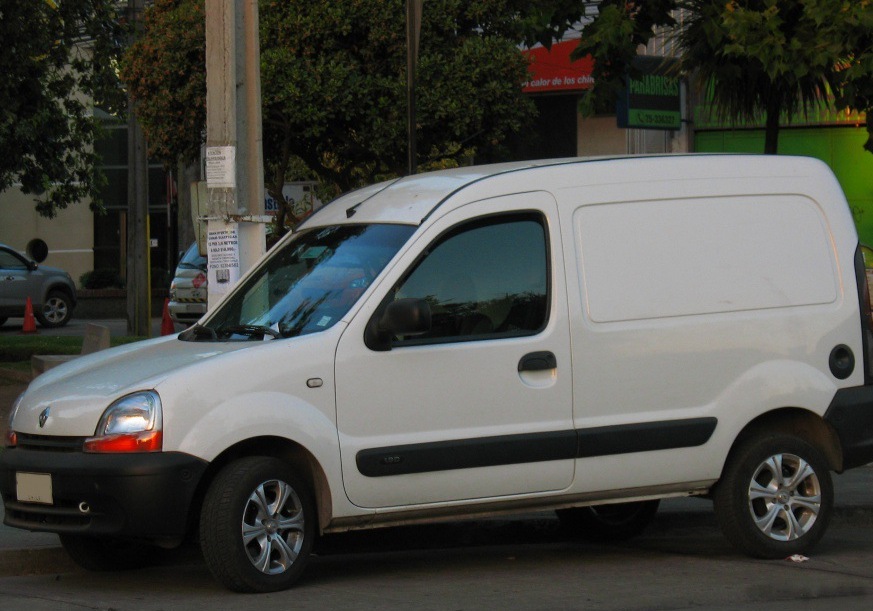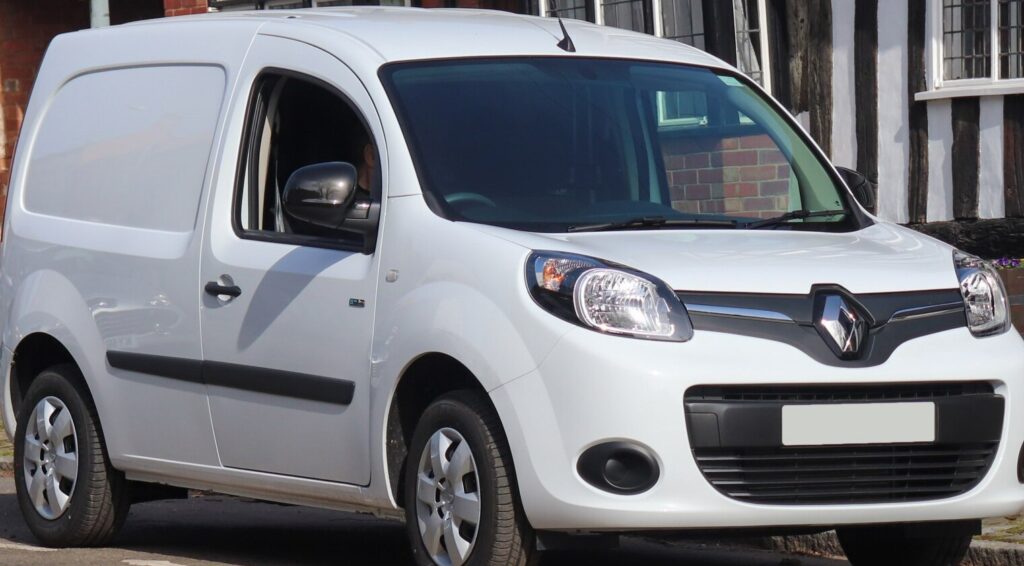
The Renault Kangoo II Express, particularly the facelifted version introduced in 2013, represented a significant step forward for Renault’s light commercial vehicle range. This variant, equipped with the 1.2 TCe (115 horsepower) engine and a six-speed Efficient Dual Clutch (EDC) automatic transmission, was positioned as a practical and efficient solution for businesses and tradespeople requiring a compact, versatile van. Production of this specific configuration ran from 2013 to 2015, falling within the broader Kangoo II lifespan (2008-2021). The Kangoo II Express, unlike the passenger-focused Kangoo, was designed primarily as a commercial vehicle, offering a dedicated cargo area and a focus on functionality.
Technical Specifications
| Brand | Renault |
| Model | Kangoo |
| Generation | Kangoo II Express (facelift 2013) |
| Type (Engine) | 1.2 TCe (115 Hp) EDC |
| Start of production | 2013 |
| End of production | 2015 |
| Powertrain Architecture | Internal Combustion engine |
| Body type | Minivan |
| Seats | 2 |
| Doors | 3 |
| Fuel consumption (combined) | 6.4-6.5 l/100 km (36.8 – 36.2 US mpg, 44.1 – 43.5 UK mpg, 15.6 – 15.4 km/l) |
| CO2 emissions | 144-147 g/km |
| Fuel Type | Petrol (Gasoline) |
| Acceleration 0 – 100 km/h | 10.4 sec |
| Acceleration 0 – 62 mph | 10.4 sec |
| Acceleration 0 – 60 mph | 9.9 sec |
| Maximum speed | 172 km/h (106.88 mph) |
| Emission standard | Euro 5 |
| Weight-to-power ratio | 11 kg/Hp, 90.6 Hp/tonne |
| Weight-to-torque ratio | 6.7 kg/Nm, 149.6 Nm/tonne |
| Power | 115 Hp @ 4500 rpm |
| Power per litre | 96.1 Hp/l |
| Torque | 190 Nm @ 2000 rpm (140.14 lb.-ft. @ 2000 rpm) |
| Engine layout | Front, Transverse |
| Engine Model/Code | H5FT |
| Engine displacement | 1197 cm3 (73.05 cu. in.) |
| Number of cylinders | 4 |
| Engine configuration | Inline |
| Number of valves per cylinder | 4 |
| Fuel injection system | Direct injection |
| Engine aspiration | Turbocharger, Intercooler |
| Engine oil capacity | 4.2 l (4.44 US qt | 3.7 UK qt) |
| Coolant | 6.9 l (7.29 US qt | 6.07 UK qt) |
| Kerb Weight | 1270-1430 kg (2799.87 – 3152.61 lbs.) |
| Max. weight | 1810 kg (3990.37 lbs.) |
| Max load | 380-540 kg (837.76 – 1190.5 lbs.) |
| Trunk (boot) space – minimum | 3000 l (105.94 cu. ft.) |
| Trunk (boot) space – maximum | 3500 l (123.6 cu. ft.) |
| Fuel tank capacity | 56 l (14.79 US gal | 12.32 UK gal) |
| Length | 4282 mm (168.58 in.) |
| Width | 1829 mm (72.01 in.) |
| Width including mirrors | 2138 mm (84.17 in.) |
| Height | 1805 mm (71.06 in.) |
| Wheelbase | 2697 mm (106.18 in.) |
| Front track | 1521 mm (59.88 in.) |
| Rear (Back) track | 1533 mm (60.35 in.) |
| Front overhang | 875 mm (34.45 in.) |
| Rear overhang | 710 mm (27.95 in.) |
| Ride height (ground clearance) | 210-157 mm (8.27 – 6.18 in.) |
| Minimum turning circle | 10.7 m (35.1 ft.) |
| Drivetrain Architecture | The Internal combustion engine (ICE) drives the front wheels of the vehicle. |
| Drive wheel | Front wheel drive |
| Number of gears and type of gearbox | 6 gears, automatic transmission EDC |
| Front suspension | Independent type McPherson |
| Rear suspension | Torsion |
| Front brakes | Ventilated discs |
| Rear brakes | Disc |
| Assisting systems | ABS (Anti-lock braking system) |
| Steering type | Steering rack and pinion |
| Power steering | Electric Steering |
| Tires size | 195/65 R15 |
| Wheel rims size | 15 |
Powertrain & Engine Architecture
The heart of this Kangoo II Express variant is the Renault H5FT engine, a 1.2-liter turbocharged four-cylinder petrol engine. This engine belongs to Renault’s TCe (Turbo Control Efficiency) family, designed to offer a balance of performance and fuel economy. The H5FT utilizes direct fuel injection, which improves combustion efficiency and reduces emissions. The turbocharger, coupled with an intercooler, provides increased power output compared to naturally aspirated engines of similar displacement. The engine produces 115 horsepower at 4500 rpm and 190 Nm (140 lb-ft) of torque at 2000 rpm. The EDC (Efficient Dual Clutch) six-speed automatic transmission is a key component, offering quicker and smoother gear changes than a traditional torque converter automatic. This transmission contributes to improved fuel efficiency and a more engaging driving experience.
Driving Characteristics
The 1.2 TCe engine, paired with the EDC transmission, provides adequate performance for typical commercial van duties. While not exceptionally quick – 0-60 mph takes around 9.9 seconds – it offers sufficient power for navigating urban environments and carrying moderate loads. The EDC transmission is responsive, and the gear ratios are well-suited to maintaining momentum. Compared to the base 1.5 dCi diesel engine, the 1.2 TCe offers a smoother and quieter driving experience, but typically at the expense of fuel economy. The 1.2 TCe is also noticeably less powerful than the higher-output diesel options, making it less suitable for consistently heavy loads or long-distance highway driving.
Equipment & Trim Levels
The Kangoo II Express 1.2 TCe EDC was generally offered with a utilitarian, work-focused trim level. Standard equipment typically included power steering, electric front windows, a driver’s airbag, and ABS brakes. The interior was designed for durability and ease of cleaning, with hard-wearing plastics and practical storage solutions. Optional extras could include air conditioning, a radio with USB connectivity, and rear parking sensors. The focus remained on providing a functional and affordable commercial vehicle, rather than luxury features.
Chassis & Braking
The Kangoo II Express utilizes a front-wheel-drive layout with an independent McPherson strut suspension at the front and a torsion beam suspension at the rear. This setup provides a reasonable balance of ride comfort and handling. The front brakes are ventilated discs, while the rear brakes are solid discs. ABS (Anti-lock Braking System) is standard, enhancing safety during emergency braking situations. The suspension is tuned to prioritize load-carrying capacity and stability, rather than sporty handling.
Market Reception & Comparison
The 1.2 TCe EDC variant of the Kangoo II Express was generally well-received as a practical and efficient option for businesses seeking a compact van. Critics praised the smooth operation of the EDC transmission and the engine’s responsiveness. However, some noted that the fuel economy wasn’t as competitive as the diesel alternatives. Compared to the 1.5 dCi diesel models, the 1.2 TCe offered a more refined driving experience but typically resulted in higher running costs due to fuel consumption. The petrol engine was often favored by those who primarily used the van for shorter journeys within urban areas.
Legacy
The Renault Kangoo II Express 1.2 TCe EDC has proven to be a relatively reliable powertrain in the used car market. The H5FT engine, while not without its potential issues (such as occasional turbocharger problems), is generally durable when properly maintained. The EDC transmission, if serviced according to Renault’s recommendations, is also known for its longevity. Today, these vans represent an affordable and practical option for small businesses and tradespeople, offering a good balance of functionality, efficiency, and reliability. However, potential buyers should be aware of the importance of regular maintenance and should inspect the vehicle thoroughly for any signs of wear or damage.