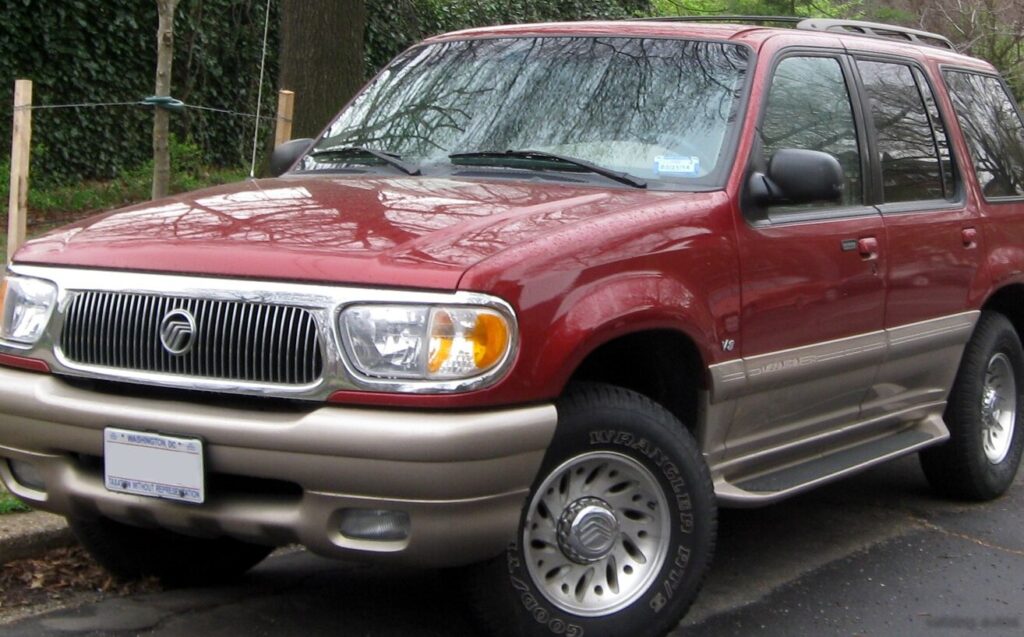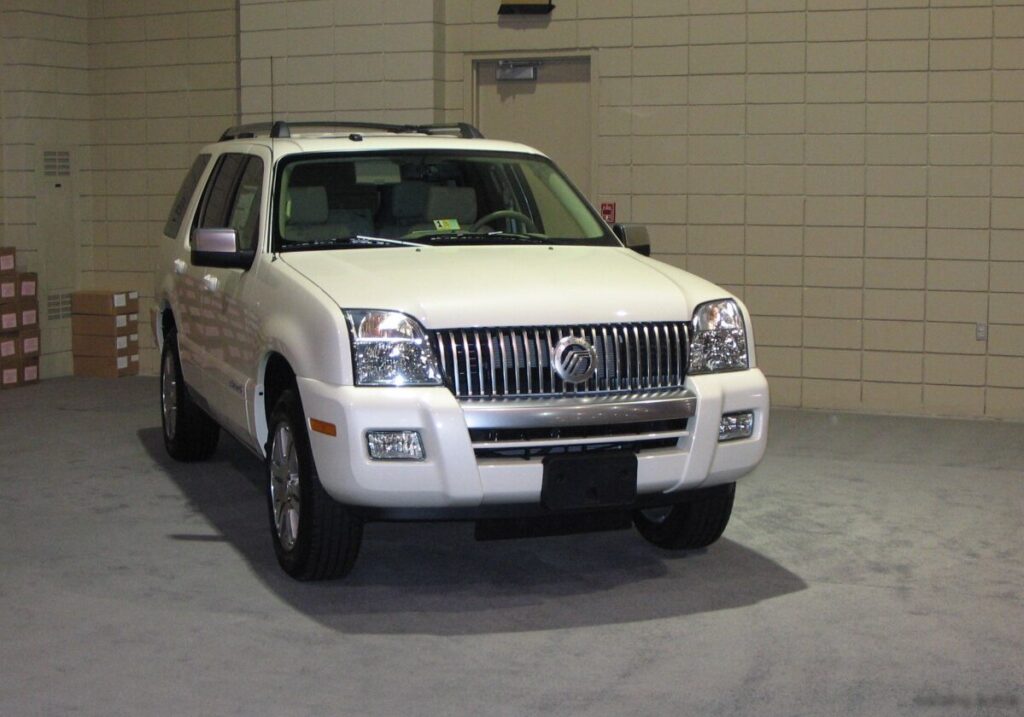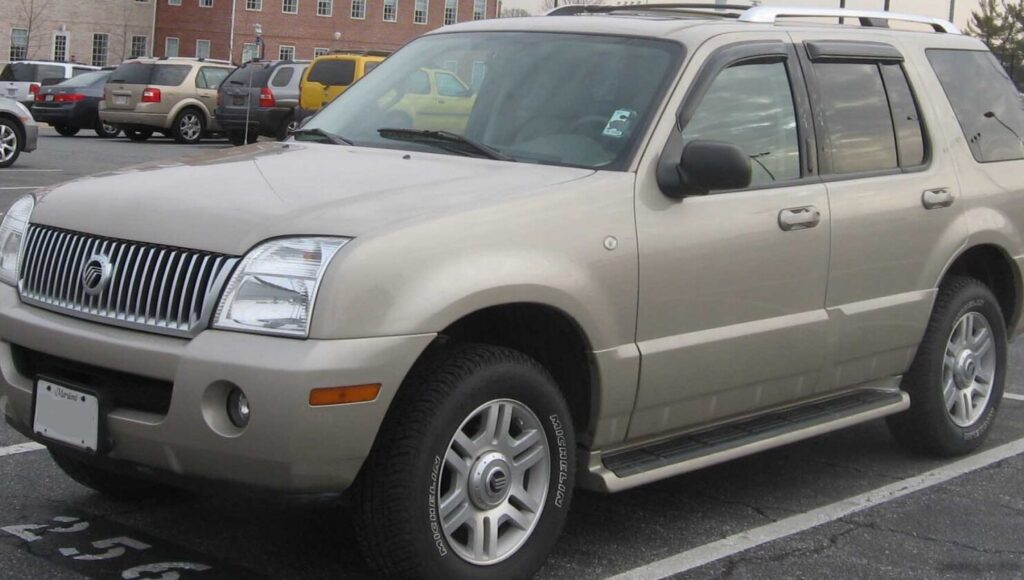
The Mercury Mountaineer II, specifically the variant equipped with the 4.6-liter V8 engine producing 239 horsepower and paired with an automatic transmission and all-wheel drive (AWD), was a significant offering in the mid-size SUV segment from 2001 to 2005. Built on the Ford Explorer platform, the Mountaineer II represented Mercury’s attempt to provide a more upscale and refined alternative within the increasingly popular SUV market. This particular configuration occupied a mid-to-high range position within the Mountaineer II lineup, offering a balance of power, capability, and comfort for families and those needing towing capacity.
Technical Specifications
| Brand | Mercury |
| Model | Mountaineer |
| Generation | Mountaineer II |
| Type (Engine) | 4.6 V8 (239 Hp) AWD Automatic |
| Start of production | March, 2001 |
| End of production | 2005 |
| Powertrain Architecture | Internal Combustion engine |
| Body type | SUV |
| Seats | 7 |
| Doors | 5 |
| Fuel consumption (economy) – urban (EPA) | 16.8 l/100 km (14 US mpg, 16.8 UK mpg) |
| Fuel consumption (economy) – extra urban (EPA) | 12.4 l/100 km (19 US mpg, 22.8 UK mpg) |
| Fuel Type | Petrol (Gasoline) |
| Emission standard | LEV |
| Weight-to-power ratio | 8.5 kg/Hp, 117.3 Hp/tonne |
| Weight-to-torque ratio | 5.3 kg/Nm, 187.5 Nm/tonne |
| Power | 239 Hp @ 4750 rpm |
| Power per litre | 51.9 Hp/l |
| Torque | 382 Nm @ 4000 rpm (281.75 lb.-ft. @ 4000 rpm) |
| Engine layout | Front, Longitudinal |
| Engine Model/Code | Modular |
| Engine displacement | 4605 cm3 (281.01 cu. in.) |
| Number of cylinders | 8 |
| Engine configuration | V-engine |
| Cylinder Bore | 90.2 mm (3.55 in.) |
| Piston Stroke | 90 mm (3.54 in.) |
| Compression ratio | 9.4:1 |
| Number of valves per cylinder | 2 |
| Fuel injection system | Multi-port manifold injection |
| Engine aspiration | Naturally aspirated engine |
| Valvetrain | SOHC |
| Engine oil capacity | 5.7 l (6.02 US qt | 5.02 UK qt) |
| Coolant | 17.6 l (18.6 US qt | 15.49 UK qt) |
| Kerb Weight | 2037-2052 kg (4490.82 – 4523.89 lbs.) |
| Max. weight | 2671 kg (5888.55 lbs.) |
| Max load | 619-634 kg (1364.66 – 1397.73 lbs.) |
| Trunk (boot) space – minimum | 391 l (13.81 cu. ft.) |
| Trunk (boot) space – maximum | 2313 l (81.68 cu. ft.) |
| Fuel tank capacity | 85 l (22.45 US gal | 18.7 UK gal) |
| Permitted trailer load with brakes (12%) | 3103 kg (6840.94 lbs.) |
| Length | 4850 mm (190.94 in.) |
| Width | 1831 mm (72.09 in.) |
| Width including mirrors | 2139 mm (84.21 in.) |
| Height | 1830 mm (72.05 in.) |
| Wheelbase | 2889 mm (113.74 in.) |
| Front track | 1547 mm (60.91 in.) |
| Rear (Back) track | 1556 mm (61.26 in.) |
| Ride height (ground clearance) | 216 mm (8.5 in.) |
| Minimum turning circle (turning diameter) | 11.2 m (36.75 ft.) |
| Drivetrain Architecture | The Internal combustion engine (ICE) drives permanently the four wheels of the vehicle. |
| Drive wheel | All wheel drive (4×4) |
| Number of gears and type of gearbox | 5 gears, automatic transmission |
| Front suspension | Coil spring, Double wishbone, Transverse stabilizer |
| Rear suspension | Double wishbone, Transverse stabilizer, Coil spring |
| Front brakes | Ventilated discs, 305 mm |
| Rear brakes | Disc, 302 mm |
| Assisting systems | ABS (Anti-lock braking system) |
| Steering type | Steering rack and pinion |
| Power steering | Hydraulic Steering |
| Tires size | 235/70 R16; 245/70 R16; 245/65 R17 |
| Wheel rims size | 7J x 16; 7.5J x 17 |
INTRODUCTION
The Mercury Mountaineer II, launched in 2001, was a redesign of the original Mountaineer, sharing its platform with the Ford Explorer. The “II” designation signified this substantial update. This generation aimed to elevate the Mountaineer’s position in the market by offering a more luxurious interior and a wider range of features. The 4.6-liter V8 AWD Automatic variant was a key component of this strategy, targeting buyers who desired a powerful and capable SUV for towing, hauling, and all-weather driving. Production continued through the 2005 model year, after which the Mountaineer nameplate was discontinued.
Powertrain & Engine Architecture
At the heart of this Mountaineer II variant lies Ford’s Modular 4.6-liter V8 engine. This engine, internally designated as part of the Triton family, is a three-valve-per-cylinder design, utilizing a single overhead camshaft (SOHC) configuration. The engine employs multi-port fuel injection, delivering fuel directly to each intake port for optimized combustion. The 4.6L V8 produced 239 horsepower at 4750 rpm and 382 lb-ft of torque at 4000 rpm. The engine’s longitudinal mounting allowed for a rear-wheel-drive bias, with the all-wheel-drive system engaging as needed. The automatic transmission used was a 5-speed unit, providing smooth shifts and a wide range of gear ratios. This transmission was designed to handle the engine’s torque output and provide adequate acceleration and towing capacity.
Driving Characteristics
The 4.6-liter V8 and automatic transmission combination delivered a noticeable performance advantage over the base engine options available in the Mountaineer II. Acceleration was brisk, and the engine provided ample power for merging onto highways and passing other vehicles. The automatic transmission, while smooth, wasn’t particularly sporty, prioritizing comfort and ease of use over aggressive shifting. Compared to the manual transmission versions, the automatic offered less driver engagement but greater convenience. The AWD system provided enhanced traction in slippery conditions, making it a capable vehicle for year-round use. The gear ratios were tuned for a balance of acceleration and fuel economy, but given the vehicle’s weight and engine displacement, fuel consumption remained relatively high.
Equipment & Trim Levels
The 4.6-liter V8 AWD Automatic Mountaineer II typically came well-equipped, often including features such as leather upholstery, power-adjustable front seats, a premium sound system, and alloy wheels. Optional extras included a DVD entertainment system, a sunroof, and upgraded trim packages. The interior design focused on providing a comfortable and spacious environment for passengers. The Mountaineer II aimed to offer a more refined interior than its Ford Explorer counterpart, with higher-quality materials and more attention to detail. Standard safety features included anti-lock brakes (ABS) and front airbags.
Chassis & Braking
The Mountaineer II utilized a body-on-frame construction, providing a robust and durable chassis. The front suspension featured an independent double wishbone design with coil springs and a transverse stabilizer bar, while the rear suspension employed a similar double wishbone setup with coil springs and a stabilizer bar. This suspension configuration aimed to provide a comfortable ride and stable handling. Braking duties were handled by ventilated discs at the front and solid discs at the rear. The ABS system helped to prevent wheel lockup during hard braking, enhancing safety and control.
Market Reception & Comparison
Critics generally praised the Mountaineer II’s spacious interior, comfortable ride, and powerful engine options. However, the vehicle’s fuel economy and somewhat dated interior design were often cited as drawbacks. Compared to the base V6 engine, the 4.6-liter V8 offered a significant performance boost, but at the cost of increased fuel consumption. The Mountaineer II competed with other mid-size SUVs such as the Toyota 4Runner, Honda Pilot, and Nissan Pathfinder. The Mountaineer II often positioned itself as a more luxurious alternative to the Ford Explorer, but it didn’t quite achieve the same level of brand recognition or resale value as some of its Japanese competitors.
Legacy
The Mercury Mountaineer II 4.6 V8 AWD Automatic, while not a groundbreaking vehicle, remains a reasonably reliable and capable SUV in the used car market. The 4.6-liter Modular V8 engine is known for its durability, although regular maintenance is crucial to prevent issues such as oil leaks and timing chain wear. The automatic transmission is generally reliable, but fluid changes should be performed according to the manufacturer’s recommendations. Today, these vehicles are often sought after by buyers looking for a spacious, powerful, and affordable SUV with all-wheel-drive capability. Its legacy lies in providing a comfortable and capable family vehicle during a period of rapid growth in the SUV segment.