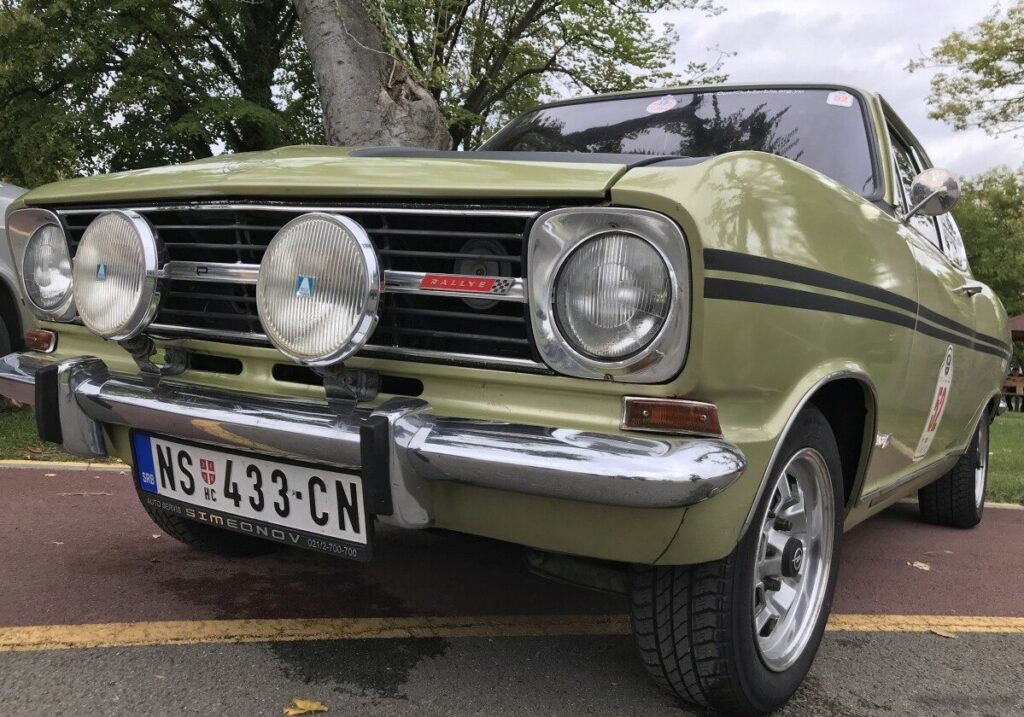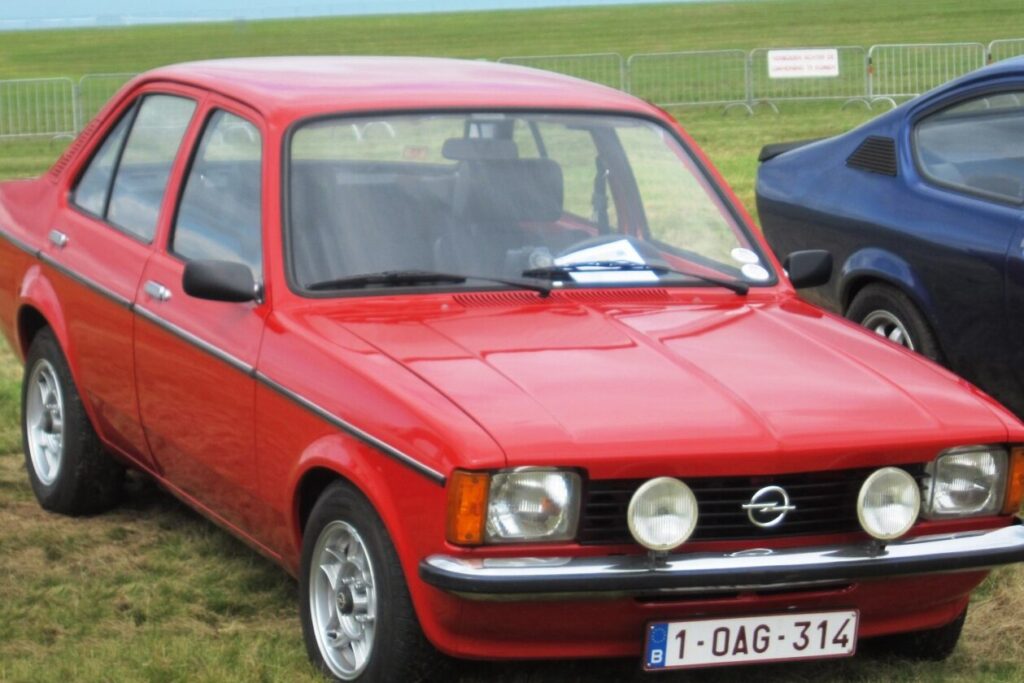
The Opel Kadett C 1.2 S Automatic, produced between 1973 and 1979, represented a relatively uncommon configuration within the broader Kadett C range. Positioned as an entry-level to mid-range offering, it provided a more accessible and comfort-oriented alternative to the more popular manual transmission variants and the higher-performance Kadett models. The Kadett C, built on the 1HX0 platform, was Opel’s mainstay family sedan during the 1970s, aiming to provide reliable and affordable transportation for the European market. This particular variant, with its modest 60 horsepower and three-speed automatic gearbox, catered to drivers prioritizing ease of use over outright performance.
Technical Specifications
| Brand | Opel |
| Model | Kadett |
| Generation | Kadett C |
| Type (Engine) | 1.2 S (60 Hp) Automatic |
| Start of production | 1973 |
| End of production | 1979 |
| Powertrain Architecture | Internal Combustion engine |
| Body type | Sedan |
| Seats | 5 |
| Doors | 4 |
| Fuel consumption (combined) | 7.9 l/100 km (29.8 US mpg, 35.8 UK mpg, 12.7 km/l) |
| Fuel Type | Petrol (Gasoline) |
| Acceleration 0 – 100 km/h | 17.5 sec |
| Acceleration 0 – 62 mph | 17.5 sec |
| Acceleration 0 – 60 mph | 16.6 sec |
| Maximum speed | 142 km/h (88.23 mph) |
| Weight-to-power ratio | 13.1 kg/Hp, 76.4 Hp/tonne |
| Weight-to-torque ratio | 8.7 kg/Nm, 114.6 Nm/tonne |
| Power | 60 Hp @ 5400 rpm |
| Power per litre | 50.2 Hp/l |
| Torque | 90 Nm (66.38 lb.-ft.) |
| Engine layout | Front, Longitudinal |
| Engine Model/Code | 12S |
| Engine displacement | 1196 cm3 (72.98 cu. in.) |
| Number of cylinders | 4 |
| Engine configuration | Inline |
| Cylinder Bore | 79 mm (3.11 in.) |
| Piston Stroke | 61 mm (2.4 in.) |
| Compression ratio | 9:1 |
| Number of valves per cylinder | 2 |
| Fuel injection system | Carburettor |
| Engine aspiration | Naturally aspirated engine |
| Engine oil capacity | 2.8 l (2.96 US qt | 2.46 UK qt) |
| Coolant | 4.7 l (4.97 US qt | 4.14 UK qt) |
| Kerb Weight | 785 kg (1730.63 lbs.) |
| Max. weight | 1205 kg (2656.57 lbs.) |
| Max load | 420 kg (925.94 lbs.) |
| Trunk (boot) space – minimum | 420 l (14.83 cu. ft.) |
| Fuel tank capacity | 43 l (11.36 US gal | 9.46 UK gal) |
| Max. roof load | 60 kg (132.28 lbs.) |
| Permitted trailer load with brakes (12%) | 800 kg (1763.7 lbs.) |
| Permitted trailer load without brakes | 430 kg (947.99 lbs.) |
| Length | 4124 mm (162.36 in.) |
| Width | 1580 mm (62.2 in.) |
| Height | 1375 mm (54.13 in.) |
| Wheelbase | 2395 mm (94.29 in.) |
| Front track | 1300 mm (51.18 in.) |
| Rear (Back) track | 1299 mm (51.14 in.) |
| Minimum turning circle | 9.2 m (30.18 ft.) |
| Drivetrain Architecture | Rear wheel drive |
| Number of gears and type of gearbox | 3 gears, automatic transmission |
| Front brakes | Drum |
| Rear brakes | Drum |
| Tires size | 155 SR13 |
| Wheel rims size | 13 |
Powertrain & Engine Architecture
The heart of the Kadett C 1.2 S Automatic was the 1196cc (72.98 cubic inch) inline-four cylinder engine, designated the 12S. This engine featured a relatively simple design, utilizing a single overhead camshaft and two valves per cylinder. Fuel delivery was managed by a carburetor, a common feature for vehicles of this era. The 12S engine produced 60 horsepower at 5400 rpm and 90 Nm (66.38 lb-ft) of torque. The engine was mounted longitudinally in the front of the vehicle, driving the rear wheels. The three-speed automatic transmission was a crucial component of this variant, offering a smoother, albeit slower, driving experience compared to the available four-speed manual gearbox. The automatic transmission was not particularly advanced, lacking features like overdrive or electronic control, but it provided a level of convenience that appealed to a specific segment of buyers.
Driving Characteristics
The Kadett C 1.2 S Automatic was not known for its blistering performance. Acceleration from 0 to 60 mph took approximately 16.6 seconds, and its top speed was around 88.23 mph. The automatic transmission, while convenient, significantly impacted performance, resulting in slower acceleration and a less engaging driving experience compared to the manual versions. The gear ratios were optimized for fuel economy and smooth cruising rather than spirited driving. In real-world conditions, the car felt adequate for city driving and highway cruising, but struggled with overtaking maneuvers or climbing steep hills. The rear-wheel drive configuration provided predictable handling, but the relatively narrow tires and basic suspension setup limited grip.
Equipment & Trim Levels
The 1.2 S Automatic trim level typically included basic features such as cloth upholstery, a simple dashboard layout, and standard bumpers and lighting. Optional extras included a radio, upgraded interior trim, and a sunroof. The interior was functional and utilitarian, prioritizing practicality over luxury. The Kadett C 1.2 S Automatic was generally positioned as a step up from the base model, offering a degree of comfort and convenience not found in the most basic trims.
Chassis & Braking
The Kadett C featured a conventional chassis design with a separate body-on-frame construction. The suspension consisted of independent front suspension with coil springs and a rigid rear axle with leaf springs. Braking was accomplished via drum brakes on all four wheels, which were adequate for the car’s weight and performance but lacked the stopping power of disc brakes. The 1.2 S Automatic, due to its slightly higher weight compared to the base models, often benefited from a slightly thicker stabilizer bar to reduce body roll during cornering.
Market Reception & Comparison
The Kadett C 1.2 S Automatic received mixed reviews. Critics acknowledged its affordability and ease of use, but often criticized its lack of performance and somewhat dated technology. Compared to the more popular 1.6-liter and 1.9-liter Kadett variants, the 1.2 S Automatic offered significantly less power and a slower driving experience. However, it also offered better fuel economy and a lower purchase price. The 1.9 TDI (introduced later in the Kadett D generation) offered a vastly different driving experience with significantly more torque and better fuel efficiency, but at a higher cost. The 1.2 S Automatic appealed to buyers who prioritized comfort and convenience over performance and were looking for an affordable and reliable family car.
Legacy
The Opel Kadett C 1.2 S Automatic, while not a particularly sought-after variant today, holds a place in automotive history as a representative of 1970s European motoring. The 12S engine and three-speed automatic transmission proved to be reasonably reliable, although maintenance can be challenging due to the age of the vehicle and the scarcity of parts. In the used car market, these Kadetts are often found in varying states of preservation, with well-maintained examples commanding a modest premium. The Kadett C, in general, is remembered fondly for its simplicity, affordability, and durability, and the 1.2 S Automatic represents a unique and somewhat quirky chapter in its history.