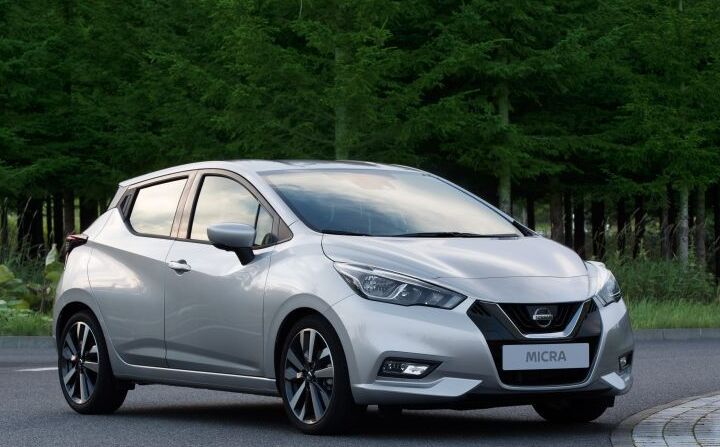
The Nissan Micra K14 1.5 dCi (90 hp) was a subcompact hatchback produced from March 2017 to August 2018. Positioned as an entry-level offering within the K14 Micra range, it aimed to provide fuel efficiency and affordability to the European market, and later, other international markets. This variant represented a key part of Nissan’s strategy to offer a diverse lineup catering to varying customer needs, particularly those prioritizing low running costs. The K14 generation Micra, designed primarily for the European market, represented a significant departure from its predecessors, focusing on a more mature and sophisticated design language.
Technical Specifications
| Brand | Nissan |
| Model | Micra |
| Generation | Micra (K14) |
| Type (Engine) | 1.5 dCi (90 Hp) |
| Start of production | March, 2017 |
| End of production | August, 2018 |
| Powertrain Architecture | Internal Combustion engine |
| Body type | Hatchback |
| Seats | 5 |
| Doors | 5 |
| Fuel consumption (urban) | 3.5-3.8 l/100 km (67.2 – 61.9 US mpg, 80.7 – 74.3 UK mpg, 28.6 – 26.3 km/l) |
| Fuel consumption (extra urban) | 3.1-3.4 l/100 km (75.9 – 69.2 US mpg, 91.1 – 83.1 UK mpg, 32.3 – 29.4 km/l) |
| Fuel consumption (combined) | 3.2-3.5 l/100 km (73.5 – 67.2 US mpg, 88.3 – 80.7 UK mpg, 31.3 – 28.6 km/l) |
| CO2 emissions | 85-92 g/km |
| Fuel Type | Diesel |
| Acceleration 0 – 100 km/h | 11.9 sec |
| Acceleration 0 – 62 mph | 11.9 sec |
| Acceleration 0 – 60 mph | 11.3 sec |
| Maximum speed | 179 km/h (111.23 mph) |
| Emission standard | Euro 6b |
| Power | 90 Hp @ 4000 rpm |
| Power per litre | 61.6 Hp/l |
| Torque | 220 Nm @ 2000 rpm (162.26 lb.-ft. @ 2000 rpm) |
| Engine layout | Front, Transverse |
| Engine Model/Code | K9K 628 |
| Engine displacement | 1461 cm3 (89.16 cu. in.) |
| Number of cylinders | 4 |
| Engine configuration | Inline |
| Cylinder Bore | 76 mm (2.99 in.) |
| Piston Stroke | 80.5 mm (3.17 in.) |
| Compression ratio | 15.5:1 |
| Number of valves per cylinder | 2 |
| Fuel injection system | Diesel Commonrail |
| Engine aspiration | Turbocharger, Intercooler |
| Engine oil capacity | 4.8 l (5.07 US qt | 4.22 UK qt) |
| Coolant capacity | 7.8 l (8.24 US qt | 6.86 UK qt) |
| Max. weight | 1590 kg (3505.35 lbs.) |
| Trunk (boot) space – minimum | 300 l (10.59 cu. ft.) |
| Trunk (boot) space – maximum | 1004 l (35.46 cu. ft.) |
| Fuel tank capacity | 41 l (10.83 US gal | 9.02 UK gal) |
| Permitted trailer load with brakes (12%) | 1170 kg (2579.41 lbs.) |
| Permitted trailer load without brakes | 555 kg (1223.57 lbs.) |
| Length | 3999 mm (157.44 in.) |
| Width | 1743 mm (68.62 in.) |
| Width including mirrors | 1935 mm (76.18 in.) |
| Height | 1455 mm (57.28 in.) |
| Wheelbase | 2525 mm (99.41 in.) |
| Front track | 1510 mm (59.45 in.) |
| Rear track | 1520 mm (59.84 in.) |
| Minimum turning circle | 10.3 m (33.79 ft.) |
| Drivetrain Architecture | Front wheel drive |
| Number of gears and type of gearbox | 5 gears, manual transmission |
| Front suspension | Independent type McPherson |
| Rear suspension | Semi-independent, coil spring |
| Front brakes | Ventilated discs |
| Rear brakes | Drum |
| Assisting systems | ABS (Anti-lock braking system) |
| Steering type | Steering rack and pinion |
| Power steering | Electric Steering |
| Tires size | 185/65 R15; 195/55 R16; 205/45 R17 |
| Wheel rims size | 6J x 15; 6J x 16; 6.5J x 17 |
INTRODUCTION
The Nissan Micra K14 1.5 dCi 90 hp, launched in 2017, was a key variant in the fourth generation of Nissan’s supermini. Built on the V-platform (also known as the 1HX0/A3 platform shared with Renault), this model aimed to appeal to buyers seeking a fuel-efficient and practical city car. The 1.5 dCi engine was a mainstay of Nissan’s small car offerings in Europe for many years, known for its economy and reliability. This particular iteration, producing 90 horsepower, was positioned as a sensible choice for everyday commuting and urban driving, offering a balance between performance and running costs. It served as a more affordable alternative to the higher-powered engine options available in the K14 range.
Powertrain & Engine Architecture
The heart of this Micra variant is the K9K 628 1.5-liter four-cylinder diesel engine. This engine is a common rail direct injection (CRDi) unit, benefiting from a turbocharger and intercooler to enhance power and efficiency. The K9K engine family has a long history, undergoing numerous revisions over the years to meet increasingly stringent emissions standards. The 90 hp version utilizes a fixed-geometry turbocharger, contributing to its responsive low-end torque. Fuel is delivered via Delphi common rail injection, operating at a high pressure of 1600 bar. The engine features two valves per cylinder and a compression ratio of 15.5:1. The 5-speed manual transmission was the standard offering, chosen for its simplicity and efficiency. While an automatic transmission was available on other K14 Micra models, it was not offered with the 1.5 dCi 90 hp engine.
Driving Characteristics
The 1.5 dCi 90 hp Micra delivers a practical, if not exhilarating, driving experience. Acceleration from 0-60 mph takes around 11.3 seconds, and top speed is approximately 111 mph. The engine’s 220 Nm of torque, available from 2000 rpm, provides adequate pulling power for everyday driving situations. The gear ratios are tuned for fuel economy, meaning the engine needs to be revved slightly to access its full potential. Compared to the higher-powered 1.0-liter petrol engine, the diesel offers significantly more torque, making it more comfortable for overtaking and carrying passengers. However, it lacks the responsiveness and refinement of the petrol unit. The manual transmission is light and easy to use, contributing to a pleasant driving experience in urban environments.
Equipment & Trim Levels
The 1.5 dCi 90 hp Micra typically came equipped with a reasonable level of standard equipment. This included air conditioning, power steering, electric front windows, and a basic audio system with USB connectivity. Safety features such as ABS, ESP (Electronic Stability Program), and multiple airbags were also standard. Higher trim levels, such as Visia+, Acenta, and Tekna, added features like alloy wheels, cruise control, a touchscreen infotainment system with navigation, and automatic climate control. Interior upholstery was typically cloth, with a functional and durable design. Optional extras included metallic paint, parking sensors, and a rear-view camera.
Chassis & Braking
The K14 Micra utilizes a front-wheel-drive layout with an independent McPherson strut suspension at the front and a semi-independent torsion beam suspension at the rear. This setup provides a comfortable ride quality, well-suited for city driving. The front brakes are ventilated discs, while the rear brakes are drums. This configuration was chosen to keep costs down and maintain acceptable braking performance for the vehicle’s weight class. Electric power steering provides light and precise steering feel. The suspension is tuned for comfort rather than sporty handling, prioritizing ride quality over cornering agility.
Market Reception & Comparison
The Nissan Micra 1.5 dCi 90 hp was generally well-received by critics for its fuel efficiency and affordability. It was praised for its low running costs and practicality, making it an attractive option for budget-conscious buyers. However, some reviewers noted that the engine could be noisy and lacked the refinement of some competitors. Compared to the 1.0-liter petrol version, the diesel offered superior fuel economy and torque but was less responsive. Against rivals like the Volkswagen Polo, Ford Fiesta, and Renault Clio, the Micra offered a competitive package, particularly in terms of value for money. Fuel economy figures of around 73.5 mpg combined were a major selling point.
Legacy
The K9K engine family has proven to be remarkably durable, and the 1.5 dCi 90 hp variant in the Micra K14 is generally considered reliable. Common issues are relatively minor, often relating to the turbocharger or fuel injectors. On the used car market, these Micras represent a good value proposition for buyers seeking a fuel-efficient and affordable city car. However, potential buyers should be aware of the potential for diesel particulate filter (DPF) issues, particularly if the vehicle has primarily been used for short journeys. Overall, the Nissan Micra K14 1.5 dCi 90 hp remains a practical and economical choice for those seeking a dependable supermini.