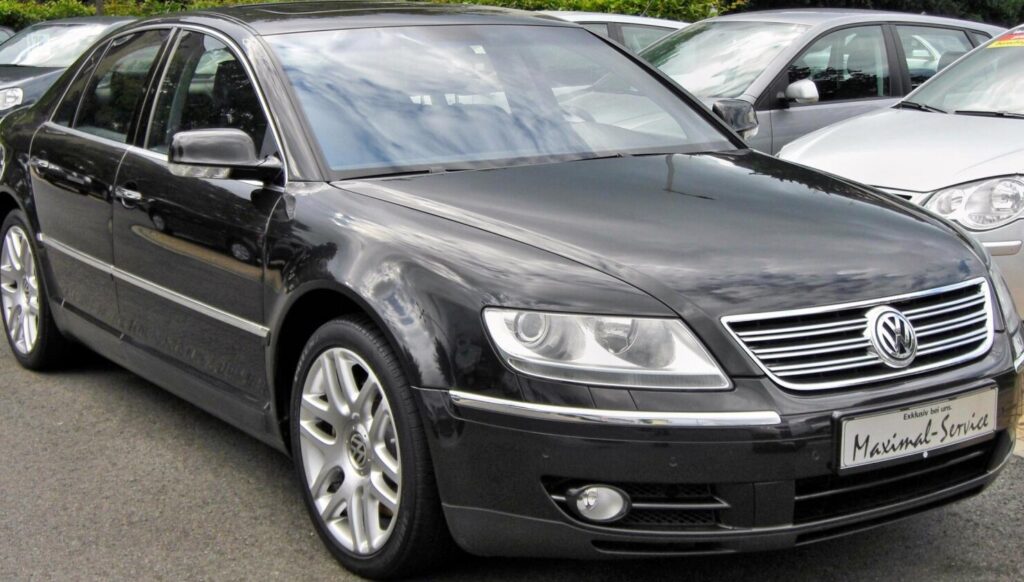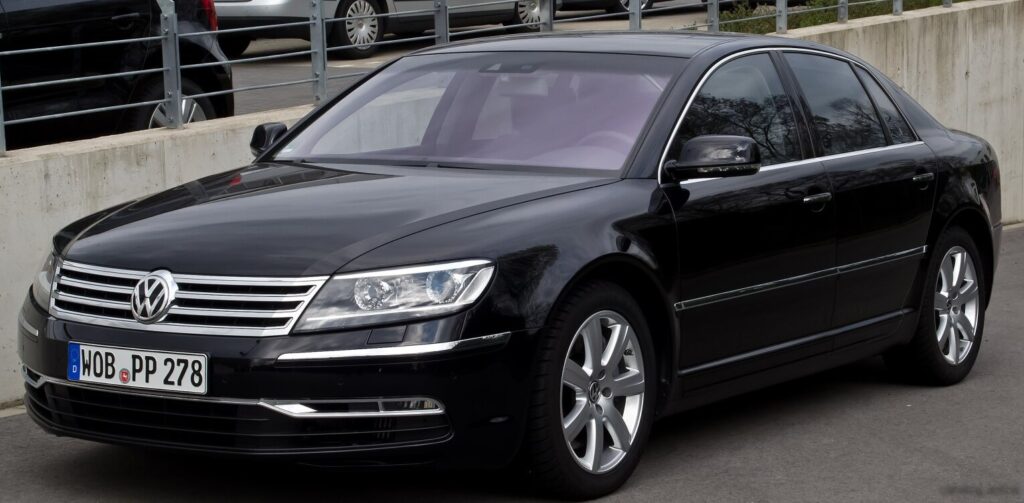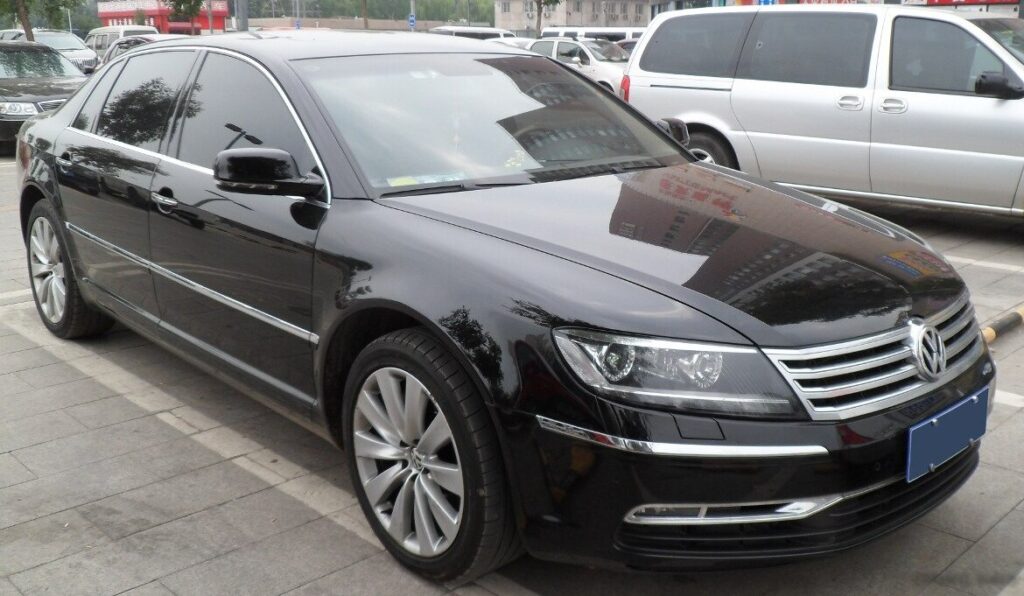
The Volkswagen Phaeton Long (facelift, 2010) 4.2 V8 4MOTION Tiptronic represents the pinnacle of Volkswagen’s luxury sedan ambitions. Produced from May 2010 to April 2015, this variant was a significant refresh of the original Phaeton, aiming to solidify its position as a competitor to established luxury brands like BMW, Mercedes-Benz, and Audi. The “Long” designation indicates an extended wheelbase, offering increased rear passenger legroom. This particular configuration, featuring the 4.2-liter V8 engine paired with a six-speed Tiptronic automatic transmission and Volkswagen’s 4MOTION all-wheel-drive system, was positioned as the flagship model within the Phaeton range, offering a blend of performance, comfort, and advanced technology.
Technical Specifications
| Brand | Volkswagen |
| Model | Phaeton |
| Generation | Phaeton Long (facelift 2010) |
| Type (Engine) | 4.2 V8 (335 Hp) 4MOTION Tiptronic |
| Start of production | May, 2010 |
| End of production | April, 2015 |
| Powertrain Architecture | Internal Combustion engine |
| Body type | Sedan |
| Seats | 5 |
| Doors | 4 |
| Fuel consumption (economy) – urban (NEDC) | 18.2 l/100 km (12.9 US mpg, 15.5 UK mpg, 5.5 km/l) |
| Fuel consumption (economy) – extra urban (NEDC) | 9.2 l/100 km (25.6 US mpg, 30.7 UK mpg, 10.9 km/l) |
| Fuel consumption (economy) – combined (NEDC) | 12.5 l/100 km (18.8 US mpg, 22.6 UK mpg, 8 km/l) |
| CO2 emissions (NEDC) | 290 g/km |
| Fuel Type | Petrol (Gasoline) |
| Acceleration 0 – 100 km/h | 6.9 sec |
| Acceleration 0 – 62 mph | 6.9 sec |
| Acceleration 0 – 60 mph | 6.6 sec |
| Maximum speed | 250 km/h (155.34 mph), Electronically limited |
| Emission standard | Euro 5 |
| Weight-to-power ratio | 6.6 kg/Hp, 152.4 Hp/tonne |
| Weight-to-torque ratio | 5.1 kg/Nm, 195.6 Nm/tonne |
| Power | 335 Hp @ 6500 rpm |
| Power per litre | 80.3 Hp/l |
| Torque | 430 Nm @ 3500 rpm (317.15 lb.-ft. @ 3500 rpm) |
| Engine layout | Front, Longitudinal |
| Engine Model/Code | BGH, BGJ |
| Engine displacement | 4172 cm3 (254.59 cu. in.) |
| Number of cylinders | 8 |
| Engine configuration | V-engine |
| Cylinder Bore | 84.5 mm (3.33 in.) |
| Piston Stroke | 93 mm (3.66 in.) |
| Compression ratio | 11:1 |
| Number of valves per cylinder | 5 |
| Fuel injection system | Multi-port manifold injection |
| Engine aspiration | Naturally aspirated engine |
| Valvetrain | DOHC |
| Engine oil capacity | 7.5 l (7.93 US qt | 6.6 UK qt) |
| Coolant | 9 l (9.51 US qt | 7.92 UK qt) |
| Kerb Weight | 2198 kg (4845.76 lbs.) |
| Max. weight | 2780 kg (6128.85 lbs.) |
| Max load | 582 kg (1283.09 lbs.) |
| Trunk (boot) space – minimum | 500 l (17.66 cu. ft.) |
| Fuel tank capacity | 90 l (23.78 US gal | 19.8 UK gal) |
| Max. roof load | 100 kg (220.46 lbs.) |
| Permitted trailer load with brakes (8%) | 2500 kg (5511.56 lbs.) |
| Permitted trailer load with brakes (12%) | 2400 kg (5291.09 lbs.) |
| Permitted trailer load without brakes | 750 kg (1653.47 lbs.) |
| Permitted towbar download | 100 kg (220.46 lbs.) |
| Length | 5179 mm (203.9 in.) |
| Width | 1903 mm (74.92 in.) |
| Width including mirrors | 2118 mm (83.39 in.) |
| Height | 1450 mm (57.09 in.) |
| Wheelbase | 3001 mm (118.15 in.) |
| Front track | 1630 mm (64.17 in.) |
| Rear (Back) track | 1617 mm (63.66 in.) |
| Ride height (ground clearance) | 120 mm (4.72 in.) |
| Minimum turning circle (turning diameter) | 12.5 m (41.01 ft.) |
| Front brakes | Ventilated discs, 360×34 mm |
| Rear brakes | Ventilated discs, 310×22 mm |
| Number of gears and type of gearbox | 6 gears, automatic transmission Tiptronic |
INTRODUCTION
The Volkswagen Phaeton, launched in 2002, was Volkswagen’s ambitious attempt to enter the ultra-luxury sedan segment, traditionally dominated by British and German marques. The 2010 facelift, and specifically the Long wheelbase variant with the 4.2 V8, represented a refinement of this vision. Built on the D2 platform (shared with the Audi A8), the Phaeton aimed to offer a similar level of luxury, technology, and performance, but at a slightly more accessible price point. The Long version, with its extended wheelbase, prioritized rear passenger comfort, making it a popular choice for chauffeur-driven executives and those seeking a supremely comfortable grand touring experience. This model year saw updates to the exterior styling, interior materials, and available technology, further enhancing its appeal.
Powertrain & Engine Architecture
The heart of the Phaeton Long 4.2 V8 is the BGH or BGJ engine code, a naturally aspirated 4.2-liter V8 gasoline engine. This engine utilizes a multi-port fuel injection system and a double overhead camshaft (DOHC) valvetrain with five valves per cylinder. The engine produces 335 horsepower at 6500 rpm and 430 Nm (317 lb-ft) of torque at 3500 rpm. The engine’s longitudinal mounting and the 4MOTION all-wheel-drive system contribute to balanced handling and excellent traction. The six-speed Tiptronic automatic transmission allows for both fully automatic operation and manual gear selection via steering wheel-mounted paddles or the gear selector. The Tiptronic transmission is known for its smooth shifts and responsiveness, although it isn’t as quick as some dual-clutch transmissions found in competitors.
Driving Characteristics
The 4.2 V8 engine delivers strong and smooth acceleration, propelling the Phaeton from 0 to 60 mph in approximately 6.6 seconds. While not a sports car, the Phaeton Long offers ample power for effortless highway cruising and confident overtaking. The Tiptronic transmission’s gear ratios are tuned for comfort and refinement, prioritizing smooth transitions over aggressive downshifts. Compared to the more fuel-efficient 3.6-liter V6 or the diesel variants, the V8 provides a more substantial power reserve and a more satisfying engine note. However, it comes at the cost of significantly higher fuel consumption. The 4MOTION all-wheel-drive system provides excellent stability and grip in all weather conditions, enhancing driver confidence.
Equipment & Trim Levels
The Phaeton Long 4.2 V8 came standard with a comprehensive list of luxury features, including leather upholstery, wood trim, a premium audio system, multi-zone climate control, and power-adjustable heated and ventilated front seats with massage functions. The Long wheelbase added significantly more rear legroom and often included features like rear seat entertainment systems and individual climate controls for rear passengers. Optional extras included adaptive cruise control, a rearview camera, and various customization options for interior materials and finishes. The Phaeton was designed to be highly customizable, allowing buyers to tailor the vehicle to their specific preferences.
Chassis & Braking
The Phaeton Long features a sophisticated chassis with a double wishbone front suspension and an independent trapezoidal lever rear suspension, both incorporating air suspension for a smooth and comfortable ride. The air suspension system automatically adjusts ride height and damping based on road conditions and driving style. The braking system consists of ventilated discs on all four wheels, providing ample stopping power. Anti-lock brakes (ABS) and electronic stability control (ESC) are standard features, enhancing safety and control. Stabilizer bars are fitted to both the front and rear axles to reduce body roll during cornering.
Market Reception & Comparison
The Phaeton, despite its quality and features, struggled to gain widespread acceptance in the luxury car market. Critics praised its build quality, ride comfort, and technology, but often questioned its brand image and value proposition. Compared to the V6 and TDI models, the 4.2 V8 offered superior performance but suffered from significantly higher fuel consumption and a higher price tag. The V8 was aimed at buyers who prioritized performance and refinement above all else. Fuel economy was a significant drawback, averaging around 18.8 US mpg in combined driving, compared to the 22-26 mpg achieved by the diesel variants.
Legacy
The Volkswagen Phaeton, while not a commercial success, remains a fascinating and ambitious project. The 4.2 V8 variant, in particular, is appreciated by enthusiasts for its smooth power delivery and luxurious appointments. Today, well-maintained Phaetons are becoming increasingly collectible, offering a unique and relatively affordable entry point into the world of high-end luxury sedans. The powertrain, while complex, has proven to be reasonably reliable with proper maintenance. However, the cost of repairs can be substantial due to the vehicle’s sophisticated technology and the limited availability of parts. The Phaeton stands as a testament to Volkswagen’s engineering prowess and its desire to compete with the best in the world.