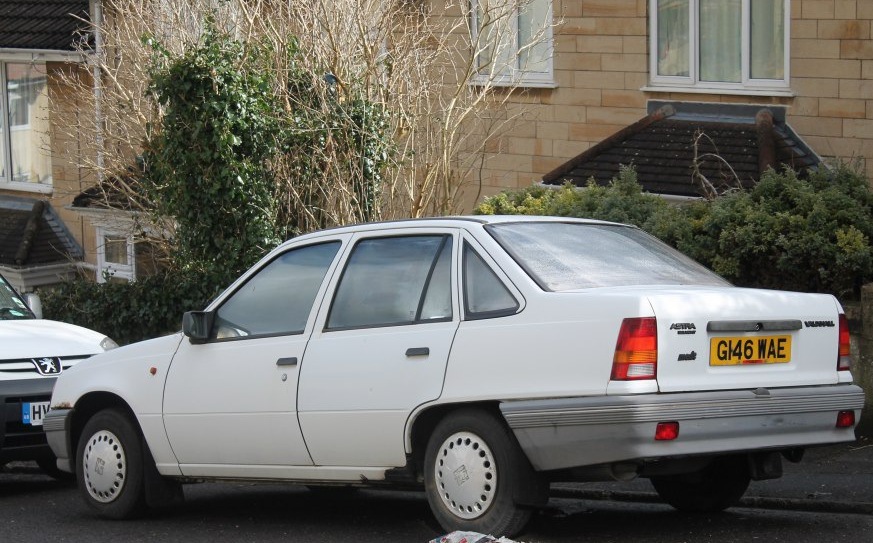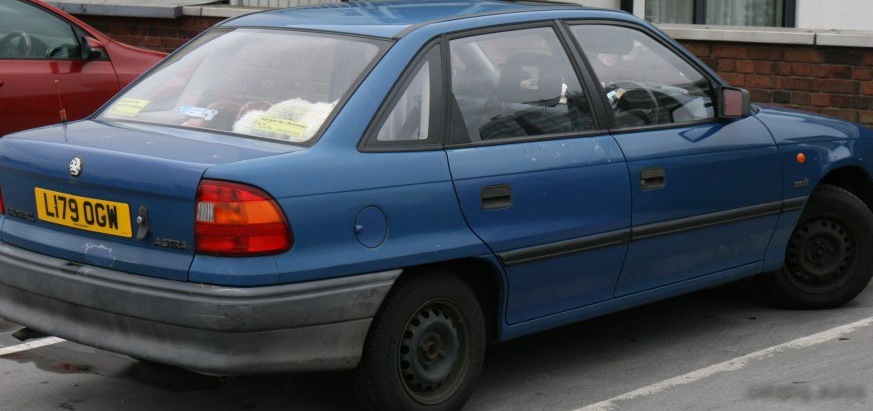
The Vauxhall Astra Mk III 1.7 D, produced between 1991 and 1992, represented the entry-level diesel offering within the Mk III Astra range (1991-1998). Positioned as a fuel-efficient and economical option, it catered to buyers prioritizing practicality and low running costs over outright performance. This variant was primarily sold in the United Kingdom and other European markets, where diesel engines were gaining popularity for their fuel economy. It utilized the existing Mk III Astra platform, known internally as the G platform, which was shared with the Opel Astra and, later, other General Motors vehicles. The 1.7 D served as a budget-friendly alternative to the gasoline-powered Astras and the more powerful 2.0-liter diesel.
Technical Specifications
| Brand | Vauxhall |
| Model | Astra |
| Generation | Astra Mk III |
| Type (Engine) | 1.7 D (57 Hp) |
| Start of production | 1991 |
| End of production | 1992 |
| Powertrain Architecture | Internal Combustion engine |
| Body type | Sedan |
| Seats | 5 |
| Doors | 4 |
| Fuel consumption (urban) | 6.7 l/100 km (35.1 US mpg, 42.2 UK mpg, 14.9 km/l) |
| Fuel consumption (extra urban) | 4.2 l/100 km (56 US mpg, 67.3 UK mpg, 23.8 km/l) |
| Fuel consumption (combined) | 6 l/100 km (39.2 US mpg, 47.1 UK mpg, 16.7 km/l) |
| Fuel Type | Diesel |
| Acceleration 0 – 100 km/h | 18.5 sec |
| Acceleration 0 – 62 mph | 18.5 sec |
| Acceleration 0 – 60 mph | 17.6 sec |
| Maximum speed | 153 km/h (95.07 mph) |
| Weight-to-power ratio | 19.2 kg/Hp, 52.1 Hp/tonne |
| Weight-to-torque ratio | 10.4 kg/Nm, 95.9 Nm/tonne |
| Power | 57 Hp |
| Power per litre | 33.5 Hp/l |
| Torque | 105 Nm @ 2400 rpm (77.44 lb.-ft. @ 2400 rpm) |
| Engine layout | Front, Transverse |
| Engine Model/Code | 17D |
| Engine displacement | 1700 cm3 (103.74 cu. in.) |
| Number of cylinders | 4 |
| Engine configuration | Inline |
| Cylinder Bore | 82.5 mm (3.25 in.) |
| Piston Stroke | 79.5 mm (3.13 in.) |
| Compression ratio | 23:1 |
| Number of valves per cylinder | 2 |
| Fuel injection system | Precombustion chamber injection |
| Engine aspiration | Naturally aspirated engine |
| Engine oil capacity | 5 l (5.28 US qt | 4.4 UK qt) |
| Coolant capacity | 7.8 l (8.24 US qt | 6.86 UK qt) |
| Kerb Weight | 1095 kg (2414.06 lbs.) |
| Max. weight | 1580 kg (3483.3 lbs.) |
| Max load | 485 kg (1069.24 lbs.) |
| Trunk (boot) space – minimum | 501 l (17.69 cu. ft.) |
| Trunk (boot) space – maximum | 1200 l (42.38 cu. ft.) |
| Fuel tank capacity | 52 l (13.74 US gal | 11.44 UK gal) |
| Length | 4239 mm (166.89 in.) |
| Width | 1688 mm (66.46 in.) |
| Height | 1410 mm (55.51 in.) |
| Wheelbase | 2520 mm (99.21 in.) |
| Front track | 1420 mm (55.91 in.) |
| Rear track | 1420 mm (55.91 in.) |
| Ride height (ground clearance) | 135 mm (5.31 in.) |
| Drivetrain Architecture | The Internal combustion engine (ICE) drives the front wheels of the vehicle. |
| Drive wheel | Front wheel drive |
| Number of gears and type of gearbox | 5 gears, manual transmission |
| Front brakes | Ventilated discs |
| Rear brakes | Drum |
| Tires size | 175/70 R13 |
| Wheel rims size | 13 |
Powertrain & Engine Architecture
The Astra Mk III 1.7 D was powered by the 17D engine, a naturally aspirated, inline-four cylinder diesel engine. This engine, a mainstay of Vauxhall/Opel’s diesel offerings during the period, utilized a precombustion chamber injection system. This system, common in older diesel engines, involved injecting fuel into a small precombustion chamber within the cylinder head, where it was partially ignited before entering the main combustion chamber. This aided in cold starting and reduced engine noise. The engine produced 57 horsepower and 105 Nm (77.44 lb-ft) of torque at 2400 rpm. The 17D engine featured a relatively low compression ratio of 23:1 and two valves per cylinder. The engine was transversely mounted at the front of the vehicle, driving the front wheels.
Driving Characteristics
The 1.7 D Astra was not known for its performance. With only 57 horsepower, acceleration was slow, taking approximately 18.5 seconds to reach 62 mph. The five-speed manual transmission was geared to maximize fuel economy rather than provide spirited acceleration. The power delivery was characterized by a narrow powerband, requiring frequent gear changes to maintain momentum, especially when climbing hills or overtaking. Compared to the gasoline-powered Astras, the 1.7 D offered significantly less power, but it provided substantially better fuel economy. Compared to the later 2.0-liter diesel variants, the 1.7 D felt noticeably underpowered, but it was also lighter and more nimble in city driving.
Equipment & Trim Levels
The 1.7 D Astra typically came with a basic level of equipment. Standard features generally included cloth upholstery, a basic instrument cluster, and manual windows and door locks. Power steering was often an optional extra. Trim levels were relatively limited for this variant, focusing on providing a functional and affordable vehicle. Optional extras could include a radio/cassette player, upgraded interior trim, and central locking. The interior was typically finished in dark, durable materials designed for practicality rather than luxury.
Chassis & Braking
The Astra Mk III 1.7 D utilized a MacPherson strut front suspension and a torsion beam rear suspension. The rear brakes were drum brakes, while the front brakes were ventilated discs. This configuration was typical for vehicles in this weight class and price range during the early 1990s. The suspension was tuned for comfort and ride quality, prioritizing a smooth ride over sporty handling. Stabilizer bars were often fitted to improve body roll control, but their thickness varied depending on the specific trim level.
Market Reception & Comparison
The Astra Mk III 1.7 D was generally well-received as a practical and economical vehicle. Critics praised its fuel efficiency and low running costs, but noted its lack of performance. It was often compared to other small diesel cars of the time, such as the Ford Escort Diesel and the Volkswagen Golf Diesel. The Astra 1.7 D typically offered a competitive price point and a spacious interior, making it an attractive option for budget-conscious buyers. Fuel economy figures of around 39.2 US mpg combined were considered excellent for the time.
Legacy
The 17D engine, while not known for its refinement or power, proved to be relatively durable and reliable. Astra Mk III 1.7 D models are now considered classic cars, and well-maintained examples are sought after by enthusiasts looking for a simple and economical vehicle. The powertrain is known for its longevity, but age-related issues such as injector wear and seal deterioration are common. Parts availability can be a challenge, but many components are still available through specialist suppliers. Today, the 1.7 D Astra represents a snapshot of early 1990s automotive engineering, prioritizing fuel efficiency and practicality over performance and luxury.