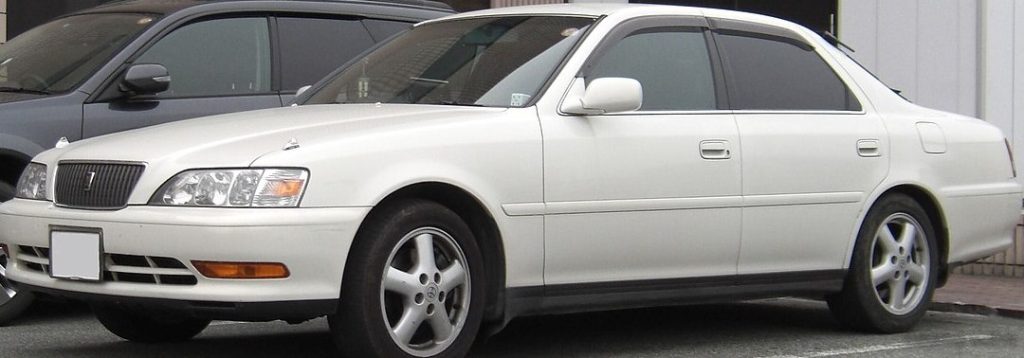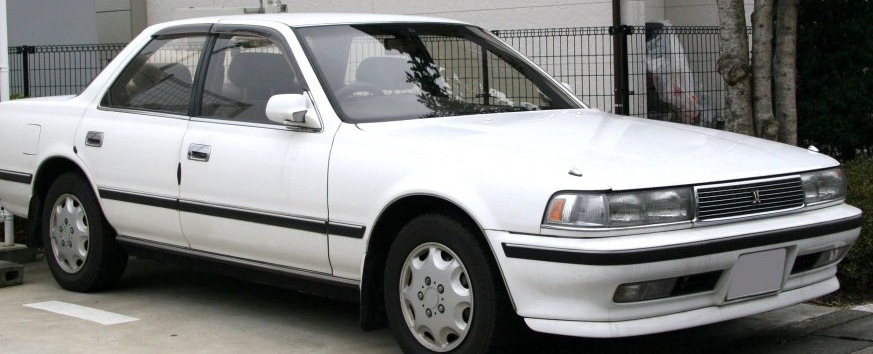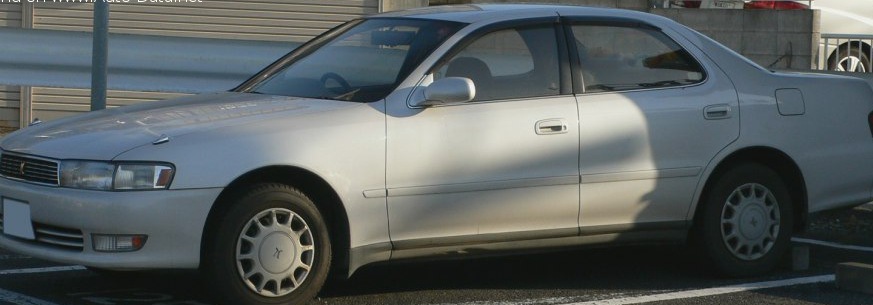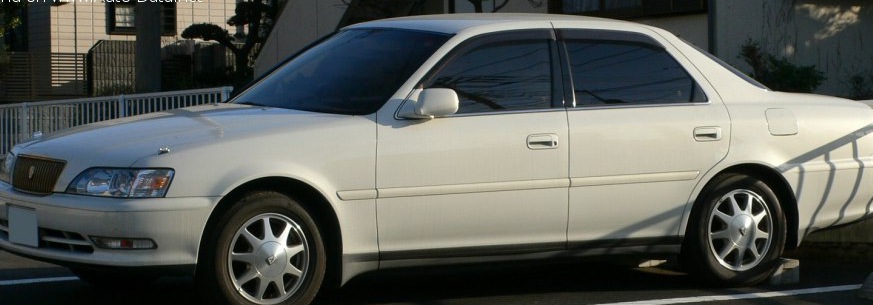
The Toyota Cresta GX100 2.0 i, produced between 1996 and 2001, represents a significant iteration of Toyota’s long-running Cresta lineage. Positioned as a mid-range offering within the GX100 generation, this variant catered to buyers seeking a balance between performance, comfort, and affordability in the Japanese domestic market. The GX100 Cresta, and specifically the 2.0 i model, was a popular choice for those desiring a stylish, rear-wheel-drive sedan with a relatively modern engine. It competed directly with other Japanese sedans like the Nissan Cefiro and Mazda Sentia, offering a blend of practicality and a sporty driving experience.
Technical Specifications
| Brand | Toyota |
| Model | Cresta |
| Generation | Cresta (GX100) |
| Type (Engine) | 2.0 i (140 Hp) |
| Start of production | 1996 |
| End of production | 2001 |
| Powertrain Architecture | Internal Combustion engine |
| Body type | Sedan |
| Seats | 5 |
| Doors | 4 |
| Fuel consumption (urban) | 9.6 l/100 km (24.5 US mpg) |
| Fuel consumption (extra urban) | 5.2 l/100 km (45.2 US mpg) |
| Fuel Type | Petrol (Gasoline) |
| Power | 140 Hp @ 6000 rpm |
| Torque | 186 Nm @ 4400 rpm (137.19 lb.-ft. @ 4400 rpm) |
| Engine layout | Front, Longitudinal |
| Engine Model/Code | 1G-FE |
| Engine displacement | 1998 cm3 (121.93 cu. in.) |
| Number of cylinders | 4 |
| Engine configuration | Inline |
| Cylinder Bore | 86 mm (3.39 in.) |
| Piston Stroke | 86 mm (3.39 in.) |
| Compression ratio | 9.5:1 |
| Number of valves per cylinder | 4 |
| Fuel injection system | Multi-port manifold injection |
| Engine aspiration | Naturally aspirated engine |
| Engine oil capacity | 4 l (4.23 US qt | 3.52 UK qt) |
| Coolant capacity | 6.5 l (6.87 US qt | 5.72 UK qt) |
| Max. weight | 1330 kg (2932.15 lbs.) |
| Fuel tank capacity | 70 l (18.49 US gal | 15.4 UK gal) |
| Length | 4750 mm (187.01 in.) |
| Width | 1755 mm (69.09 in.) |
| Height | 1420 mm (55.91 in.) |
| Wheelbase | 2730 mm (107.48 in.) |
| Front track | 1485 mm (58.46 in.) |
| Rear track | 1495 mm (58.86 in.) |
| Minimum turning circle | 10.2 m (33.46 ft.) |
| Drivetrain | Rear wheel drive |
| Front brakes | Ventilated discs |
| Rear brakes | Disc |
| Tires size | 195/65 R15 |
| Wheel rims size | 6JJ x 15 |
Powertrain & Engine Architecture
The heart of the Cresta 2.0 i is the 1G-FE engine, a 2.0-liter inline-four cylinder powerplant. This engine is a naturally aspirated design, utilizing multi-port fuel injection for precise fuel delivery. The 1G-FE is known for its relative reliability and smooth operation. It features a single overhead camshaft (SOHC) valvetrain with four valves per cylinder, contributing to its respectable power output for its displacement. The engine produces 140 horsepower at 6000 rpm and 186 Nm (137.19 lb-ft) of torque at 4400 rpm. The engine’s longitudinal mounting and rear-wheel-drive configuration were a hallmark of the Cresta, providing a traditional driving experience. The transmission paired with the 1G-FE in this variant is a four-speed automatic. While not offering the most modern gear ratios, it was designed for smooth, comfortable shifts and suited the car’s intended purpose as a comfortable cruiser.
Driving Characteristics
The Cresta 2.0 i with the automatic transmission delivers a comfortable and predictable driving experience. Acceleration is adequate for everyday driving, but it doesn’t offer the briskness of the turbocharged or higher-displacement variants. The four-speed automatic transmission, while smooth, can feel somewhat dated compared to more modern transmissions with more gears. The gear ratios are tuned for fuel efficiency and ease of driving rather than outright performance. Compared to the manual transmission versions of the 2.0 i, the automatic sacrifices some responsiveness, but gains in convenience. Against the more powerful 2.4-liter or turbocharged models, the 2.0 i automatic feels noticeably slower, but it offers a more relaxed and fuel-efficient driving experience.
Equipment & Trim Levels
The 2.0 i trim of the GX100 Cresta typically included features such as power windows, power steering, air conditioning, and a basic audio system. Interior upholstery was generally cloth, with options for upgraded materials available. Dashboard configuration was fairly standard for the era, with a functional layout and clear instrumentation. Optional extras included features like a sunroof, upgraded audio systems, and alloy wheels. The 2.0 i trim was generally considered a well-equipped vehicle for its price point, offering a good balance of features and value.
Chassis & Braking
The GX100 Cresta features a traditional body-on-frame construction, contributing to its robust feel. The suspension consists of independent front suspension with MacPherson struts and a multi-link rear suspension. This setup provides a comfortable ride quality, although it’s not particularly sporty. Braking duties are handled by ventilated discs on the front wheels and solid discs on the rear. Anti-lock braking system (ABS) was standard, enhancing safety. The chassis and braking system were designed to handle the weight and power of the 2.0-liter engine comfortably, providing adequate stopping power and stability.
Market Reception & Comparison
The Cresta 2.0 i was well-received in the Japanese market as a practical and stylish sedan. Critics praised its comfortable ride, reliable engine, and relatively affordable price. Compared to the more expensive and powerful variants, the 2.0 i offered a more accessible entry point into the Cresta lineup. Fuel economy was a strong point, with the 2.0 i achieving around 9.6 l/100 km in urban driving and 5.2 l/100 km on the highway. Reliability was also a key strength, with the 1G-FE engine proving to be a durable and long-lasting powerplant.
Legacy
The Toyota Cresta GX100 2.0 i remains a popular choice among enthusiasts and used car buyers in Japan and increasingly, in export markets. The 1G-FE engine is known for its longevity and relatively simple maintenance requirements. Parts availability is generally good, although some components may be becoming increasingly difficult to find. Today, these cars are often sought after for their classic styling, rear-wheel-drive configuration, and overall reliability. While not a high-performance machine, the Cresta 2.0 i offers a comfortable, dependable, and enjoyable driving experience, making it a worthy representative of Toyota’s enduring legacy in the sedan market.