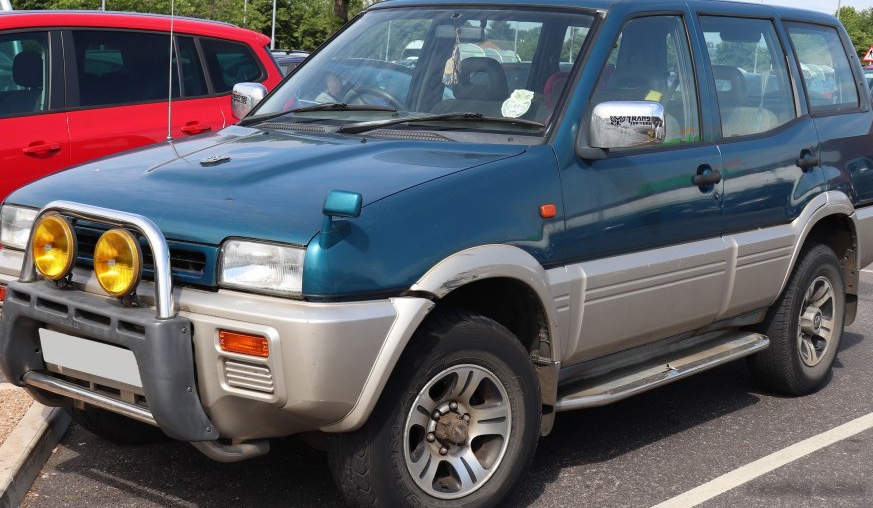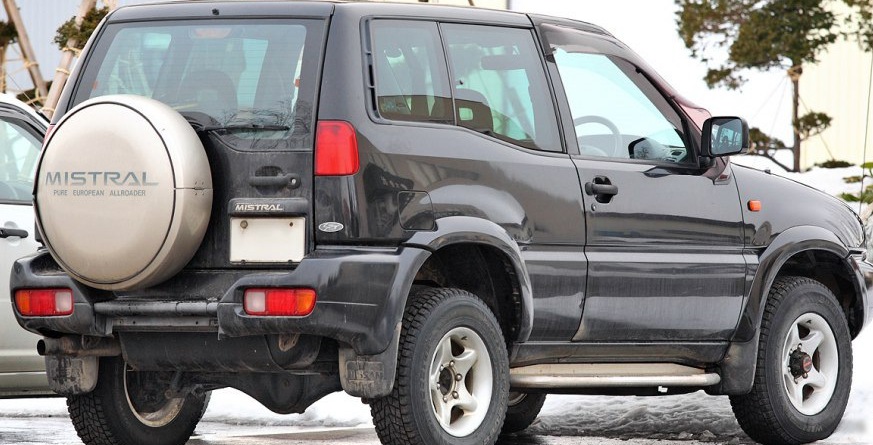
The Nissan Mistral, designated as the R20 series, was a compact SUV produced between 1995 and 1999. Positioned as a more rugged alternative to traditional station wagons, the Mistral was primarily marketed in Europe and Japan. It was essentially a rebadged and slightly modified version of the Mitsubishi Pajero Pinin, a result of the ongoing partnership between Nissan and Mitsubishi. The 2.7 TDi variant, producing 100 horsepower, represented a mid-range offering within the Mistral lineup, aimed at buyers seeking a balance between fuel efficiency and capability. It sat below the more powerful petrol engines and above the base-level diesel options.
Technical Specifications
| Brand | Nissan |
| Model | Mistral |
| Generation | Mistral (R20) 3D |
| Type (Engine) | 2.7 TDi (100 Hp) |
| Start of production | 1995 |
| End of production | 1999 |
| Powertrain Architecture | Internal Combustion engine |
| Body type | SUV |
| Seats | 5 |
| Doors | 3 |
| Fuel consumption (combined) | 10.9 l/100 km |
| Fuel consumption (US mpg) | 21.6 US mpg |
| Fuel consumption (UK mpg) | 25.9 UK mpg |
| Fuel consumption (km/l) | 9.2 km/l |
| Fuel Type | Diesel |
| Acceleration 0 – 100 km/h | 19 sec |
| Acceleration 0 – 62 mph | 19 sec |
| Acceleration 0 – 60 mph | 18.1 sec |
| Maximum speed | 145 km/h (90.1 mph) |
| Weight-to-power ratio | 17.3 kg/Hp |
| Weight-to-torque ratio | 7.8 kg/Nm |
| Power | 100 Hp @ 4000 rpm |
| Power per litre | 37.6 Hp/l |
| Torque | 221 Nm @ 2200 rpm (163 lb.-ft. @ 2200 rpm) |
| Engine layout | Front, Longitudinal |
| Engine displacement | 2663 cm3 (162.51 cu. in.) |
| Number of cylinders | 4 |
| Engine configuration | Inline |
| Cylinder Bore | 96 mm (3.78 in.) |
| Piston Stroke | 92 mm (3.62 in.) |
| Compression ratio | 21.9:1 |
| Number of valves per cylinder | 2 |
| Fuel injection system | Precombustion chamber injection |
| Engine aspiration | Turbocharger |
| Kerb Weight | 1730 kg (3814 lbs.) |
| Max. weight | 2300 kg (5070.63 lbs.) |
| Max load | 570 kg (1256.63 lbs.) |
| Trunk (boot) space – minimum | 335 l (11.83 cu. ft.) |
| Trunk (boot) space – maximum | 1650 l (58.27 cu. ft.) |
| Fuel tank capacity | 72 l (19.02 US gal | 15.84 UK gal) |
| Length | 4105 mm (161.61 in.) |
| Width | 1735 mm (68.31 in.) |
| Height | 1805 mm (71.06 in.) |
| Wheelbase | 2450 mm (96.46 in.) |
| Front track | 1455 mm (57.28 in.) |
| Rear (Back) track | 1430 mm (56.3 in.) |
| Drive wheel | All wheel drive (4×4) |
| Number of gears and type of gearbox | 5 gears, manual transmission |
| Front suspension | Double wishbone |
| Rear suspension | Coil spring |
| Front brakes | Ventilated discs |
| Rear brakes | Drum |
| Assisting systems | ABS (Anti-lock braking system) |
| Power steering | Hydraulic Steering |
| Tires size | 215/85 R15 S |
Powertrain & Engine Architecture
The heart of the Mistral 2.7 TDi was a 2.7-liter inline-four cylinder diesel engine. This engine, while based on Mitsubishi designs, was adapted by Nissan for use in the Mistral. It utilized a precombustion chamber injection system, a common technology for diesel engines of that era, which improved combustion efficiency and reduced noise compared to direct injection systems. The engine was turbocharged, boosting power output to 100 horsepower and 221 Nm (163 lb-ft) of torque. The five-speed manual transmission was the only gearbox option available with this engine, providing a relatively direct connection to the drivetrain. The engine was longitudinally mounted, contributing to the vehicle’s all-wheel-drive configuration.
Driving Characteristics
The 2.7 TDi Mistral offered a practical, if not particularly exciting, driving experience. With 100 horsepower propelling a vehicle weighing over 1700 kg, acceleration was leisurely, taking approximately 19 seconds to reach 100 km/h (62 mph). The turbocharger helped to mitigate some of the power deficit, providing a noticeable boost in torque at lower engine speeds. However, the engine lacked the responsiveness of more modern diesel engines. The five-speed manual transmission was well-matched to the engine’s characteristics, allowing drivers to keep the engine in its optimal power band. Compared to the petrol-powered Mistrals, the 2.7 TDi prioritized fuel economy and low-end torque over outright performance. It was a better choice for those who frequently towed or drove on challenging terrain.
Equipment & Trim Levels
The Mistral 2.7 TDi typically came with a fairly basic level of equipment, reflecting its position as a mid-range model. Standard features generally included power steering, ABS brakes, and a relatively simple interior with cloth upholstery. Air conditioning was often an optional extra, as were features like power windows and central locking. The dashboard layout was functional and straightforward, prioritizing usability over aesthetics. Higher trim levels, if available, might have added features like alloy wheels, upgraded audio systems, and more luxurious interior trim.
Chassis & Braking
The Mistral’s chassis was designed to provide a comfortable ride and reasonable off-road capability. It featured a double wishbone suspension setup at the front and a coil spring suspension at the rear. The all-wheel-drive system provided enhanced traction in slippery conditions. Braking duties were handled by ventilated discs at the front and drum brakes at the rear. While adequate for everyday driving, the braking system lacked the stopping power of more modern vehicles. The suspension was tuned for comfort, resulting in a slightly soft and body-roll-prone handling experience.
Market Reception & Comparison
The Nissan Mistral 2.7 TDi was generally well-received as a practical and affordable SUV. Critics praised its ruggedness, spacious interior, and fuel efficiency. However, its relatively slow acceleration and basic interior were often cited as drawbacks. Compared to other SUVs in its class, such as the Toyota RAV4 and Honda CR-V, the Mistral offered a more utilitarian and off-road-focused experience. The 2.7 TDi variant was often seen as a good compromise between the base-level diesel engines and the more expensive petrol options. Fuel economy was a key selling point, particularly in Europe where diesel fuel was often cheaper than petrol.
Legacy
The Nissan Mistral, while not a groundbreaking vehicle, established Nissan as a player in the growing compact SUV market. The 2.7 TDi engine, while not known for its longevity or high performance, proved to be reasonably reliable with proper maintenance. Today, the Mistral 2.7 TDi is a relatively rare sight on the roads, but it has gained a following among enthusiasts who appreciate its rugged simplicity and unique styling. Parts availability can be a challenge, but the shared components with the Mitsubishi Pajero Pinin can sometimes simplify repairs. The Mistral represents a transitional period in SUV design, bridging the gap between traditional off-road vehicles and the more car-like crossovers that dominate the market today.