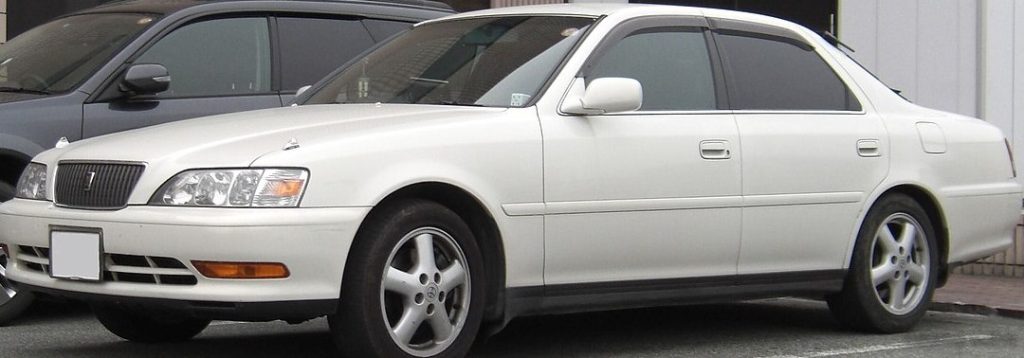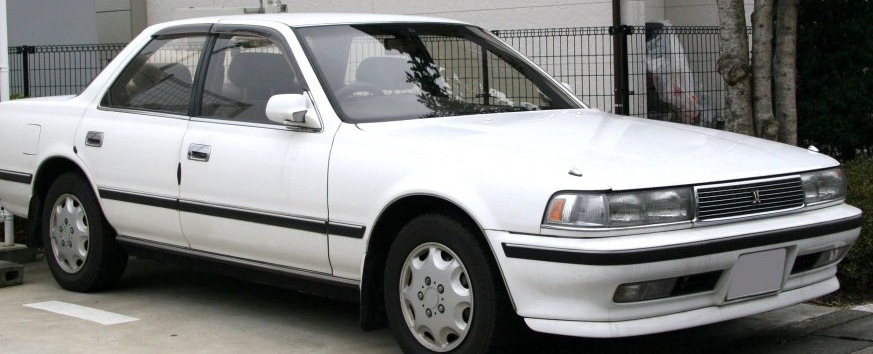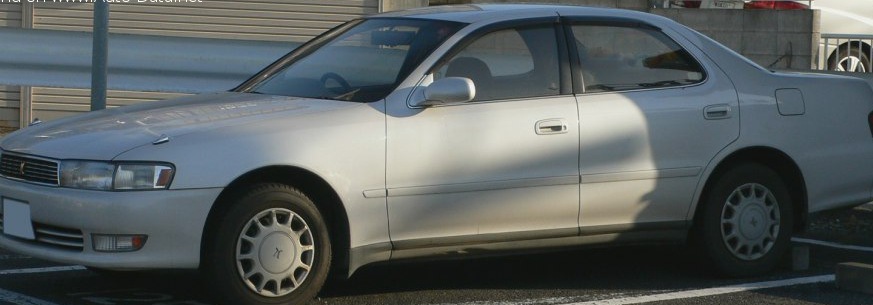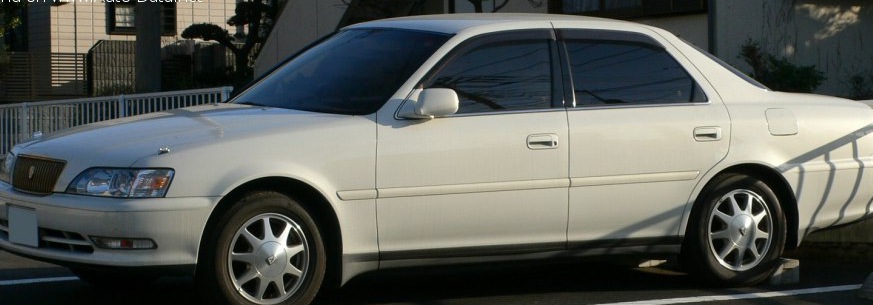
The Toyota Cresta GX100, specifically the 2.5 i V6 24V variant, represents a significant iteration in Toyota’s long-running Cresta lineage. Produced between 1996 and 2001, this generation (the tenth) of the Cresta was primarily aimed at the Japanese domestic market (JDM). It occupied a unique position, blending sporty styling with comfortable practicality, and catered to buyers seeking a step up from more mainstream sedans. The GX100 Cresta, and this 2.5L engine trim in particular, was designed to appeal to those desiring a rear-wheel-drive experience with a refined, powerful engine – a formula increasingly rare in the Japanese automotive landscape of the late 1990s. It competed with rivals like the Nissan Cefiro and Mazda Sentia, offering a compelling alternative with Toyota’s reputation for reliability.
Technical Specifications
| Brand | Toyota |
| Model | Cresta |
| Generation | Cresta (GX100) |
| Type (Engine) | 2.5 i V6 24V (200 Hp) |
| Start of production | 1996 |
| End of production | 2001 |
| Powertrain Architecture | Internal Combustion engine |
| Body type | Sedan |
| Seats | 5 |
| Doors | 4 |
| Fuel consumption (urban) | 11.6 l/100 km (20.3 US mpg) |
| Fuel consumption (extra urban) | 6.2 l/100 km (37.9 US mpg) |
| Fuel Type | Petrol (Gasoline) |
| Power | 200 Hp @ 6000 rpm |
| Torque | 245 Nm @ 4600 rpm (180.7 lb.-ft. @ 4600 rpm) |
| Engine layout | Front, Longitudinal |
| Engine Model/Code | 1JZ-GE |
| Engine displacement | 2496 cm3 (152.32 cu. in.) |
| Number of cylinders | 6 |
| Engine configuration | V-engine |
| Cylinder Bore | 87.5 mm (3.44 in.) |
| Piston Stroke | 69.2 mm (2.72 in.) |
| Compression ratio | 10.8:1 |
| Number of valves per cylinder | 4 |
| Fuel injection system | Multi-port manifold injection |
| Engine aspiration | Naturally aspirated engine |
| Valvetrain | DOHC |
| Engine oil capacity | 5.7 l (6.02 US qt | 5.02 UK qt) |
| Coolant capacity | 6.9 l (7.29 US qt | 6.07 UK qt) |
| Max. weight | 1330 kg (2932.15 lbs.) |
| Fuel tank capacity | 70 l (18.49 US gal | 15.4 UK gal) |
| Length | 4750 mm (187.01 in.) |
| Width | 1755 mm (69.09 in.) |
| Height | 1420 mm (55.91 in.) |
| Wheelbase | 2730 mm (107.48 in.) |
| Front track | 1485 mm (58.46 in.) |
| Rear track | 1495 mm (58.86 in.) |
| Minimum turning circle | 10.2 m (33.46 ft.) |
| Drivetrain | Rear wheel drive |
| Front brakes | Ventilated discs |
| Rear brakes | Disc |
| Tires size | 195/65 R15 |
| Wheel rims size | 6JJ x 15 |
Powertrain & Engine Architecture
The heart of the Cresta 2.5 i V6 24V is the 1JZ-GE engine. This 2.5-liter, inline-six cylinder engine is a naturally aspirated powerplant known for its smoothness and relative durability. The ‘GE’ designation signifies Toyota’s electronically fuel-injected (EFI) system. The 1JZ-GE utilizes a multi-port fuel injection system, delivering fuel directly to each intake port for optimized combustion. It features a double overhead camshaft (DOHC) valvetrain, operating 24 valves (four per cylinder) to enhance volumetric efficiency and power output. The engine’s 10.8:1 compression ratio contributes to its respectable 200 horsepower at 6000 rpm and 245 Nm (180.7 lb-ft) of torque at 4600 rpm. The engine is longitudinally mounted, driving the rear wheels. While a manual transmission was available on some Cresta trims, the 2.5 i V6 was most commonly paired with a four-speed automatic transmission. This automatic was chosen for its smooth operation and suitability for the Cresta’s intended role as a comfortable, yet capable, grand tourer.
Driving Characteristics
The 2.5 i V6 automatic combination delivers a refined driving experience. The four-speed automatic, while not offering the most aggressive gear ratios, provides smooth and predictable shifts. Acceleration is brisk, but not overtly sporty. The engine’s torque curve is relatively flat, providing adequate power for everyday driving and highway cruising. Compared to the turbocharged variants (like those utilizing the 1JZ-GTE), the 1JZ-GE lacks the immediate punch, but offers a more linear and predictable power delivery. Against the manual transmission versions, the automatic sacrifices some driver engagement and responsiveness, but gains in ease of use and comfort. The rear-wheel-drive configuration contributes to balanced handling, although the Cresta isn’t a dedicated sports car. It feels planted and stable in corners, offering a confident driving experience.
Equipment & Trim Levels
The 2.5 i V6 trim generally represented a mid-range offering within the GX100 Cresta lineup. Standard equipment typically included power windows, power locks, air conditioning, and a decent audio system. Interior upholstery was usually cloth, although leather options were available as upgrades. The dashboard layout was functional and well-designed, featuring clear instrumentation. Optional extras could include a sunroof, upgraded audio systems, and various cosmetic enhancements. The overall interior ambiance was geared towards comfort and practicality, rather than outright luxury.
Chassis & Braking
The GX100 Cresta utilized a traditional body-on-frame construction, contributing to its robust feel. The suspension consisted of independent front suspension with MacPherson struts and a multi-link rear suspension. This setup provided a comfortable ride while maintaining reasonable handling characteristics. Braking duties were handled by ventilated discs on the front wheels and solid discs on the rear. Anti-lock braking system (ABS) was standard, enhancing safety and control during emergency braking situations. The chassis was tuned to prioritize ride comfort over aggressive handling, making it a pleasant vehicle for long journeys.
Market Reception & Comparison
The Cresta 2.5 i V6 was generally well-received in the Japanese market. Critics praised its smooth engine, comfortable ride, and overall refinement. However, some noted that the automatic transmission could feel slightly dated compared to newer designs. Fuel economy was considered reasonable for a vehicle of its size and engine displacement. Compared to the turbocharged 1JZ-GTE variants, the 1JZ-GE offered better fuel efficiency and lower maintenance costs, but at the expense of outright performance. The 1.8L and 2.0L naturally aspirated models were positioned as more affordable entry-level options, while the 2.5 i V6 struck a balance between performance and practicality.
Legacy
The Toyota Cresta GX100 2.5 i V6 24V has developed a cult following among JDM enthusiasts. The 1JZ-GE engine is renowned for its reliability and potential for modification. While not as sought-after as the turbocharged 1JZ-GTE, the 1JZ-GE remains a popular choice for engine swaps and rebuilds. Today, well-maintained examples of the GX100 Cresta are becoming increasingly rare and collectible. The combination of rear-wheel drive, a smooth inline-six engine, and Toyota’s reputation for durability ensures that this variant will continue to be appreciated by enthusiasts for years to come. Finding parts can be challenging outside of Japan, but a dedicated aftermarket supports these vehicles, ensuring their continued viability on the road.