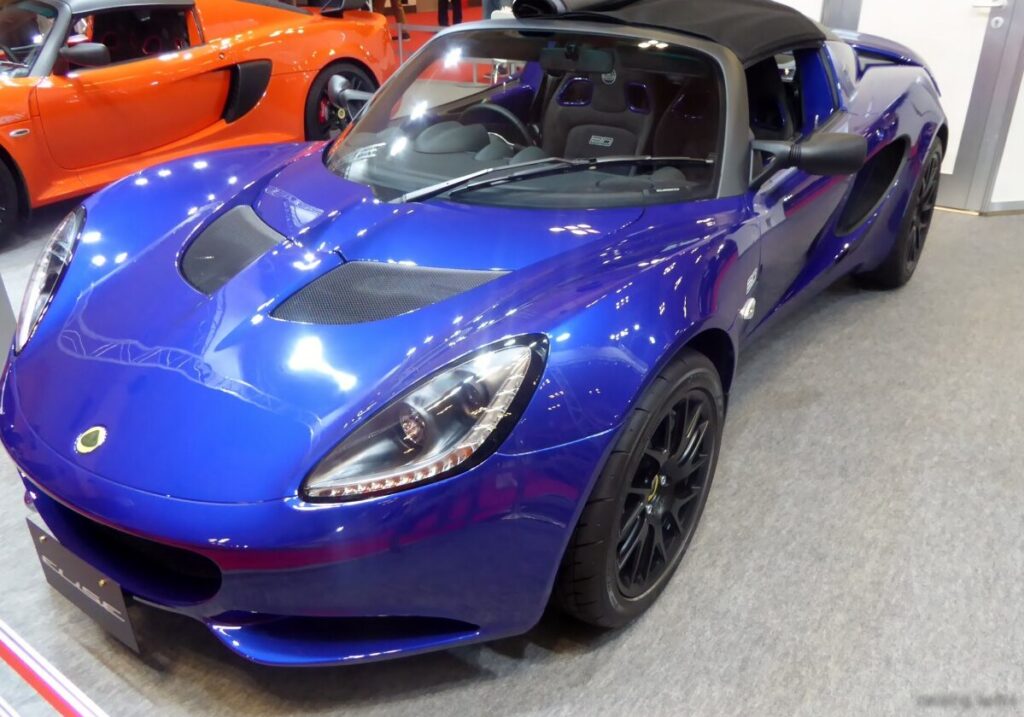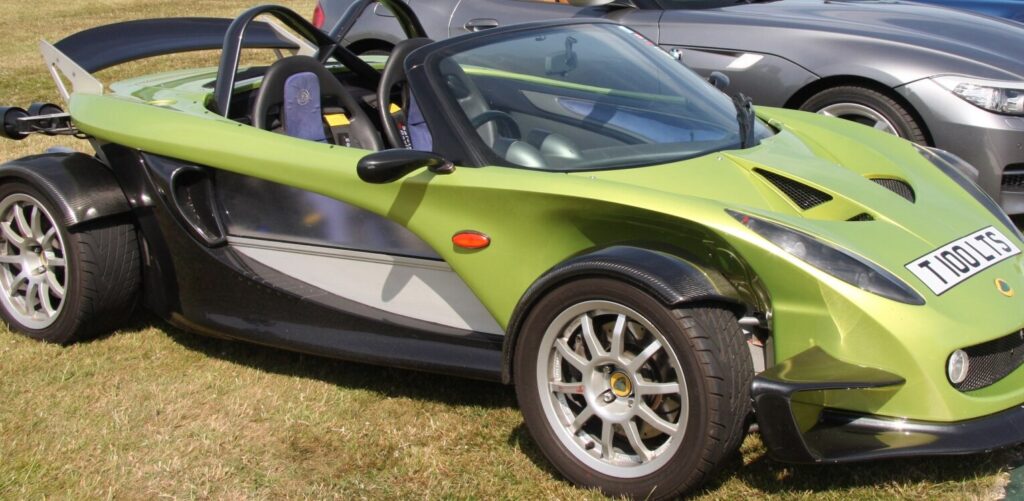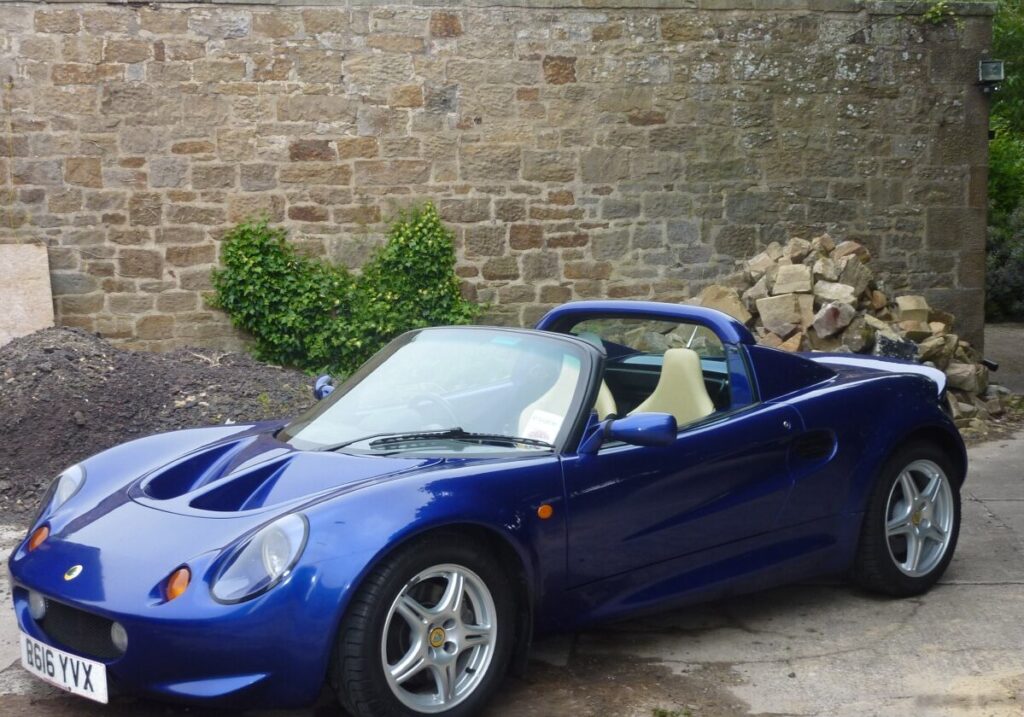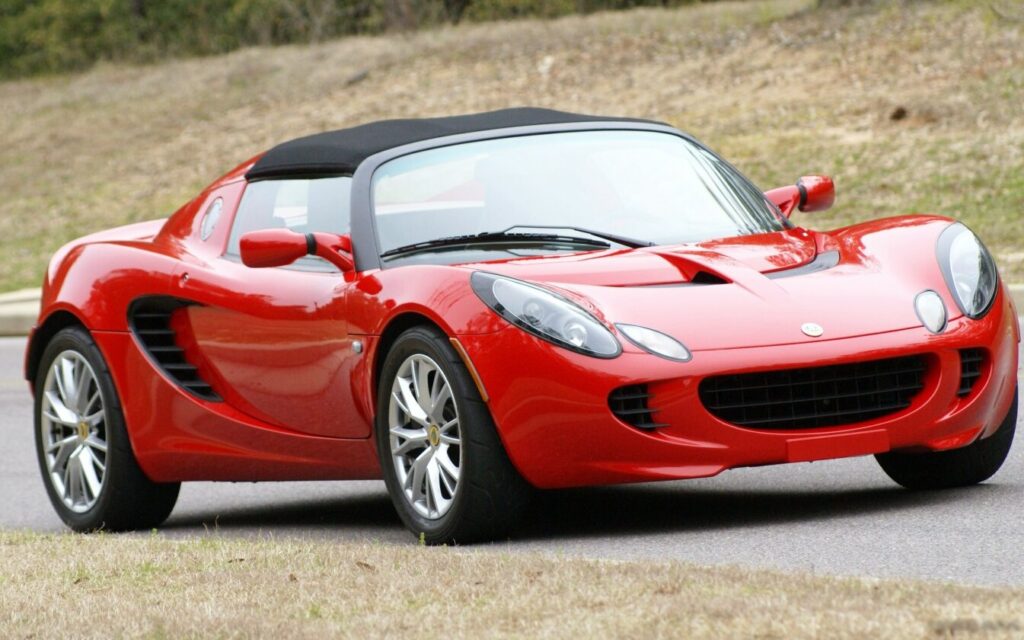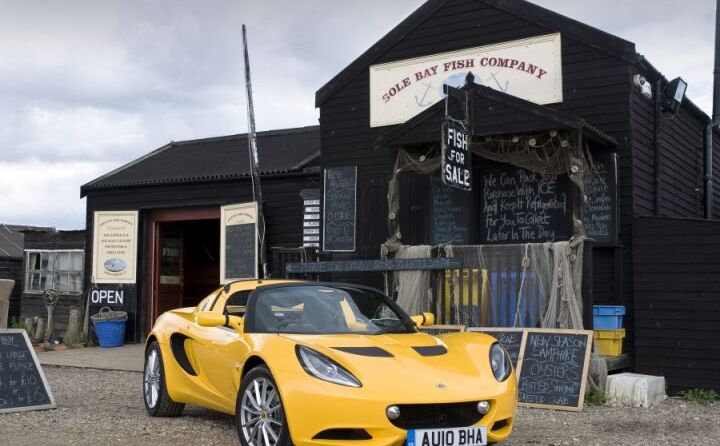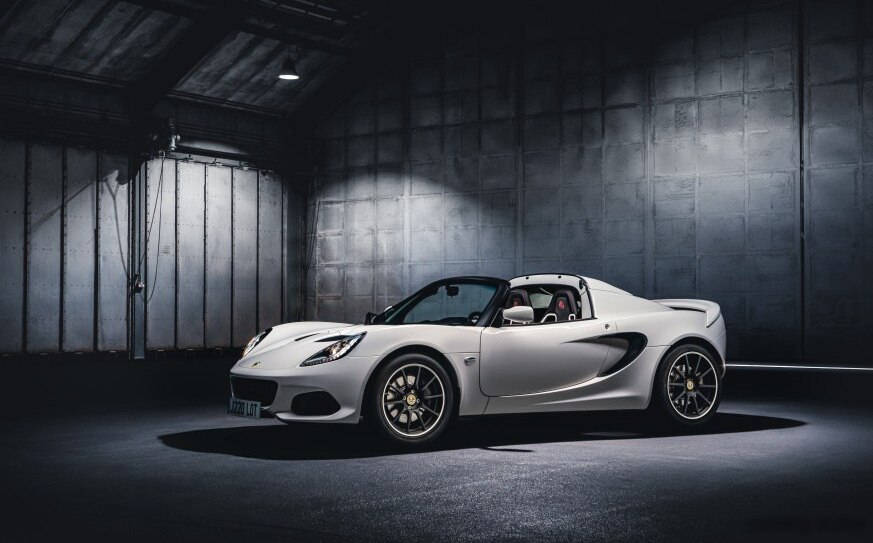
The Lotus Elise Sport 220, introduced as part of the Series 3 facelift in 2017, represents a focused iteration of the iconic British sports car. Built upon the lightweight philosophy that defines the Elise, this variant aimed to deliver an engaging driving experience with a significant power upgrade over earlier models. Production continued through 2017 and beyond, solidifying its place within the broader Elise lineage – specifically the 1HX0/A3 platform – as a performance-oriented offering. The Sport 220 occupies a position near the top of the Series 3 range, bridging the gap between the entry-level Elise S and more specialized variants like the Cup models.
Technical Specifications
| Brand | Lotus |
| Model | Elise |
| Generation | Elise (Series 3, facelift 2017) |
| Type | Sport 220 1.8 (220 Hp) |
| Start of production | 2017 |
| Powertrain Architecture | Internal Combustion engine |
| Body type | Roadster |
| Seats | 2 |
| Doors | 2 |
| Fuel consumption (urban) | 10.3 l/100 km (22.8 US mpg) |
| Fuel consumption (extra urban) | 5.9 l/100 km (39.9 US mpg) |
| Fuel consumption (combined) | 7.5 l/100 km (31.4 US mpg) |
| CO2 emissions | 173 g/km |
| Fuel Type | Petrol (Gasoline) |
| Acceleration 0 – 100 km/h | 4.6 sec |
| Acceleration 0 – 62 mph | 4.6 sec |
| Acceleration 0 – 60 mph | 4.2 sec |
| Maximum speed | 234 km/h (145.4 mph) |
| Weight-to-power ratio | 4.1 kg/Hp |
| Weight-to-torque ratio | 3.6 kg/Nm |
| Power | 220 Hp @ 6800 rpm |
| Power per litre | 122.4 Hp/l |
| Torque | 250 Nm @ 4600 rpm (184.39 lb.-ft. @ 4600 rpm) |
| Engine layout | Middle, Transverse |
| Engine Model/Code | 2ZR-FE |
| Engine displacement | 1798 cm3 (109.72 cu. in.) |
| Number of cylinders | 4 |
| Engine configuration | Inline |
| Number of valves per cylinder | 4 |
| Engine aspiration | Supercharger, Intercooler |
| Valvetrain | DOHC, VVT-i |
| Engine oil capacity | 2.4 l (2.54 US qt | 2.11 UK qt) |
| Coolant capacity | 4 l (4.23 US qt | 3.52 UK qt) |
| Kerb Weight | 904 kg (1992.98 lbs) |
| Fuel tank capacity | 40 l (10.57 US gal | 8.8 UK gal) |
| Length | 3824 mm (150.55 in) |
| Width | 1719 mm (67.68 in) |
| Height | 1117 mm (43.98 in) |
| Drivetrain Architecture | Rear wheel drive |
| Number of gears | 6 |
| Gearbox type | Manual transmission |
| Front suspension | Double wishbone |
| Rear suspension | Double wishbone |
| Front brakes | Ventilated discs, 288 mm |
| Rear brakes | Ventilated discs, 288 mm |
| Assisting systems | ABS (Anti-lock braking system) |
| Steering type | Steering rack and pinion |
| Front tires | 175/55 R16 |
| Rear tires | 225/45 R17 |
| Front wheel rims | 16 |
| Rear wheel rims | 17 |
Powertrain & Engine Architecture
The heart of the Elise Sport 220 is the Toyota-sourced 2ZR-FE 1.8-liter inline-four cylinder engine. This engine is notable for its supercharger and intercooler, a significant upgrade from the naturally aspirated engines found in earlier Elise models. The supercharger, a Roots-type unit, provides instant boost and a broad torque curve, enhancing responsiveness. The engine utilizes a dual overhead camshaft (DOHC) valvetrain with variable valve timing-intelligent (VVT-i) technology, optimizing performance and efficiency across the rev range. Fuel is delivered via direct injection. The engine is transversely mounted in a mid-engine layout, contributing to the car’s exceptional balance. The Sport 220 is exclusively paired with a six-speed manual transmission, chosen for its direct connection and driver engagement. This transmission features close ratios designed to maximize the engine’s power band.
Driving Characteristics
The Elise Sport 220 delivers a thrilling driving experience characterized by its lightweight construction and potent engine. The supercharged 1.8-liter engine provides a noticeable step up in performance compared to the standard Elise, with strong acceleration and a willingness to rev. The manual transmission allows for precise gear changes, and the short ratios keep the engine in its powerband. While not as raw or track-focused as the Elise Cup variants, the Sport 220 offers a more accessible and usable performance profile for road driving. The car’s steering is exceptionally precise and communicative, providing ample feedback to the driver. The relatively low weight (around 904 kg or 1993 lbs) contributes to agile handling and impressive cornering ability.
Equipment & Trim Levels
The Elise Sport 220 came reasonably well-equipped, focusing on performance and driver experience rather than luxury. Standard features included lightweight composite body panels, a minimalist interior, and sport seats. The interior trim was typically finished in a combination of leather and Alcantara. Air conditioning and a basic audio system were often included. Optional extras included upgraded suspension components, different wheel designs, and various interior trim options. The Elise’s interior is deliberately spartan, prioritizing weight savings and a direct connection to the driving experience.
Chassis & Braking
The Elise’s chassis is a bonded aluminum monocoque, renowned for its exceptional rigidity and low weight. This construction provides a solid foundation for the suspension and contributes to the car’s precise handling. The suspension utilizes double wishbones at both the front and rear, providing excellent control and responsiveness. The Sport 220 features ventilated disc brakes on all four wheels, providing ample stopping power. The ABS system enhances braking performance and stability. The car’s lightweight construction minimizes the need for overly aggressive braking components.
Market Reception & Comparison
The Elise Sport 220 was generally well-received by automotive critics, who praised its engaging driving experience, responsive engine, and lightweight construction. It was often seen as a sweet spot in the Elise lineup, offering a significant performance upgrade over the base models without the extreme focus of the Cup variants. Compared to the naturally aspirated Elise S, the Sport 220 offered a noticeable improvement in acceleration and overall performance. Fuel economy was respectable for a sports car, averaging around 31.4 US mpg in combined driving. Reliability was generally good, although the Elise’s minimalist interior and focus on performance meant that it wasn’t as comfortable or refined as some of its competitors.
Legacy
The Lotus Elise Sport 220 has established itself as a desirable and sought-after model in the used car market. Its combination of performance, handling, and lightweight construction continues to appeal to driving enthusiasts. The 2ZR-FE engine, while requiring regular maintenance, has proven to be relatively reliable. The Elise’s enduring appeal lies in its purity of purpose and its ability to deliver an unparalleled driving experience. As a representative of a dying breed of lightweight, analog sports cars, the Sport 220 is likely to remain a cherished model for years to come. Its value has remained relatively stable, reflecting its desirability and the enduring legacy of the Lotus Elise.