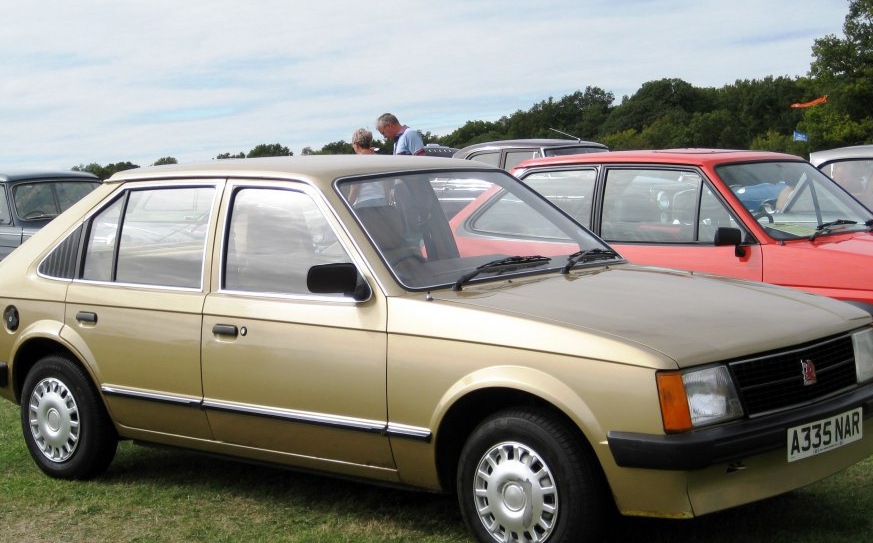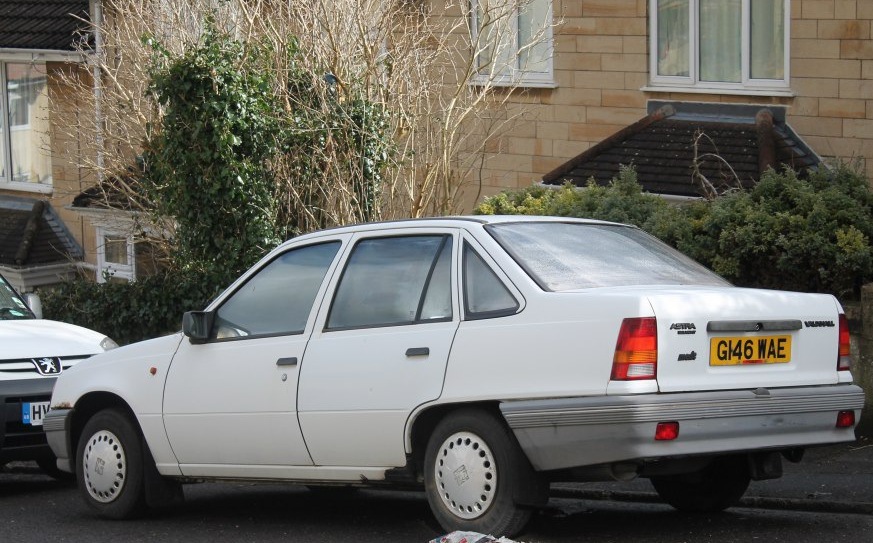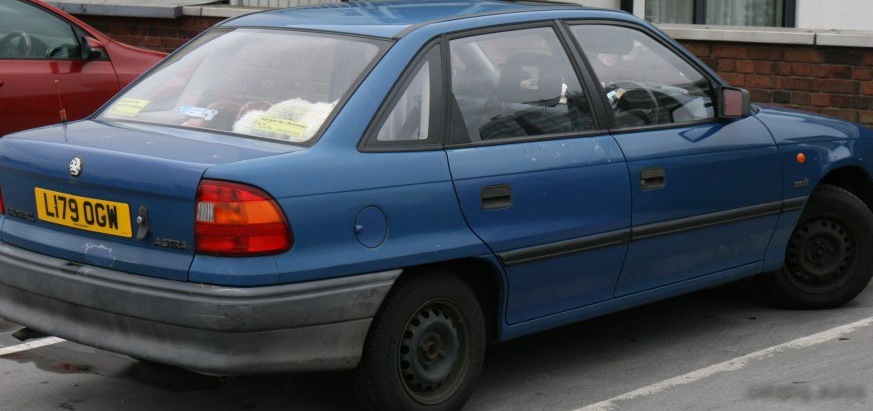
The Vauxhall Astra Mk III 1.7 TD, produced between 1991 and 1994, represented a fuel-efficient and practical offering within the broader Astra Mk III range (1991-1998), known internally as the G platform. Positioned as an entry-level diesel variant, it catered to buyers prioritizing economy and dependability over outright performance. This model was primarily sold in European markets, including the United Kingdom where it was a common sight as a family saloon. It occupied a niche below the more powerful petrol variants and the later, more refined diesel options that would follow.
Technical Specifications
| Brand | Vauxhall |
| Model | Astra |
| Generation | Astra Mk III |
| Type (Engine) | 1.7 TD (82 Hp) |
| Start of production | 1991 |
| End of production | 1994 |
| Powertrain Architecture | Internal Combustion engine |
| Body type | Sedan |
| Seats | 5 |
| Doors | 4 |
| Fuel consumption (urban) | 6.9 l/100 km (34.1 US mpg, 40.9 UK mpg, 14.5 km/l) |
| Fuel consumption (extra urban) | 4.8 l/100 km (49 US mpg, 58.9 UK mpg, 20.8 km/l) |
| Fuel consumption (combined) | 6.1 l/100 km (38.6 US mpg, 46.3 UK mpg, 16.4 km/l) |
| CO2 emissions | 162 g/km |
| Fuel Type | Diesel |
| Acceleration 0 – 100 km/h | 13.5 sec |
| Acceleration 0 – 62 mph | 13.5 sec |
| Acceleration 0 – 60 mph | 12.8 sec |
| Maximum speed | 172 km/h (106.88 mph) |
| Weight-to-power ratio | 13.3 kg/Hp, 75.2 Hp/tonne |
| Weight-to-torque ratio | 6.5 kg/Nm, 154.1 Nm/tonne |
| Power | 82 Hp @ 4400 rpm |
| Power per litre | 48.6 Hp/l |
| Torque | 168 Nm @ 2400 rpm (123.91 lb.-ft. @ 2400 rpm) |
| Engine layout | Front, Transverse |
| Engine Model/Code | X17DT |
| Engine displacement | 1686 cm3 (102.89 cu. in.) |
| Number of cylinders | 4 |
| Engine configuration | Inline |
| Fuel injection system | Precombustion chamber injection |
| Engine aspiration | Turbocharger |
| Engine oil capacity | 4.5 l (4.76 US qt | 3.96 UK qt) |
| Coolant capacity | 6.8 l (7.19 US qt | 5.98 UK qt) |
| Kerb Weight | 1090 kg (2403.04 lbs) |
| Max. weight | 1580 kg (3483.3 lbs) |
| Max load | 490 kg (1080.27 lbs) |
| Trunk (boot) space – minimum | 501 l (17.69 cu. ft.) |
| Trunk (boot) space – maximum | 1200 l (42.38 cu. ft.) |
| Fuel tank capacity | 52 l (13.74 US gal | 11.44 UK gal) |
| Length | 4239 mm (166.89 in) |
| Width | 1689 mm (66.5 in) |
| Height | 1389 mm (54.69 in) |
| Wheelbase | 2520 mm (99.21 in) |
| Front track | 1420 mm (55.91 in) |
| Rear track | 1420 mm (55.91 in) |
| Ride height (ground clearance) | 135 mm (5.31 in) |
| Drag coefficient (Cd) | 0.31 |
| Drivetrain Architecture | The Internal combustion engine (ICE) drives the front wheels of the vehicle. |
| Drive wheel | Front wheel drive |
| Number of gears and type of gearbox | 5 gears, manual transmission |
| Front brakes | Ventilated discs |
| Rear brakes | Drum |
| Steering type | Steering rack and pinion |
| Power steering | Hydraulic Steering |
| Tires size | 175/70 R13 |
| Wheel rims size | 13 |
INTRODUCTION
The Vauxhall Astra Mk III 1.7 TD, launched in 1991, was a key component of Vauxhall’s strategy to offer a diverse range of options to UK car buyers. Built on the G platform, shared with Opel, this generation Astra represented a significant step forward in terms of styling, safety, and overall refinement compared to its predecessor. The 1.7 TD variant specifically targeted those seeking a cost-effective and economical saloon car, particularly appealing in a market increasingly sensitive to fuel prices. It was available as a four-door saloon, offering a practical and spacious interior for families.
Powertrain & Engine Architecture
At the heart of the Astra 1.7 TD lies the X17DT engine, a 1.7-liter inline-four cylinder diesel. This engine utilized a precombustion chamber injection system, a common technology for diesel engines of the era. This system involved injecting fuel into a precombustion chamber, where it partially ignited before being fully combusted in the main cylinder, aiding in smoother combustion and reduced noise. The engine was turbocharged, boosting power output to 82 horsepower at 4400 rpm and 168 Nm (123.91 lb-ft) of torque at 2400 rpm. The five-speed manual transmission was the only gearbox option available with this engine, prioritizing fuel efficiency over rapid acceleration. The engine’s design focused on durability and low-end torque, making it well-suited for everyday driving and long journeys.
Driving Characteristics
The driving experience in the Astra 1.7 TD was characterized by its relaxed and economical nature. Acceleration was modest, taking around 13.5 seconds to reach 62 mph, and a top speed of 106.88 mph. However, the engine’s strong low-end torque made it surprisingly capable in everyday driving situations, providing sufficient power for overtaking and navigating urban roads. The five-speed gearbox was well-matched to the engine’s characteristics, allowing drivers to maintain optimal revs for fuel efficiency. Compared to the more powerful petrol versions of the Astra Mk III, the 1.7 TD offered a significantly different driving experience, prioritizing fuel economy and practicality over performance. The manual transmission provided a more engaging driving experience than an automatic would have, but also required more driver involvement.
Equipment & Trim Levels
The 1.7 TD typically came with a relatively basic level of equipment, reflecting its position as an entry-level model. Standard features generally included central locking, power steering, and a basic stereo system. Interior upholstery was typically cloth, and the dashboard featured a functional, if somewhat utilitarian, design. Optional extras included electric windows, a sunroof, and upgraded stereo systems. Trim levels were relatively limited, with the focus being on providing a practical and affordable package. The interior space was generous for a car of its size, offering comfortable seating for five adults.
Chassis & Braking
The Astra Mk III 1.7 TD featured a MacPherson strut front suspension and a torsion beam rear suspension. This setup provided a reasonable balance between ride comfort and handling. Braking was handled by ventilated discs on the front wheels and drum brakes on the rear. While adequate for normal driving conditions, the braking system wasn’t particularly powerful compared to some of its rivals. The car’s relatively light weight (1090 kg / 2403.04 lbs) helped to mitigate the limitations of the braking system. Stabilizer bars were fitted to both the front and rear axles to reduce body roll during cornering.
Market Reception & Comparison
The Astra 1.7 TD was generally well-received by critics for its fuel efficiency and reliability. It was seen as a sensible and practical choice for buyers prioritizing economy over performance. Compared to the petrol-powered Astra variants, the 1.7 TD offered significantly better fuel economy, making it a popular choice for high-mileage drivers. However, it was criticized for its lack of power and relatively slow acceleration. Compared to other diesel saloons of the time, such as the Ford Sierra and the Volkswagen Jetta, the Astra 1.7 TD offered a competitive package in terms of price, fuel economy, and practicality.
Legacy
The Vauxhall Astra Mk III 1.7 TD has proven to be a remarkably durable and reliable car. Many examples are still on the road today, testament to the robustness of the engine and the overall build quality of the vehicle. In the used car market, these Astras are often sought after by those looking for a cheap and reliable runabout. While not a particularly exciting car to drive, the 1.7 TD’s simplicity and fuel efficiency have ensured its enduring appeal. The X17DT engine, while not known for its high performance, is generally considered to be a reliable unit, provided it is properly maintained. Its legacy lies in providing affordable and dependable transportation for a generation of drivers.