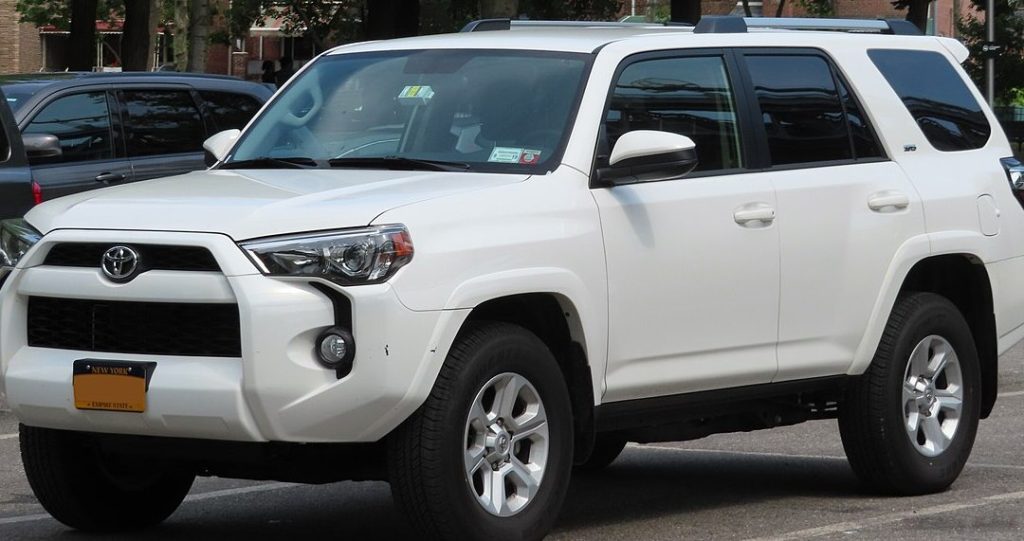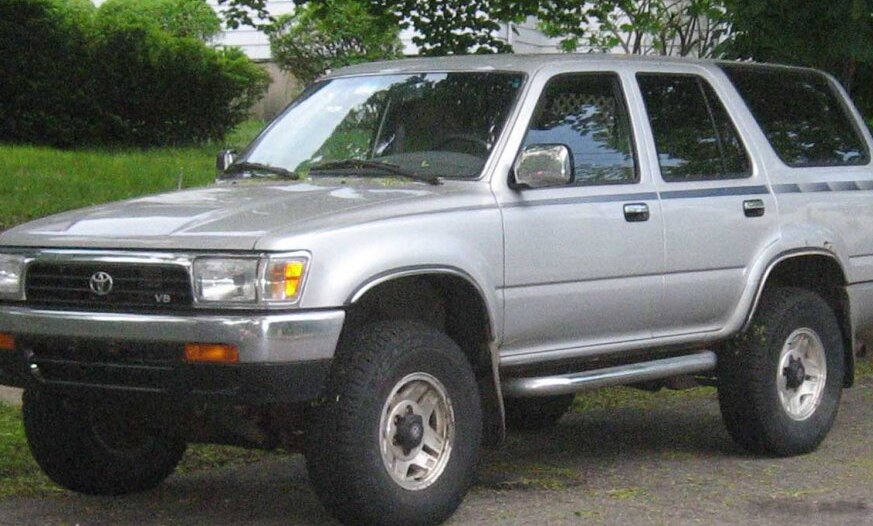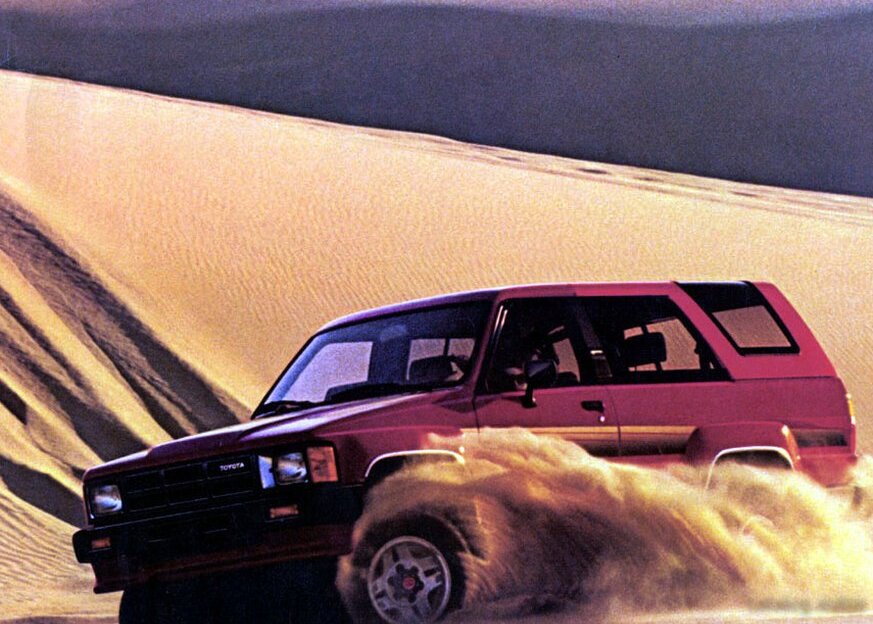
The Toyota 4Runner I 3.0i V6 4×4, produced from 1988 to 1989, represents the second generation of Toyota’s popular SUV. Built on the 1984-1989 Hilux platform, this iteration of the 4Runner moved away from the more compact, car-based first generation and embraced a more rugged, truck-based design. This shift aimed to appeal to buyers seeking a capable off-road vehicle with increased durability and cargo capacity. The 3.0i V6 variant, equipped with the 3VZ-E engine, occupied a mid-range position within the 4Runner lineup, offering a balance between performance and fuel efficiency compared to the base four-cylinder models.
Technical Specifications
| Brand | Toyota |
| Model | 4Runner |
| Generation | 4Runner I |
| Type (Engine) | 3.0i V6 (145 Hp) 4×4 |
| Start of production | 1988 |
| End of production | 1989 |
| Powertrain Architecture | Internal Combustion engine |
| Body type | SUV |
| Seats | 5 |
| Doors | 3 |
| Fuel consumption (urban) | 16.1 l/100 km (14.6 US mpg, 17.5 UK mpg, 6.2 km/l) |
| Fuel consumption (extra urban) | 10.7 l/100 km (22 US mpg, 26.4 UK mpg, 9.3 km/l) |
| Fuel consumption (combined) | 15.5 l/100 km (15.2 US mpg, 18.2 UK mpg, 6.5 km/l) |
| Fuel Type | Petrol (Gasoline) |
| Acceleration 0 – 100 km/h | 15.3 sec |
| Acceleration 0 – 62 mph | 15.3 sec |
| Acceleration 0 – 60 mph | 14.5 sec |
| Maximum speed | 165 km/h (102.53 mph) |
| Weight-to-power ratio | 12.4 kg/Hp, 80.6 Hp/tonne |
| Weight-to-torque ratio | 7.5 kg/Nm, 133.3 Nm/tonne |
| Power | 145 Hp @ 4600 rpm |
| Power per litre | 49 Hp/l |
| Torque | 240 Nm @ 3400 rpm (177.01 lb.-ft. @ 3400 rpm) |
| Engine layout | Front, Longitudinal |
| Engine Model/Code | 3VZ-E |
| Engine displacement | 2958 cm3 (180.51 cu. in.) |
| Number of cylinders | 6 |
| Engine configuration | V-engine |
| Cylinder Bore | 87.5 mm (3.44 in.) |
| Piston Stroke | 82 mm (3.23 in.) |
| Compression ratio | 9:1 |
| Number of valves per cylinder | 2 |
| Fuel injection system | Multi-port manifold injection |
| Engine aspiration | Naturally aspirated engine |
| Valvetrain | SOHC |
| Engine oil capacity | 4.5 l (4.76 US qt | 3.96 UK qt) |
| Coolant capacity | 10.5 l (11.1 US qt | 9.24 UK qt) |
| Kerb Weight | 1800 kg (3968.32 lbs.) |
| Max. weight | 2430 kg (5357.23 lbs.) |
| Max load | 630 kg (1388.91 lbs.) |
| Trunk (boot) space – minimum | 1200 l (42.38 cu. ft.) |
| Trunk (boot) space – maximum | 2100 l (74.16 cu. ft.) |
| Fuel tank capacity | 65 l (17.17 US gal | 14.3 UK gal) |
| Length | 4435 mm (174.61 in.) |
| Width | 1689 mm (66.5 in.) |
| Height | 1679 mm (66.1 in.) |
| Wheelbase | 2625 mm (103.35 in.) |
| Front track | 1430 mm (56.3 in.) |
| Rear (Back) track | 1425 mm (56.1 in.) |
| Ride height (ground clearance) | 269 mm (10.59 in.) |
| Minimum turning circle | 11.3 m (37.07 ft.) |
| Approach angle | 37° |
| Departure angle | 22.5° |
| Drive wheel | All wheel drive (4×4) |
| Number of gears | 5 gears, manual transmission |
| Front suspension | Independent torsion bar, double wishbone |
| Rear suspension | Leaf spring |
| Front brakes | Ventilated discs |
| Rear brakes | Drum |
| Steering type | Worm-reduction unit |
| Power steering | Hydraulic Steering |
| Tires size | 225/75 R15 |
| Wheel rims size | 15 |
Powertrain & Engine Architecture
The heart of the 3.0i V6 4×4 is the 3VZ-E engine, a 2.958-liter (180.5 cu in) naturally aspirated V6. This engine featured a single overhead camshaft (SOHC) valvetrain with two valves per cylinder. It utilized a multi-port fuel injection system, which improved fuel atomization and combustion efficiency compared to earlier carbureted designs. The 3VZ-E produced 145 horsepower at 4600 rpm and 240 Nm (177 lb-ft) of torque at 3400 rpm. The engine was mounted longitudinally in the chassis. The transmission was a 5-speed manual, providing drivers with direct control over gear selection. This manual transmission was chosen for its durability and ability to handle the engine’s torque in off-road situations.
Driving Characteristics
The 3.0i V6 4×4 offered a noticeable step up in performance compared to the base four-cylinder 4Runners. While not a sports car, the V6 provided adequate power for both on-road driving and moderate off-road excursions. Acceleration to 60 mph took around 14.5 seconds, and the top speed was approximately 102.5 mph. The manual transmission allowed for precise control, but the gear ratios were geared more towards low-end torque for off-roading rather than rapid acceleration. Compared to later, more powerful 4Runner variants, the 3.0i felt somewhat underpowered, especially when fully loaded or tackling steep inclines. However, its simplicity and reliability were significant advantages.
Equipment & Trim Levels
The 3.0i V6 4×4 typically came with a relatively basic level of equipment, reflecting its positioning as a rugged utility vehicle. Standard features included manual windows and locks, a basic AM/FM radio, and cloth upholstery. Optional extras included air conditioning, a cassette player, and upgraded interior trim. The interior design was functional and durable, prioritizing practicality over luxury. The 4Runner’s interior was designed to withstand the rigors of off-road use, with easily cleanable surfaces and robust construction.
Chassis & Braking
The 4Runner I utilized a body-on-frame construction, providing a robust and durable chassis. The front suspension featured independent torsion bars and double wishbones, offering a comfortable ride and good handling on paved roads. The rear suspension employed leaf springs, which were well-suited for carrying heavy loads and providing good articulation off-road. Braking duties were handled by ventilated discs at the front and drum brakes at the rear. The braking system was adequate for normal driving conditions, but lacked the stopping power of more modern systems. The 4Runner’s high ground clearance (269 mm / 10.59 in) and approach/departure angles (37°/22.5°) made it a capable off-road vehicle.
Market Reception & Comparison
The 3.0i V6 4×4 was generally well-received by automotive critics as a capable and reliable off-road vehicle. It was praised for its rugged construction, comfortable ride, and adequate power. However, some critics noted its relatively slow acceleration and basic interior. Compared to the four-cylinder models, the 3.0i offered a significant performance boost, but at a higher price point. Fuel economy was a concern for some, with combined fuel consumption averaging around 15.5 l/100 km (15.2 US mpg). The 3.0i V6 4×4 offered a compelling alternative to other SUVs of the time, such as the Chevrolet Blazer and Ford Bronco II.
Legacy
The 3VZ-E engine, found in the 3.0i V6 4×4, is known for its durability and reliability. With proper maintenance, these engines can last for hundreds of thousands of miles. However, they are prone to certain issues, such as oil leaks and timing belt failures. In the used car market today, the 1988-1989 4Runner I 3.0i V6 4×4 is a sought-after vehicle among enthusiasts and collectors. Its rugged construction, classic styling, and off-road capability make it a desirable vehicle for those seeking a vintage SUV. Parts availability is generally good, and the 4Runner’s simple design makes it relatively easy to maintain and repair.