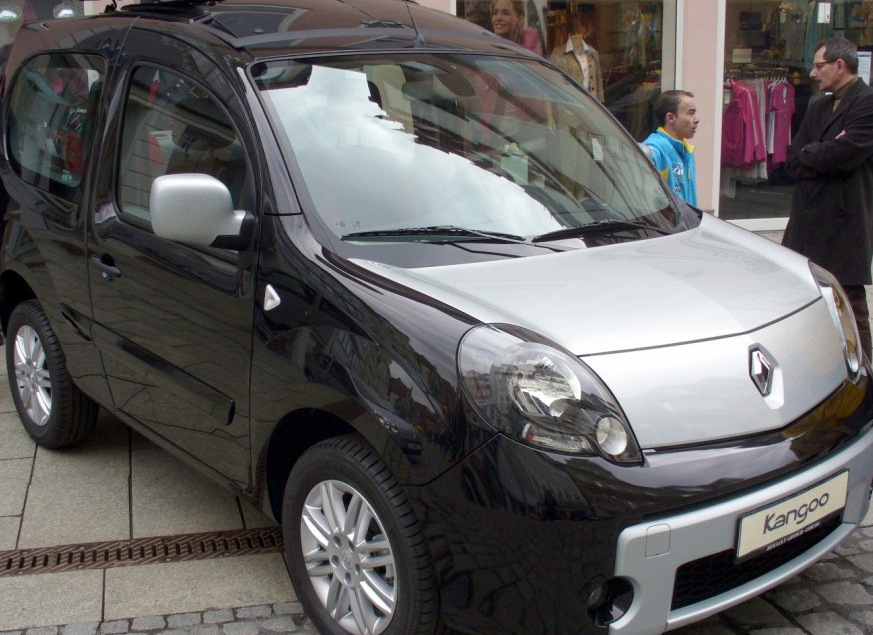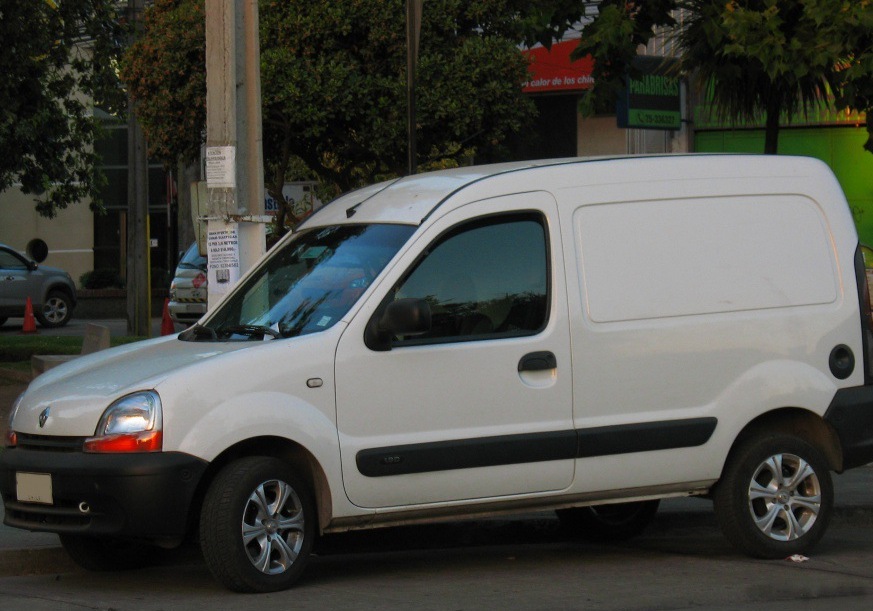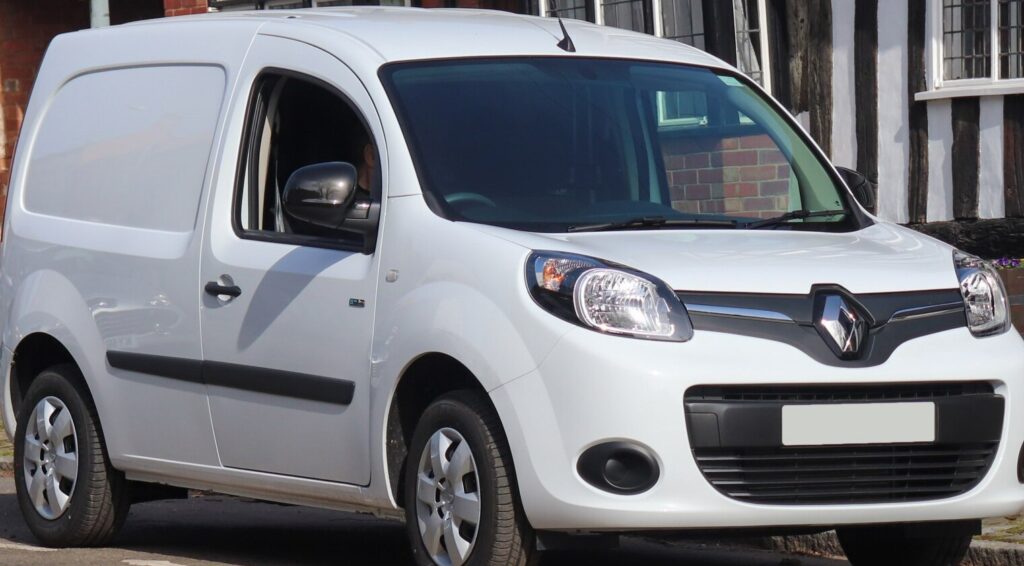
The Renault Kangoo II Express, particularly the facelifted version introduced in 2013, represented a significant step forward in the compact van segment. Production of the 1.5 Energy dCi (95 hp) variant ran from March 2019 to 2021. This specific configuration was aimed at businesses and tradespeople needing a practical, fuel-efficient, and reliable light commercial vehicle. Positioned as an entry-level to mid-range offering within the Kangoo II Express lineup, it provided a balance between affordability and capability, slotting below the more powerful dCi 110 and 130 variants. The Kangoo II Express, built on the X0/B platform, was a crucial model for Renault, particularly in European markets, where compact vans are highly popular.
Technical Specifications
| Brand | Renault |
| Model | Kangoo |
| Generation | Kangoo II Express (facelift 2013) |
| Type (Engine) | 1.5 Energy dCi (95 Hp) |
| Start of production | March, 2019 |
| End of production | 2021 |
| Powertrain Architecture | Internal Combustion engine |
| Body type | Minivan |
| Seats | 2 |
| Doors | 3 |
| Combined fuel consumption (WLTP) | 6.3 l/100 km (37.3 US mpg, 44.8 UK mpg, 15.9 km/l) |
| CO2 emissions (WLTP) | 166 g/km |
| Fuel Type | Diesel |
| Acceleration 0 – 100 km/h | 12.3 sec |
| Acceleration 0 – 62 mph | 12.3 sec |
| Acceleration 0 – 60 mph | 11.7 sec |
| Maximum speed | 163 km/h (101.28 mph) |
| Emission standard | Euro 6 Dt |
| Weight-to-power ratio | 14.9 kg/Hp, 67.1 Hp/tonne |
| Weight-to-torque ratio | 6.2 kg/Nm, 162.5 Nm/tonne |
| Power | 95 Hp @ 3750 rpm |
| Power per litre | 65 Hp/l |
| Torque | 230 Nm @ 1750 rpm (169.64 lb.-ft. @ 1750 rpm) |
| Engine layout | Front, Transverse |
| Engine Model/Code | K9K |
| Engine displacement | 1461 cm3 (89.16 cu. in.) |
| Number of cylinders | 4 |
| Engine configuration | Inline |
| Number of valves per cylinder | 2 |
| Fuel injection system | Diesel Commonrail |
| Engine aspiration | Turbocharger, Intercooler |
| Engine oil capacity | 5.7 l (6.02 US qt | 5.02 UK qt) |
| Kerb Weight | 1415 kg (3119.54 lbs.) |
| Max. weight | 1980 kg (4365.15 lbs.) |
| Max load | 565 kg (1245.61 lbs.) |
| Trunk (boot) space – minimum | 3000 l (105.94 cu. ft.) |
| Trunk (boot) space – maximum | 3500 l (123.6 cu. ft.) |
| Fuel tank capacity | 60 l (15.85 US gal | 13.2 UK gal) |
| AdBlue tank | 17.4 l (4.6 US gal | 3.83 UK gal) |
| Max. roof load | 100 kg (220.46 lbs.) |
| Permitted trailer load with brakes (12%) | 1050 kg (2314.85 lbs.) |
| Permitted trailer load without brakes | 690 kg (1521.19 lbs.) |
| Length | 4282 mm (168.58 in.) |
| Width | 1829 mm (72.01 in.) |
| Width including mirrors | 2138 mm (84.17 in.) |
| Height | 1805-1844 mm (71.06 – 72.6 in.) |
| Wheelbase | 2697 mm (106.18 in.) |
| Front track | 1521 mm (59.88 in.) |
| Rear (Back) track | 1533 mm (60.35 in.) |
| Front overhang | 875 mm (34.45 in.) |
| Rear overhang | 710 mm (27.95 in.) |
| Ride height (ground clearance) | 143-210 mm (5.63 – 8.27 in.) |
| Minimum turning circle (turning diameter) | 10.7 m (35.1 ft.) |
| Drivetrain Architecture | The Internal combustion engine (ICE) drives the front wheels of the vehicle. |
| Drive wheel | Front wheel drive |
| Number of gears and type of gearbox | 6 gears, manual transmission |
| Front suspension | Independent type McPherson |
| Rear suspension | Torsion |
| Front brakes | Ventilated discs, 280 mm |
| Rear brakes | Drum, 274 mm |
| Assisting systems | ABS (Anti-lock braking system) |
| Steering type | Steering rack and pinion |
| Power steering | Electric Steering |
| Tires size | 195/65 R15 91 T |
| Wheel rims size | 15 |
Powertrain & Engine Architecture
The heart of this Kangoo Express variant is the Renault K9K engine, a 1.5-liter inline-four diesel. This engine, part of the ‘Energy’ family, was designed for efficiency and reduced emissions. The K9K utilizes a common rail direct injection system, delivering fuel at high pressure for optimized combustion. A turbocharger with an intercooler further enhances performance, providing increased air intake for improved power output. The 95 horsepower output is achieved at 3750 rpm, while peak torque of 230 Nm (169.64 lb-ft) is available from 1750 rpm, providing good low-end grunt for hauling loads. The engine features two valves per cylinder and is known for its relatively simple construction, contributing to its reliability. The transmission is a 6-speed manual, chosen for its fuel efficiency and cost-effectiveness in this segment.
Driving Characteristics
The 1.5 dCi 95 hp engine, paired with the 6-speed manual transmission, delivers adequate performance for typical commercial use. Acceleration is not its strong suit, with a 0-100 km/h time of 12.3 seconds, but it provides sufficient power for everyday driving and carrying loads. The gear ratios are tuned for fuel economy and usability, with a relatively long first gear for easy starts with a load and closely spaced higher gears for efficient cruising. Compared to the more powerful dCi 110 and 130 versions, this variant feels less responsive, particularly when fully loaded or climbing hills. However, the lower power output also translates to improved fuel economy and reduced stress on the engine components. The driving experience is generally comfortable, thanks to the Kangoo’s well-tuned suspension, but it’s primarily focused on practicality rather than sporty handling.
Equipment & Trim Levels
The Kangoo II Express 1.5 dCi 95 hp typically came with a functional, no-frills interior focused on durability and practicality. Standard equipment included a driver’s airbag, central locking, electric front windows, and a basic audio system. The interior trim was typically hard-wearing plastic, designed to withstand the rigors of commercial use. Optional extras included air conditioning, a passenger airbag, rear parking sensors, and upgraded audio systems. The van’s defining feature is its spacious cargo area, accessible through rear doors and a side sliding door. The flat load floor and numerous tie-down points make it ideal for securing cargo.
Chassis & Braking
The Kangoo II Express utilizes a McPherson strut independent suspension at the front and a torsion beam suspension at the rear. This setup provides a good balance between ride comfort and handling. The front brakes are ventilated discs, providing adequate stopping power, while the rear brakes are drums, a cost-saving measure common in this class of vehicle. ABS (Anti-lock Braking System) is standard, enhancing safety during emergency braking. The steering is electrically assisted, providing light and precise control. The vehicle’s relatively lightweight construction contributes to its agility and fuel efficiency.
Market Reception & Comparison
The Renault Kangoo II Express 1.5 dCi 95 hp was generally well-received by critics as a practical and economical light commercial vehicle. It was praised for its fuel efficiency, spacious cargo area, and reliability. However, some reviewers noted its lack of power compared to higher-output versions. Compared to competitors like the Volkswagen Caddy and Citroën Berlingo, the Kangoo offered a competitive price point and a good level of standard equipment. The 1.5 dCi engine proved to be relatively reliable, with few major issues reported. Fuel economy was a key selling point, with the WLTP figures showing a combined consumption of 6.3 l/100 km (37.3 US mpg).
Legacy
The Renault Kangoo II Express 1.5 dCi 95 hp has proven to be a durable and reliable workhorse in the used car market. The K9K engine is known for its longevity, and with regular maintenance, it can provide many years of service. These vans are still commonly seen on roads today, testament to their build quality and practicality. While not the fastest or most luxurious van on the market, the Kangoo II Express 1.5 dCi 95 hp remains a popular choice for businesses and tradespeople seeking an affordable, fuel-efficient, and dependable light commercial vehicle.