
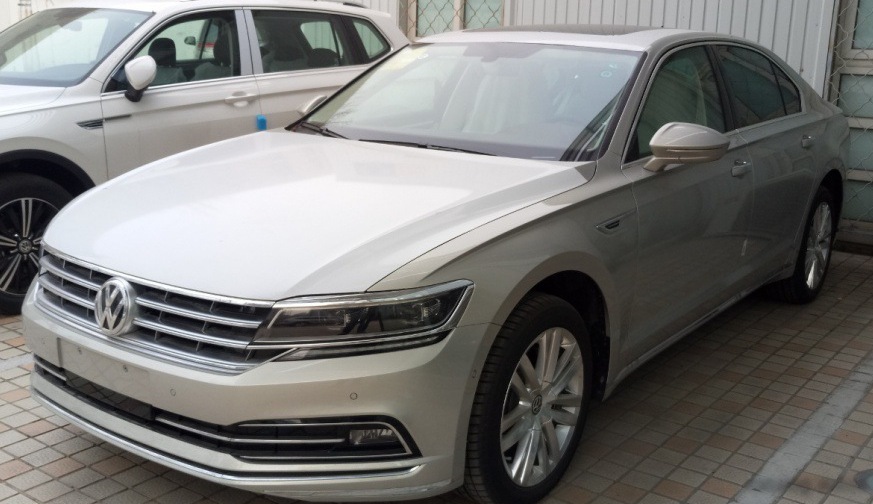
The Volkswagen Phideon, launched in 2016, represented Volkswagen’s foray into the premium large sedan segment, primarily targeted at the Chinese market. Positioned above the Passat and Magotan in Volkswagen’s Chinese lineup, the Phideon aimed to compete with established luxury brands. The 480V6 variant, equipped with a 3.0-liter V6 engine producing 299 horsepower and paired with a 7-speed dual-clutch transmission (DSG) and all-wheel drive, was a flagship offering within the Phideon range. While not officially sold in North America, the Phideon showcased Volkswagen’s engineering capabilities and ambition in the luxury car sector.
Technical Specifications
| Brand | Volkswagen |
| Model | Phideon |
| Type (Engine) | 480V6 (299 Hp) AWD DSG |
| Start of production | 2016 |
| Powertrain Architecture | Internal Combustion engine |
| Body type | Sedan |
| Seats | 5 |
| Doors | 4 |
| Fuel consumption (combined) | 9.1 l/100 km (25.8 US mpg, 31 UK mpg, 11 km/l) |
| Fuel Type | Petrol (Gasoline) |
| Acceleration 0 – 100 km/h | 6.3 sec |
| Acceleration 0 – 62 mph | 6.3 sec |
| Acceleration 0 – 60 mph | 6 sec |
| Maximum speed | 250 km/h (155.34 mph) |
| Weight-to-power ratio | 6.8 kg/Hp, 147.7 Hp/tonne |
| Weight-to-torque ratio | 4.6 kg/Nm, 217.3 Nm/tonne |
| Power | 299 Hp @ 5250-6500 rpm |
| Power per litre | 99.8 Hp/l |
| Torque | 440 Nm @ 2900-4500 rpm (324.53 lb.-ft. @ 2900-4500 rpm) |
| Engine layout | Front, Longitudinal |
| Engine Model/Code | EA837 |
| Engine displacement | 2995 cm3 (182.77 cu. in.) |
| Number of cylinders | 6 |
| Engine configuration | V-engine |
| Cylinder Bore | 84.5 mm (3.33 in.) |
| Piston Stroke | 89 mm (3.5 in.) |
| Number of valves per cylinder | 4 |
| Fuel injection system | Direct injection |
| Engine aspiration | Turbocharger, Intercooler |
| Valvetrain | DOHC |
| Kerb Weight | 2025 kg (4464.36 lbs.) |
| Fuel tank capacity | 75 l (19.81 US gal, 16.5 UK gal) |
| Length | 5074 mm (199.76 in.) |
| Width | 1893 mm (74.53 in.) |
| Height | 1463 mm (57.6 in.) |
| Wheelbase | 3009 mm (118.46 in.) |
| Drive wheel | All wheel drive (4×4) |
| Number of gears and type of gearbox | 7 gears, automatic transmission DSG |
| Front brakes | Ventilated discs |
| Rear brakes | Disc |
| Assisting systems | ABS (Anti-lock braking system) |
| Steering type | Steering rack and pinion |
| Power steering | Electric Steering |
Powertrain & Engine Architecture
The heart of the Phideon 480V6 is the EA837 3.0-liter V6 engine. This engine utilizes direct fuel injection and is coupled with a twin-scroll turbocharger and intercooler to deliver a substantial 299 horsepower and 440 Nm (324.53 lb-ft) of torque. The engine’s architecture features a 60-degree V-angle, contributing to a smoother power delivery and reduced vibrations. The dual overhead camshafts (DOHC) control four valves per cylinder, optimizing airflow for enhanced performance. The engine is longitudinally mounted, a configuration typically found in rear-wheel-drive or all-wheel-drive vehicles. The 7-speed dual-clutch transmission (DSG) provides rapid and seamless gear changes, enhancing both acceleration and fuel efficiency. The DSG’s ability to pre-select the next gear allows for near-instantaneous shifts, contributing to a more engaging driving experience.
Driving Characteristics
The Phideon 480V6 offers a refined and comfortable driving experience. The combination of the turbocharged V6 engine and the 7-speed DSG transmission results in brisk acceleration, with a 0-60 mph time of around 6 seconds. The all-wheel-drive system provides excellent traction and stability, particularly in adverse weather conditions. Compared to the lower-powered 4-cylinder Phideon variants, the 480V6 delivers significantly more power and torque, resulting in a more effortless and confident driving experience. While not a sports sedan, the Phideon 480V6 offers a good balance of performance and comfort, making it well-suited for long-distance highway driving. The DSG transmission’s gear ratios are tuned for both acceleration and fuel economy, providing a responsive feel in most driving situations.
Equipment & Trim Levels
The Phideon 480V6 was typically equipped with a high level of standard features, reflecting its positioning as a flagship model. These included leather upholstery, power-adjustable front seats with heating and ventilation, a premium sound system, a large touchscreen infotainment system, and a comprehensive suite of safety features. Optional extras could include a panoramic sunroof, adaptive cruise control, lane-keeping assist, and a head-up display. Interior trim levels varied, with options for different wood veneers and metallic accents. The overall interior design emphasized luxury and sophistication, with a focus on high-quality materials and craftsmanship.
Chassis & Braking
The Phideon’s chassis is designed to provide a comfortable and controlled ride. It utilizes a multi-link suspension system at both the front and rear, which helps to absorb bumps and maintain stability. The all-wheel-drive system distributes power between the front and rear axles as needed, optimizing traction and handling. The braking system features ventilated discs at the front and solid discs at the rear, providing ample stopping power. Anti-lock braking system (ABS) is standard, enhancing safety during emergency braking situations. The steering system is an electric power steering rack and pinion, offering precise and responsive steering feel.
Market Reception & Comparison
The Volkswagen Phideon was primarily aimed at the Chinese market, where large sedans are highly valued. Reviews in China generally praised the Phideon’s spacious interior, comfortable ride, and advanced technology. However, some critics noted that the Phideon lacked the brand prestige of established luxury rivals such as Audi, BMW, and Mercedes-Benz. Compared to the lower-powered Phideon variants, the 480V6 offered a significant performance upgrade, but it also came at a higher price point. Fuel economy for the 480V6 was rated at 9.1 l/100 km, which was comparable to other V6-powered sedans in its class.
Legacy
The Volkswagen Phideon, while not a global success, demonstrated Volkswagen’s ambition to compete in the premium large sedan segment. The EA837 V6 engine and 7-speed DSG transmission proved to be reliable and capable powertrains. In the used car market, the Phideon 480V6 is considered a well-equipped and comfortable luxury sedan. While long-term reliability data is still emerging, early reports suggest that the powertrain is generally robust. The Phideon’s legacy lies in its showcasing of Volkswagen’s engineering prowess and its attempt to establish a stronger presence in the luxury car market, particularly in China.
