
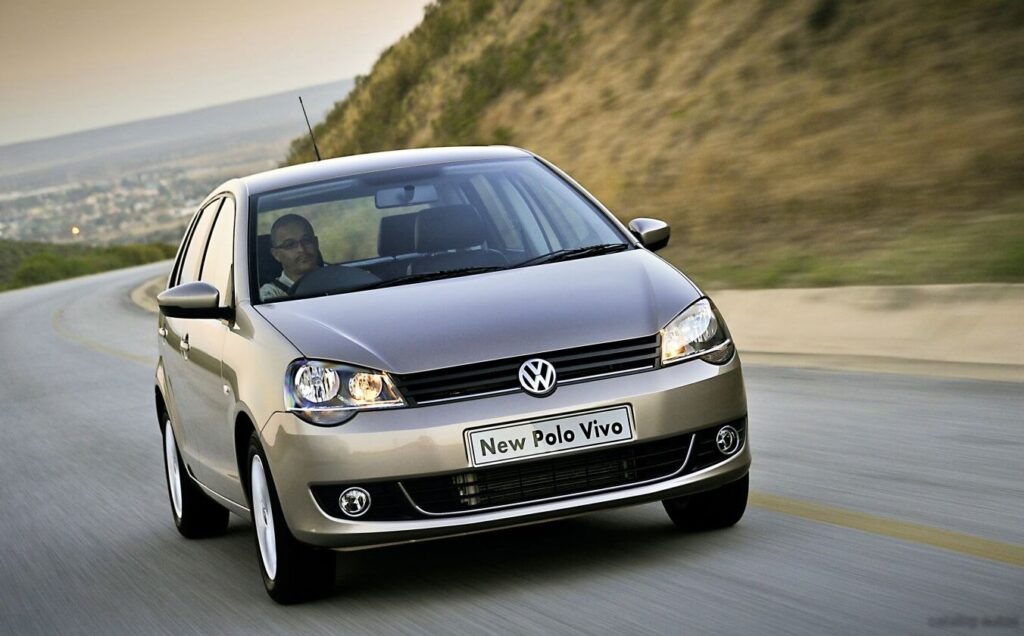
The Volkswagen Polo Vivo I 1.4, producing 75 horsepower, was a key entry point into the Polo Vivo range, manufactured from 2010 to 2017. Positioned as the base model, it served as an affordable and practical hatchback primarily targeted at first-time buyers and those seeking economical transportation. The Vivo itself was developed specifically for the South African market, and other emerging economies, as a continuation of the Polo Classic (Mk3 Polo) production after European production ceased. It represented a cost-effective alternative to newer Polo generations, offering a familiar platform with updated features and a focus on durability. This variant played a significant role in Volkswagen’s market share in these regions, providing a reliable and accessible vehicle.
Technical Specifications
| Brand | Volkswagen |
| Model | Polo Vivo |
| Generation | Polo Vivo I |
| Type (Engine) | 1.4 (75 Hp) |
| Start of production | 2010 |
| End of production | 2017 |
| Powertrain Architecture | Internal Combustion engine |
| Body type | Hatchback |
| Seats | 5 |
| Doors | 5 |
| Fuel consumption (urban) | 8.1 l/100 km (29 US mpg, 34.9 UK mpg, 12.3 km/l) |
| Fuel consumption (extra urban) | 5.1 l/100 km (46.1 US mpg, 55.4 UK mpg, 19.6 km/l) |
| Fuel consumption (combined) | 6.2 l/100 km (37.9 US mpg, 45.6 UK mpg, 16.1 km/l) |
| CO2 emissions | 147 g/km |
| Fuel Type | Petrol (Gasoline) |
| Acceleration 0 – 100 km/h | 12.9 sec |
| Acceleration 0 – 62 mph | 12.9 sec |
| Acceleration 0 – 60 mph | 12.3 sec |
| Maximum speed | 171 km/h (106.25 mph) |
| Weight-to-power ratio | 14 kg/Hp, 71.5 Hp/tonne |
| Weight-to-torque ratio | 7.9 kg/Nm, 125.8 Nm/tonne |
| Power | 75 Hp @ 5000 rpm |
| Power per litre | 53.6 Hp/l |
| Torque | 132 Nm @ 3600 rpm (97.36 lb.-ft. @ 3600 rpm) |
| Engine layout | Front, Transverse |
| Engine Model/Code | CLPB |
| Engine displacement | 1398 cm3 (85.31 cu. in.) |
| Number of cylinders | 4 |
| Engine configuration | Inline |
| Cylinder Bore | 76.5 mm (3.01 in.) |
| Piston Stroke | 75.6 mm (2.98 in.) |
| Compression ratio | 10.5:1 |
| Number of valves per cylinder | 4 |
| Fuel injection system | Multi-port manifold injection |
| Engine aspiration | Naturally aspirated engine |
| Valvetrain | DOHC |
| Engine oil capacity | 3.2 l (3.38 US qt | 2.82 UK qt) |
| Kerb Weight | 1049 kg (2312.65 lbs.) |
| Trunk (boot) space – minimum | 270 l (9.53 cu. ft.) |
| Trunk (boot) space – maximum | 635 l (22.42 cu. ft.) |
| Fuel tank capacity | 45 l (11.89 US gal | 9.9 UK gal) |
| Length | 3916 mm (154.17 in.) |
| Width | 1650 mm (64.96 in.) |
| Height | 1467 mm (57.76 in.) |
| Wheelbase | 2462 mm (96.93 in.) |
| Front track | 1434 mm (56.46 in.) |
| Rear (Back) track | 1426 mm (56.14 in.) |
| Ride height (ground clearance) | 115 mm (4.53 in.) |
| Minimum turning circle | 10.6 m (34.78 ft.) |
| Drivetrain Architecture | Front wheel drive |
| Number of gears and type of gearbox | 5 gears, manual transmission |
| Front suspension | Spring Strut, Wishbone |
| Rear suspension | Spring Strut, Trailing arm, Torsion |
| Front brakes | Disc |
| Rear brakes | Drum |
| Assisting systems | ABS (Anti-lock braking system) |
| Steering type | Steering rack and pinion |
| Power steering | Hydraulic Steering |
| Tires size | 175/65 R14 |
| Wheel rims size | 5J x 14 |
INTRODUCTION
The Volkswagen Polo Vivo I 1.4 (75 hp) was introduced in 2010 as the foundational model within the Vivo range. The Vivo was essentially a continuation of the Mk3 Polo (Polo Classic) production, tailored for markets like South Africa where demand for affordable, reliable transportation remained strong. It filled the gap left by the discontinuation of the Polo Classic in Europe, offering a familiar and proven platform with some updates. This 1.4-liter variant was specifically designed to be the most accessible option, prioritizing fuel efficiency and low running costs over outright performance. It was built on the 6N2 platform, a well-regarded chassis known for its robustness.
Powertrain & Engine Architecture
At the heart of the Polo Vivo 1.4 is the CLPB engine code, a 1.4-liter inline-four cylinder petrol engine. This engine is a naturally aspirated unit utilizing a multi-port fuel injection system. The engine features a double overhead camshaft (DOHC) valvetrain with four valves per cylinder, contributing to reasonable efficiency and responsiveness for its displacement. The 75 horsepower output is achieved at 5000 rpm, while peak torque of 132 Nm (97.36 lb-ft) arrives at 3600 rpm. The engine’s compression ratio is 10.5:1. The engine is transversely mounted, driving the front wheels. The standard transmission for this variant was a five-speed manual gearbox, chosen for its simplicity and cost-effectiveness. The gearbox ratios were geared towards fuel economy rather than rapid acceleration.
Driving Characteristics
The driving experience in the Polo Vivo 1.4 75 hp is best described as practical and undemanding. Acceleration is modest, taking approximately 12.9 seconds to reach 100 km/h (62 mph). The engine feels somewhat strained when pushed hard, particularly when fully loaded or tackling inclines. The five-speed manual transmission is light and easy to use, but the gear ratios are spaced to prioritize fuel efficiency over spirited driving. Compared to higher-output Polo Vivo variants, such as those with larger engines or turbocharging, this 1.4-liter model feels significantly less powerful. However, it offers a smooth and predictable driving experience in urban environments and on relatively flat roads. The steering is light and precise, making it easy to maneuver in tight spaces.
Equipment & Trim Levels
The Polo Vivo 1.4, as the entry-level model, came with a relatively basic but functional equipment list. Standard features typically included power steering, central locking, and an immobilizer. Interior upholstery was usually cloth, with a simple dashboard layout. Air conditioning was often an optional extra, as were power windows and a radio/CD player. Safety features included dual front airbags and ABS (Anti-lock Braking System). Higher trim levels within the Vivo range offered upgrades such as alloy wheels, upgraded interior trim, and additional convenience features, but the 1.4 model focused on providing essential features at an affordable price point.
Chassis & Braking
The Polo Vivo I utilized a robust chassis derived from the Mk3 Polo. The front suspension consisted of a spring strut and wishbone setup, while the rear employed a spring strut and trailing arm with torsion beam arrangement. This suspension configuration provided a comfortable ride quality, although it wasn’t particularly sporty. The braking system featured disc brakes on the front wheels and drum brakes on the rear. ABS was standard, enhancing braking performance and stability, especially on slippery surfaces. The relatively light weight of the vehicle (1049 kg / 2312.65 lbs) helped to compensate for the modest braking power.
Market Reception & Comparison
The Polo Vivo 1.4 was generally well-received in its target markets as a practical and affordable hatchback. Critics praised its reliability, fuel efficiency, and low running costs. However, the engine’s lack of power was a common criticism. Compared to other trims in the Polo Vivo lineup, such as the 1.6-liter models, the 1.4 offered significantly less performance but at a lower purchase price. It competed with other entry-level hatchbacks in the same segment, such as the Toyota Yaris and Ford Fiesta, often undercutting them on price. Fuel economy figures of around 6.2 l/100 km (37.9 US mpg) were competitive for its class.
Legacy
The Polo Vivo I 1.4 has proven to be a remarkably durable and reliable vehicle. In the used car market, these models are still relatively common and are often sought after by buyers looking for an affordable and dependable car. The CLPB engine is known for its longevity, provided it has been properly maintained. While not a performance icon, the Polo Vivo 1.4 served a vital role in providing accessible transportation to a wide range of customers, and its reputation for reliability continues to make it a popular choice in the used car market today. Parts availability remains good, contributing to its continued viability as a budget-friendly option.

