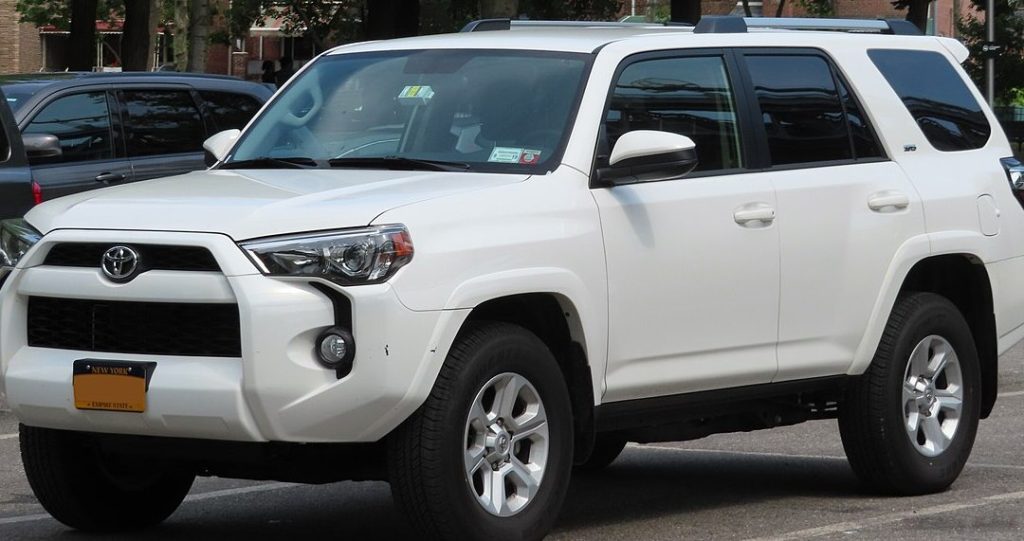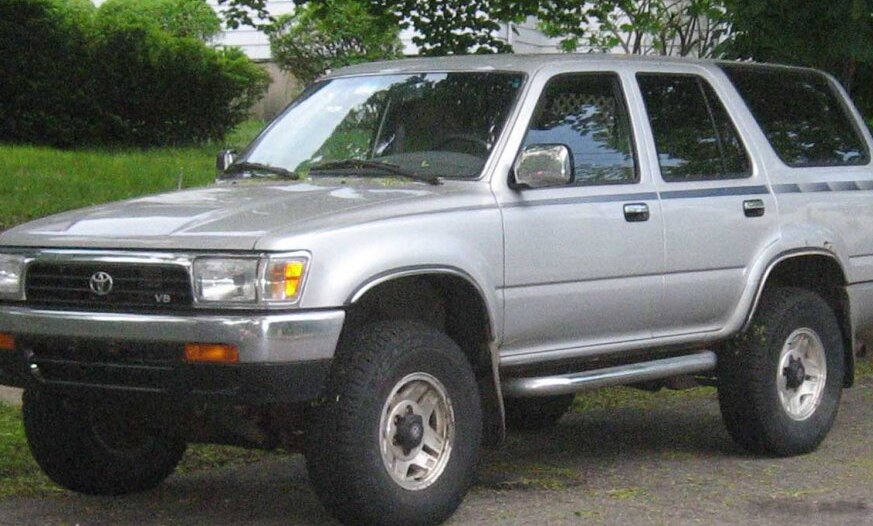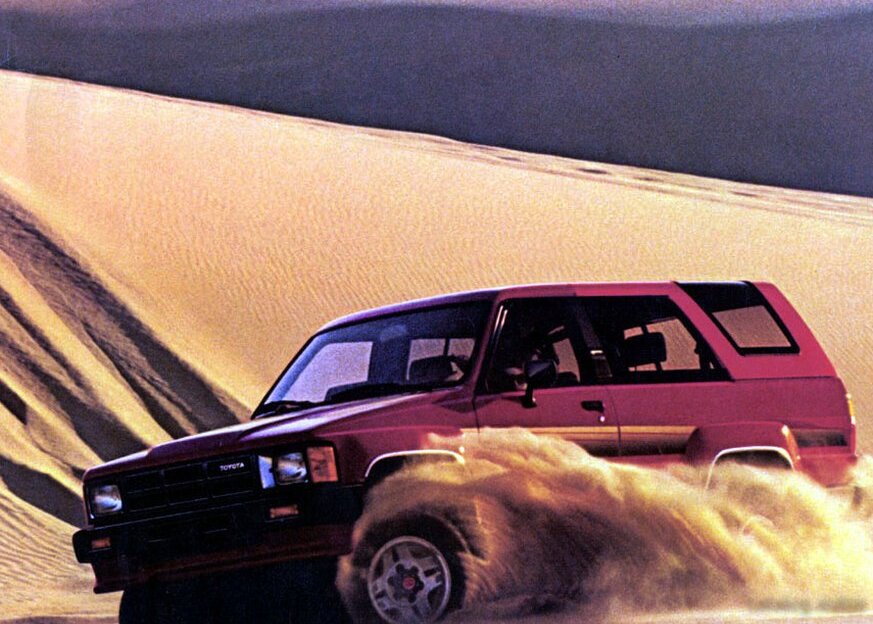
The Toyota 4Runner I 3.0i V6 4×4 Automatic, produced primarily for the 1989 model year, represents the first generation of Toyota’s popular SUV. Falling within the first generation (1984-1989) of the 4Runner, this variant occupied a mid-range position in the lineup, offering a blend of off-road capability and relative comfort. Initially conceived as a compact, rugged body-on-frame vehicle based on the Toyota Hilux pickup truck chassis, the 4Runner quickly gained traction as a versatile vehicle appealing to those seeking both utility and recreational capabilities. This specific configuration, with the 3.0-liter V6 engine and four-speed automatic transmission, was aimed at buyers who desired a more refined driving experience than the standard four-cylinder options offered, while still retaining the 4Runner’s core off-road DNA.
Technical Specifications
| Brand | Toyota |
| Model | 4Runner |
| Generation | 4Runner I |
| Type (Engine) | 3.0i V6 (150 Hp) 4×4 Automatic |
| Start of production | 1989 |
| End of production | 1989 |
| Powertrain Architecture | Internal Combustion engine |
| Body type | SUV |
| Seats | 5 |
| Doors | 3 |
| Fuel consumption (urban) | 15.6 l/100 km (15.1 US mpg / 18.1 UK mpg / 6.4 km/l) |
| Fuel consumption (extra urban) | 13 l/100 km (18.1 US mpg / 21.7 UK mpg / 7.7 km/l) |
| Fuel Type | Petrol (Gasoline) |
| Power | 150 Hp @ 4800 rpm |
| Power per litre | 50.7 Hp/l |
| Torque | 244 Nm @ 3400 rpm (179.97 lb.-ft. @ 3400 rpm) |
| Engine layout | Front, Longitudinal |
| Engine Model/Code | 3VZ-E |
| Engine displacement | 2958 cm3 (180.51 cu. in.) |
| Number of cylinders | 6 |
| Engine configuration | V-engine |
| Cylinder Bore | 87.5 mm (3.44 in.) |
| Piston Stroke | 82 mm (3.23 in.) |
| Compression ratio | 9:1 |
| Number of valves per cylinder | 2 |
| Fuel injection system | Multi-port manifold injection |
| Engine aspiration | Naturally aspirated engine |
| Valvetrain | OHC |
| Engine oil capacity | 4.5 l (4.76 US qt | 3.96 UK qt) |
| Coolant capacity | 10.3 l (10.88 US qt | 9.06 UK qt) |
| Max. weight | 2350 kg (5180.86 lbs.) |
| Trunk (boot) space – minimum | 1200 l (42.38 cu. ft.) |
| Trunk (boot) space – maximum | 2100 l (74.16 cu. ft.) |
| Fuel tank capacity | 65 l (17.17 US gal | 14.3 UK gal) |
| Length | 4435 mm (174.61 in.) |
| Width | 1689 mm (66.5 in.) |
| Height | 1679 mm (66.1 in.) |
| Wheelbase | 2625 mm (103.35 in.) |
| Front track | 1430 mm (56.3 in.) |
| Rear track | 1425 mm (56.1 in.) |
| Ride height (ground clearance) | 269 mm (10.59 in.) |
| Minimum turning circle | 11.3 m (37.07 ft.) |
| Approach angle | 37° |
| Departure angle | 22.5° |
| Drive wheel | All wheel drive (4×4) |
| Number of gears | 4 |
| Gearbox type | Automatic transmission |
| Front suspension | Independent torsion bar, double wishbone |
| Rear suspension | Leaf spring |
| Front brakes | Ventilated discs |
| Rear brakes | Drum |
| Steering type | Worm-reduction unit |
| Power steering | Hydraulic |
| Tires size | 225/75 R15 |
| Wheel rims size | 15 |
Powertrain & Engine Architecture
The heart of this 4Runner variant is the 3VZ-E engine, a 3.0-liter, naturally aspirated V6. This engine, a staple in Toyota’s lineup during the late 1980s and early 1990s, features a single overhead camshaft (OHC) design and multi-port fuel injection. The 3VZ-E produces 150 horsepower at 4800 rpm and 244 Nm (179.97 lb-ft) of torque at 3400 rpm. The engine’s longitudinal mounting within the chassis contributes to a more balanced weight distribution, aiding in both on-road handling and off-road stability. Paired with this engine is a four-speed automatic transmission, offering smoother shifts compared to the available five-speed manual. This automatic transmission, while providing convenience, was geared more towards comfortable cruising than aggressive acceleration.
Driving Characteristics
The 4Runner 3.0i V6 Automatic delivers a noticeably more relaxed driving experience compared to the four-cylinder models. While not a performance machine, the V6 provides adequate power for everyday driving and moderate off-road excursions. The automatic transmission, while smooth, does result in some power loss compared to the manual transmission. Gear ratios are optimized for torque delivery at lower speeds, making it suitable for navigating challenging terrain. However, passing maneuvers at highway speeds require careful planning. The 4×4 system, engaged via a lever inside the cabin, provides part-time four-wheel drive, offering enhanced traction in slippery conditions or off-road environments.
Equipment & Trim Levels
The 1989 4Runner 3.0i V6 Automatic typically came standard with features such as air conditioning, a basic AM/FM radio, and cloth upholstery. Power steering was also a standard inclusion. Optional extras included upgraded sound systems, sunroofs, and rear-seat heaters. Interior trim was relatively basic, reflecting the vehicle’s utilitarian origins, but offered a durable and functional layout. The dashboard featured a straightforward design with clearly marked gauges for speed, fuel level, coolant temperature, and other vital information.
Chassis & Braking
The 4Runner’s chassis is a traditional body-on-frame construction, providing robust durability and off-road capability. Front suspension utilizes an independent torsion bar and double wishbone setup, offering a reasonable level of ride comfort. The rear suspension employs leaf springs, a cost-effective and durable solution well-suited for carrying loads and tackling rough terrain. Braking duties are handled by ventilated discs at the front and drum brakes at the rear. While adequate for the vehicle’s weight and intended use, the braking system lacks the stopping power of more modern vehicles.
Market Reception & Comparison
The 4Runner 3.0i V6 Automatic was generally well-received by automotive critics as a capable and versatile SUV. It was praised for its off-road prowess, comfortable ride (for its class), and the added refinement of the V6 engine. Compared to the base four-cylinder models, the V6 offered a significant improvement in performance and drivability, justifying the higher price tag. However, fuel economy was a common criticism, with the V6 consuming considerably more fuel than the smaller engine options. Compared to competitors like the Chevrolet Blazer and Ford Bronco II, the 4Runner offered a reputation for superior reliability and build quality.
Legacy
The 4Runner 3.0i V6 Automatic, while a relatively short-lived variant, has established a solid reputation for long-term reliability. The 3VZ-E engine is known for its durability, and with proper maintenance, can exceed 200,000 miles. Today, these first-generation 4Runners are sought after by enthusiasts and collectors, particularly those who appreciate their rugged simplicity and off-road capabilities. Well-maintained examples command a premium in the used car market, reflecting their enduring appeal and the growing demand for classic SUVs. The automatic transmission, while not as sporty as the manual, remains a reliable component, though regular fluid changes are crucial for longevity.