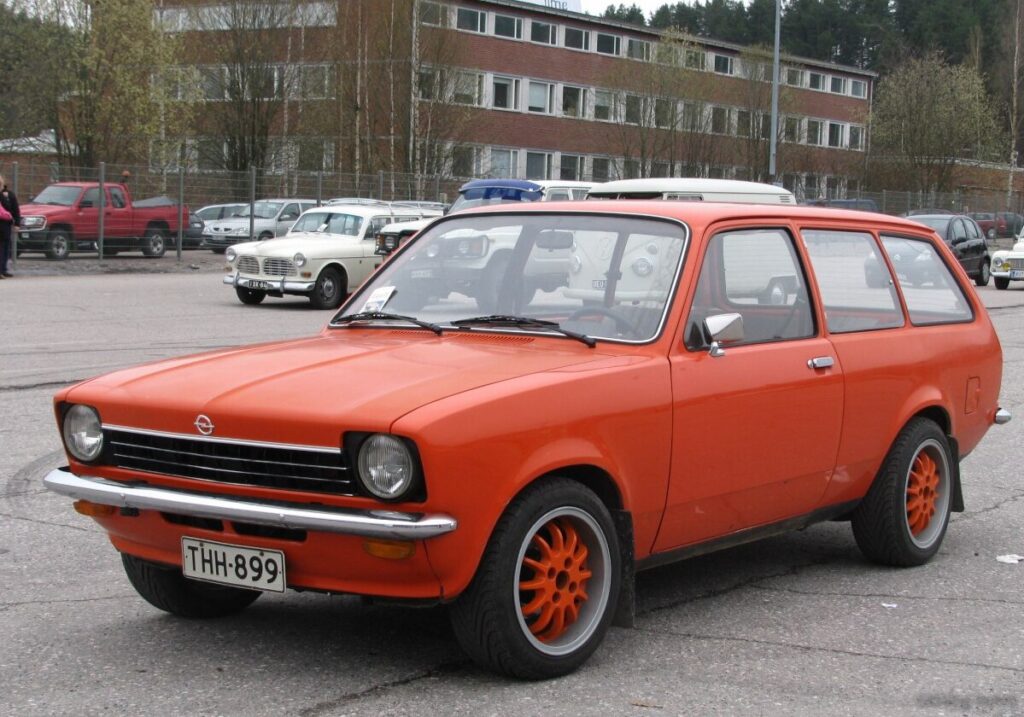
The Opel Kadett C Caravan 1.2 S Automatic, produced between 1973 and 1979, represented an entry-level offering within the broader Kadett C range. Positioned as a practical and affordable family vehicle, it catered to buyers seeking a spacious station wagon with the convenience of an automatic transmission. The Kadett C, launched in 1972, was a significant model for Opel, building upon the success of the Kadett B and offering a more modern design and improved features. The Caravan body style, a station wagon, was a popular choice in Europe, offering increased cargo capacity for families and businesses. This particular 1.2 S Automatic variant occupied the lower end of the performance spectrum for the C Caravan, prioritizing fuel economy and ease of driving over outright speed.
Technical Specifications
| Brand | Opel |
| Model | Kadett |
| Generation | Kadett C Caravan |
| Type (Engine) | 1.2 S (60 Hp) Automatic |
| Start of production | 1973 |
| End of production | 1979 |
| Powertrain Architecture | Internal Combustion engine |
| Body type | Station wagon (estate) |
| Seats | 5 |
| Doors | 5 |
| Fuel consumption (combined) | 8.6 l/100 km |
| Fuel consumption (US mpg) | 27.4 |
| Fuel consumption (UK mpg) | 32.8 |
| Fuel consumption (km/l) | 11.6 |
| Fuel Type | Petrol (Gasoline) |
| Acceleration 0 – 100 km/h | 22 sec |
| Acceleration 0 – 62 mph | 22 sec |
| Acceleration 0 – 60 mph | 20.9 sec |
| Maximum speed | 137 km/h (85.13 mph) |
| Weight-to-power ratio | 13.7 kg/Hp |
| Weight-to-torque ratio | 9.1 kg/Nm |
| Power | 60 Hp @ 5400 rpm |
| Power per litre | 50.2 Hp/l |
| Torque | 90 Nm (66.38 lb.-ft.) |
| Engine layout | Front, Longitudinal |
| Engine Model/Code | 12S |
| Engine displacement | 1196 cm3 (72.98 cu. in.) |
| Number of cylinders | 4 |
| Engine configuration | Inline |
| Cylinder Bore | 79 mm (3.11 in.) |
| Piston Stroke | 61 mm (2.4 in.) |
| Compression ratio | 9:1 |
| Number of valves per cylinder | 2 |
| Fuel injection system | Carburettor |
| Engine aspiration | Naturally aspirated |
| Engine oil capacity | 2.8 l (2.96 US qt | 2.46 UK qt) |
| Coolant capacity | 4.7 l (4.97 US qt | 4.14 UK qt) |
| Kerb Weight | 820 kg (1807.79 lbs.) |
| Max. weight | 1270 kg (2799.87 lbs.) |
| Max load | 450 kg (992.08 lbs.) |
| Trunk (boot) space – maximum | 450 l (15.89 cu. ft.) |
| Fuel tank capacity | 43 l (11.36 US gal | 9.46 UK gal) |
| Max. roof load | 60 kg (132.28 lbs.) |
| Permitted trailer load with brakes (12%) | 800 kg (1763.7 lbs.) |
| Permitted trailer load without brakes | 430 kg (947.99 lbs.) |
| Length | 4140 mm (162.99 in.) |
| Width | 1580 mm (62.2 in.) |
| Height | 1385 mm (54.53 in.) |
| Wheelbase | 2395 mm (94.29 in.) |
| Front track | 1300 mm (51.18 in.) |
| Rear track | 1299 mm (51.14 in.) |
| Minimum turning circle | 9.2 m (30.18 ft.) |
| Drivetrain | Rear wheel drive |
| Number of gears | 3 |
| Gearbox type | Automatic transmission |
| Front brakes | Disc |
| Rear brakes | Drum |
| Tires size | 155 SR13 |
| Wheel rims size | 13 |
Powertrain & Engine Architecture
The Kadett C Caravan 1.2 S Automatic was powered by a 1,196 cc (72.98 cubic inches) inline-four cylinder engine, designated the 12S. This engine was a relatively simple design, featuring a single overhead camshaft and two valves per cylinder. Fuel delivery was handled by a carburetor, a common feature for vehicles of this era. The engine produced 60 horsepower at 5,400 rpm and 90 Nm (66.38 lb-ft) of torque. The engine was mounted longitudinally in the front of the vehicle, driving the rear wheels. The automatic transmission was a three-speed unit, offering a level of convenience not typically found in entry-level cars of the 1970s. While the transmission provided smooth shifts, it did come at the cost of some performance, as the three-speed design lacked the versatility of more modern automatic gearboxes.
Driving Characteristics
The 1.2 S Automatic was not designed for spirited driving. Acceleration was leisurely, taking approximately 22 seconds to reach 62 mph (100 km/h). The automatic transmission, while convenient, contributed to a noticeable power loss compared to the manual transmission versions of the Kadett C. The gear ratios were optimized for fuel economy and smooth cruising rather than rapid acceleration. In real-world conditions, the car felt adequate for city driving and highway cruising, but struggled with steep hills or when fully loaded. Compared to the more powerful Kadett C variants, such as the 1.6 S or the later 2.0 E, the 1.2 S Automatic offered a significantly more relaxed driving experience, prioritizing comfort and ease of use over performance.
Equipment & Trim Levels
The 1.2 S Automatic trim level was considered a mid-range offering within the Kadett C Caravan lineup. Standard equipment included cloth upholstery, basic instrumentation (speedometer, fuel gauge, temperature gauge), and a two-spoke steering wheel. The interior was functional and durable, reflecting the car’s practical nature. Optional extras included a radio, upgraded upholstery, and a sunroof. The exterior featured chrome trim around the windows and bumpers, and relatively simple steel wheels with hubcaps. The Caravan body style offered a generous amount of cargo space, making it a popular choice for families and those needing to transport larger items.
Chassis & Braking
The Kadett C Caravan featured a relatively simple chassis design. The front suspension utilized independent coil springs, while the rear suspension employed a rigid axle with leaf springs. The braking system consisted of disc brakes on the front wheels and drum brakes on the rear wheels. The braking performance was adequate for the car’s weight and power, but lacked the stopping power of more modern vehicles. The steering was a recirculating ball system, providing a relatively vague feel. Stabilizer bars were not standard equipment on the 1.2 S Automatic, contributing to a slightly more pronounced body roll in corners.
Market Reception & Comparison
The Kadett C Caravan 1.2 S Automatic was generally well-received by critics as a practical and affordable family vehicle. However, the automatic transmission and relatively low horsepower were often criticized. Fuel economy was a strong point, with the car achieving around 27.4 US mpg. Compared to other trims in the Kadett C lineup, the 1.2 S Automatic offered a more comfortable and convenient driving experience, but at the expense of performance. The manual transmission versions of the 1.2 S offered better acceleration and fuel economy, while the larger-engined variants provided significantly more power. The Kadett C Caravan competed with other European station wagons, such as the Ford Escort Estate and the Vauxhall/Bedford Astra Estate.
Legacy
The Opel Kadett C Caravan 1.2 S Automatic, while not a particularly exciting vehicle, proved to be a reliable and durable workhorse for many owners. The 12S engine, while simple, was generally robust and relatively easy to maintain. The automatic transmission, while not known for its longevity, could provide years of service with proper maintenance. Today, the Kadett C Caravan is a popular classic car, particularly in Europe. The 1.2 S Automatic variant is less common than the manual transmission versions, making it a somewhat more desirable collector’s item. Parts availability can be a challenge, but a dedicated community of enthusiasts continues to support the model, ensuring its continued survival.