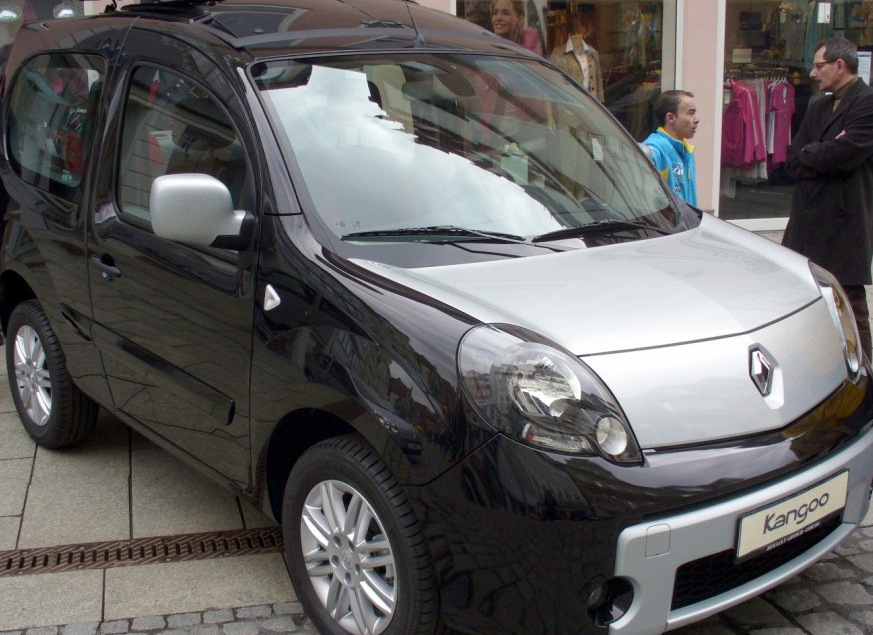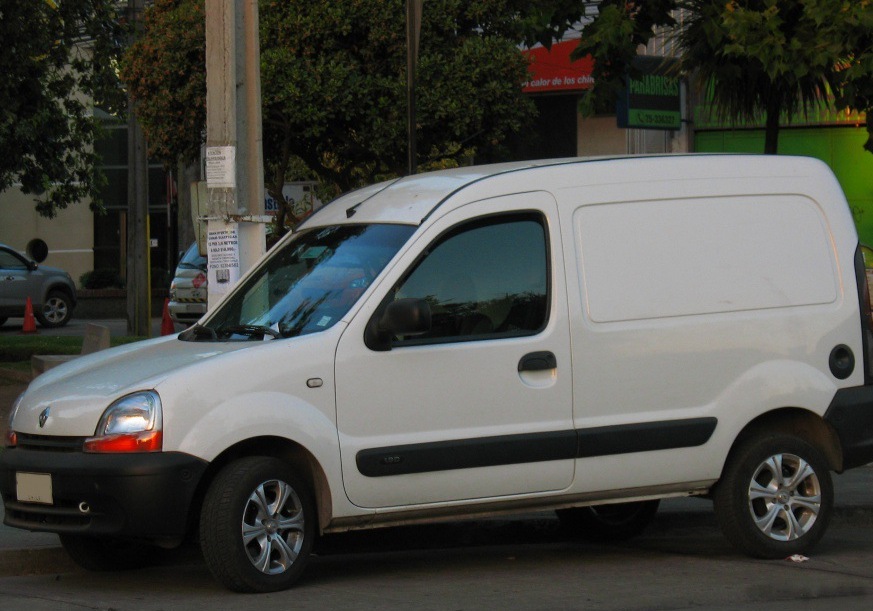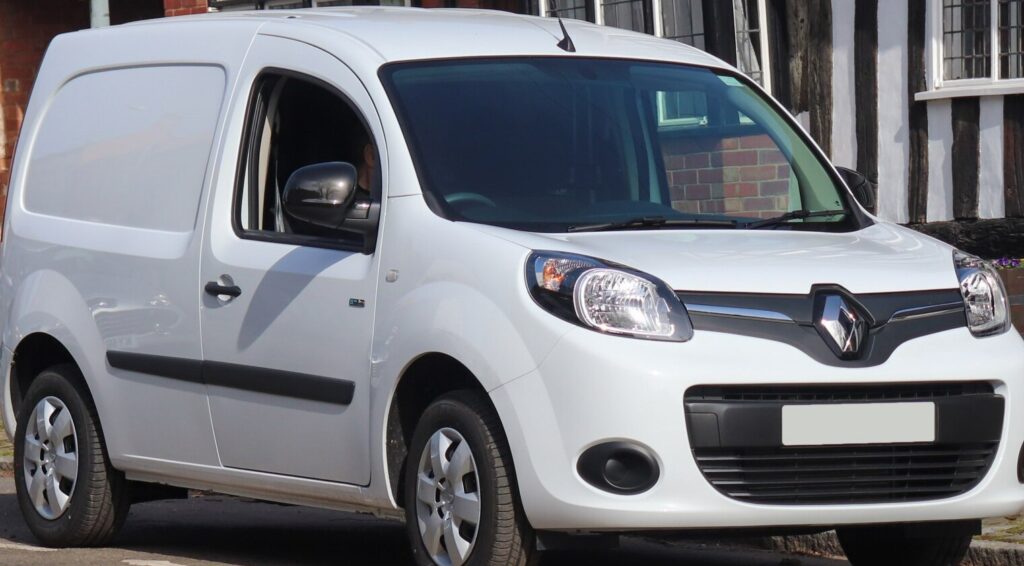
The Renault Kangoo II Express Z.E. 33 kWh, producing 60 horsepower, represents Renault’s entry into the electric light commercial vehicle (LCV) market. Introduced in 2017 as part of the Kangoo II facelift (internally designated the B91 series), this variant was specifically designed for urban delivery and service applications. It offered a zero-emission solution for businesses and tradespeople, capitalizing on growing environmental regulations and the demand for sustainable transport options in Europe. Production continued until 2021, with the Kangoo Z.E. serving as a key component of Renault’s “ElectriCity” strategy. This particular configuration, with its limited power output, was positioned as the base model within the Kangoo Z.E. range, prioritizing range and affordability over outright performance.
Technical Specifications
| Brand | Renault |
| Model | Kangoo |
| Generation | Kangoo II Express (facelift 2013) |
| Type (Engine) | Z.E. 33 kWh (60 Hp) |
| Start of production | 2017 |
| End of production | 2021 |
| Powertrain Architecture | BEV (Electric Vehicle) |
| Body type | Minivan |
| Seats | 2 |
| Doors | 3 |
| Fuel Type | Electricity |
| Acceleration 0 – 100 km/h | 20.6 sec |
| Acceleration 0 – 62 mph | 20.6 sec |
| Acceleration 0 – 60 mph | 19.6 sec |
| Maximum speed | 130 km/h (80.78 mph) |
| Weight-to-power ratio | 25.1 kg/Hp |
| Weight-to-torque ratio | 6.7 kg/Nm |
| Gross battery capacity | 33 kWh |
| Net (usable) battery capacity | 31 kWh |
| Battery voltage | 400 V |
| Battery technology | Lithium-ion (Li-Ion) |
| Battery weight | 255 kg (562.18 lbs) |
| Battery location | Below the floor |
| All-electric range | 270 km (167.77 mi) |
| Average Energy consumption | 15.2 kWh/100 km (24.46 kWh/100 mi) |
| MPGe | 138 |
| km/kWh | 6.6 |
| mi/kWh | 4.1 |
| Electric motor power | 60 Hp @ 12000 rpm |
| Electric motor Torque | 225 Nm @ 225-1870 rpm (165.95 lb.-ft. @ 225-1870 rpm) |
| Electric motor model/code | 5AQ 60 |
| Electric motor location | Front axle, Transverse |
| System power | 60 Hp @ 12000 rpm |
| System torque | 225 Nm @ 225-1870 rpm (165.95 lb.-ft. @ 225-1870 rpm) |
| Kerb Weight | 1505 kg (3317.96 lbs) |
| Max. weight | 2130 kg (4695.85 lbs) |
| Max load | 625 kg (1377.89 lbs) |
| Trunk (boot) space – minimum | 3000 l (105.94 cu. ft) |
| Trunk (boot) space – maximum | 3500 l (123.6 cu. ft) |
| Permitted trailer load with brakes (12%) | 374 kg (824.53 lbs) |
| Permitted trailer load without brakes | 374 kg (824.53 lbs) |
| Length | 4282 mm (168.58 in) |
| Width | 1829 mm (72.01 in) |
| Width including mirrors | 2138 mm (84.17 in) |
| Height | 1844 mm (72.6 in) |
| Wheelbase | 2697 mm (106.18 in) |
| Front track | 1521 mm (59.88 in) |
| Rear (Back) track | 1533 mm (60.35 in) |
| Front overhang | 875 mm (34.45 in) |
| Rear overhang | 710 mm (27.95 in) |
| Ride height (ground clearance) | 184 mm (7.24 in) |
| Minimum turning circle | 10.7 m (35.1 ft) |
| Drivetrain Architecture | One electric motor drives the front wheels |
| Drive wheel | Front wheel drive |
| Number of gears and type of gearbox | 1 gears, automatic transmission |
| Front suspension | Independent type McPherson |
| Rear suspension | Torsion |
| Front brakes | Ventilated discs, 280×24 mm |
| Rear brakes | Disc, 274×11 mm |
| Assisting systems | ABS (Anti-lock braking system) |
| Steering type | Steering rack and pinion |
| Power steering | Electric Steering |
| Tires size | 195/65 R15 |
| Wheel rims size | 6J x 15 |
Powertrain & Engine Architecture
The Kangoo Z.E. utilizes a fully electric powertrain, centered around a 33 kWh lithium-ion battery pack. This pack, composed of 192 cells, is located under the vehicle floor, contributing to a lower center of gravity and maximizing cargo space. The electric motor, designated 5AQ 60, delivers 60 horsepower (44 kW) at 12,000 rpm and 225 Nm (165.95 lb-ft) of torque available from 225 to 1870 rpm. This motor is a synchronous reluctance motor, chosen for its efficiency and relatively simple construction. The single-speed automatic transmission provides seamless acceleration, although it’s primarily geared towards efficiency rather than rapid acceleration. The charging port is located on the front fender, allowing for AC charging via a Type 2 connector. DC fast charging capability was limited on earlier models, but later iterations offered faster charging rates.
Driving Characteristics
The 60 hp output of the Kangoo Z.E. results in modest performance. Acceleration from 0-100 km/h (0-62 mph) takes approximately 20.6 seconds, making it unsuitable for high-speed applications. However, the instant torque delivery of the electric motor provides adequate responsiveness for urban driving and low-speed maneuvers. The single-speed transmission simplifies operation, but the lack of gear changes can feel somewhat monotonous. The vehicle excels in stop-and-go traffic, where regenerative braking helps to recapture energy and extend range. Compared to the petrol or diesel Kangoo variants, the Z.E. prioritizes quiet operation and smooth acceleration, but sacrifices overall speed and towing capacity.
Equipment & Trim Levels
The Kangoo II Express Z.E. 33 kWh, as the entry-level electric variant, typically came equipped with basic features focused on practicality. Standard equipment included power steering, ABS, a driver’s airbag, and a basic audio system. The interior was typically finished with durable, easy-to-clean plastics. Options included air conditioning, a rear parking sensor, and a navigation system. The trim level was generally focused on functionality, with the emphasis on providing a reliable and cost-effective electric van for commercial use. The seats were designed for durability rather than luxury, and the dashboard layout was straightforward and utilitarian.
Chassis & Braking
The Kangoo Z.E. utilizes a McPherson strut independent suspension at the front and a torsion beam suspension at the rear. This setup provides a comfortable ride quality, particularly when carrying a load. The front brakes are ventilated discs measuring 280×24 mm, while the rear brakes are solid discs measuring 274×11 mm. ABS (Anti-lock Braking System) is standard. The suspension tuning is geared towards maximizing payload capacity and stability, rather than sporty handling. The electric powertrain’s added weight, due to the battery pack, is partially offset by the lower center of gravity, improving stability in corners.
Market Reception & Comparison
The Renault Kangoo Z.E. was generally well-received by critics as a viable electric LCV option. Its primary strengths were its zero-emission capability, relatively low running costs, and practical cargo space. However, its limited range and modest performance were often cited as drawbacks. Compared to the petrol and diesel Kangoo models, the Z.E. offered a quieter and more environmentally friendly driving experience, but at a higher initial purchase price. Fuel economy, expressed as energy consumption, was rated at 15.2 kWh/100 km, translating to approximately 138 MPGe. Reliability reports suggest that the powertrain is generally robust, but battery degradation over time is a potential concern.
Legacy
The Renault Kangoo Z.E. played a significant role in establishing Renault as a leader in the electric LCV market. While the 33 kWh version has been superseded by models with larger battery packs and improved performance, it remains a popular choice in the used vehicle market. The powertrain has proven to be relatively reliable, although regular battery health checks are recommended. The Kangoo Z.E. paved the way for Renault’s continued investment in electric commercial vehicles, and its legacy can be seen in the newer Kangoo E-Tech Electric, which builds upon the foundation laid by the original Z.E. model.