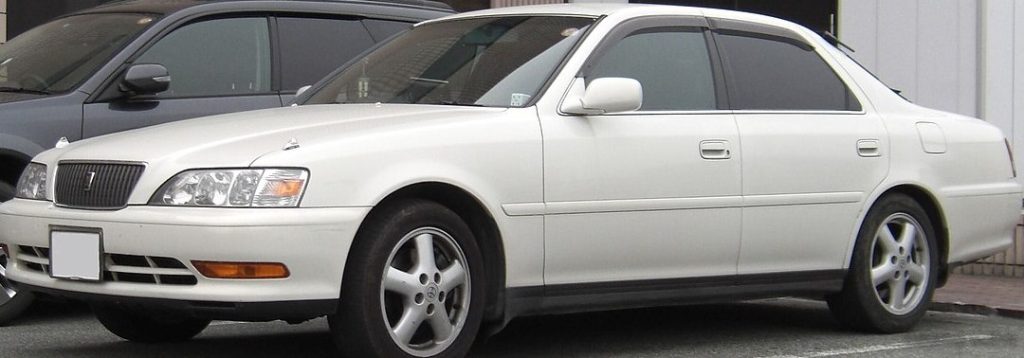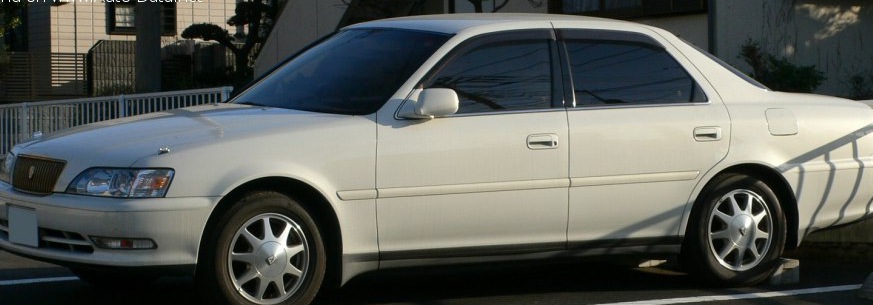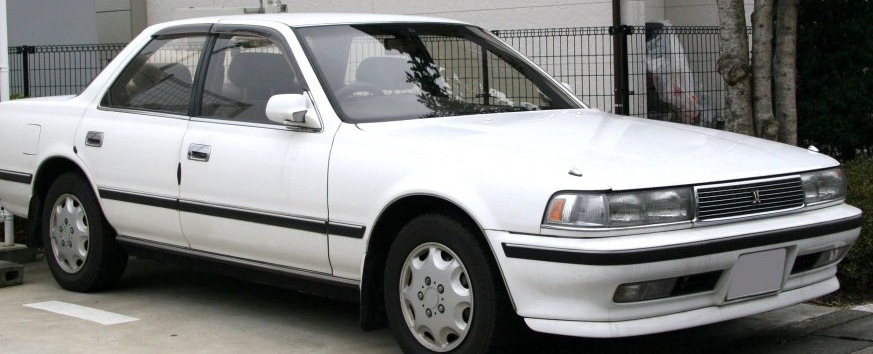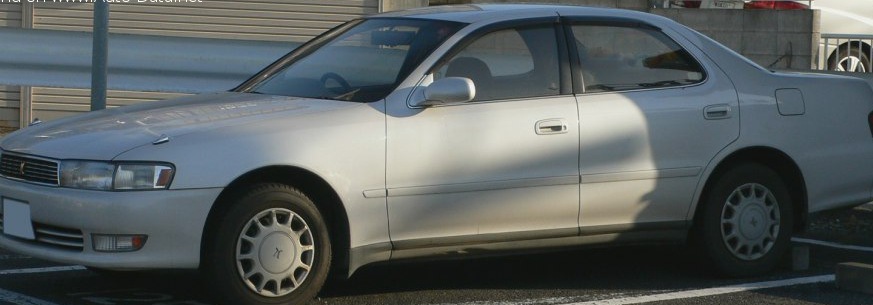
The Toyota Cresta GX90, produced between 1992 and 1996, marked a significant step forward in Toyota’s mid-size sedan offerings. Positioned as a more stylish and sporty alternative to the more conservatively styled Toyota Camry, the Cresta GX90 was designed for the Japanese domestic market (JDM) consumer seeking a balance of comfort, performance, and distinctive design. The 1.8 i 16V SC variant, equipped with the 4S-FE engine and a four-speed automatic transmission, occupied a middle ground within the GX90 lineup, offering a compromise between affordability and respectable performance. It proved a popular choice for buyers desiring a comfortable daily driver without sacrificing the Cresta’s inherent sporting character.
Technical Specifications
| Brand | Toyota |
| Model | Cresta |
| Generation | Cresta (GX90) |
| Type (Engine) | 1.8 i 16V SC (120 Hp) |
| Start of production | 1992 |
| End of production | 1996 |
| Powertrain Architecture | Internal Combustion engine |
| Body type | Sedan |
| Seats | 5 |
| Doors | 4 |
| Fuel Type | Petrol (Gasoline) |
| Weight-to-power ratio | 10.4 kg/Hp, 96 Hp/tonne |
| Weight-to-torque ratio | 7.7 kg/Nm, 129.6 Nm/tonne |
| Power | 120 Hp @ 6000 rpm |
| Power per litre | 65.3 Hp/l |
| Torque | 162 Nm @ 4600 rpm (119.49 lb.-ft. @ 4600 rpm) |
| Engine layout | Front, Longitudinal |
| Engine Model/Code | 4S-FE |
| Engine displacement | 1839 cm3 (112.22 cu. in.) |
| Number of cylinders | 4 |
| Engine configuration | Inline |
| Cylinder Bore | 82.5 mm (3.25 in.) |
| Piston Stroke | 86 mm (3.39 in.) |
| Compression ratio | 9.5:1 |
| Number of valves per cylinder | 4 |
| Fuel injection system | Multi-port manifold injection |
| Engine aspiration | Naturally aspirated engine |
| Valvetrain | DOHC |
| Engine oil capacity | 3.6 l (3.8 US qt | 3.17 UK qt) |
| Coolant | 6.8 l (7.19 US qt | 5.98 UK qt) |
| Kerb Weight | 1250 kg (2755.78 lbs.) |
| Max. weight | 1525 kg (3362.05 lbs.) |
| Max load | 275 kg (606.27 lbs.) |
| Fuel tank capacity | 70 l (18.49 US gal | 15.4 UK gal) |
| Length | 4750 mm (187.01 in.) |
| Width | 1750 mm (68.9 in.) |
| Height | 1390 mm (54.72 in.) |
| Wheelbase | 2730 mm (107.48 in.) |
| Front track | 1485 mm (58.46 in.) |
| Rear (Back) track | 1495 mm (58.86 in.) |
| Drivetrain Architecture | The Internal combustion engine (ICE) drives the rear wheels of the vehicle. |
| Drive wheel | Rear wheel drive |
| Number of gears and type of gearbox | 4 gears, automatic transmission |
| Front suspension | Coil spring |
| Rear suspension | Coil spring |
| Front brakes | Ventilated discs |
| Rear brakes | Disc |
| Assisting systems | ABS (Anti-lock braking system) |
| Steering type | Steering rack and pinion |
| Power steering | Hydraulic Steering |
| Tires size | 185/70 R14 S |
Powertrain & Engine Architecture
The 1.8 i 16V SC Cresta’s engine was the 4S-FE, a 1.8-liter (1839 cc) inline-four cylinder engine. This engine was a common fixture in Toyota’s lineup throughout the early to mid-1990s, appreciated for its reliability and relatively smooth operation. The “16V” designation signifies the engine’s four valves per cylinder, which improved breathing and enhanced high-end power delivery. The 4S-FE employed a multi-port fuel injection system, precisely delivering fuel to each intake port for efficient combustion. A double overhead camshaft (DOHC) valvetrain further optimized the engine’s performance characteristics. The engine was paired with a four-speed automatic transmission, designed for smooth and convenient shifting in everyday driving situations. While reliable, this transmission wasn’t specifically tuned for maximizing performance.
Driving Characteristics
The 4S-FE engine, producing 120 horsepower and 162 Nm (119.49 lb-ft) of torque, coupled with the four-speed automatic transmission, delivered a driving experience focused on comfort and ease of use rather than outright speed. Acceleration was sufficient for typical urban and highway driving, but the car wasn’t particularly quick. Compared to the higher-performance GX90 variants, equipped with engines like the 1JZ-GE or 2JZ-GE, the 1.8L automatic felt noticeably slower. The automatic transmission’s gear ratios were optimized for fuel efficiency and smooth transitions, rather than aggressive downshifts or rapid acceleration. The rear-wheel-drive configuration provided a balanced feel, but the modest power output minimized the risk of oversteer. The suspension, tuned for comfort, effectively absorbed bumps, making it a pleasant vehicle for cruising.
Equipment & Trim Levels
The 1.8 i 16V SC trim generally included standard features like power windows, power steering, central locking, and an AM/FM radio. Interior upholstery was typically cloth, with optional upgrades available. The dashboard layout was straightforward, featuring clearly labeled controls and a functional design. Optional extras included air conditioning, a sunroof, and upgraded audio systems. This trim level aimed to provide a comfortable and well-equipped vehicle at a more accessible price point than the higher-specification models.
Chassis & Braking
The Cresta GX90 utilized a traditional body-on-frame construction, providing a robust and durable chassis. Suspension consisted of coil springs all around, with independent front suspension and a solid rear axle. Braking was handled by ventilated discs at the front and solid discs at the rear. An Anti-lock Braking System (ABS) was often included as standard equipment, enhancing safety by preventing wheel lockup during hard braking. The steering system employed a rack and pinion setup with hydraulic power assistance, offering responsive and precise steering feel.
Market Reception & Comparison
The Cresta 1.8 i 16V SC was generally well-received in the Japanese market as a practical and stylish sedan. Critics praised its comfortable ride, reliable engine, and relatively affordable price. However, some reviewers noted that the automatic transmission could feel somewhat sluggish, and the engine lacked the power of the larger, more potent options available in the GX90 lineup. Compared to the 2.0L or 2.5L variants, the 1.8L offered better fuel economy but significantly less performance. The 1.9 TDI diesel versions, while not directly comparable in driving experience, offered even greater fuel efficiency and appealed to buyers prioritizing economy.
Legacy
The Toyota Cresta GX90, and particularly the 1.8 i 16V SC variant, has garnered a following among enthusiasts and collectors. The 4S-FE engine is renowned for its durability and relatively simple maintenance requirements. While not a high-performance machine, the 1.8L automatic remains a reliable and enjoyable classic car. In the used car market, these models are often sought after for their affordability and classic JDM styling. Parts availability is generally good, although some trim-specific components may be more difficult to locate. The GX90 Cresta, in all its variants, represents a unique chapter in Toyota’s history, offering a blend of style, comfort, and reliability that continues to appeal to car enthusiasts today.