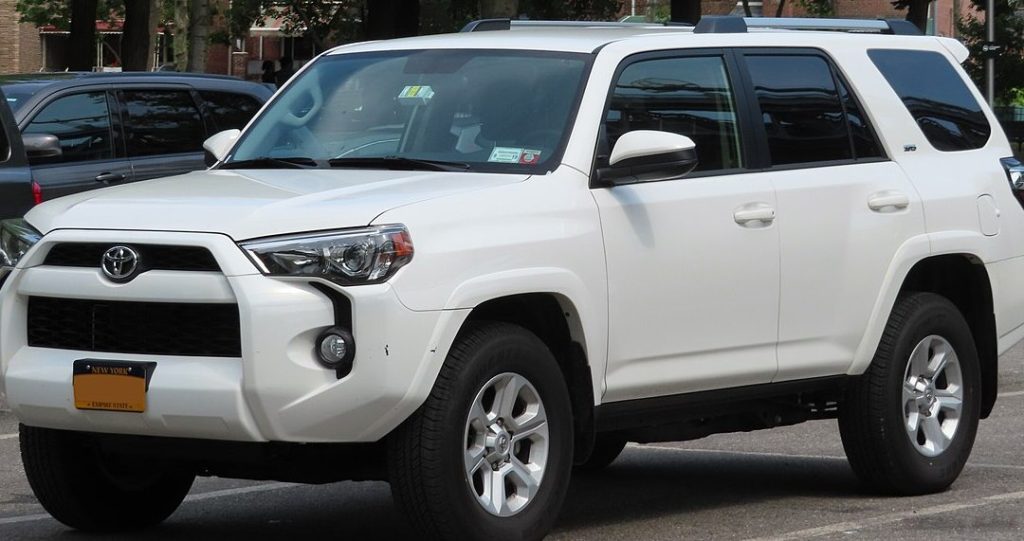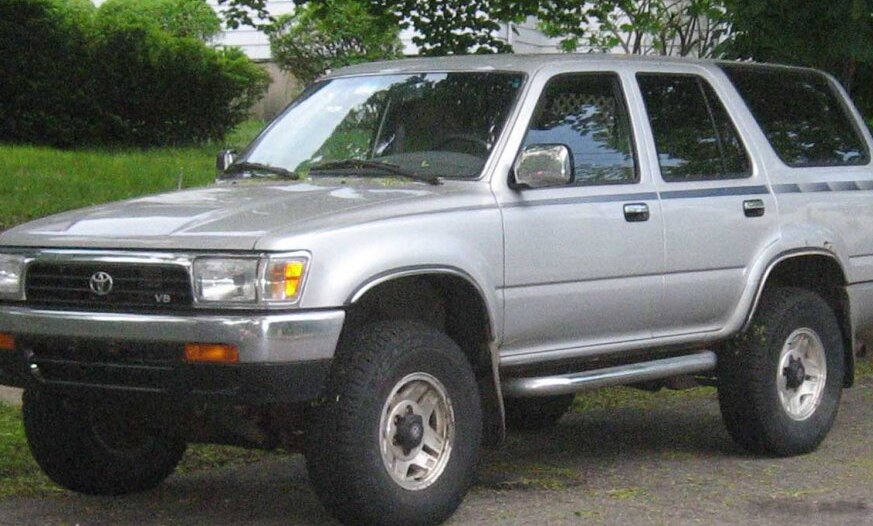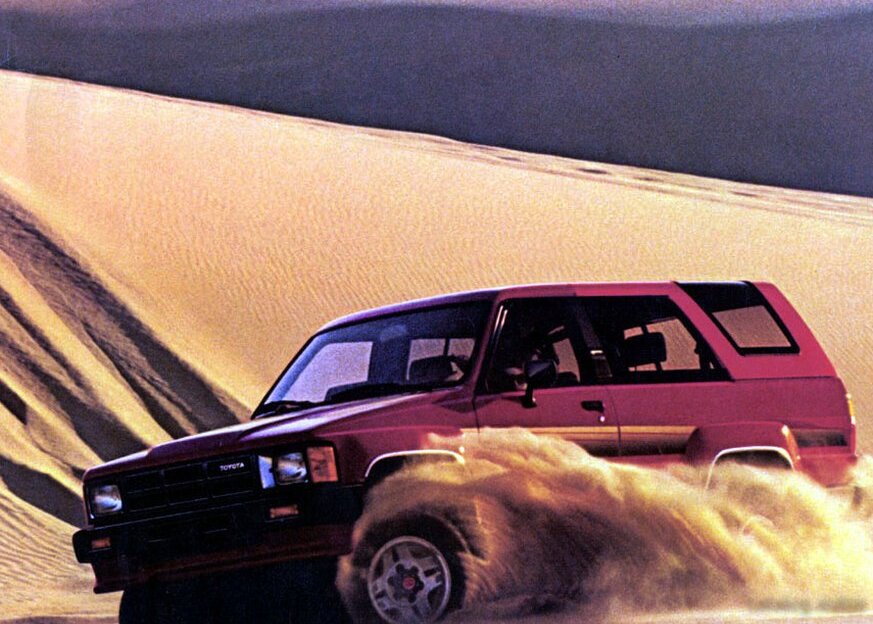
The Toyota 4Runner Deluxe 2.4i, produced between 1987 and 1989, represents the entry-level offering within the first generation (XN10/XN11) of Toyota’s popular SUV. Positioned as a rugged, body-on-frame vehicle, the 4Runner was initially conceived as a compact, two-door alternative to larger, more traditional SUVs. It quickly gained a reputation for reliability and off-road capability, establishing a foothold in the burgeoning SUV market, particularly in North America and Australia. This specific 2.4i Deluxe variant, equipped with a 2.4-liter engine and a four-speed automatic transmission, aimed to provide a balance of affordability and usability for buyers seeking a versatile vehicle for both daily driving and light off-road adventures.
Technical Specifications
| Brand | Toyota |
| Model | 4Runner |
| Generation | 4Runner I |
| Type | Deluxe 2.4i (116 Hp) 4×4 Automatic |
| Start of production | 1987 |
| End of production | 1989 |
| Powertrain Architecture | Internal Combustion engine |
| Body type | SUV |
| Seats | 2 |
| Doors | 3 |
| Fuel consumption (urban) | 12.3 l/100 km (19.1 US mpg / 23 UK mpg) |
| Fuel consumption (extra urban) | 10.6 l/100 km (22.2 US mpg / 26.6 UK mpg) |
| Fuel Type | Petrol (Gasoline) |
| Power | 116 Hp @ 4800 rpm |
| Power per litre | 49 Hp/l |
| Torque | 190 Nm @ 3600 rpm (140.14 lb.-ft. @ 3600 rpm) |
| Engine layout | Front, Longitudinal |
| Engine Model/Code | 22R-E |
| Engine displacement | 2366 cm3 (144.38 cu. in.) |
| Number of cylinders | 4 |
| Engine configuration | Inline |
| Cylinder Bore | 92 mm (3.62 in.) |
| Piston Stroke | 89 mm (3.5 in.) |
| Compression ratio | 9.3:1 |
| Number of valves per cylinder | 2 |
| Fuel injection system | Multi-port manifold injection |
| Engine aspiration | Naturally aspirated engine |
| Valvetrain | SOHC |
| Engine oil capacity | 4.3 l (4.54 US qt | 3.78 UK qt) |
| Coolant capacity | 9.1 l (9.62 US qt | 8.01 UK qt) |
| Max. weight | 2304 kg (5079.45 lbs.) |
| Trunk (boot) space – minimum | 1200 l (42.38 cu. ft.) |
| Trunk (boot) space – maximum | 2100 l (74.16 cu. ft.) |
| Fuel tank capacity | 65 l (17.17 US gal | 14.3 UK gal) |
| Length | 4435 mm (174.61 in.) |
| Width | 1689 mm (66.5 in.) |
| Height | 1679 mm (66.1 in.) |
| Wheelbase | 2625 mm (103.35 in.) |
| Front track | 1430 mm (56.3 in.) |
| Rear track | 1425 mm (56.1 in.) |
| Ride height (ground clearance) | 269 mm (10.59 in.) |
| Minimum turning circle | 11.3 m (37.07 ft.) |
| Approach angle | 37° |
| Departure angle | 22.5° |
| Drive wheel | All wheel drive (4×4) |
| Number of gears | 4 |
| Gearbox type | Automatic transmission |
| Front suspension | Independent torsion bar, double wishbone |
| Rear suspension | Leaf spring |
| Front brakes | Ventilated discs |
| Rear brakes | Drum |
| Assisting systems | ABS (Anti-lock braking system) |
| Steering type | Worm-reduction unit |
| Power steering | Hydraulic Steering |
| Tires size | 225/75 R15 |
| Wheel rims size | 15 |
Powertrain & Engine Architecture
The 4Runner Deluxe 2.4i was powered by the Toyota 22R-E engine, a 2.4-liter inline-four cylinder gasoline engine. This engine was a staple in Toyota’s lineup during the late 1980s, known for its durability and relatively simple design. The 22R-E featured a single overhead camshaft (SOHC) valvetrain operating two valves per cylinder. Fuel delivery was handled by a multi-port fuel injection system, improving efficiency and responsiveness compared to earlier carbureted designs. The engine produced 116 horsepower at 4800 rpm and 190 Nm (140 lb-ft) of torque at 3600 rpm. Paired with this engine was a four-speed automatic transmission, providing convenient shifting for everyday driving. This transmission was not known for its sportiness, prioritizing smooth operation and reliability over aggressive gear changes.
Driving Characteristics
The 4Runner 2.4i Automatic offered a comfortable, if not particularly exhilarating, driving experience. The automatic transmission, while user-friendly, resulted in somewhat sluggish acceleration compared to the available five-speed manual transmission. The gear ratios were optimized for fuel economy and low-speed off-road crawling rather than rapid acceleration. The 116 horsepower was adequate for on-road driving, but the vehicle felt strained when fully loaded or tackling steep inclines. The 4×4 system, engaged via a lever inside the cabin, provided decent traction in loose terrain, making it suitable for light to moderate off-road use. The suspension, featuring torsion bars in the front and leaf springs in the rear, provided a reasonably comfortable ride on paved roads, though it could feel somewhat bouncy when unladen.
Equipment & Trim Levels
The Deluxe trim level, as the name suggests, offered a step up in features compared to the base model. Standard equipment included cloth upholstery, a basic AM/FM radio, and manual windows and locks. Optional extras included air conditioning, a cassette player, and upgraded interior trim. The interior was functional and utilitarian, prioritizing durability over luxury. The dashboard layout was straightforward, with clearly labeled controls. The 4Runner’s relatively spartan interior reflected its intended use as a rugged, practical vehicle.
Chassis & Braking
The 4Runner’s chassis was a traditional body-on-frame construction, providing robust strength and off-road capability. The front suspension utilized independent torsion bars and double wishbones, offering a degree of ride comfort and handling precision. The rear suspension employed leaf springs, a cost-effective and durable solution for supporting heavier loads. Braking duties were handled by ventilated discs in the front and drum brakes in the rear. An Anti-lock Braking System (ABS) was available as an option, enhancing safety by preventing wheel lockup during hard braking. The steering system was a worm-reduction unit with hydraulic power assistance, providing reasonable steering feel and maneuverability.
Market Reception & Comparison
The 4Runner 2.4i Automatic was generally well-received by automotive critics as a capable and reliable SUV. However, the automatic transmission and 2.4-liter engine were often criticized for their lack of performance compared to the manual transmission and the optional 3.0-liter V6 engine. The V6 offered significantly more power and torque, making it a more appealing choice for buyers who prioritized performance. Fuel economy was average for the time, with the 2.4i achieving around 19 mpg in the city and 22 mpg on the highway. The 4Runner’s reputation for reliability and durability contributed to its strong resale value.
Legacy
The first-generation Toyota 4Runner, including the 2.4i Deluxe Automatic variant, established the 4Runner as a benchmark for reliability and off-road capability in the compact SUV segment. The 22R-E engine, in particular, is renowned for its longevity and relatively simple maintenance requirements. Today, well-maintained examples of the first-generation 4Runner are sought after by enthusiasts and collectors. While the 2.4i Automatic may not be the most powerful or fastest version of the 4Runner, its affordability, simplicity, and proven reliability make it a desirable classic SUV. Parts availability remains relatively good, ensuring that these vehicles can be kept on the road for years to come.