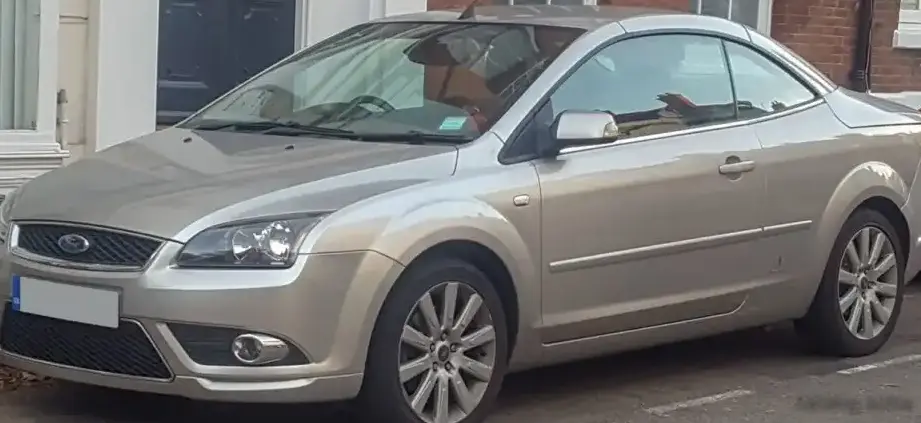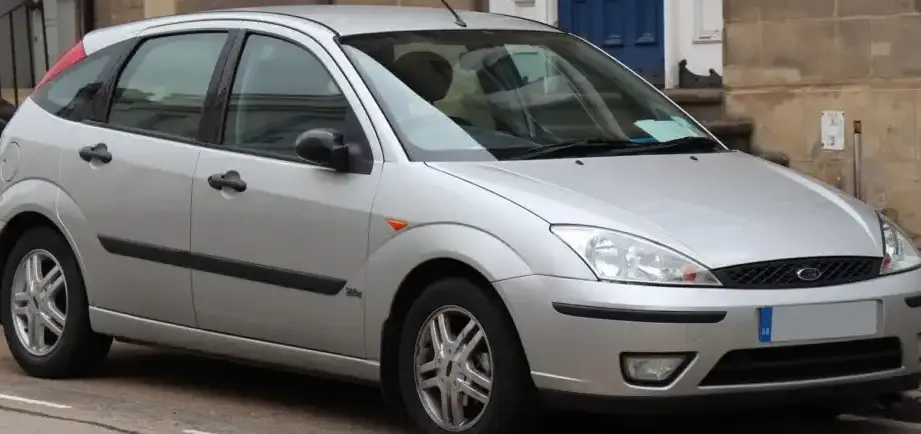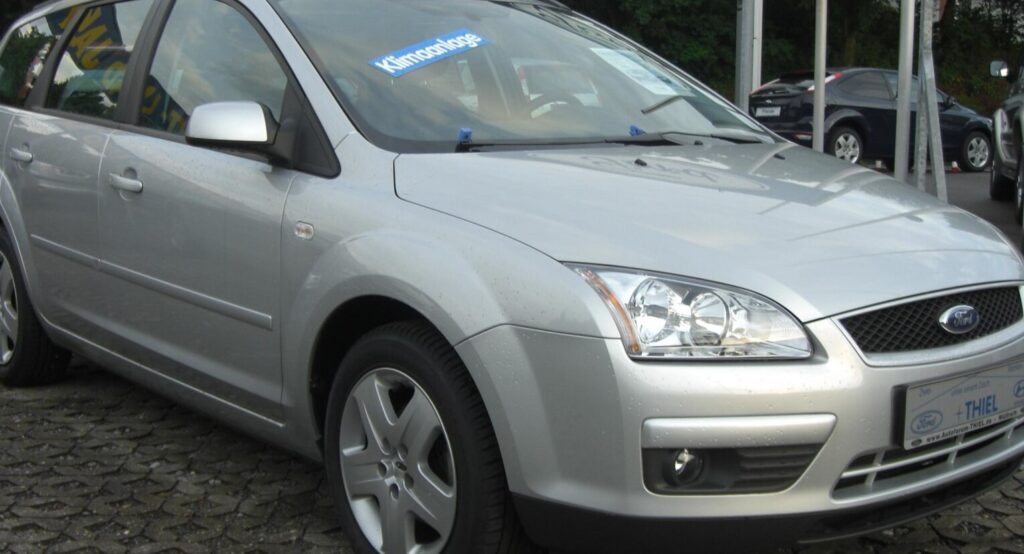
The Ford Focus Turnier II 1.6 TDCi, produced between 2005 and 2010, represented a key offering in Ford of Europe’s lineup during a period of increasing diesel popularity. Positioned as a practical and fuel-efficient option within the second-generation Focus (internally designated as the Mk2) range, the Turnier – Ford’s designation for a station wagon or estate – aimed to provide family-oriented buyers with a versatile vehicle. This particular variant, equipped with the 1.6-liter TDCi engine producing 109 horsepower, was generally considered a mid-range trim, offering a balance between affordability and reasonable performance. It served as a stepping stone between the base petrol models and the more powerful TDCi variants, appealing to drivers prioritizing economy and practicality over outright speed.
Technical Specifications
| Brand | Ford |
| Model | Focus |
| Generation | Focus Turnier II |
| Type (Engine) | 1.6 TDCi HP (109 Hp) |
| Start of production | 2005 |
| End of production | 2010 |
| Powertrain Architecture | Internal Combustion engine |
| Body type | Station wagon (estate) |
| Seats | 5 |
| Doors | 5 |
| Fuel consumption (urban) | 6.2 l/100 km (37.9 US mpg, 45.6 UK mpg, 16.1 km/l) |
| Fuel consumption (extra urban) | 4 l/100 km (58.8 US mpg, 70.6 UK mpg, 25 km/l) |
| Fuel Type | Diesel |
| Acceleration 0 – 100 km/h | 11.1 sec |
| Acceleration 0 – 62 mph | 11.1 sec |
| Acceleration 0 – 60 mph | 10.5 sec |
| Maximum speed | 188 km/h (116.82 mph) |
| Weight-to-power ratio | 12.2 kg/Hp, 82.3 Hp/tonne |
| Weight-to-torque ratio | 5.5 kg/Nm, 181.1 Nm/tonne |
| Power | 109 Hp @ 4000 rpm |
| Power per litre | 69.9 Hp/l |
| Torque | 240 Nm @ 1750 rpm (177.01 lb.-ft. @ 1750 rpm) |
| Engine layout | Front, Transverse |
| Engine Model/Code | G8DA, G8DB, G8DD, G8DE, G8DF |
| Engine displacement | 1560 cm3 (95.2 cu. in.) |
| Number of cylinders | 4 |
| Engine configuration | Inline |
| Cylinder Bore | 75 mm (2.95 in.) |
| Piston Stroke | 88.3 mm (3.48 in.) |
| Compression ratio | 18.3:1 |
| Number of valves per cylinder | 4 |
| Fuel injection system | Diesel Commonrail |
| Engine aspiration | Turbocharger, Intercooler |
| Engine oil capacity | 3.8 l (4.02 US qt | 3.34 UK qt) |
| Coolant | 7.3 l (7.71 US qt | 6.42 UK qt) |
| Kerb Weight | 1325 kg (2921.12 lbs.) |
| Max. weight | 1885 kg (4155.71 lbs.) |
| Max load | 560 kg (1234.59 lbs.) |
| Trunk (boot) space – minimum | 482 l (17.02 cu. ft.) |
| Trunk (boot) space – maximum | 1525 l (53.85 cu. ft.) |
| Fuel tank capacity | 55 l (14.53 US gal | 12.1 UK gal) |
| Length | 4472 mm (176.06 in.) |
| Width | 1840 mm (72.44 in.) |
| Height | 1501 mm (59.09 in.) |
| Wheelbase | 2640 mm (103.94 in.) |
| Front track | 1535 mm (60.43 in.) |
| Rear (Back) track | 1531 mm (60.28 in.) |
| Drivetrain Architecture | The Internal combustion engine (ICE) drives the front wheels of the vehicle. |
| Drive wheel | Front wheel drive |
| Number of gears and type of gearbox | 5 gears, manual transmission |
| Front suspension | Spring Strut |
| Rear suspension | Transverse stabilizer |
| Front brakes | Disc |
| Rear brakes | Disc |
| Assisting systems | ABS (Anti-lock braking system) |
| Steering type | Steering rack and pinion |
| Power steering | Hydraulic Steering |
| Tires size | 195/65 R15 |
| Wheel rims size | 6JX15 |
Powertrain & Engine Architecture
The heart of the Focus Turnier II 1.6 TDCi was the Duratorq engine family, specifically the 1.6-liter four-cylinder diesel. Engine codes such as G8DA, G8DB, G8DD, G8DE, and G8DF were commonly found, representing minor variations in calibration and emissions control equipment. This engine utilized a common rail direct injection system, delivering fuel at extremely high pressure for optimized combustion. A turbocharger with an intercooler was employed to boost power and torque, providing a noticeable improvement over naturally aspirated diesel engines. The engine featured four valves per cylinder and a single overhead camshaft, a relatively simple valvetrain design prioritizing reliability and cost-effectiveness. The 5-speed manual transmission was the standard offering, chosen for its efficiency and affordability. The transmission’s gear ratios were tuned to maximize fuel economy and provide adequate acceleration for everyday driving.
Driving Characteristics
The 109 horsepower and 240 Nm (177 lb-ft) of torque delivered by the 1.6 TDCi engine provided adequate, though not exhilarating, performance. Acceleration from 0-60 mph took around 10.5 to 11.1 seconds, making it competitive with other diesel-powered compact wagons of the era. The engine’s peak torque, available from 1750 rpm, meant that the car felt reasonably responsive in everyday driving situations, particularly when overtaking or climbing hills. Compared to the higher-output 1.8 TDCi or petrol-powered Focus models, the 1.6 TDCi felt noticeably slower, but it compensated with significantly better fuel economy. The manual transmission offered precise shifts, and the gear ratios were well-matched to the engine’s powerband. The driving experience was generally comfortable, with the Focus’s well-tuned suspension absorbing bumps and providing a stable ride.
Equipment & Trim Levels
The 1.6 TDCi Turnier typically came equipped with a reasonable level of standard features. These included power steering, central locking, electric front windows, and an adjustable steering column. Air conditioning was often an optional extra, as were alloy wheels, a CD player with steering wheel-mounted controls, and rear electric windows. Interior upholstery was typically cloth, with a durable and practical design. Trim levels varied slightly depending on the market, but generally, the 1.6 TDCi sat in the middle of the range, offering a good balance of features and affordability. Safety features included ABS brakes and driver and passenger airbags.
Chassis & Braking
The Focus Turnier II utilized a MacPherson strut front suspension and a multi-link rear suspension, providing a good balance of ride comfort and handling. The front brakes were ventilated discs, while the rear brakes were typically solid discs, although some base models may have featured drum brakes. Anti-lock Braking System (ABS) was standard, enhancing braking performance and stability. The chassis was relatively lightweight, contributing to the car’s fuel efficiency and agility. Stabilizer bars were fitted to both the front and rear axles, reducing body roll during cornering.
Market Reception & Comparison
The Ford Focus Turnier II 1.6 TDCi was generally well-received by automotive critics as a practical and economical family car. It was praised for its fuel efficiency, comfortable ride, and spacious interior. However, some reviewers noted that the engine could feel underpowered, particularly when fully loaded. Compared to the more powerful TDCi variants, the 1.6 TDCi offered a lower purchase price and better fuel economy, making it an attractive option for budget-conscious buyers. Its reliability was generally considered good, although, like all diesel engines, it was susceptible to issues with the fuel injection system and turbocharger if not properly maintained.
Legacy
The Ford Focus Turnier II 1.6 TDCi remains a relatively common sight on used car markets today. Its reputation for reliability and fuel efficiency has helped it maintain a loyal following. While not a performance car, it continues to offer a practical and affordable transportation solution for families and individuals alike. The Duratorq engine, while requiring regular maintenance, is generally considered durable, and parts availability remains good. However, potential buyers should be aware of the potential for issues with the diesel particulate filter (DPF) and the fuel injection system, particularly on vehicles that have not been properly serviced.