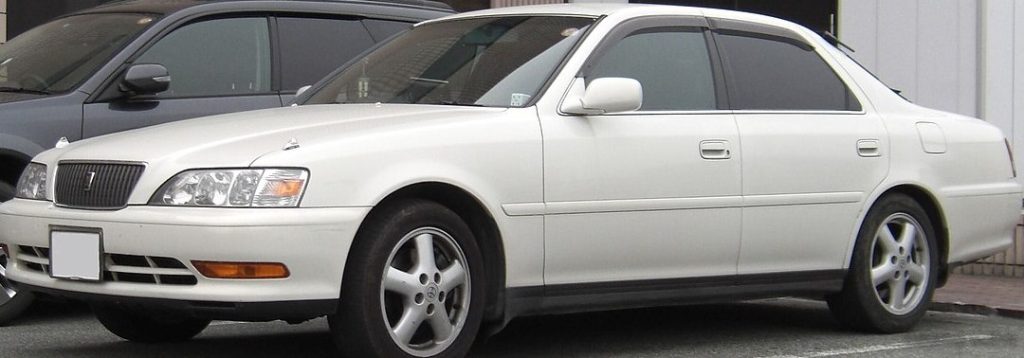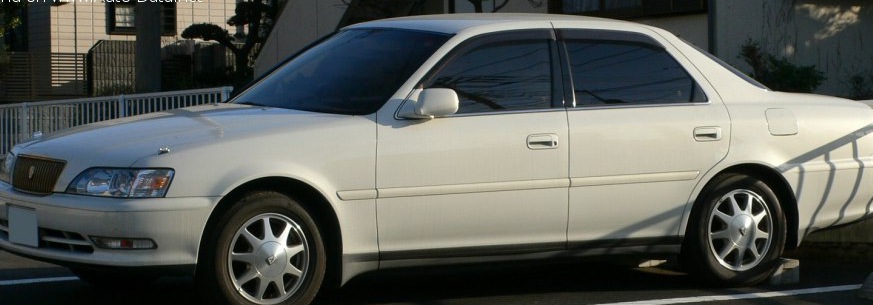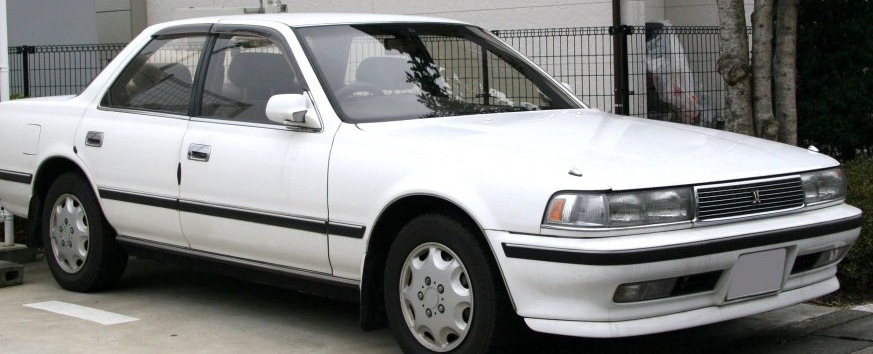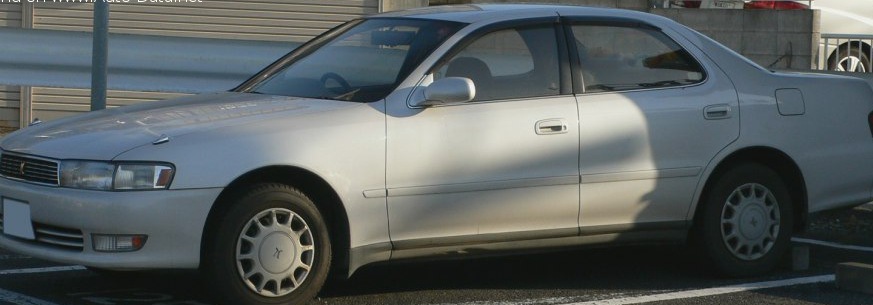
The Toyota Cresta GX90 2.0i, produced between 1992 and 1996, represents a significant iteration of Toyota’s long-running Cresta lineage. Positioned as a mid-range offering within the GX90 generation, this variant catered to buyers seeking a balance between performance, comfort, and affordability. The GX90 Cresta, and its sibling the Mark II, were popular choices in the Japanese domestic market (JDM) as comfortable and reliable sedans, often favored by families and business professionals. This model occupied a space between the more basic trims and the higher-performance, turbocharged options, offering a naturally aspirated inline-six engine paired with either a manual or automatic transmission. The 2.0i model, with its 135 horsepower output, was a common sight on Japanese roads during its production run.
Technical Specifications
| Brand | Toyota |
| Model | Cresta |
| Generation | Cresta (GX90) |
| Type (Engine) | 2.0i (135 Hp) |
| Start of production | 1992 |
| End of production | 1996 |
| Powertrain Architecture | Internal Combustion engine |
| Body type | Sedan |
| Seats | 5 |
| Doors | 4 |
| Fuel Type | Petrol (Gasoline) |
| Weight-to-power ratio | 9.5 kg/Hp, 105.5 Hp/tonne |
| Weight-to-torque ratio | 7.2 kg/Nm, 138.3 Nm/tonne |
| Power | 135 Hp @ 5600 rpm |
| Power per litre | 67.9 Hp/l |
| Torque | 177 Nm @ 4400 rpm (130.55 lb.-ft. @ 4400 rpm) |
| Engine layout | Front, Longitudinal |
| Engine Model/Code | 1G-FE |
| Engine displacement | 1988 cm3 (121.32 cu. in.) |
| Number of cylinders | 6 |
| Engine configuration | Inline |
| Cylinder Bore | 75 mm (2.95 in.) |
| Piston Stroke | 75 mm (2.95 in.) |
| Compression ratio | 9.6:1 |
| Number of valves per cylinder | 4 |
| Fuel injection system | Multi-port manifold injection |
| Engine aspiration | Naturally aspirated engine |
| Valvetrain | DOHC |
| Engine oil capacity | 4 l (4.23 US qt | 3.52 UK qt) |
| Coolant | 6.5 l (6.87 US qt | 5.72 UK qt) |
| Kerb Weight | 1280 kg (2821.92 lbs.) |
| Max. weight | 1550 kg (3417.17 lbs.) |
| Max load | 270 kg (595.25 lbs.) |
| Fuel tank capacity | 70 l (18.49 US gal | 15.4 UK gal) |
| Length | 4750 mm (187.01 in.) |
| Width | 1750 mm (68.9 in.) |
| Height | 1390 mm (54.72 in.) |
| Wheelbase | 2730 mm (107.48 in.) |
| Front track | 1485 mm (58.46 in.) |
| Rear (Back) track | 1495 mm (58.86 in.) |
| Drivetrain Architecture | The Internal combustion engine (ICE) drives the rear wheels of the vehicle. |
| Drive wheel | Rear wheel drive |
| Number of gears and type of gearbox | 5 gears, manual transmission |
| Front suspension | Coil spring |
| Rear suspension | Coil spring |
| Front brakes | Ventilated discs |
| Rear brakes | Disc |
| Assisting systems | ABS (Anti-lock braking system) |
| Steering type | Steering rack and pinion |
| Power steering | Hydraulic Steering |
| Tires size | 185/70 R14 |
| Wheel rims size | 14 |
Powertrain & Engine Architecture
The heart of the Cresta 2.0i is the 1G-FE engine, a 2.0-liter (1988cc) inline-six cylinder powerplant. This engine is a naturally aspirated design, utilizing multi-port fuel injection and a double overhead camshaft (DOHC) valvetrain. The 1G-FE was known for its smoothness and relative reliability, characteristics valued in the Japanese market. The engine produced 135 horsepower at 5600 rpm and 177 Nm (130.55 lb-ft) of torque at 4400 rpm. The engine’s longitudinal mounting allowed for a rear-wheel-drive configuration, a traditional layout favored by many Japanese car enthusiasts. The 5-speed manual transmission offered a more engaging driving experience, while the optional 4-speed automatic provided convenience, though at the expense of some performance. The automatic transmission, while reliable, wasn’t known for its particularly quick shifts.
Driving Characteristics
The 2.0i variant of the GX90 Cresta offered a comfortable and composed driving experience. While not a sports car, the inline-six engine provided adequate power for everyday driving and highway cruising. The rear-wheel-drive layout contributed to balanced handling, although the relatively soft suspension tuning prioritized ride comfort over sharp cornering. Compared to the turbocharged variants (like those equipped with the 1JZ-GTE), the 2.0i felt noticeably less powerful, particularly during acceleration. The manual transmission allowed drivers to extract more performance from the engine, while the automatic, with its taller gear ratios, focused on fuel efficiency and smooth operation. The power delivery was linear, making it easy to modulate the throttle, but lacked the punch of the turbocharged engines.
Equipment & Trim Levels
The 2.0i trim of the GX90 Cresta typically included features such as power windows, power steering, and an AM/FM radio. Air conditioning was a common inclusion, and higher-spec versions could be equipped with features like central locking, electric mirrors, and upgraded interior trim. Interior upholstery was typically cloth, with options for different colors and patterns. The dashboard layout was functional and straightforward, prioritizing ease of use over flashy design. Optional extras included a sunroof, upgraded audio systems, and alloy wheels. The overall interior ambiance was comfortable and well-built, reflecting Toyota’s reputation for quality.
Chassis & Braking
The GX90 Cresta utilized a traditional body-on-frame construction, providing a robust and durable chassis. Suspension consisted of coil springs all around, with independent front suspension and a solid rear axle. The braking system featured ventilated discs on the front wheels and solid discs on the rear. Anti-lock brakes (ABS) were available as an option, enhancing safety. The suspension was tuned for comfort, resulting in a relatively soft ride. Stabilizer bars were fitted to both the front and rear axles to reduce body roll during cornering, but the overall handling characteristics were geared towards stability and ease of driving rather than outright sportiness.
Market Reception & Comparison
The Cresta 2.0i was well-received in the Japanese market as a practical and reliable sedan. Critics praised its comfortable ride, smooth engine, and build quality. However, some noted that its performance was modest compared to the turbocharged alternatives. Fuel economy was considered reasonable for a vehicle of its size and class. Compared to the 2.4-liter and turbocharged variants, the 2.0i offered a more affordable entry point into the Cresta lineup, appealing to buyers who prioritized value and efficiency. The 1.8L models were even more affordable, but offered less power. The 2.0i struck a balance between performance and price, making it a popular choice for families and commuters.
Legacy
The GX90 Cresta 2.0i has maintained a loyal following among JDM enthusiasts. The 1G-FE engine is known for its durability and relatively simple maintenance requirements. While not as sought-after as the turbocharged models, the 2.0i offers a more accessible entry point into the world of classic Japanese sedans. Today, well-maintained examples are becoming increasingly collectible. The car’s reputation for reliability and its comfortable driving experience continue to appeal to enthusiasts seeking a classic Japanese car that is both enjoyable to drive and relatively easy to maintain. Parts availability, while not as extensive as for more common models, remains reasonable, ensuring that these cars can be kept on the road for years to come.