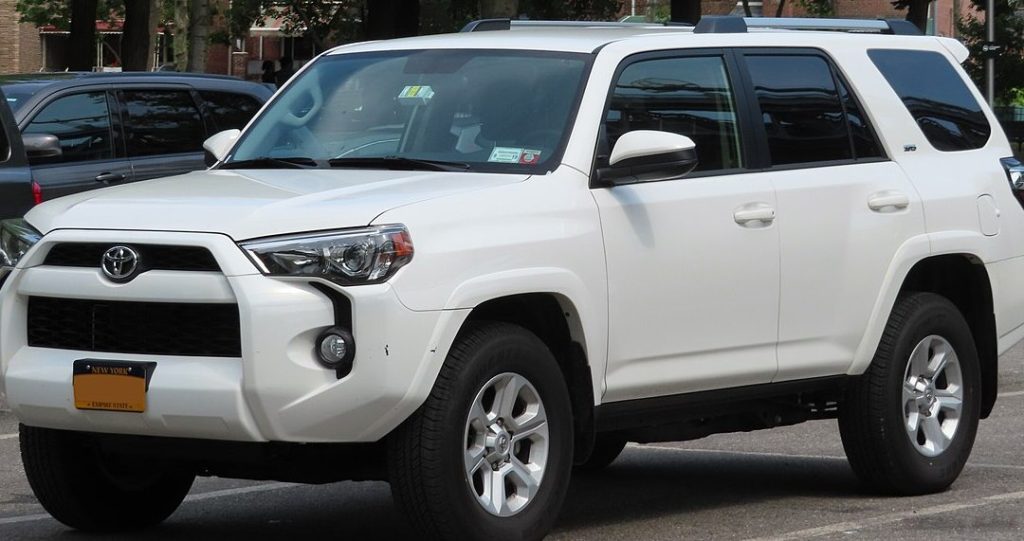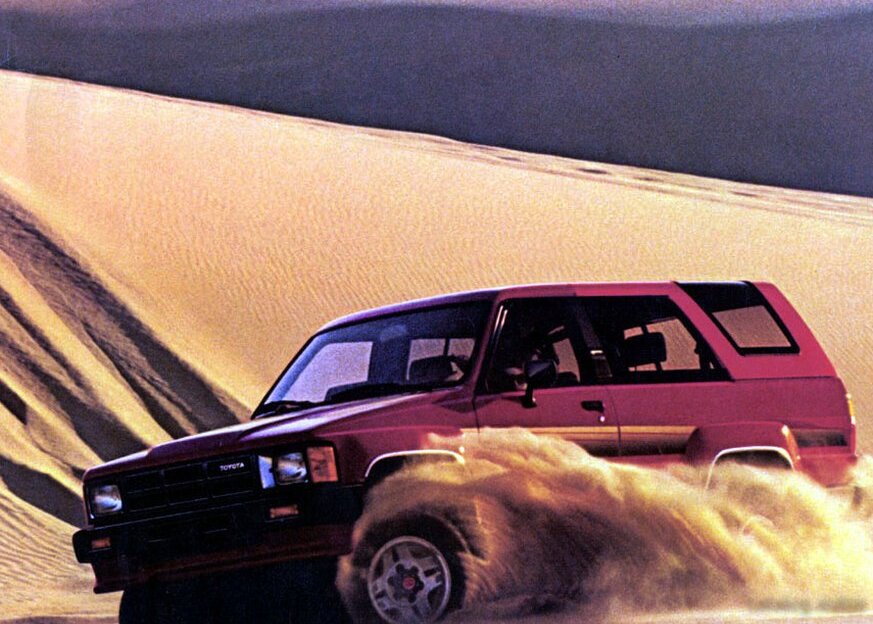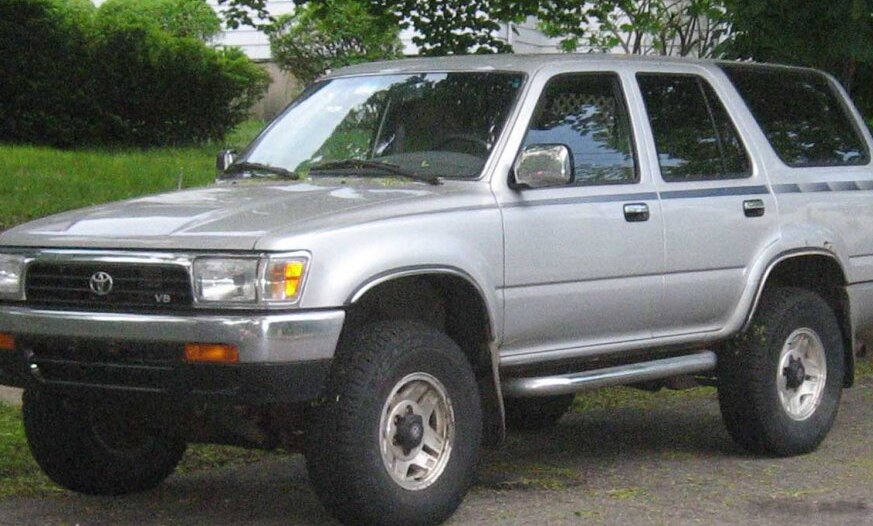
The Toyota 4Runner II 2.4 TD 4×4, produced between 1992 and 1995, represented a significant offering in Toyota’s expanding SUV lineup. Falling within the second generation (1990-1995) of the 4Runner, this diesel-powered variant was primarily aimed at markets outside of North America, where diesel engines enjoyed greater popularity. It served as a more economical and rugged alternative to the gasoline-powered models, appealing to buyers seeking off-road capability and fuel efficiency. This particular configuration, with its 2.4-liter turbocharged diesel engine and five-speed manual transmission, occupied a mid-range position within the 4Runner II portfolio, offering a balance between performance and affordability.
Technical Specifications
| Brand | Toyota |
| Model | 4Runner |
| Generation | 4Runner II |
| Type (Engine) | 2.4 TD (90 Hp) 4×4 |
| Start of production | 1992 |
| End of production | 1995 |
| Powertrain Architecture | Internal Combustion engine |
| Body type | SUV |
| Seats | 5 |
| Doors | 5 |
| Fuel consumption (urban) | 15 l/100 km (15.7 US mpg, 18.8 UK mpg, 6.7 km/l) |
| Fuel consumption (extra urban) | 9.4 l/100 km (25 US mpg, 30.1 UK mpg, 10.6 km/l) |
| Fuel consumption (combined) | 10.9 l/100 km (21.6 US mpg, 25.9 UK mpg, 9.2 km/l) |
| Fuel Type | Diesel |
| Acceleration 0 – 100 km/h | 22 sec |
| Acceleration 0 – 62 mph | 22 sec |
| Acceleration 0 – 60 mph | 20.9 sec |
| Maximum speed | 145 km/h (90.1 mph) |
| Weight-to-power ratio | 19.4 kg/Hp, 51.4 Hp/tonne |
| Weight-to-torque ratio | 8.1 kg/Nm, 122.9 Nm/tonne |
| Power | 90 Hp @ 3500 rpm |
| Power per litre | 36.8 Hp/l |
| Torque | 215 Nm @ 2400 rpm (158.58 lb.-ft. @ 2400 rpm) |
| Engine layout | Front, Longitudinal |
| Engine Model/Code | 2L-TE, 2L-TII turbo |
| Engine displacement | 2446 cm3 (149.26 cu. in.) |
| Number of cylinders | 4 |
| Engine configuration | Inline |
| Cylinder Bore | 92 mm (3.62 in.) |
| Piston Stroke | 92 mm (3.62 in.) |
| Compression ratio | 22:1 |
| Number of valves per cylinder | 2 |
| Fuel injection system | Precombustion chamber injection |
| Engine aspiration | Turbocharger |
| Valvetrain | OHV |
| Engine oil capacity | 6.8 l (7.19 US qt | 5.98 UK qt) |
| Coolant | 9.1 l (9.62 US qt | 8.01 UK qt) |
| Kerb Weight | 1750 kg (3858.09 lbs.) |
| Max. weight | 2430 kg (5357.23 lbs.) |
| Max load | 680 kg (1499.14 lbs.) |
| Trunk (boot) space – minimum | 1200 l (42.38 cu. ft.) |
| Trunk (boot) space – maximum | 2100 l (74.16 cu. ft.) |
| Fuel tank capacity | 65 l (17.17 US gal | 14.3 UK gal) |
| Length | 4490 mm (176.77 in.) |
| Width | 1690 mm (66.54 in.) |
| Height | 1745 mm (68.7 in.) |
| Wheelbase | 2625 mm (103.35 in.) |
| Front track | 1430 mm (56.3 in.) |
| Rear (Back) track | 1425 mm (56.1 in.) |
| Ride height (ground clearance) | 210 mm (8.27 in.) |
| Drive wheel | All wheel drive (4×4) |
| Number of gears and type of gearbox | 5 gears, manual transmission |
| Front suspension | Double wishbone |
| Rear suspension | dependent spring suspension |
| Front brakes | Ventilated discs |
| Rear brakes | Drum |
| Steering type | Worm-reduction unit |
| Power steering | Hydraulic Steering |
| Tires size | 225/75 R15 |
| Wheel rims size | 15 |
Powertrain & Engine Architecture
The heart of the 4Runner II 2.4 TD 4×4 is the 2L-TE (and sometimes 2L-TII) 2.4-liter inline-four diesel engine. This engine, a staple in Toyota’s commercial vehicle lineup, utilized precombustion chamber injection, a system common in older diesel designs. This system involves injecting fuel into a pre-chamber, where it partially combusts, then ignites the main combustion chamber. The 2L-TE featured a turbocharger with an intercooler, boosting power output to 90 horsepower at 3500 rpm and 215 Nm (158.58 lb-ft) of torque at 2400 rpm. The engine’s overhead valve (OHV) valvetrain was a relatively simple and robust design, contributing to its longevity. The five-speed manual transmission provided a good balance of gearing for both on-road cruising and off-road crawling. The transmission’s ratios were geared towards maximizing torque delivery, essential for tackling challenging terrain.
Driving Characteristics
The 4Runner II 2.4 TD 4×4 offered a distinctly different driving experience compared to its gasoline-powered counterparts. While lacking the outright acceleration of the larger gasoline engines, the diesel provided ample low-end torque, making it well-suited for off-road driving and towing. The five-speed manual transmission allowed drivers to maintain optimal engine speed for the conditions. Acceleration to 60 mph took approximately 20.9 seconds, and top speed was around 90 mph. The turbocharger provided a noticeable boost in power, but turbo lag was present, requiring drivers to anticipate acceleration. Compared to the more powerful gasoline versions, the 2.4 TD felt less refined but more durable and economical.
Equipment & Trim Levels
The 2.4 TD 4×4 trim level typically included basic features such as cloth upholstery, manual windows and door locks, and a simple audio system. Air conditioning was often an optional extra. Interior appointments were functional rather than luxurious, reflecting the vehicle’s utilitarian focus. The dashboard layout was straightforward, with clearly marked gauges and controls. Optional extras could include power windows, upgraded audio systems, and a sunroof. The emphasis was on practicality and durability, rather than lavish comfort.
Chassis & Braking
The 4Runner II utilized a body-on-frame construction, providing a robust and durable chassis. The front suspension featured a double wishbone design, while the rear suspension employed a dependent spring setup with a solid axle. This configuration prioritized off-road capability and load-carrying capacity. Braking duties were handled by ventilated discs at the front and drum brakes at the rear. The hydraulic power steering provided reasonable assistance, although it lacked the precision of more modern systems. The 225/75 R15 tires offered a good compromise between on-road comfort and off-road traction.
Market Reception & Comparison
The 4Runner II 2.4 TD 4×4 was well-received in markets where diesel engines were preferred, such as Europe and Australia. Critics praised its fuel efficiency, durability, and off-road capability. However, it was often criticized for its relatively slow acceleration and lack of refinement compared to gasoline-powered SUVs. Compared to the gasoline-powered 4Runner models, the 2.4 TD offered significantly better fuel economy – around 21.6 US mpg combined – but less overall performance. The diesel’s simpler mechanical design also contributed to lower maintenance costs.
Legacy
The 2L-TE engine, found in the 4Runner II 2.4 TD 4×4, is known for its exceptional reliability and longevity. With proper maintenance, these engines can accumulate very high mileage. In the used car market, these 4Runners are sought after by enthusiasts who appreciate their ruggedness and simplicity. While parts availability may be becoming more challenging, the engine’s robust design and relatively simple mechanics make it a popular choice for restoration projects. The 4Runner II 2.4 TD 4×4 remains a testament to Toyota’s commitment to building durable and capable vehicles.