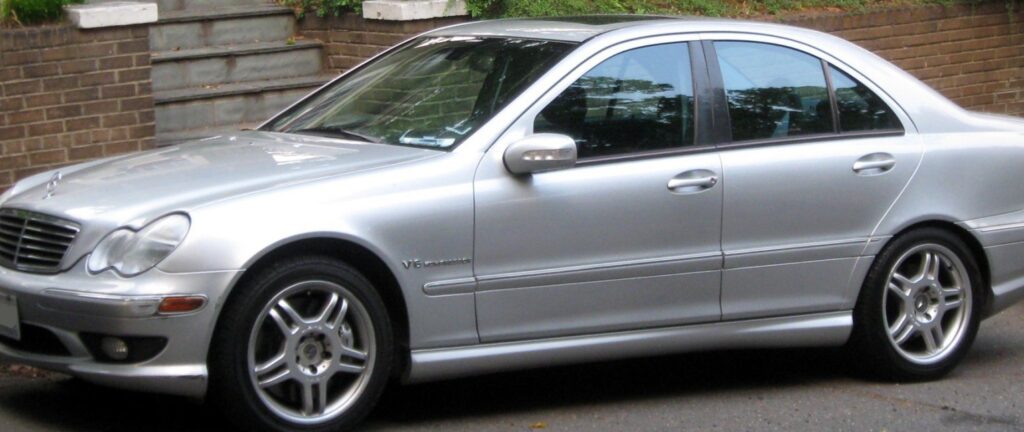
The Mercedes-Benz C-Class (W203) AMG C 30 CDI Automatic, produced from February 2003 to March 2004, represented a unique offering within the second-generation C-Class lineup. Positioned as a performance-oriented diesel variant, it combined the luxury and refinement expected of Mercedes-Benz with the efficiency and torque characteristics of a five-cylinder commonrail diesel engine. This model aimed to appeal to buyers seeking a sporty driving experience without sacrificing fuel economy, a niche that was gaining traction in the European market during this period. It sat above the standard C220 CDI and C270 CDI models in terms of performance, but below the more focused C32 AMG which featured a gasoline engine.
Technical Specifications
| Brand | Mercedes-Benz |
| Model | C-class |
| Generation | C-class (W203) |
| Type | AMG C 30 CDI (231 Hp) Automatic |
| Start of production | February, 2003 |
| End of production | March, 2004 |
| Powertrain Architecture | Internal Combustion engine |
| Body type | Sedan |
| Seats | 5 |
| Doors | 4 |
| Fuel consumption (urban) | 10.2 l/100 km (23.1 US mpg, 27.7 UK mpg, 9.8 km/l) |
| Fuel consumption (extra urban) | 5.9 l/100 km (39.9 US mpg, 47.9 UK mpg, 16.9 km/l) |
| Fuel consumption (combined) | 7.6 l/100 km (30.9 US mpg, 37.2 UK mpg, 13.2 km/l) |
| CO2 emissions | 201 g/km |
| Fuel Type | Diesel |
| Acceleration 0 – 100 km/h | 6.8 sec |
| Acceleration 0 – 62 mph | 6.8 sec |
| Acceleration 0 – 60 mph | 6.5 sec |
| Maximum speed | 250 km/h (155.34 mph) – Electronically limited |
| Power | 231 Hp @ 3800 rpm |
| Torque | 540 Nm @ 2000 rpm (398.28 lb.-ft. @ 2000 rpm) |
| Maximum engine speed | 4500 rpm |
| Engine layout | Front, Longitudinal |
| Engine Model/Code | OM 612.990 |
| Engine displacement | 2950 cm3 (180.02 cu. in.) |
| Number of cylinders | 5 |
| Engine configuration | Inline |
| Cylinder Bore | 88 mm (3.46 in.) |
| Piston Stroke | 97 mm (3.82 in.) |
| Compression ratio | 16.5:1 |
| Number of valves per cylinder | 4 |
| Fuel injection system | Diesel Commonrail |
| Engine aspiration | Turbocharger, Intercooler |
| Valvetrain | DOHC |
| Engine oil capacity | 6.5 l (6.87 US qt | 5.72 UK qt) |
| Coolant capacity | 11 l (11.62 US qt | 9.68 UK qt) |
| Kerb Weight | 1580 kg (3483.3 lbs.) |
| Max. weight | 2135 kg (4706.87 lbs.) |
| Max load | 555 kg (1223.57 lbs.) |
| Trunk (boot) space (minimum) | 455 l (16.07 cu. ft.) |
| Fuel tank capacity | 62 l (16.38 US gal | 13.64 UK gal) |
| Length | 4526 mm (178.19 in.) |
| Width | 1728 mm (68.03 in.) |
| Width including mirrors | 1980 mm (77.95 in.) |
| Height | 1412 mm (55.59 in.) |
| Wheelbase | 2715 mm (106.89 in.) |
| Front track | 1494 mm (58.82 in.) |
| Rear track | 1468 mm (57.8 in.) |
| Drag coefficient (Cd) | 0.27 |
| Minimum turning circle | 10.76 m (35.3 ft.) |
| Drivetrain | Rear wheel drive |
| Number of gears | 5 |
| Gearbox type | Automatic transmission |
| Front suspension | Independent type McPherson, Transverse stabilizer |
| Rear suspension | Independent multi-link suspension, Transverse stabilizer |
| Front brakes | Ventilated discs, 345 mm |
| Rear brakes | Ventilated discs, 300 mm |
| Assisting systems | ABS (Anti-lock braking system) |
| Steering type | Steering rack and pinion |
| Power steering | Hydraulic Steering |
| Front tires | 225/45 ZR 17 91 Y |
| Rear tires | 245/40 ZR 17 91 Y |
| Front wheel rims | 7 J x 17 H 2 |
| Rear wheel rims | 8.5 J x 17 H 2 |
Powertrain & Engine Architecture
The heart of the C 30 CDI was the OM 612.990, a 2.95-liter inline five-cylinder diesel engine. This engine utilized a commonrail direct injection system, delivering fuel at extremely high pressures for improved combustion efficiency and reduced emissions. A variable geometry turbocharger with an intercooler further enhanced performance, providing increased boost across a wider RPM range. The engine featured a double overhead camshaft (DOHC) valvetrain with four valves per cylinder, optimizing airflow for increased power output. The five-speed automatic transmission, a standard feature, was designed to handle the engine’s substantial 540 Nm (398 lb-ft) of torque. This transmission was not a particularly advanced unit by modern standards, but it was known for its durability and smooth operation when properly maintained.
Driving Characteristics
The C 30 CDI Automatic offered a compelling blend of performance and economy. Acceleration from 0 to 100 km/h (0-62 mph) took approximately 6.8 seconds, making it noticeably quicker than the standard C220 CDI. While not as overtly sporty as the C32 AMG, the C 30 CDI provided ample torque for effortless cruising and confident overtaking. The automatic transmission, while smooth, could sometimes feel hesitant during quick downshifts. Compared to the manual transmission versions of the C30 CDI, the automatic offered less driver engagement but greater convenience. The gear ratios were tuned for a balance between acceleration and fuel efficiency, prioritizing mid-range grunt over outright top-end speed.
Equipment & Trim Levels
The AMG C 30 CDI Automatic typically came well-equipped, reflecting its position as a premium variant. Standard features included automatic climate control, power windows and mirrors, a multi-function steering wheel, and a high-quality audio system. Upholstery was generally a combination of cloth and leatherette, with full leather options available as an upgrade. Optional extras included a sunroof, navigation system, heated seats, and upgraded alloy wheels. The exterior styling featured subtle AMG-specific touches, such as a unique front spoiler and side skirts, differentiating it from the standard C-Class models.
Chassis & Braking
The W203 C-Class featured an independent suspension system, with McPherson struts at the front and a multi-link setup at the rear. The C 30 CDI benefited from slightly stiffer springs and dampers compared to the lower-spec models, providing improved handling and body control. Braking duties were handled by ventilated disc brakes on all four wheels, offering ample stopping power. Anti-lock Braking System (ABS) was standard. The rear suspension utilized a transverse stabilizer bar to reduce body roll during cornering. The weight distribution was reasonably balanced, contributing to the car’s neutral handling characteristics.
Market Reception & Comparison
The C 30 CDI Automatic was generally well-received by automotive critics. It was praised for its strong performance, fuel efficiency, and comfortable ride. However, some reviewers noted that the automatic transmission could feel sluggish at times. Compared to the C220 CDI, the C 30 CDI offered a significant performance upgrade, while maintaining competitive fuel economy. Against the C270 CDI, the C 30 CDI provided even more power and torque, but at a slightly higher price point. The C32 AMG, with its gasoline engine, offered a more exhilarating driving experience but came with significantly higher running costs.
Legacy
The OM 612 engine family, including the OM 612.990 found in the C 30 CDI, is known for its durability and longevity. When properly maintained, these engines can reliably exceed 200,000 miles. The C 30 CDI Automatic has become a sought-after model in the used car market, particularly among enthusiasts who appreciate its blend of performance, economy, and Mercedes-Benz refinement. Common issues include wear and tear on the turbocharger, potential problems with the fuel injectors, and the occasional need for automatic transmission servicing. However, these are generally manageable with regular maintenance and preventative care. Today, the C 30 CDI represents a compelling alternative to more modern vehicles, offering a unique driving experience and a classic Mercedes-Benz feel.