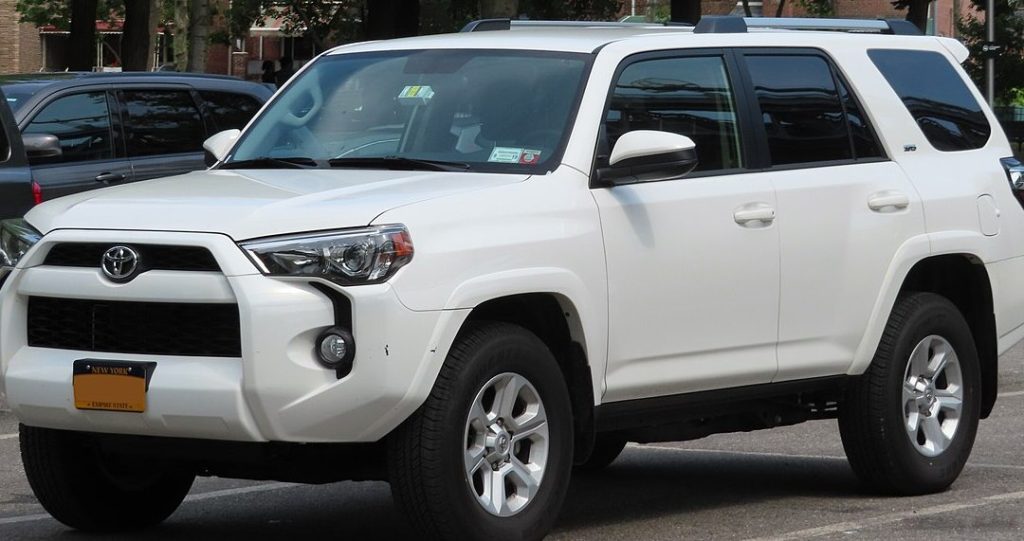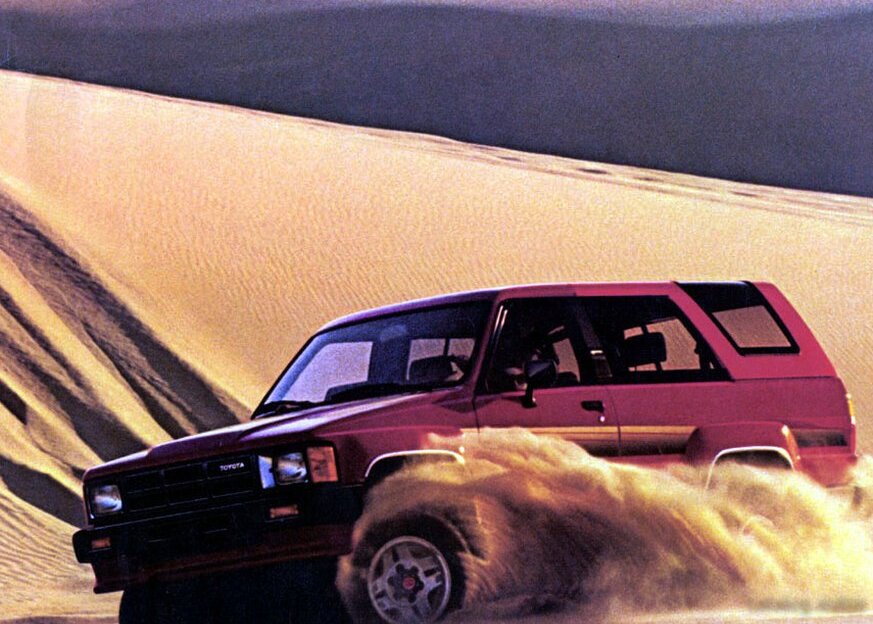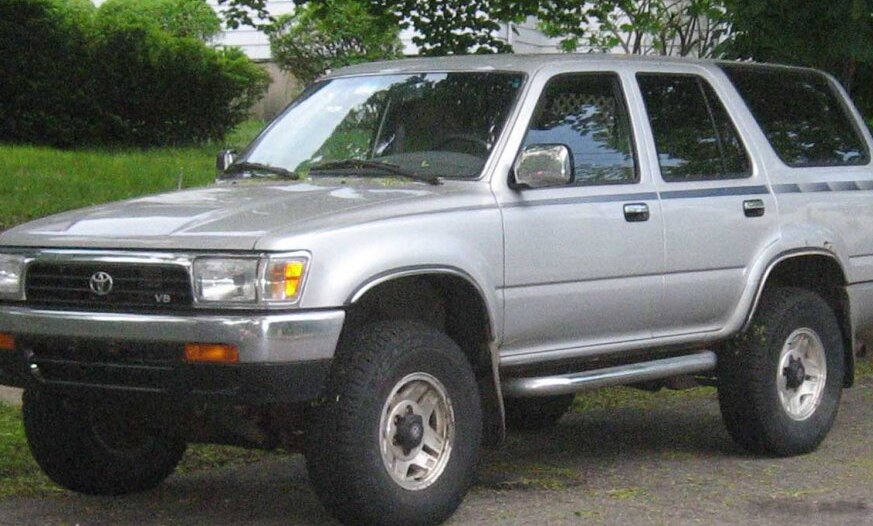
The Toyota 4Runner II, produced between 1990 and 1995, represented a significant evolution of Toyota’s popular off-road SUV. The 3.0 TD (125 Hp) 4×4 variant, manufactured from 1991-1995, occupied a middle ground in the 4Runner II lineup, offering a diesel engine option for buyers prioritizing fuel economy and torque for towing and off-road capability. This generation, internally designated as the YN130 series, built upon the success of the first-generation 4Runner, offering increased refinement and a more robust four-wheel-drive system. It was primarily marketed in Europe, Australia, and other regions outside of North America, where diesel engines were more prevalent.
Technical Specifications
| Brand | Toyota |
| Model | 4Runner |
| Generation | 4Runner II |
| Type (Engine) | 3.0 TD (125 Hp) 4×4 |
| Start of production | 1991 year |
| End of production | 1995 year |
| Powertrain Architecture | Internal Combustion engine |
| Body type | SUV |
| Seats | 5 |
| Doors | 5 |
| Fuel consumption (economy) – combined | 11.5 l/100 km |
| Fuel consumption (economy) – combined | 20.5 US mpg |
| Fuel consumption (economy) – combined | 24.6 UK mpg |
| Fuel consumption (economy) – combined | 8.7 km/l |
| Fuel Type | Diesel |
| Acceleration 0 – 100 km/h | 16 sec |
| Acceleration 0 – 62 mph | 16 sec |
| Acceleration 0 – 60 mph | 15.2 sec |
| Maximum speed | 155 km/h |
| Maximum speed | 96.31 mph |
| Weight-to-power ratio | 15 kg/Hp |
| Weight-to-power ratio | 66.5 Hp/tonne |
| Weight-to-torque ratio | 6.4 kg/Nm |
| Weight-to-torque ratio | 156.9 Nm/tonne |
| Power | 125 Hp @ 3600 rpm |
| Power per litre | 41.9 Hp/l |
| Torque | 295 Nm @ 2000 rpm |
| Torque | 217.58 lb.-ft. @ 2000 rpm |
| Engine layout | Front, Longitudinal |
| Engine Model/Code | 1KZ-T, 1KZ-TE |
| Engine displacement | 2982 cm3 |
| Engine displacement | 181.97 cu. in. |
| Number of cylinders | 4 |
| Engine configuration | Inline |
| Cylinder Bore | 96 mm |
| Cylinder Bore | 3.78 in. |
| Piston Stroke | 103 mm |
| Piston Stroke | 4.06 in. |
| Compression ratio | 21.2:1 |
| Number of valves per cylinder | 2 |
| Fuel injection system | Precombustion chamber injection |
| Engine aspiration | Turbocharger |
| Engine oil capacity | 7 l |
| Engine oil capacity | 7.4 US qt | 6.16 UK qt |
| Coolant | 10 l |
| Coolant | 10.57 US qt | 8.8 UK qt |
| Kerb Weight | 1880 kg |
| Kerb Weight | 4144.69 lbs. |
| Max. weight | 2510 kg |
| Max. weight | 5533.6 lbs. |
| Max load | 630 kg |
| Max load | 1388.91 lbs. |
| Trunk (boot) space – minimum | 1200 l |
| Trunk (boot) space – minimum | 42.38 cu. ft. |
| Trunk (boot) space – maximum | 2100 l |
| Trunk (boot) space – maximum | 74.16 cu. ft. |
| Fuel tank capacity | 65 l |
| Fuel tank capacity | 17.17 US gal | 14.3 UK gal |
| Length | 4490 mm |
| Length | 176.77 in. |
| Width | 1690 mm |
| Width | 66.54 in. |
| Height | 1745 mm |
| Height | 68.7 in. |
| Wheelbase | 2625 mm |
| Wheelbase | 103.35 in. |
| Front track | 1430 mm |
| Front track | 56.3 in. |
| Rear (Back) track | 1425 mm |
| Rear (Back) track | 56.1 in. |
| Ride height (ground clearance) | 210 mm |
| Ride height (ground clearance) | 8.27 in. |
| Drive wheel | All wheel drive (4×4) |
| Number of gears and type of gearbox | 5 gears, manual transmission |
| Front suspension | Double wishbone |
| Rear suspension | dependent spring suspension |
| Front brakes | Ventilated discs |
| Rear brakes | Drum |
| Steering type | Worm-reduction unit |
| Power steering | Hydraulic Steering |
| Wheel rims size | 15 |
Powertrain & Engine Architecture
The heart of the 4Runner II 3.0 TD was the 1KZ-T (and later 1KZ-TE) 3.0-liter inline-four diesel engine. This engine was a robust and relatively simple design, utilizing precombustion chamber injection. This system, common in older diesel engines, involved injecting fuel into a pre-chamber where it partially combusted, then igniting the main combustion chamber. The 1KZ-T featured a turbocharger, boosting power output to 125 horsepower at 3600 rpm and 295 Nm (217.58 lb-ft) of torque at 2000 rpm. The 1KZ-TE variant, introduced later, featured an electronic fuel injection pump for improved efficiency and control. The engine was mounted longitudinally in the chassis. The 4Runner II 3.0 TD was typically equipped with a five-speed manual transmission, chosen for its durability and suitability for off-road driving. The transmission was geared to prioritize low-end torque, essential for navigating challenging terrain.
Driving Characteristics
The 4Runner II 3.0 TD 4×4, with its 125 hp and 295 Nm of torque, offered a distinctly different driving experience compared to the gasoline-powered versions. Acceleration was modest, taking around 16 seconds to reach 100 km/h (62 mph). However, the diesel engine’s strong low-end torque made it capable of tackling steep inclines and towing loads with relative ease. The manual transmission allowed for precise control, particularly useful when off-roading. Compared to a hypothetical gasoline counterpart with similar horsepower, the diesel 4Runner would have felt slower in everyday driving but more confident when faced with demanding conditions. The gear ratios were optimized for pulling power rather than outright speed.
Equipment & Trim Levels
The 3.0 TD 4×4 trim level generally represented a mid-range offering within the 4Runner II lineup. Standard equipment typically included power steering, a basic audio system, and cloth upholstery. Air conditioning was often an optional extra, as were power windows and central locking. The interior was functional and durable, designed to withstand the rigors of off-road use. Dashboard configuration was relatively simple, focusing on essential gauges and controls. Exterior features included steel wheels, black plastic bumpers, and side steps for easier access to the cabin.
Chassis & Braking
The 4Runner II utilized a body-on-frame construction, providing a robust and durable platform for off-road adventures. The front suspension featured a double wishbone setup, while the rear employed a dependent spring suspension with a solid axle. This configuration prioritized articulation and durability over on-road comfort. Braking duties were handled by ventilated discs at the front and drum brakes at the rear. The braking system was adequate for normal use but lacked the stopping power of more modern systems. The 4Runner II’s relatively high ground clearance (210 mm / 8.27 inches) further enhanced its off-road capability.
Market Reception & Comparison
The 4Runner II 3.0 TD 4×4 was well-received in markets where diesel engines were popular, particularly in Europe and Australia. Critics praised its fuel economy, durability, and off-road capability. However, some noted its relatively slow acceleration and basic interior. Compared to the gasoline-powered 4Runner II variants, the diesel model offered superior fuel efficiency and torque but lacked the responsiveness of the gasoline engines. It was often seen as a more practical and utilitarian choice, appealing to buyers who prioritized functionality over performance.
Legacy
The 1KZ-T and 1KZ-TE engines have earned a reputation for exceptional reliability and longevity. Many examples of the 4Runner II 3.0 TD 4×4 are still on the road today, testament to the engine’s durability. In the used car market, these vehicles are often sought after by enthusiasts and those looking for a dependable and capable off-road vehicle. While maintenance costs can be higher due to the age of the vehicle and the diesel engine’s specific requirements, the 4Runner II 3.0 TD remains a popular choice for those seeking a classic and rugged SUV.