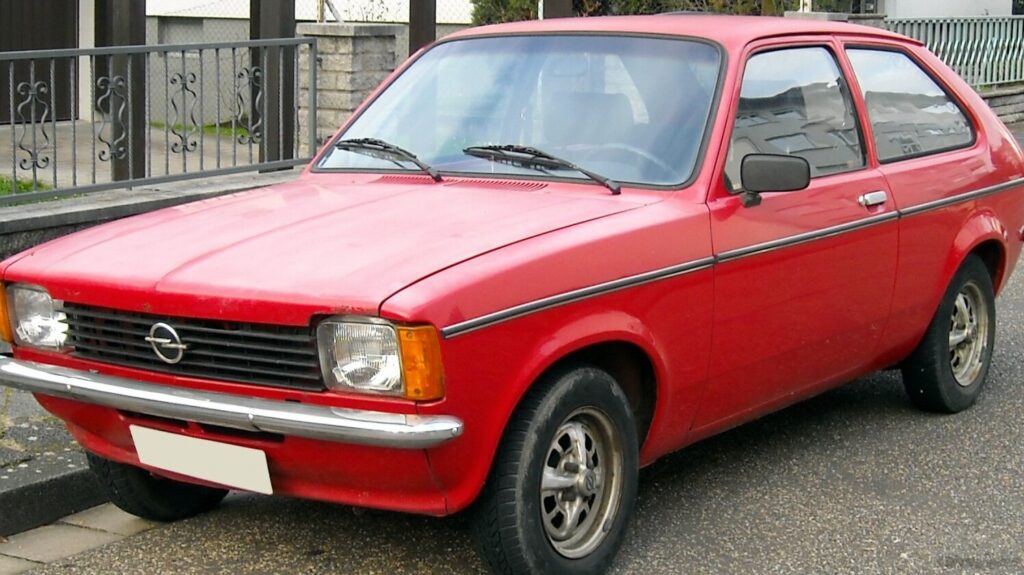
The Opel Kadett C City 1.2, producing 54 horsepower, was a mainstay of the European small car market from 1973 to 1979. Positioned as the entry-level variant of the Kadett C range, it offered affordable transportation during a period of economic uncertainty. The Kadett C, built on the GM T-platform, represented a significant step forward for Opel, offering improved styling, comfort, and practicality compared to its predecessor, the Kadett B. The “City” designation specifically denoted the three-door hatchback body style, which was becoming increasingly popular for its versatility and ease of parking in urban environments. This particular 1.2-liter engine and four-speed manual transmission combination was aimed at buyers prioritizing fuel economy and low running costs over outright performance.
Technical Specifications
| Brand | Opel |
| Model | Kadett |
| Generation | Kadett C City |
| Type (Engine) | 1.2 (54 Hp) |
| Start of production | 1973 |
| End of production | 1979 |
| Powertrain Architecture | Internal Combustion engine |
| Body type | Hatchback |
| Seats | 5 |
| Doors | 3 |
| Fuel consumption (combined) | 9.5 l/100 km (24.8 US mpg, 29.7 UK mpg, 10.5 km/l) |
| Fuel Type | Petrol (Gasoline) |
| Acceleration 0 – 100 km/h | 19 sec |
| Acceleration 0 – 62 mph | 19 sec |
| Acceleration 0 – 60 mph | 18.1 sec |
| Maximum speed | 142 km/h (88.23 mph) |
| Weight-to-power ratio | 14.7 kg/Hp (67.9 Hp/tonne) |
| Weight-to-torque ratio | 9.6 kg/Nm (104.4 Nm/tonne) |
| Power | 54 Hp @ 5600 rpm |
| Power per litre | 45.2 Hp/l |
| Torque | 83 Nm (61.22 lb.-ft.) |
| Engine layout | Front, Transverse |
| Engine Model/Code | 12N |
| Engine displacement | 1196 cm3 (72.98 cu. in.) |
| Number of cylinders | 4 |
| Engine configuration | Inline |
| Cylinder Bore | 79 mm (3.11 in.) |
| Piston Stroke | 61 mm (2.4 in.) |
| Compression ratio | 9:1 |
| Number of valves per cylinder | 2 |
| Fuel injection system | Carburettor |
| Engine aspiration | Naturally aspirated |
| Engine oil capacity | 2.8 l (2.96 US qt | 2.46 UK qt) |
| Coolant | 4.7 l (4.97 US qt | 4.14 UK qt) |
| Kerb Weight | 795 kg (1752.67 lbs.) |
| Max. weight | 1205 kg (2656.57 lbs.) |
| Max load | 410 kg (903.9 lbs.) |
| Length | 3895 mm (153.35 in.) |
| Width | 1580 mm (62.2 in.) |
| Height | 1375 mm (54.13 in.) |
| Wheelbase | 2395 mm (94.29 in.) |
| Front track | 1300 mm (51.18 in.) |
| Rear track | 1299 mm (51.14 in.) |
| Drivetrain Architecture | Front wheel drive |
| Number of gears | 4 |
| Gearbox type | Manual transmission |
Powertrain & Engine Architecture
The heart of the Kadett C City 1.2 was the Opel 12N engine, a 1196cc inline-four cylinder unit. This engine utilized a single overhead camshaft (SOHC) design with two valves per cylinder. Fuel delivery was managed by a Solex carburetor, a common setup for the time, prioritizing simplicity and cost-effectiveness over the more advanced fuel injection systems. The 12N engine, while not particularly powerful, was known for its durability and relatively easy maintenance. The four-speed manual transmission was a standard unit for the Kadett C, offering a straightforward driving experience. Gear ratios were geared towards maximizing fuel efficiency rather than providing spirited acceleration. The engine’s transverse mounting, a relatively modern configuration for the early 1970s, helped to optimize space utilization within the front-wheel-drive layout.
Driving Characteristics
The 1.2-liter Kadett C City was not designed for speed. With only 54 horsepower on tap, acceleration was leisurely, taking approximately 19 seconds to reach 62 mph. The focus was on providing economical and reliable transportation. The four-speed manual transmission required frequent shifting to maintain momentum, especially when encountering hills or overtaking. Compared to the more powerful Kadett C variants, such as the 1.6-liter models, the 1.2 felt noticeably underpowered. However, the lighter weight of the 1.2-liter version did contribute to slightly better handling and fuel economy. The steering was light and relatively precise, making it easy to maneuver in city traffic. The suspension, while basic, provided a reasonably comfortable ride on most road surfaces.
Equipment & Trim Levels
The Kadett C City 1.2 was typically equipped with basic amenities. Standard features included cloth upholstery, vinyl floor covering, and a simple dashboard layout. The instrumentation was limited to a speedometer, fuel gauge, and temperature indicator. Optional extras included a radio, heated rear window, and upgraded upholstery. The interior was functional and durable, designed to withstand the rigors of daily use. The “City” trim level generally represented the most basic offering within the Kadett C range, prioritizing affordability over luxury.
Chassis & Braking
The Kadett C City utilized a MacPherson strut front suspension and a rigid axle rear suspension. The front suspension provided a reasonable level of comfort and handling, while the rear suspension was more basic. Braking was accomplished via drum brakes on all four wheels, which were adequate for the car’s weight and performance. The steering was a rack and pinion system, providing relatively precise control. The Kadett C’s chassis was relatively lightweight, contributing to its fuel efficiency and maneuverability.
Market Reception & Comparison
The Kadett C City 1.2 was well-received in its target market as an affordable and practical small car. Critics praised its fuel economy and reliability, but noted its lack of performance. Compared to other small cars of the era, such as the Ford Fiesta and Volkswagen Polo, the Kadett C offered a spacious interior and a comfortable ride. The 1.6-liter Kadett C variants offered significantly more performance, but at a higher price point. The 1.2-liter version appealed to buyers who prioritized economy and practicality over driving excitement. Maintenance costs were generally low, making it an attractive option for budget-conscious buyers.
Legacy
The Opel Kadett C City 1.2 remains a popular choice among classic car enthusiasts and collectors. Its simple design and robust powertrain make it relatively easy to maintain and repair. While not a high-performance vehicle, it represents a significant piece of automotive history, embodying the spirit of affordable and practical transportation in the 1970s. Today, well-maintained examples of the Kadett C City 1.2 are becoming increasingly rare and sought after, particularly by those seeking a nostalgic reminder of a bygone era. The 12N engine, while not known for its power, proved to be remarkably durable, with many examples still running reliably after decades of use. The Kadett C City 1.2’s enduring appeal lies in its simplicity, affordability, and enduring charm.