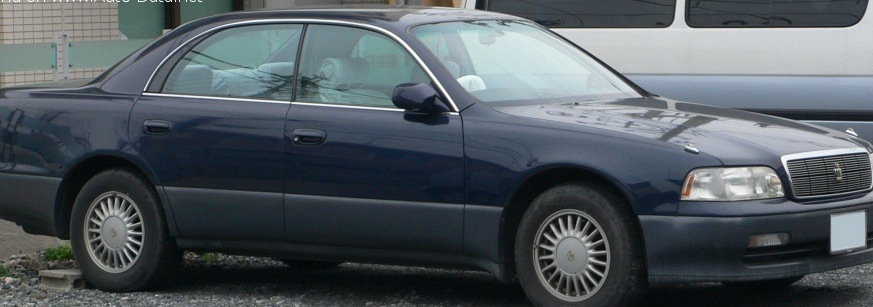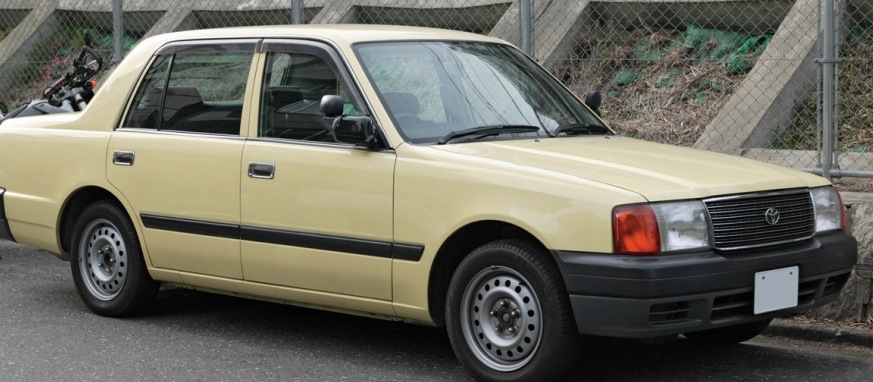
The Toyota Crown Comfort (XS10) 2.0 16V, producing 79 horsepower, was a variant of Toyota’s long-running Crown series, specifically tailored for commercial and fleet applications. Produced from 1995 to 1996, this model occupied a unique niche, bridging the gap between private passenger vehicles and more utilitarian transport. It was primarily sold in markets where a spacious, reliable, and relatively affordable sedan was needed for taxi, limousine, and corporate transport duties. The XS10 generation, introduced in 1995, represented a significant departure from previous Crown models, adopting a more boxy and practical design focused on maximizing interior space and ease of maintenance. This particular 2.0-liter LPG variant was positioned as an entry-level option within the XS10 lineup, offering a balance of fuel efficiency and operational cost.
Technical Specifications
| Brand | Toyota |
| Model | Crown |
| Generation | Crown Comfort (XS10) |
| Type (Engine) | 2.0 16V (79 Hp) LPG |
| Start of production | 1995 |
| End of production | 1996 |
| Powertrain Architecture | Internal Combustion engine |
| Body type | Sedan |
| Seats | 5 |
| Doors | 4 |
| Fuel Type | Petrol / LPG |
| Weight-to-power ratio | 16.2 kg/Hp, 61.7 Hp/tonne |
| Weight-to-torque ratio | 8 kg/Nm, 125 Nm/tonne |
| Power | 79 Hp @ 4400 rpm |
| Power per litre | 39.5 Hp/l |
| Torque | 160 Nm @ 2400 rpm (118.01 lb.-ft. @ 2400 rpm) |
| Engine layout | Front, Longitudinal |
| Engine Model/Code | 3Y-PE |
| Engine displacement | 1998 cm3 (121.93 cu. in.) |
| Number of cylinders | 4 |
| Engine configuration | Inline |
| Number of valves per cylinder | 4 |
| Fuel injection system | Multi-port manifold injection |
| Engine aspiration | Naturally aspirated engine |
| Valvetrain | DOHC |
| Kerb Weight | 1280 kg (2821.92 lbs) |
| Max. weight | 1610 kg (3549.44 lbs) |
| Max load | 330 kg (727.53 lbs) |
| Length | 4695 mm (184.84 in) |
| Width | 1695 mm (66.73 in) |
| Height | 1515 mm (59.65 in) |
| Wheelbase | 2785 mm (109.65 in) |
| Front track | 1455 mm (57.28 in) |
| Rear (Back) track | 1400 mm (55.12 in) |
| Ride height (ground clearance) | 165 mm (6.5 in) |
| Minimum turning circle (turning diameter) | 10.2 m (33.46 ft) |
| Drivetrain Architecture | The Internal combustion engine (ICE) drives the rear wheels of the vehicle. |
| Drive wheel | Rear wheel drive |
| Number of gears and type of gearbox | 4 gears, manual transmission |
| Front suspension | Independent type McPherson |
| Rear suspension | dependent spring suspension, Trailing arm |
| Front brakes | Ventilated discs |
| Rear brakes | Drum |
| Steering type | Steering rack and pinion |
Powertrain & Engine Architecture
The heart of the Crown Comfort 2.0 16V LPG was the 3Y-PE engine, a 1.998-liter inline-four cylinder powerplant. This engine featured a double overhead camshaft (DOHC) valvetrain operating 16 valves (four per cylinder), contributing to improved breathing and efficiency. The 3Y-PE utilized a multi-port fuel injection system, delivering fuel directly to each intake port for precise fuel metering. Crucially, this variant was designed to run on Liquefied Petroleum Gas (LPG) as its primary fuel source, with a gasoline fallback system. LPG conversion was often factory-installed, offering lower running costs in regions with readily available and affordable LPG. The engine produced 79 horsepower at 4400 rpm and 160 Nm (118 lb-ft) of torque at 2400 rpm. The engine’s longitudinal mounting and rear-wheel drive configuration were traditional for the Crown, prioritizing a balanced weight distribution and a comfortable ride.
Driving Characteristics
The 79 hp output and manual transmission of the Crown Comfort 2.0 16V LPG resulted in modest, but adequate, performance. Acceleration was not its strong suit, and the vehicle was geared towards smooth, economical cruising rather than spirited driving. The four-speed manual gearbox was chosen for its simplicity and durability, rather than outright performance. Compared to higher-output Crown variants, such as those equipped with larger engines or automatic transmissions, this model felt noticeably less powerful. However, the lower power output also translated to improved fuel economy, particularly when running on LPG. The rear-wheel drive layout provided a stable and predictable handling experience, making it well-suited for long distances and varied road conditions.
Equipment & Trim Levels
The Crown Comfort 2.0 16V LPG was typically equipped with a fairly basic level of trim, reflecting its intended use as a commercial vehicle. Standard features generally included cloth upholstery, a simple dashboard layout with analog gauges, and manual windows and door locks. Air conditioning was often included, particularly in warmer climates. Power steering was also a common feature. Optional extras could include upgraded audio systems, central locking, and more comfortable seating. The interior was designed for durability and ease of cleaning, with hard-wearing materials used throughout. The focus was on providing a functional and comfortable environment for both driver and passengers, rather than luxury or aesthetic appeal.
Chassis & Braking
The XS10 Crown Comfort utilized a traditional body-on-frame construction, providing a robust and durable chassis. The front suspension employed an independent McPherson strut setup, while the rear suspension featured a dependent spring and trailing arm configuration. This setup prioritized ride comfort and load-carrying capacity over sporty handling. The braking system consisted of ventilated discs at the front and drum brakes at the rear. While adequate for the vehicle’s weight and performance, the drum brakes on the rear wheels were a cost-saving measure and did not offer the same stopping power as disc brakes. The steering system was a rack and pinion type, providing reasonably precise steering feel.
Market Reception & Comparison
The Toyota Crown Comfort 2.0 16V LPG was generally well-received in its target markets. Critics praised its reliability, spacious interior, and low running costs, particularly when utilizing LPG. Compared to other trims in the XS10 lineup, such as those with larger engines or automatic transmissions, this variant offered the most affordable entry point. However, its modest performance and basic trim level were also noted. It competed with other mid-size sedans used for commercial purposes, such as the Nissan Cedric and the Mitsubishi Galant, but the Crown Comfort’s reputation for durability and reliability gave it a competitive edge.
Legacy
The Toyota Crown Comfort 2.0 16V LPG, while not a performance icon, has proven to be a remarkably durable and long-lasting vehicle. Many examples remain in service today, particularly in regions where it was widely used as a taxi or limousine. The 3Y-PE engine is known for its robustness and relatively simple maintenance requirements. In the used car market, these models are often sought after for their affordability and reliability, making them a practical choice for budget-conscious buyers. The Crown Comfort’s legacy lies in its ability to provide dependable transportation for years, cementing its place as a workhorse in many parts of the world.