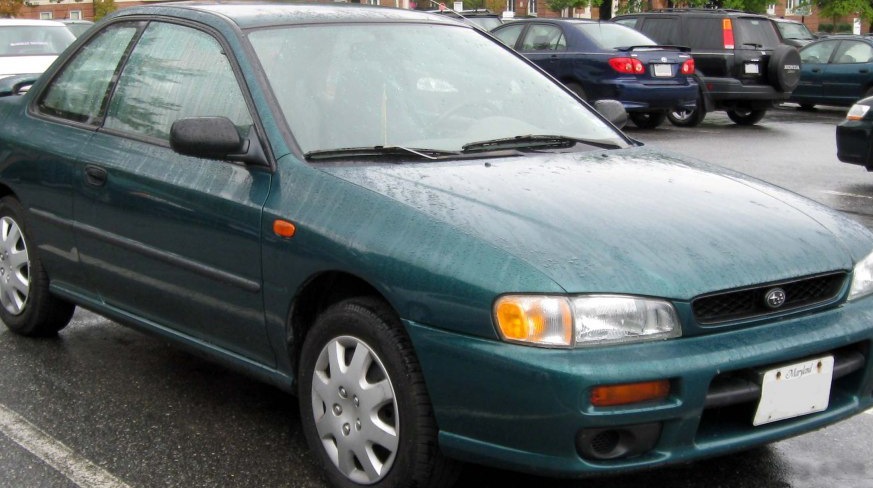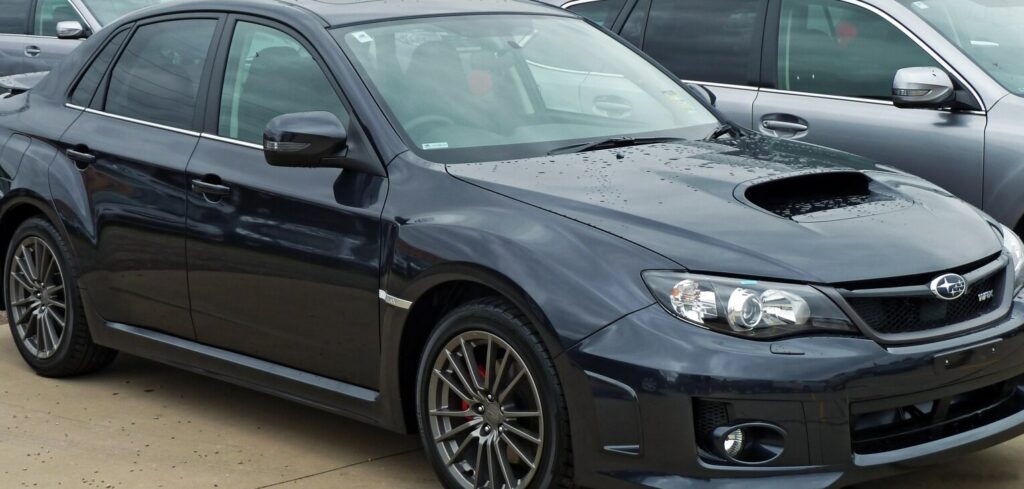
The Subaru Impreza III Sedan 1.5R, produced between 2008 and 2011, represented an entry point into the Impreza range for many buyers. Positioned within the third generation of the Impreza (often referred to as the GE/GH/GR/GP series depending on body style and market), this variant offered Subaru’s signature symmetrical all-wheel drive in a practical, fuel-conscious package. It served as a more affordable alternative to the higher-performance WRX and STI models, and even the more powerful naturally aspirated 2.5-liter Impreza trims. The 1.5R was primarily aimed at drivers seeking a reliable, safe, and economical sedan with all-weather capability.
Technical Specifications
| Brand | Subaru |
| Model | Impreza |
| Generation | Impreza III Sedan |
| Type (Engine) | 1.5R (107 Hp) AWD |
| Start of production | 2008 |
| End of production | 2011 |
| Powertrain Architecture | Internal Combustion engine |
| Body type | Sedan |
| Seats | 5 |
| Doors | 4 |
| Fuel consumption (urban) | 9.6 l/100 km (24.5 US mpg) |
| Fuel consumption (extra urban) | 6.3 l/100 km (37.3 US mpg) |
| Fuel consumption (combined) | 7.5 l/100 km (31.4 US mpg) |
| Fuel Type | Petrol (Gasoline) |
| Acceleration 0 – 100 km/h | 14 sec |
| Acceleration 0 – 62 mph | 14 sec |
| Acceleration 0 – 60 mph | 13.3 sec |
| Maximum speed | 175 km/h (108.74 mph) |
| Emission standard | Euro 4 |
| Weight-to-power ratio | 12.2 kg/Hp |
| Weight-to-torque ratio | 9.2 kg/Nm |
| Power | 107 Hp @ 6000 rpm |
| Torque | 142 Nm @ 4500 rpm (104.73 lb.-ft. @ 4500 rpm) |
| Engine layout | Front, Longitudinal |
| Engine Model/Code | EJ15 |
| Engine displacement | 1498 cm3 (91.41 cu. in.) |
| Number of cylinders | 4 |
| Engine configuration | Boxer |
| Cylinder Bore | 77.7 mm (3.06 in.) |
| Piston Stroke | 79 mm (3.11 in.) |
| Compression ratio | 10.1:1 |
| Number of valves per cylinder | 4 |
| Fuel injection system | Multi-port manifold injection |
| Engine aspiration | Naturally aspirated engine |
| Valvetrain | OHC |
| Engine oil capacity | 4.2 l (4.44 US qt | 3.7 UK qt) |
| Coolant capacity | 7.4 l (7.82 US qt | 6.51 UK qt) |
| Kerb Weight | 1310 kg (2888.06 lbs.) |
| Fuel tank capacity | 60 l (15.85 US gal | 13.2 UK gal) |
| Length | 4580 mm (180.31 in.) |
| Width | 1740 mm (68.5 in.) |
| Height | 1475 mm (58.07 in.) |
| Wheelbase | 2620 mm (103.15 in.) |
| Front track | 1505 mm (59.25 in.) |
| Rear track | 1510 mm (59.45 in.) |
| Minimum turning circle | 10.6 m (34.78 ft.) |
| Drive wheel | All wheel drive (4×4) |
| Number of gears | 5 gears, manual transmission |
| Front suspension | Independent, type McPherson with coil spring and anti-roll bar |
| Rear suspension | Several levers and rods |
| Front brakes | Ventilated discs |
| Rear brakes | Disc |
| Assisting systems | ABS (Anti-lock braking system) |
| Steering type | Steering rack and pinion |
| Tires size | 195/65 R15 |
| Wheel rims size | 15 |
INTRODUCTION
The Subaru Impreza III Sedan 1.5R, launched in 2008, was a key component of Subaru’s strategy to broaden the appeal of the Impreza. It represented a downsized engine option within the range, designed to offer improved fuel economy and lower running costs compared to the 2.5-liter models. Built on the Subaru Impreza platform (GE for sedan), the 1.5R aimed to attract buyers who prioritized practicality and affordability without sacrificing Subaru’s renowned all-wheel-drive system. Production continued until 2011, when the Impreza range underwent further revisions.
Powertrain & Engine Architecture
At the heart of the 1.5R is the EJ15 1.5-liter horizontally-opposed (Boxer) four-cylinder engine. This engine, a hallmark of Subaru engineering, features a naturally aspirated configuration and multi-point fuel injection. The Boxer layout, with its pistons moving horizontally, contributes to a lower center of gravity, enhancing stability and handling. The EJ15 produces 107 horsepower at 6000 rpm and 142 Nm (104.73 lb-ft) of torque at 4500 rpm. The engine utilizes a single overhead camshaft (OHC) valvetrain. Paired with this engine was a five-speed manual transmission, which was the standard offering. The transmission was chosen for its durability and relatively simple design, contributing to lower maintenance costs. The all-wheel-drive system is a symmetrical system, distributing power to all four wheels via a viscous coupling limited-slip center differential.
Driving Characteristics
The 1.5R’s driving experience is characterized by its smooth, predictable power delivery. While not particularly quick – 0-60 mph takes around 13.3 seconds – it provides adequate performance for everyday driving. The five-speed manual transmission offers a decent spread of gears, allowing the engine to operate efficiently at highway speeds. Compared to the more powerful 2.5-liter Impreza, the 1.5R feels noticeably less responsive, particularly during acceleration. However, the lower weight of the 1.5R engine contributes to a more balanced feel in corners. The all-wheel-drive system provides excellent traction in various weather conditions, a key selling point for Subaru vehicles. The gear ratios are tuned for fuel efficiency rather than outright performance, making it a comfortable cruiser but less engaging for spirited driving.
Equipment & Trim Levels
The 1.5R typically came with a fairly basic level of equipment, reflecting its position as the entry-level Impreza. Standard features generally included air conditioning, power windows and locks, and a basic audio system. Safety features such as anti-lock brakes (ABS) and front airbags were also standard. Interior upholstery was typically cloth, and the dashboard featured a straightforward design. Optional extras included alloy wheels, a sunroof, and an upgraded audio system. Higher trim levels, such as the 1.5R Premium, added features like keyless entry and a more comprehensive audio system. The interior materials were functional but not luxurious, prioritizing durability and practicality.
Chassis & Braking
The Impreza III Sedan 1.5R utilizes a McPherson strut front suspension and a multi-link rear suspension. This setup provides a good balance between ride comfort and handling. The front suspension incorporates a stabilizer bar to reduce body roll during cornering. Braking duties are handled by ventilated discs at the front and solid discs at the rear. The ABS system helps to maintain steering control during emergency braking. The chassis is relatively lightweight, contributing to the car’s nimble handling characteristics. The suspension tuning is geared towards comfort, providing a smooth ride over most road surfaces.
Market Reception & Comparison
The 1.5R was generally well-received by critics as a sensible and economical option within the Impreza range. It was praised for its fuel efficiency, all-wheel-drive capability, and reliability. However, some reviewers noted its lack of outright performance compared to the 2.5-liter models. Compared to the 2.5i, the 1.5R offered significantly better fuel economy, but at the cost of around 20-30 horsepower. The 1.5R also offered a more affordable entry point into the Subaru brand. In terms of reliability, the EJ15 engine proved to be generally robust, although regular maintenance was essential to prevent issues such as oil leaks and head gasket failures (a common concern with some Subaru engines of this era).
Legacy
The Subaru Impreza III Sedan 1.5R remains a relatively common sight on used car markets. Its reputation for reliability and affordability makes it an attractive option for budget-conscious buyers. The EJ15 engine, while not known for its high performance, is generally considered to be durable and relatively easy to maintain. However, potential buyers should be aware of the potential for oil leaks and head gasket issues, and should ensure that the vehicle has been properly maintained. The 1.5R’s legacy lies in its role as a practical and accessible entry point into the Subaru brand, offering all-wheel-drive capability and reliability at an affordable price point.