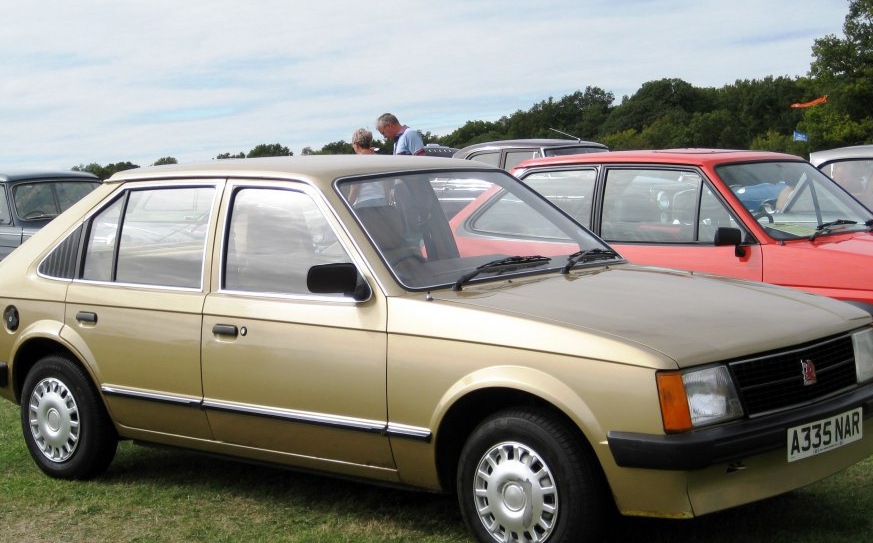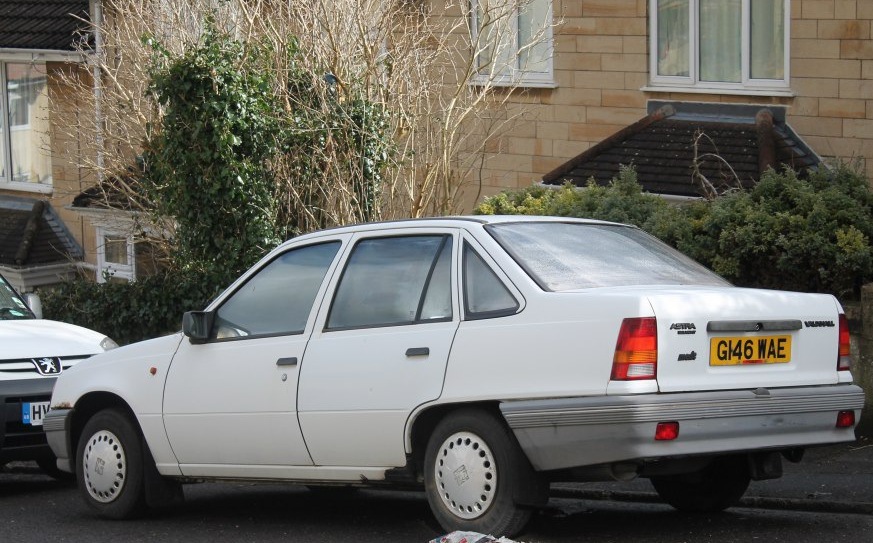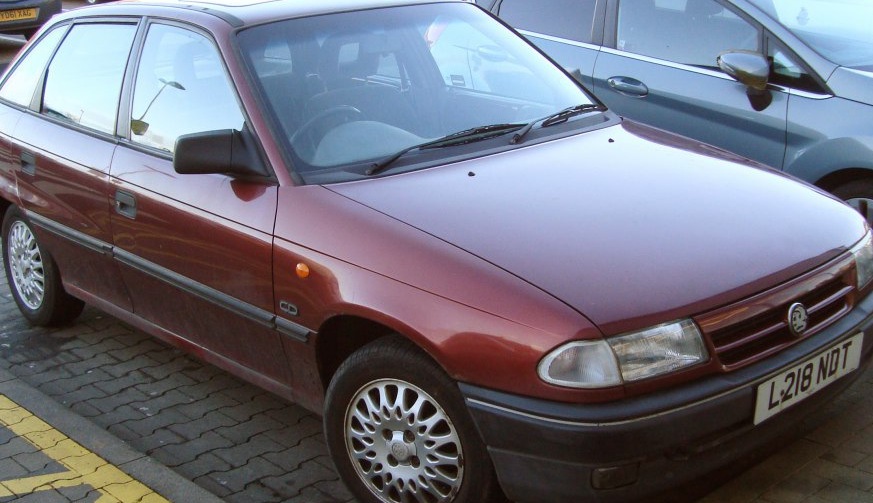
The Vauxhall Astra Mk III CC 1.4 iS Automatic, produced between 1991 and 1994, represented an entry-level offering within the broader Mk III Astra range (designated 1HX0/A3). Positioned as a practical and affordable hatchback, this variant catered to buyers prioritizing fuel economy and ease of use over outright performance. It was a common sight on British roads during its production run, serving as a dependable family vehicle and a popular choice for new drivers. The “CC” designation signified the car’s ‘Club’ trim level, a step up from the base model but below the more luxurious ‘GL’ and ‘GSi’ trims.
Technical Specifications
| Brand | Vauxhall |
| Model | Astra |
| Generation | Astra Mk III CC |
| Type (Engine) | 1.4 iS (82 Hp) Automatic |
| Start of production | 1991 |
| End of production | 1994 |
| Powertrain Architecture | Internal Combustion engine |
| Body type | Hatchback |
| Seats | 5 |
| Doors | 3-5 |
| Fuel consumption (combined) | 7.4 l/100 km |
| Fuel consumption (US mpg) | 31.8 US mpg |
| Fuel consumption (UK mpg) | 38.2 UK mpg |
| Fuel consumption (km/l) | 13.5 km/l |
| Fuel Type | Petrol (Gasoline) |
| Acceleration 0 – 100 km/h | 13 sec |
| Acceleration 0 – 62 mph | 13 sec |
| Acceleration 0 – 60 mph | 12.4 sec |
| Maximum speed | 175 km/h (108.74 mph) |
| Weight-to-power ratio | 11.6 kg/Hp |
| Weight-to-torque ratio | 8.4 kg/Nm |
| Power | 82 Hp @ 6800 rpm |
| Power per litre | 59 Hp/l |
| Torque | 113 Nm @ 3400 rpm (83.34 lb.-ft. @ 3400 rpm) |
| Engine layout | Front, Transverse |
| Engine Model/Code | 14SE, C14SE |
| Engine displacement | 1389 cm3 (84.76 cu. in.) |
| Number of cylinders | 4 |
| Engine configuration | Inline |
| Number of valves per cylinder | 2 |
| Fuel injection system | Multi-port manifold injection |
| Engine aspiration | Naturally aspirated engine |
| Engine oil capacity | 3.5 l (3.7 US qt | 3.08 UK qt) |
| Coolant capacity | 5.8 l (6.13 US qt | 5.1 UK qt) |
| Kerb Weight | 950 kg (2094.39 lbs) |
| Max. weight | 1475 kg (3251.82 lbs) |
| Max load | 525 kg (1157.43 lbs) |
| Trunk (boot) space – minimum | 360 l (12.71 cu. ft.) |
| Length | 4049 mm (159.41 in) |
| Width | 1689 mm (66.5 in) |
| Height | 1410 mm (55.51 in) |
| Wheelbase | 2520 mm (99.21 in) |
| Front track | 1420 mm (55.91 in) |
| Rear (Back) track | 1420 mm (55.91 in) |
| Ride height (ground clearance) | 135 mm (5.31 in) |
| Drag coefficient (Cd) | 0.31 |
| Drivetrain Architecture | The Internal combustion engine (ICE) drives the front wheels of the vehicle. |
| Drive wheel | Front wheel drive |
| Number of gears and type of gearbox | 4 gears, automatic transmission |
| Front brakes | Ventilated discs |
| Rear brakes | Drum |
| Tires size | 185/60 R14 |
| Wheel rims size | 14 |
Powertrain & Engine Architecture
The heart of the Astra Mk III CC 1.4 iS Automatic was the 14SE (or C14SE in some markets) 1.4-liter inline-four cylinder engine. This engine, a staple of Vauxhall/Opel’s small car lineup, featured a relatively simple design with two valves per cylinder and a single overhead camshaft. Fuel delivery was handled by a multi-port fuel injection system, a significant improvement over the carburetors found in earlier Astras. The 14SE engine produced 82 horsepower at 6800 rpm and 113 Nm (83.34 lb-ft) of torque at 3400 rpm. This power was then sent to the front wheels via a four-speed automatic transmission. This transmission, while providing convenience, was not known for its sportiness or rapid shifting. It was a traditional hydraulic automatic, prioritizing smooth operation over performance.
Driving Characteristics
The 1.4 iS Automatic offered a comfortable, if uninspiring, driving experience. Acceleration was leisurely, taking around 13 seconds to reach 60 mph. The automatic transmission contributed to this, with noticeable delays in downshifting and a tendency to ‘hunt’ for gears on inclines. Compared to the five-speed manual version of the 1.4, the automatic suffered a noticeable performance penalty. The higher-output 1.6 and 2.0-liter engines, particularly when paired with a manual gearbox, offered a significantly more engaging driving experience. However, the automatic’s strength lay in its ease of use, making it ideal for urban driving and commuting. The suspension, tuned for comfort, provided a reasonably smooth ride, although it could feel somewhat wallowy in corners.
Equipment & Trim Levels
The Astra Mk III CC 1.4 iS Automatic, as a ‘Club’ trim level, came reasonably well-equipped for its time. Standard features typically included central locking, power steering, and an adjustable steering column. Interior upholstery was usually cloth, with a simple, functional dashboard layout. Options available included electric front windows, a sunroof, and upgraded audio systems. The interior plastics were durable but lacked the refinement of more expensive trims. The car’s practicality was enhanced by its relatively spacious interior and decent-sized boot (360 liters).
Chassis & Braking
The Astra Mk III utilized a MacPherson strut front suspension and a torsion beam rear suspension. This setup provided a good balance between comfort and handling, although it wasn’t particularly sporty. Braking was handled by ventilated discs on the front wheels and drum brakes on the rear. While adequate for normal driving, the rear drum brakes were a limitation compared to the all-disc setups found on higher-spec models. The car’s weight of around 950 kg (2094 lbs) contributed to its manageable handling characteristics.
Market Reception & Comparison
The Astra Mk III CC 1.4 iS Automatic was generally well-received as a practical and affordable family car. Critics praised its fuel economy (around 31.8 US mpg) and comfortable ride. However, the automatic transmission and relatively low power output were often criticized. Compared to the manual 1.4, the automatic offered less engaging driving experience. The 1.6-liter versions provided a noticeable performance boost, while the 2.0-liter GSi models were aimed at a more enthusiastic driver. In terms of reliability, the 14SE engine was generally considered robust, although regular maintenance was essential.
Legacy
Today, the Vauxhall Astra Mk III CC 1.4 iS Automatic is a relatively common sight in the used car market, often available at very affordable prices. While not a performance icon, it remains a dependable and practical classic. The 14SE engine, while not particularly powerful, is known for its durability. However, potential buyers should be aware of potential issues with rust, particularly on older examples. The automatic transmission, while convenient, may require more frequent servicing than a manual gearbox. Overall, the Astra Mk III CC 1.4 iS Automatic represents a solid, if unspectacular, example of 1990s British motoring.