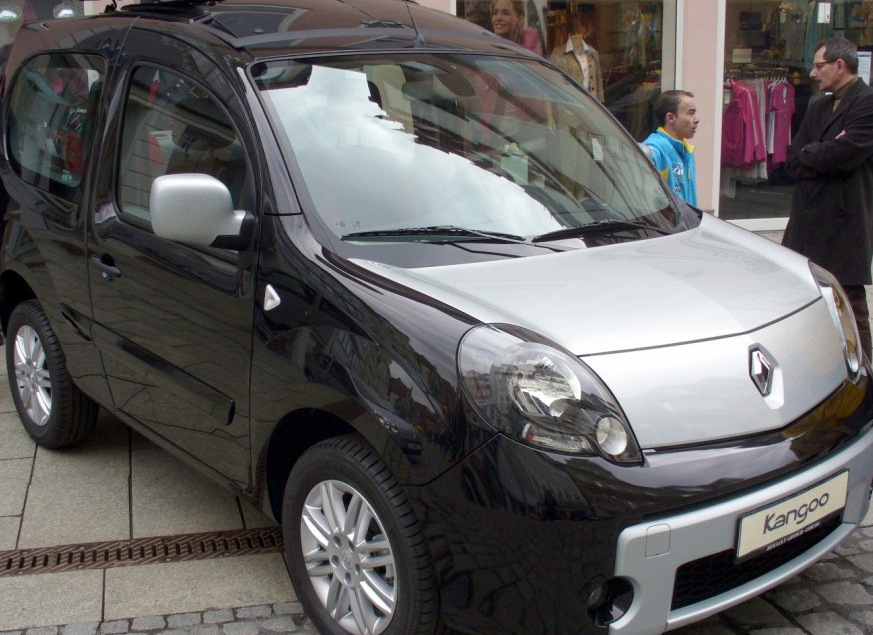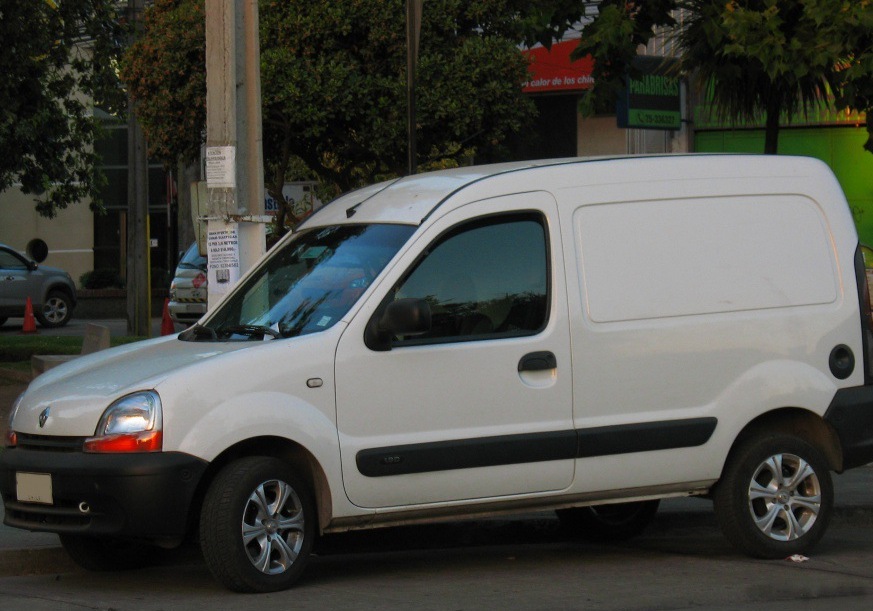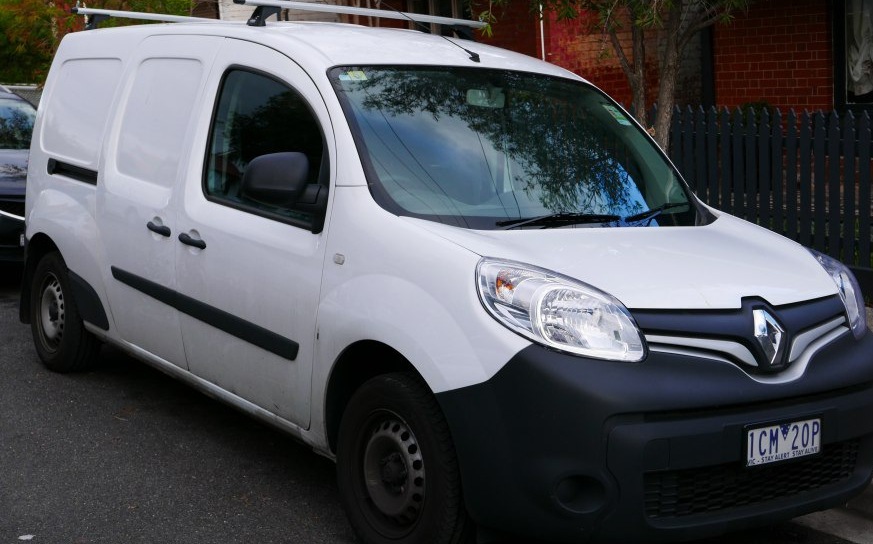
The Renault Kangoo II Express Maxi Grand Volume, specifically the facelifted version produced from 2013 to 2018, represented a significant offering in the compact van segment, particularly in European markets. This variant, equipped with the 1.5 Energy dCi engine producing 90 horsepower and featuring a Stop&Start system, was positioned as a practical and fuel-efficient solution for businesses and tradespeople requiring a versatile cargo vehicle. The Kangoo II, built on the X0/B9 platform, was renowned for its spacious interior and robust construction, making it a popular choice for commercial applications. This particular engine and trim level aimed to balance affordability with acceptable performance and economy.
Technical Specifications
| Brand | Renault |
| Model | Kangoo |
| Generation | Kangoo II Express Maxi Grand Volume (facelift 2013) |
| Type (Engine) | 1.5 Energy dCi (90 Hp) Stop&Start |
| Start of production | 2013 |
| End of production | 2018 |
| Powertrain Architecture | Internal Combustion engine |
| Body type | Minivan |
| Seats | 2 |
| Doors | 3 |
| Fuel consumption (combined) | 4.7 l/100 km (50 US mpg, 60.1 UK mpg, 21.3 km/l) |
| CO2 emissions | 123 g/km |
| Fuel Type | Diesel |
| Acceleration 0 – 100 km/h | 13.3 sec |
| Acceleration 0 – 62 mph | 13.3 sec |
| Acceleration 0 – 60 mph | 12.6 sec |
| Maximum speed | 160 km/h (99.42 mph) |
| Emission standard | Euro 5 |
| Weight-to-power ratio | 15.1 kg/Hp, 66.3 Hp/tonne |
| Weight-to-torque ratio | 6.2 kg/Nm, 162.1 Nm/tonne |
| Power | 90 Hp @ 4000 rpm |
| Power per litre | 61.6 Hp/l |
| Torque | 220 Nm @ 1750 rpm (162.26 lb.-ft. @ 1750 rpm) |
| Engine layout | Front, Transverse |
| Engine Model/Code | K9K |
| Engine displacement | 1461 cm3 (89.16 cu. in.) |
| Number of cylinders | 4 |
| Engine configuration | Inline |
| Number of valves per cylinder | 2 |
| Fuel injection system | Diesel Commonrail |
| Engine aspiration | Turbocharger, Intercooler |
| Engine oil capacity | 4.5 l (4.76 US qt | 3.96 UK qt) |
| Coolant capacity | 7.2 l (7.61 US qt | 6.34 UK qt) |
| Kerb Weight | 1357-1496 kg (2991.67 – 3298.12 lbs.) |
| Max. weight | 2200 kg (4850.17 lbs.) |
| Max load | 704-843 kg (1552.05 – 1858.5 lbs.) |
| Trunk (boot) space – minimum | 4000 l (141.26 cu. ft.) |
| Trunk (boot) space – maximum | 4600 l (162.45 cu. ft.) |
| Fuel tank capacity | 60 l (15.85 US gal | 13.2 UK gal) |
| Permitted trailer load with brakes (12%) | 1050 kg (2314.85 lbs.) |
| Permitted trailer load without brakes | 680 kg (1499.14 lbs.) |
| Length | 4666 mm (183.7 in.) |
| Width | 1829 mm (72.01 in.) |
| Width including mirrors | 2138 mm (84.17 in.) |
| Height | 1810 mm (71.26 in.) |
| Wheelbase | 3081 mm (121.3 in.) |
| Front track | 1521 mm (59.88 in.) |
| Rear (Back) track | 1533 mm (60.35 in.) |
| Front overhang | 875 mm (34.45 in.) |
| Rear overhang | 710 mm (27.95 in.) |
| Minimum turning circle | 11.9 m (39.04 ft.) |
| Drivetrain Architecture | Front wheel drive |
| Drive wheel | Front wheel drive |
| Number of gears and type of gearbox | 5 gears, manual transmission |
| Front suspension | Independent type McPherson |
| Rear suspension | Torsion |
| Front brakes | Ventilated discs |
| Rear brakes | Drum |
| Assisting systems | ABS (Anti-lock braking system) |
| Steering type | Steering rack and pinion |
| Power steering | Electric Steering |
| Tires size | 195/65 R15 91 T |
| Wheel rims size | 15 |
INTRODUCTION
The Renault Kangoo II Express Maxi Grand Volume 1.5 dCi 90 Stop&Start, introduced with the 2013 facelift, was a key variant within the Kangoo II range. Designed primarily for commercial use, it offered a longer wheelbase (“Maxi”) and increased cargo volume (“Grand Volume”) compared to the standard Kangoo II. The facelift brought updated styling, improved interior features, and refinements to the engine lineup. This particular model, with its 90 horsepower diesel engine and Stop&Start technology, aimed to provide a balance between fuel efficiency, practicality, and affordability for small businesses and tradespeople. It was a mainstay in the European light commercial vehicle market.
Powertrain & Engine Architecture
At the heart of this Kangoo variant lies the Renault K9K engine, a 1.5-liter inline-four cylinder diesel. This engine, a member of the Renault-Nissan Alliance’s common engine family, is known for its robustness and relatively simple design. The ‘Energy dCi’ designation signifies Renault’s efforts to improve fuel efficiency and reduce emissions. The 90 horsepower version utilizes a turbocharger with an intercooler to boost power output, while the common rail direct fuel injection system ensures precise fuel delivery for optimal combustion. The Stop&Start system automatically shuts off the engine when the vehicle is stationary (at traffic lights, for example) and restarts it instantly when the clutch is depressed, further enhancing fuel economy. The engine’s 220 Nm (162 lb-ft) of torque, available from 1750 rpm, provides adequate pulling power for carrying loads. The engine utilizes a two-valve per cylinder configuration. The 5-speed manual transmission was the standard offering for this trim, providing a balance between fuel economy and usability.
Driving Characteristics
The 90 horsepower 1.5 dCi engine, coupled with the 5-speed manual transmission, delivers adequate, though not exhilarating, performance. Acceleration from 0-60 mph takes around 12.6 seconds, and the top speed is approximately 99 mph. The engine’s torque characteristics make it well-suited for carrying loads, providing sufficient power for everyday driving and moderate inclines. However, when fully loaded, the engine can feel strained, and overtaking maneuvers require careful planning. The gear ratios are geared towards fuel efficiency, meaning the engine operates at relatively low RPMs during cruising. Compared to higher-powered Kangoo variants (like those with the 110 hp engine), this version feels less responsive, but it offers significantly better fuel economy. The manual transmission provides a more engaging driving experience than an automatic, allowing the driver to better control the engine’s power band.
Equipment & Trim Levels
The Kangoo II Express Maxi Grand Volume 1.5 dCi 90 Stop&Start was typically equipped with a functional, rather than luxurious, interior. Standard features included a driver’s airbag, central locking, electric front windows, and a basic audio system. The interior trim was typically durable and practical, designed to withstand the rigors of commercial use. The cab was relatively spartan, focusing on functionality and ease of cleaning. Optional extras included air conditioning, a passenger airbag, rear parking sensors, and upgraded audio systems. The ‘Grand Volume’ designation meant a significantly larger cargo area compared to standard Kangoo models, making it ideal for businesses needing to transport bulky items. The van typically featured a steel bulkhead separating the cab from the cargo area for added security and noise reduction.
Chassis & Braking
The Kangoo II utilizes a McPherson strut independent suspension at the front and a torsion beam suspension at the rear. This setup provides a reasonable balance between ride comfort and handling. The front brakes are ventilated discs, offering good stopping power, while the rear brakes are drums, a cost-saving measure common in light commercial vehicles. ABS (Anti-lock Braking System) is standard, enhancing safety during emergency braking. The suspension is tuned to prioritize load-carrying capacity over sporty handling. The steering is rack and pinion with electric power assistance, providing light and easy steering, particularly useful for maneuvering in tight urban environments.
Market Reception & Comparison
The Renault Kangoo II Express Maxi Grand Volume 1.5 dCi 90 Stop&Start was generally well-received by critics and commercial vehicle operators. It was praised for its fuel efficiency, spacious cargo area, and robust construction. However, some reviewers noted that the 90 horsepower engine could feel underpowered when fully loaded. Compared to other vans in its class, such as the Citroën Berlingo and Peugeot Partner, the Kangoo offered a competitive package in terms of price, fuel economy, and practicality. The 1.5 dCi 90 version was often seen as a good compromise for businesses prioritizing running costs over outright performance. The 110 hp version offered more power but at a higher price point and with slightly reduced fuel economy.
Legacy
The Renault Kangoo II, and specifically the 1.5 dCi 90 Stop&Start variant, has proven to be a reliable and durable workhorse. The K9K engine is known for its longevity, and with regular maintenance, can cover high mileages. On the used car market, these vans remain popular due to their affordability and practicality. Common issues include wear and tear on suspension components and potential problems with the turbocharger, particularly if the vehicle has not been well-maintained. However, spare parts are readily available and relatively inexpensive. The Kangoo II continues to be a popular choice for small businesses and tradespeople seeking a versatile and economical light commercial vehicle.