
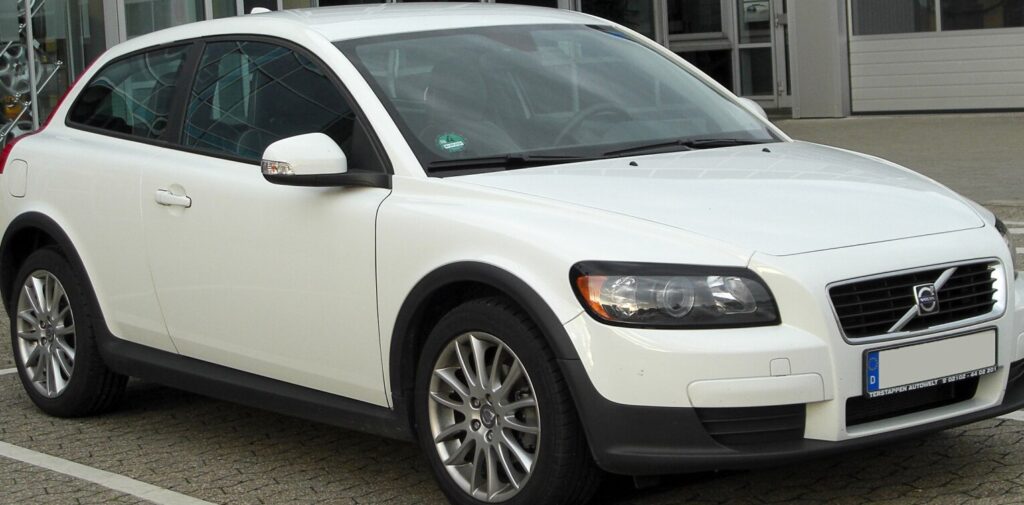
The Volvo C30 2.4 D5, produced between 2006 and 2010, represents a distinctive offering within the second generation of Volvo’s C30 compact coupe. Positioned as a premium, sporty option, the D5 variant utilized a five-cylinder diesel engine paired with a five-speed automatic transmission. This configuration aimed to balance fuel efficiency with respectable performance, appealing to European drivers seeking a stylish and practical vehicle. The C30 itself was Volvo’s attempt to capture a younger demographic, offering a more emotionally driven design compared to their traditionally conservative offerings. It was built on the Ford C1 platform, shared with the Mazda 3 and Ford Focus, showcasing Volvo’s integration within the Ford Motor Company at the time.
Technical Specifications
| Brand | Volvo |
| Model | C30 |
| Generation | C30 |
| Type (Engine) | 2.4 D5 (163 Hp) |
| Start of production | 2006 |
| End of production | 2010 |
| Powertrain Architecture | Internal Combustion engine |
| Body type | Coupe |
| Seats | 4 |
| Doors | 3 |
| Fuel consumption (combined) | 6.9 l/100 km (34.1 US mpg, 40.9 UK mpg, 14.5 km/l) |
| CO2 emissions | 182 g/km |
| Fuel Type | Diesel |
| Acceleration 0 – 100 km/h | 9.3 sec |
| Acceleration 0 – 62 mph | 9.3 sec |
| Acceleration 0 – 60 mph | 8.8 sec |
| Maximum speed | 210 km/h (130.49 mph) |
| Weight-to-power ratio | 8.6 kg/Hp, 116.1 Hp/tonne |
| Weight-to-torque ratio | 4.1 kg/Nm, 242.2 Nm/tonne |
| Power | 163 Hp @ 4000 rpm |
| Power per litre | 67.9 Hp/l |
| Torque | 340 Nm @ 1750 rpm (250.77 lb.-ft. @ 1750 rpm) |
| Engine layout | Front, Transverse |
| Engine Model/Code | D5244T9 |
| Engine displacement | 2401 cm3 (146.52 cu. in.) |
| Number of cylinders | 5 |
| Engine configuration | Inline |
| Cylinder Bore | 81 mm (3.19 in.) |
| Piston Stroke | 93.2 mm (3.67 in.) |
| Compression ratio | 18:1 |
| Number of valves per cylinder | 4 |
| Fuel injection system | Diesel Commonrail |
| Engine aspiration | Turbocharger, Intercooler |
| Valvetrain | DOHC |
| Engine oil capacity | 6 l (6.34 US qt | 5.28 UK qt) |
| Coolant | 11 l (11.62 US qt | 9.68 UK qt) |
| Kerb Weight | 1404 kg (3095.29 lbs.) |
| Trunk (boot) space – minimum | 233 l (8.23 cu. ft.) |
| Fuel tank capacity | 60 l (15.85 US gal | 13.2 UK gal) |
| Length | 4252 mm (167.4 in.) |
| Width | 1782 mm (70.16 in.) |
| Height | 1447 mm (56.97 in.) |
| Wheelbase | 2640 mm (103.94 in.) |
| Front track | 1548 mm (60.94 in.) |
| Rear track | 1544 mm (60.79 in.) |
| Minimum turning circle | 10.6 m (34.78 ft.) |
Powertrain & Engine Architecture
The heart of the C30 2.4 D5 is the D5244T9 engine, a 2.4-liter inline five-cylinder diesel. This engine is a descendant of Volvo’s long-running D5 series, known for its robustness and efficiency. The D5244T9 utilizes a common rail direct injection system, delivering fuel at extremely high pressure for optimized combustion. A variable geometry turbocharger (VGT) with an intercooler further enhances performance by increasing air intake and reducing intake temperatures. The engine features a double overhead camshaft (DOHC) valvetrain with four valves per cylinder, contributing to its efficient breathing. The five-speed automatic transmission, sourced from Aisin, was chosen for its smoothness and reliability. While not a performance-oriented gearbox, it provided comfortable shifting and adequate response for everyday driving.
Driving Characteristics
The 163 horsepower and 340 Nm (250 lb-ft) of torque delivered by the D5 engine provided a respectable, if not exhilarating, driving experience. Acceleration from 0-60 mph took around 8.8 seconds, making it competitive with other diesel-powered compacts of the era. The automatic transmission, while smooth, did slightly diminish the engine’s potential compared to the available six-speed manual. Gear ratios were tuned for fuel economy and relaxed cruising, rather than aggressive acceleration. The engine’s peak torque, available from just 1750 rpm, provided ample pulling power for overtaking and highway driving. Compared to the more powerful 2.5-liter turbocharged petrol variants, the D5 offered a more refined and economical driving experience, sacrificing outright speed for improved fuel efficiency.
Equipment & Trim Levels
The C30 2.4 D5 typically came equipped with a generous level of standard features. These included climate control, power windows and mirrors, a CD stereo system, and alloy wheels. Safety was a Volvo hallmark, and the C30 included features like ABS brakes, traction control, and multiple airbags. Interior upholstery was typically cloth, with leather options available as an upgrade. Optional extras included a premium audio system, sunroof, and parking sensors. The trim level generally sat in the mid-range of the C30 lineup, offering a good balance of features and price. It was positioned above the base 1.6-liter petrol models but below the higher-performance T5 variants.
Chassis & Braking
The C30’s chassis was based on the Ford C1 platform, providing a stable and well-balanced foundation. The front suspension utilized MacPherson struts, while the rear employed a multi-link setup. This configuration delivered a comfortable ride with decent handling characteristics. The D5 variant, due to its heavier engine, often featured slightly stiffer suspension components compared to the lighter petrol models. Braking was handled by ventilated discs on all four wheels, providing ample stopping power. ABS (Anti-lock Braking System) was standard, enhancing safety and control during emergency braking situations. Stabilizer bars were fitted to both the front and rear axles to reduce body roll during cornering.
Market Reception & Comparison
The Volvo C30 2.4 D5 was generally well-received by automotive critics. It was praised for its stylish design, comfortable interior, and fuel-efficient engine. However, some reviewers noted that the automatic transmission could feel sluggish at times, and the rear seats were somewhat cramped. Compared to other diesel-powered compacts, the C30 D5 offered a more premium feel and a higher level of standard equipment. Fuel economy was competitive, averaging around 40 mpg in real-world driving. Reliability was generally good, although some owners reported issues with the diesel particulate filter (DPF) system, a common concern with modern diesel engines.
Legacy
The Volvo C30, including the 2.4 D5 variant, has developed a loyal following among enthusiasts. The D5 engine, in particular, is known for its durability and potential for tuning. While the C30 was discontinued in 2013, well-maintained examples continue to appear on the used car market. The 2.4 D5 automatic combination represents a practical and stylish option for those seeking a fuel-efficient and comfortable coupe. Its blend of Scandinavian design, robust engineering, and reasonable running costs ensures its continued appeal to a discerning clientele. The D5 engine’s reputation for longevity means that many examples are still providing reliable service today, making it a viable option for those seeking a unique and dependable vehicle.
