
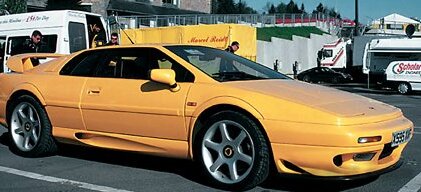
The Lotus Esprit 2.0 i 16V Turbo GT3, produced between 1996 and 1999, represents a high-performance iteration of the iconic Esprit model. Falling within the final years of Esprit production (the S4 generation, internally designated as the V8 chassis), the GT3 was positioned as a focused, driver-oriented variant aimed at enthusiasts. It served as a bridge between the earlier naturally aspirated models and the later, more exclusive V8-powered Esprits. The GT3 benefited from refinements made throughout the Esprit’s lifecycle, offering a compelling blend of performance, handling, and classic British sports car character. It was primarily sold in European and Asian markets, with limited numbers reaching North America.
Technical Specifications
| Brand | Lotus |
| Model | Esprit |
| Generation | Esprit |
| Type (Engine) | 2.0 i 16V Turbo GT3 (243 Hp) |
| Start of production | 1996 |
| End of production | 1999 |
| Powertrain Architecture | Internal Combustion engine |
| Body type | Coupe |
| Seats | 2 |
| Doors | 2 |
| Fuel consumption (urban) | 19 l/100 km (12.4 US mpg) |
| Fuel consumption (extra urban) | 8 l/100 km (29.4 US mpg) |
| Fuel Type | Petrol (Gasoline) |
| Acceleration 0 – 100 km/h | 5.2 sec |
| Acceleration 0 – 62 mph | 5.2 sec |
| Acceleration 0 – 60 mph | 4.9 sec |
| Maximum speed | 263 km/h (163.42 mph) |
| Weight-to-power ratio | 5.5 kg/Hp |
| Weight-to-torque ratio | 4.6 kg/Nm |
| Power | 243 Hp @ 6250 rpm |
| Power per litre | 123.2 Hp/l |
| Torque | 294 Nm @ 3750 rpm (216.84 lb.-ft. @ 3750 rpm) |
| Engine layout | Rear, Longitudinal |
| Engine Model/Code | Lotus 920 |
| Engine displacement | 1973 cm3 (120.4 cu. in.) |
| Number of cylinders | 4 |
| Engine configuration | Inline |
| Cylinder Bore | 95.3 mm (3.75 in.) |
| Piston Stroke | 69.2 mm (2.72 in.) |
| Compression ratio | 8:1 |
| Number of valves per cylinder | 4 |
| Fuel injection system | Multi-port manifold injection |
| Engine aspiration | Turbocharger |
| Valvetrain | DOHC |
| Engine oil capacity | 6.3 l (6.66 US qt | 5.54 UK qt) |
| Coolant | 24 l (25.36 US qt | 21.12 UK qt) |
| Kerb Weight | 1340 kg (2954.19 lbs.) |
| Max. weight | 1590 kg (3505.35 lbs.) |
| Max load | 250 kg (551.16 lbs.) |
| Trunk (boot) space – minimum | 200 l (7.06 cu. ft.) |
| Fuel tank capacity | 73 l (19.28 US gal | 16.06 UK gal) |
| Length | 4369 mm (172.01 in.) |
| Width | 1883 mm (74.13 in.) |
| Height | 1150 mm (45.28 in.) |
| Wheelbase | 2420 mm (95.28 in.) |
| Front track | 1530 mm (60.24 in.) |
| Rear (Back) track | 1545 mm (60.83 in.) |
| Drivetrain Architecture | Rear wheel drive |
| Number of gears and type of gearbox | 5 gears, manual transmission |
| Front suspension | Coil spring |
| Rear suspension | Coil spring |
| Front brakes | Ventilated discs |
| Rear brakes | Ventilated discs |
| Steering type | Steering rack and pinion |
| Power steering | Hydraulic Steering |
| Tires size | 215/40 R17; 245/40 R17 |
| Wheel rims size | 17 |
Powertrain & Engine Architecture
The heart of the Esprit GT3 is the Lotus 920 engine, a 2.0-liter turbocharged inline-four cylinder. This engine is a development of the earlier 2.0-liter turbocharged unit, but with revisions to the engine management system and turbocharger to increase power output to 243 horsepower. The engine utilizes a Garrett T28 turbocharger with an intercooler to manage intake temperatures. Fuel delivery is handled by a Bosch multi-port fuel injection system. The engine features a double overhead camshaft (DOHC) valvetrain with four valves per cylinder, contributing to its high specific output. The GT3 exclusively came with a five-speed manual transmission, known for its robust construction and precise shift feel. The engine is mounted longitudinally in the rear of the chassis, driving the rear wheels.
Driving Characteristics
The Esprit GT3 delivers a distinctly engaging driving experience. The turbocharged engine provides strong acceleration, with peak torque available from 3750 rpm, making it responsive in a variety of driving situations. While not as brutally powerful as the later V8 models, the GT3 offers a more accessible and balanced power delivery. The five-speed manual transmission allows for precise control, and the relatively lightweight construction (around 2954 lbs) contributes to nimble handling. Compared to the naturally aspirated Esprit variants, the GT3 offers significantly improved acceleration and top speed. However, it lacks the immediate throttle response of the naturally aspirated engines. Against the V8 Esprits, the GT3 provides a more raw and connected feel, appealing to drivers who prioritize handling and driver involvement over sheer power.
Equipment & Trim Levels
The GT3 was relatively well-equipped for its time, though it wasn’t positioned as a luxury vehicle. Standard features included leather upholstery, power windows, central locking, and an upgraded sound system. Air conditioning was typically standard. The interior design is functional and driver-focused, with a clear instrument cluster and well-placed controls. Optional extras included upgraded audio systems, and various cosmetic enhancements. The GT3’s interior generally featured a dark color scheme, with black leather being the most common choice.
Chassis & Braking
The Esprit GT3 utilizes a steel backbone chassis, a design that Lotus pioneered and refined over decades. This chassis provides a high degree of rigidity while keeping weight to a minimum. Suspension consists of independent double wishbones with coil springs and anti-roll bars at both the front and rear. The braking system features ventilated discs on all four wheels, providing ample stopping power. Power-assisted steering is standard, offering a good balance of feel and ease of use. The GT3’s suspension setup is tuned for performance, providing a firm but controlled ride.
Market Reception & Comparison
The Esprit GT3 was generally well-received by automotive critics, who praised its performance, handling, and distinctive styling. It was seen as a compelling alternative to other high-performance sports cars of the era, such as the Porsche 911. Fuel economy, while not a primary concern for buyers of this type of vehicle, was reasonable for a turbocharged sports car. Reliability was a mixed bag, as with many British sports cars of the period. The GT3’s turbocharged engine required careful maintenance, and some owners reported issues with the electrical system. Compared to the naturally aspirated Esprits, the GT3 offered significantly improved performance but at the cost of some complexity. Against the V8 Esprits, the GT3 represented a more affordable entry point into Esprit ownership, offering a similar driving experience at a lower price point.
Legacy
The Lotus Esprit GT3 remains a highly sought-after vehicle among collectors and enthusiasts. Its combination of performance, handling, and classic British sports car character has ensured its enduring appeal. While maintenance can be challenging due to the car’s age and complexity, the GT3 is generally considered to be a reliable vehicle when properly maintained. The Lotus 920 engine, while not without its quirks, is a robust and capable unit. Today, the Esprit GT3 represents a significant piece of automotive history, embodying the spirit of innovation and performance that Lotus is known for. Values have been steadily increasing in recent years, reflecting the growing demand for well-preserved examples.
