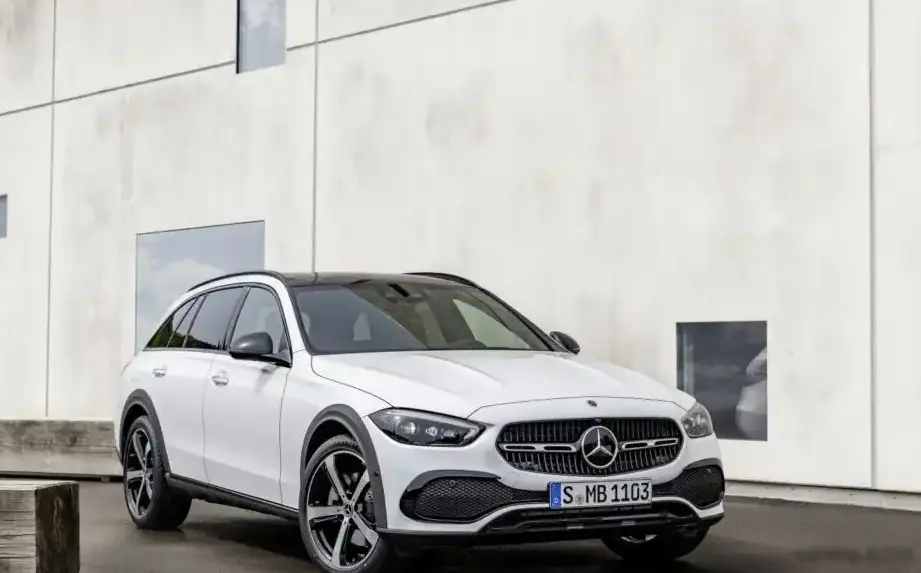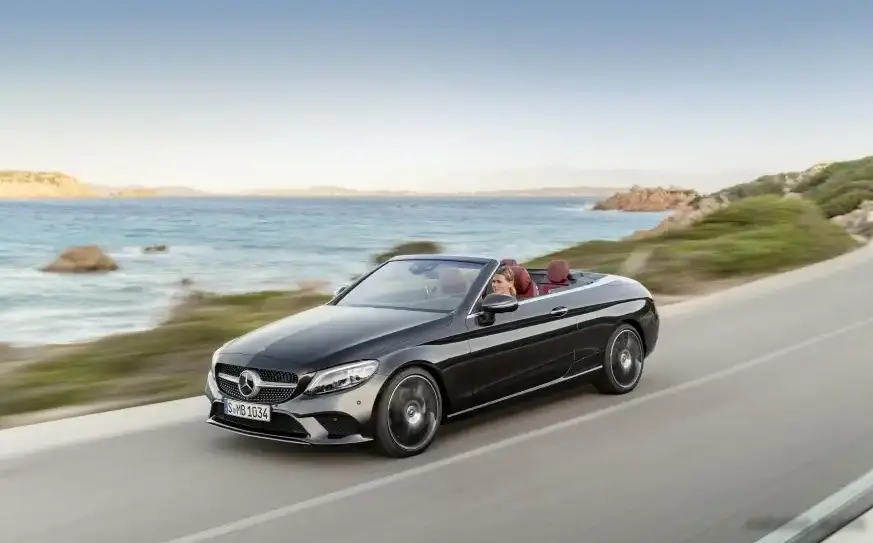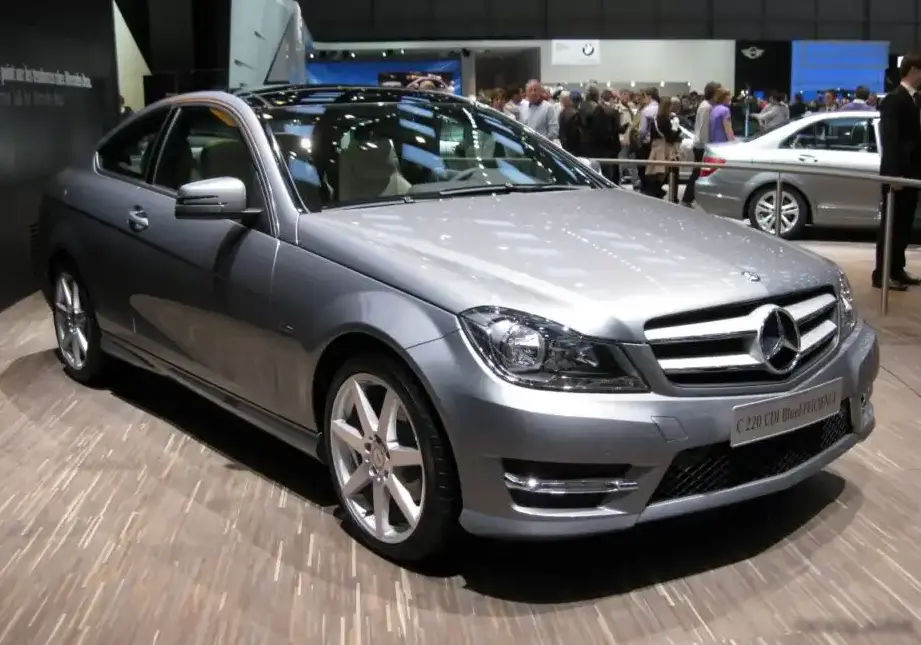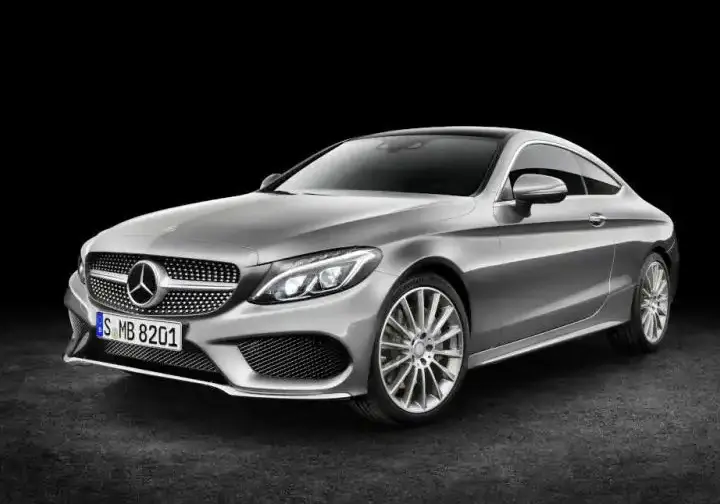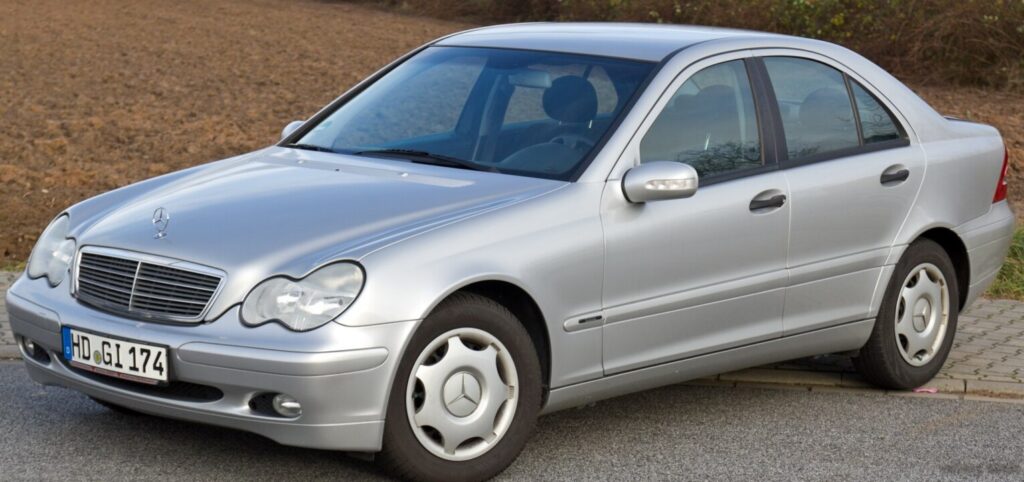
The Mercedes-Benz C-Class (W203) C 200 CDI Automatic, produced from July 2000 to June 2003, represented a key entry point into the premium compact executive car segment for Mercedes-Benz. Positioned as a fuel-efficient and comfortable option within the W203 range, it catered to buyers prioritizing economy and refinement over outright performance. This variant utilized a 2.1-liter turbocharged diesel engine paired with a five-speed automatic transmission, offering a balance between usability and the Mercedes-Benz brand experience. It was a significant offering in the European market, where diesel engines held a strong preference, and saw limited sales in North America where the C-Class was primarily offered with gasoline engines.
Technical Specifications
| Brand | Mercedes-Benz |
| Model | C-class |
| Generation | C-class (W203) |
| Type (Engine) | C 200 CDI (116 Hp) Automatic |
| Start of production | July, 2000 |
| End of production | June, 2003 |
| Powertrain Architecture | Internal Combustion engine |
| Body type | Sedan |
| Seats | 5 |
| Doors | 4 |
| Fuel consumption (economy) – urban (NEDC) | 9.4 l/100 km (25 US mpg, 30.1 UK mpg, 10.6 km/l) |
| Fuel consumption (economy) – extra urban (NEDC) | 5.1 l/100 km (46.1 US mpg, 55.4 UK mpg, 19.6 km/l) |
| Fuel consumption (economy) – combined (NEDC) | 6.7 l/100 km (35.1 US mpg, 42.2 UK mpg, 14.9 km/l) |
| CO2 emissions (NEDC) | 177 g/km |
| Fuel Type | Diesel |
| Acceleration 0 – 100 km/h | 12.1 sec |
| Acceleration 0 – 62 mph | 12.1 sec |
| Acceleration 0 – 60 mph | 11.5 sec |
| Maximum speed | 198 km/h (123.03 mph) |
| Emission standard | Euro 3 |
| Weight-to-power ratio | 12.3 kg/Hp, 81.1 Hp/tonne |
| Weight-to-torque ratio | 5.7 kg/Nm, 174.8 Nm/tonne |
| Power | 116 Hp @ 4200 rpm |
| Power per litre | 54 Hp/l |
| Torque | 250 Nm @ 1400-2600 rpm (184.39 lb.-ft. @ 1400-2600 rpm) |
| Engine layout | Front, Longitudinal |
| Engine Model/Code | OM 611.962 |
| Engine displacement | 2148 cm3 (131.08 cu. in.) |
| Number of cylinders | 4 |
| Engine configuration | Inline |
| Cylinder Bore | 88 mm (3.46 in.) |
| Piston Stroke | 88.3 mm (3.48 in.) |
| Compression ratio | 18:1 |
| Number of valves per cylinder | 4 |
| Fuel injection system | Diesel Commonrail |
| Engine aspiration | Turbocharger, Intercooler |
| Valvetrain | DOHC |
| Engine oil capacity | 6.5 l (6.87 US qt | 5.72 UK qt) |
| Coolant | 8.5 l (8.98 US qt | 7.48 UK qt) |
| Kerb Weight | 1430 kg (3152.61 lbs.) |
| Max. weight | 1985 kg (4376.18 lbs.) |
| Max load | 555 kg (1223.57 lbs.) |
| Trunk (boot) space – minimum | 455 l (16.07 cu. ft.) |
| Fuel tank capacity | 62 l (16.38 US gal | 13.64 UK gal) |
| Max. roof load | 100 kg (220.46 lbs.) |
| Permitted trailer load with brakes (12%) | 1500 kg (3306.93 lbs.) |
| Permitted trailer load without brakes | 750 kg (1653.47 lbs.) |
| Length | 4526 mm (178.19 in.) |
| Width | 1728 mm (68.03 in.) |
| Width including mirrors | 1980 mm (77.95 in.) |
| Height | 1426 mm (56.14 in.) |
| Wheelbase | 2715 mm (106.89 in.) |
| Front track | 1505 mm (59.25 in.) |
| Rear (Back) track | 1476 mm (58.11 in.) |
| Front overhang | 755 mm (29.72 in.) |
| Rear overhang | 1056 mm (41.57 in.) |
| Drag coefficient (Cd) | 0.27 |
| Minimum turning circle (turning diameter) | 10.76 m (35.3 ft.) |
| Drivetrain Architecture | The Internal combustion engine (ICE) drives the rear wheels of the vehicle. |
| Drive wheel | Rear wheel drive |
| Number of gears and type of gearbox | 5 gears, automatic transmission |
| Front suspension | Independent type McPherson, Transverse stabilizer |
| Rear suspension | Independent multi-link suspension, Transverse stabilizer |
| Front brakes | Ventilated discs |
| Rear brakes | Disc |
| Assisting systems | ABS (Anti-lock braking system) |
| Steering type | Steering rack and pinion |
| Power steering | Hydraulic Steering |
| Tires size | 195/65 R15 91 H |
| Wheel rims size | 6 J x 15 H 2 |
Powertrain & Engine Architecture
The C 200 CDI was powered by the OM 611.962, a 2.1-liter inline-four cylinder diesel engine. This engine was a mainstay of the Mercedes-Benz lineup during the early 2000s, known for its durability and relatively refined operation for a diesel. It featured a cast iron block and aluminum cylinder head, incorporating a turbocharger with an intercooler to boost power output. Crucially, this engine utilized common rail direct injection, a technology that allowed for precise fuel delivery and improved combustion efficiency. The common rail system, operating at extremely high pressures, enabled finer control over the injection process, resulting in reduced emissions and improved fuel economy. The engine’s valvetrain employed a double overhead camshaft (DOHC) design with four valves per cylinder, optimizing airflow for enhanced performance. The five-speed automatic transmission, a standard feature, was a conventional torque converter type, prioritizing smooth shifts and ease of use over outright sportiness.
Driving Characteristics
The C 200 CDI Automatic offered a comfortable and relaxed driving experience. With 116 horsepower and 250 Nm (184 lb-ft) of torque, acceleration was adequate but not particularly brisk. The 0-60 mph time of around 11.5 seconds reflects this. The automatic transmission, while smooth, wasn’t known for its quick responsiveness. Gear ratios were tuned for fuel efficiency rather than performance, meaning the engine often operated at lower RPMs during cruising. Compared to the more powerful C 220 CDI or C 320 CDI models, the C 200 CDI felt noticeably slower, especially when overtaking. However, the readily available torque at low RPMs made it a capable cruiser, and the automatic transmission eliminated the need for constant gear changes in city traffic. The rear-wheel drive configuration provided a balanced feel, though it lacked the all-weather capability of all-wheel drive variants.
Equipment & Trim Levels
The C 200 CDI Automatic typically came equipped with a reasonable level of standard features. Interior upholstery was usually a fabric material, though leather was available as an option. Standard equipment included power windows, central locking, air conditioning, and an audio system. Optional extras included a sunroof, upgraded audio systems, leather upholstery, automatic climate control, and parking sensors. The dashboard layout was typical of the W203, featuring a straightforward design with clearly labeled controls. Trim levels were relatively simple, with options primarily focused on adding comfort and convenience features rather than significantly altering the car’s appearance.
Chassis & Braking
The W203 C-Class featured an independent suspension system at all four wheels. The front suspension utilized a McPherson strut design, while the rear employed a multi-link setup. This configuration provided a good balance between ride comfort and handling. Stabilizer bars were fitted to both the front and rear axles to reduce body roll during cornering. Braking duties were handled by ventilated discs at the front and solid discs at the rear. Anti-lock Braking System (ABS) was standard, enhancing safety by preventing wheel lockup during hard braking. The C 200 CDI, being a lower-powered variant, typically featured slightly smaller brake rotors compared to the higher-performance models.
Market Reception & Comparison
The C 200 CDI Automatic was generally well-received by critics as a practical and economical option within the C-Class range. Its fuel economy was a major selling point, particularly in Europe where diesel fuel was significantly cheaper than gasoline. However, some reviewers criticized its relatively slow acceleration and the somewhat dated feel of the automatic transmission. Compared to the C 220 CDI, the C 200 CDI offered lower running costs but sacrificed performance. The C 220 CDI, with its slightly more powerful engine, provided a more engaging driving experience. Reliability was generally good, though like all cars of this era, regular maintenance was essential to prevent issues.
Legacy
The OM 611 engine family, including the OM 611.962 found in the C 200 CDI, has proven to be remarkably durable. Many examples are still on the road today, having accumulated high mileage. The C 200 CDI Automatic remains a relatively affordable option in the used car market. However, potential buyers should be aware of the age-related issues common to vehicles of this era, such as wear and tear on suspension components and potential problems with the automatic transmission. Despite its age, the C 200 CDI continues to appeal to buyers seeking a comfortable, economical, and reliable compact executive car.