
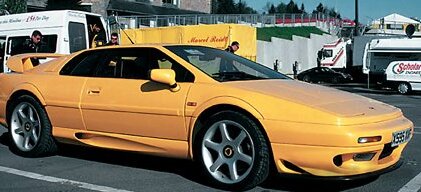
The Lotus Esprit 2.2 i 16V Turbo SE S4, produced between 1989 and 1996, represents a significant evolution of the iconic Esprit model. Positioned as a high-performance variant within the fourth generation (S4) of the Esprit, it aimed to blend the car’s renowned handling characteristics with increased power and refinement. The S4 generation, and particularly the 2.2 i 16V Turbo, marked a shift towards more sophisticated technology and build quality for Lotus, though it retained the core principles of lightweight construction and driver engagement that defined the Esprit lineage. This model was primarily aimed at the enthusiast market, offering a compelling alternative to contemporary sports cars from Porsche and Ferrari.
Technical Specifications
| Brand | Lotus |
| Model | Esprit |
| Generation | Esprit |
| Type (Engine) | 2.2 i 16V Turbo SE S4 (268 Hp) |
| Start of production | 1989 |
| End of production | 1996 |
| Powertrain Architecture | Internal Combustion engine |
| Body type | Coupe |
| Seats | 2 |
| Doors | 2 |
| Fuel consumption (combined) | 11 l/100 km |
| Fuel consumption (US mpg) | 21.4 US mpg |
| Fuel consumption (UK mpg) | 25.7 UK mpg |
| Fuel consumption (km/l) | 9.1 km/l |
| Fuel Type | Petrol (Gasoline) |
| Acceleration 0 – 100 km/h | 4.8 sec |
| Acceleration 0 – 62 mph | 4.8 sec |
| Acceleration 0 – 60 mph | 4.6 sec |
| Maximum speed | 265 km/h (164.66 mph) |
| Weight-to-power ratio | 5 kg/Hp, 201.5 Hp/tonne |
| Weight-to-torque ratio | 3.8 kg/Nm, 266.2 Nm/tonne |
| Power | 268 Hp @ 6500 rpm |
| Power per litre | 123.3 Hp/l |
| Torque | 354 Nm @ 3900 rpm (261.1 lb.-ft. @ 3900 rpm) |
| Engine layout | Rear, Longitudinal |
| Engine Model/Code | Lotus 910 |
| Engine displacement | 2174 cm3 (132.67 cu. in.) |
| Number of cylinders | 4 |
| Engine configuration | Inline |
| Cylinder Bore | 95.3 mm (3.75 in.) |
| Piston Stroke | 76.2 mm (3 in.) |
| Compression ratio | 8:1 |
| Number of valves per cylinder | 4 |
| Fuel injection system | Multi-port manifold injection |
| Engine aspiration | Turbocharger |
| Valvetrain | DOHC |
| Engine oil capacity | 5.4 l (5.71 US qt | 4.75 UK qt) |
| Coolant capacity | 12 l (12.68 US qt | 10.56 UK qt) |
| Kerb Weight | 1330 kg (2932.15 lbs.) |
| Trunk (boot) space (minimum) | 200 l (7.06 cu. ft.) |
| Fuel tank capacity | 73 l (19.28 US gal | 16.06 UK gal) |
| Length | 4330 mm (170.47 in.) |
| Width | 1860 mm (73.23 in.) |
| Height | 1150 mm (45.28 in.) |
| Wheelbase | 2440 mm (96.06 in.) |
| Front track | 1525 mm (60.04 in.) |
| Rear track | 1555 mm (61.22 in.) |
| Drivetrain Architecture | Rear wheel drive |
| Number of gears | 5 gears, manual transmission |
| Front suspension | Double wishbone |
| Rear suspension | Double wishbone |
| Front brakes | Ventilated discs |
| Rear brakes | Ventilated discs |
| Assisting systems | ABS (Anti-lock braking system) |
| Steering type | Steering rack and pinion |
| Power steering | Hydraulic Steering |
| Tires size | 245/50 R16 |
| Wheel rims size | 16 |
Introduction
The Lotus Esprit 2.2 i 16V Turbo SE S4, built from 1989 to 1996, represents a high point in the development of the Esprit. It was part of the fourth generation, internally designated S4, which aimed to address some of the earlier Esprit’s shortcomings in terms of build quality and refinement while retaining the car’s core strengths: exceptional handling and a striking design. The 2.2-liter turbocharged inline-four engine, designated the Lotus 910, was a key component of this evolution. The S4 Esprit was intended to appeal to a broader audience than previous iterations, offering a more usable and reliable sports car experience without sacrificing the Lotus ethos of lightweight performance.
Powertrain & Engine Architecture
The heart of the Esprit 2.2 i 16V Turbo SE S4 is the Lotus 910 engine. This 2.2-liter (2174 cc) inline-four cylinder engine features a sixteen-valve dual overhead camshaft (DOHC) cylinder head and is equipped with a Garrett T25 turbocharger. The engine utilizes multi-port fuel injection, providing precise fuel delivery for optimal performance and efficiency. The 8:1 compression ratio was a compromise to accommodate the turbocharging system. The engine’s output of 268 horsepower at 6500 rpm and 261 lb-ft of torque at 3900 rpm provided a significant performance boost over earlier, naturally aspirated Esprit models. The engine is mounted longitudinally in the rear of the vehicle, contributing to the car’s balanced handling characteristics. The five-speed manual transmission was the only gearbox option available, chosen for its direct connection and driver engagement.
Driving Characteristics
The Esprit 2.2 i 16V Turbo S4 delivers a thrilling driving experience. The turbocharger provides a noticeable surge of power, particularly in the mid-range, resulting in strong acceleration. The 0-60 mph sprint takes approximately 4.6 seconds, and the car can achieve a top speed of 164.66 mph. The manual transmission, while requiring skill to operate smoothly, offers precise control and enhances the driver’s connection to the car. Compared to earlier Esprits, the S4 benefits from improved refinement and a more compliant ride, making it more suitable for everyday use. However, the car still demands respect from the driver, as the turbocharged engine can be sensitive to throttle inputs. The rear-wheel-drive layout and well-tuned suspension contribute to exceptional handling, allowing the car to corner with confidence and precision.
Equipment & Trim Levels
The “SE” designation in the model name indicates a higher level of standard equipment. The Esprit 2.2 i 16V Turbo SE S4 typically included leather upholstery, power windows, central locking, and an upgraded sound system. Air conditioning was also a standard feature. Optional extras included a sunroof, upgraded wheels, and metallic paint finishes. The interior design was relatively minimalist, focusing on functionality and driver ergonomics. The dashboard layout was clean and straightforward, with clearly marked gauges and controls. The S4 also featured improved interior trim materials compared to earlier Esprits, enhancing the overall sense of quality.
Chassis & Braking
The Esprit S4 utilizes a lightweight, all-aluminum chassis, a hallmark of Lotus engineering. The suspension system employs double wishbones at both the front and rear, providing excellent wheel control and a responsive ride. Ventilated disc brakes are fitted to all four wheels, offering ample stopping power. An anti-lock braking system (ABS) was standard, enhancing safety and stability. The steering is a rack-and-pinion system with hydraulic power assistance, providing precise and responsive steering feel. The car rides on 16-inch wheels with 245/50 R16 tires, offering a good balance of grip and ride comfort.
Market Reception & Comparison
The Esprit 2.2 i 16V Turbo S4 was generally well-received by automotive critics. It was praised for its exceptional handling, strong performance, and striking design. However, some critics noted that the car’s build quality, while improved over earlier Esprits, still lagged behind some of its rivals. Compared to the naturally aspirated Esprit variants, the 2.2 i 16V Turbo offered a significant performance advantage. It also provided a more refined and comfortable driving experience. In terms of fuel economy, the turbocharged engine was less efficient than the naturally aspirated models, returning around 21.4 US mpg in combined driving. Reliability was a mixed bag, with some owners reporting issues with the turbocharger and electrical systems.
Legacy
The Lotus Esprit 2.2 i 16V Turbo S4 remains a highly sought-after sports car among enthusiasts. Its combination of performance, handling, and iconic design has ensured its place in automotive history. While the car’s maintenance can be complex and expensive, due to its specialized components and limited production numbers, well-maintained examples command high prices in the used car market. The Lotus 910 engine, while not without its quirks, proved to be a capable and durable powerplant. The S4 generation represents a significant step forward in the Esprit’s evolution, bridging the gap between the classic, raw Esprits of the 1970s and 1980s and the more modern sports cars of the 1990s.
