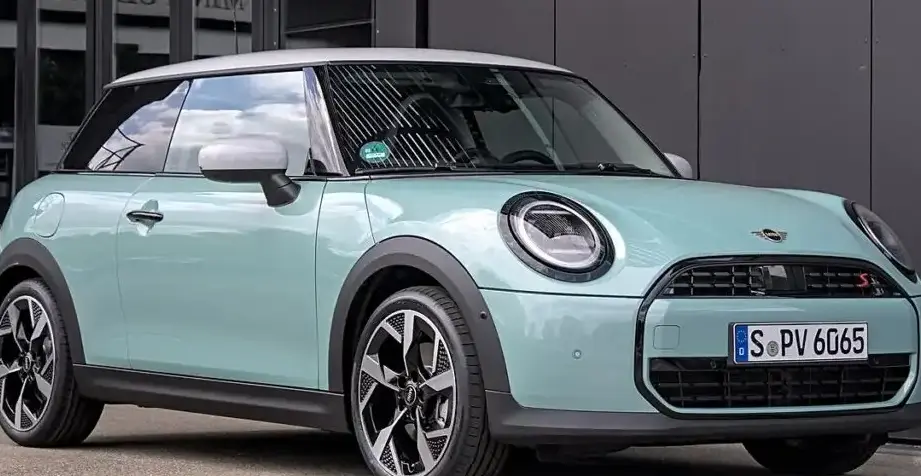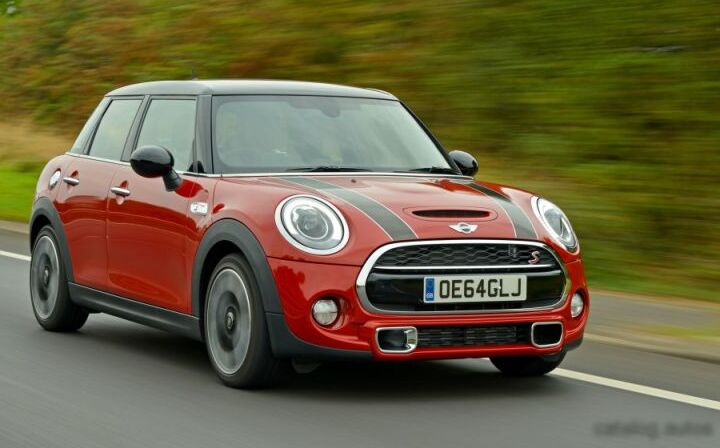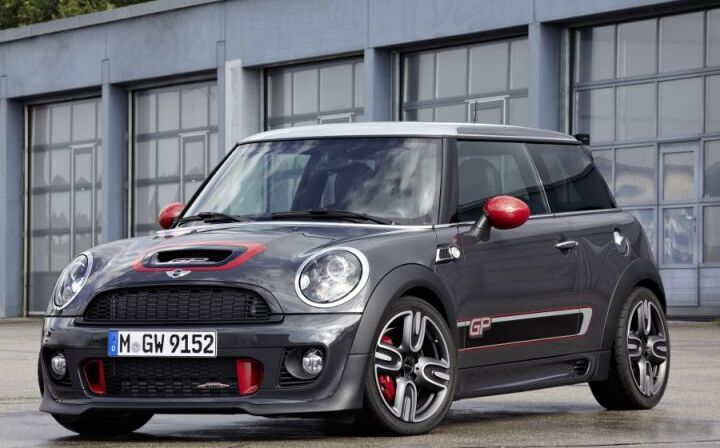
The Mini Hatch (R56) Cooper S 1.6, produced from 2010 to 2012, represented a significant evolution of the modern Mini platform, first introduced in 2001. Positioned as the performance variant within the R56 Hatchback range, the Cooper S 1.6 offered a substantial upgrade over the standard Cooper models, appealing to drivers seeking a more engaging and spirited driving experience. This iteration of the Cooper S utilized the N18 engine family, marking a shift from the previous N14 powerplant, and aimed to balance performance with improved refinement and reliability. It sat above the base Cooper in the lineup and below any potential limited-edition or John Cooper Works (JCW) models.
Technical Specifications
| Brand | Mini |
| Model | Hatch |
| Generation | Hatch (R56) |
| Type (Engine) | Cooper S 1.6 (184 Hp) |
| Start of production | 2010 |
| End of production | 2012 |
| Powertrain Architecture | Internal Combustion engine |
| Body type | Hatchback |
| Seats | 4 |
| Doors | 3 |
| Fuel consumption (urban) | 7.3 l/100 km (32.2 US mpg) |
| Fuel consumption (extra urban) | 5 l/100 km (47 US mpg) |
| Fuel consumption (combined) | 5.8 l/100 km (40.6 US mpg) |
| CO2 emissions | 136 g/km |
| Fuel Type | Petrol (Gasoline) |
| Acceleration 0 – 100 km/h | 7 sec |
| Acceleration 0 – 62 mph | 7 sec |
| Acceleration 0 – 60 mph | 6.7 sec |
| Maximum speed | 228 km/h (141.67 mph) |
| Emission standard | Euro 5 |
| Weight-to-power ratio | 6.1 kg/Hp |
| Weight-to-torque ratio | 4.7 kg/Nm |
| Power | 184 Hp @ 5500 rpm |
| Torque | 240 Nm @ 1600-5000 rpm (177.01 lb.-ft.) |
| Engine layout | Front, Transverse |
| Engine Model/Code | N18B16A |
| Engine displacement | 1598 cm3 (97.52 cu. in.) |
| Number of cylinders | 4 |
| Engine configuration | Inline |
| Cylinder Bore | 77 mm (3.03 in.) |
| Piston Stroke | 85.8 mm (3.38 in.) |
| Compression ratio | 10.5:1 |
| Number of valves per cylinder | 4 |
| Fuel injection system | Multi-port manifold injection |
| Engine aspiration | Turbocharger, Intercooler |
| Engine oil capacity | 4.2 l (4.44 US qt | 3.7 UK qt) |
| Coolant capacity | 7.5 l (7.93 US qt | 6.6 UK qt) |
| Kerb Weight | 1130 kg (2491.22 lbs.) |
| Max. weight | 1580 kg (3483.3 lbs.) |
| Max load | 450 kg (992.08 lbs.) |
| Trunk (boot) space – minimum | 160 l (5.65 cu. ft.) |
| Trunk (boot) space – maximum | 680 l (24.01 cu. ft.) |
| Fuel tank capacity | 50 l (13.21 US gal | 11 UK gal) |
| Length | 3714 mm (146.22 in.) |
| Width | 1683 mm (66.26 in.) |
| Height | 1407 mm (55.39 in.) |
| Wheelbase | 2467 mm (97.13 in.) |
| Front track | 1453 mm (57.2 in.) |
| Rear track | 1461 mm (57.52 in.) |
| Ride height (ground clearance) | 130 mm (5.12 in.) |
| Minimum turning circle | 10.7 m (35.1 ft.) |
| Drivetrain Architecture | Front wheel drive |
| Number of gears | 6 |
| Gearbox type | Manual transmission |
| Front suspension | Independent, McPherson with coil spring and anti-roll bar |
| Rear suspension | Independent coil spring |
| Front brakes | Ventilated discs |
| Rear brakes | Disc |
| Assisting systems | ABS (Anti-lock braking system) |
| Steering type | Steering rack and pinion |
| Tires size | 195/55 R16 87V RSC |
| Wheel rims size | 6.5J x 16 LM |
Powertrain & Engine Architecture
The heart of the 2010-2012 Cooper S 1.6 was the N18B16A 1.6-liter turbocharged inline-four engine. This engine represented a significant upgrade over the earlier N14 engine, addressing concerns about oil consumption and cooling. The N18 featured a twin-scroll turbocharger, direct fuel injection, and variable valve timing (Double-VANOS) on both the intake and exhaust camshafts. These technologies worked in concert to deliver a broad torque curve and responsive performance. The engine produced 184 horsepower at 5500 rpm and 177 lb-ft of torque between 1600 and 5000 rpm. The six-speed manual transmission was standard, offering precise shifts and a direct connection to the engine. The N18 engine utilized a closed-deck engine block for increased strength and durability. The fuel injection system was a sophisticated direct injection system, allowing for precise fuel metering and improved combustion efficiency.
Driving Characteristics
The Cooper S 1.6 with the manual transmission provided a genuinely engaging driving experience. The turbocharger provided a noticeable boost in power, delivering strong acceleration in the mid-range. While not brutally fast, the car felt nimble and responsive, particularly on winding roads. The six-speed gearbox was well-matched to the engine’s powerband, allowing drivers to keep the engine in its sweet spot. Compared to the base Cooper, the Cooper S offered a significantly more potent driving experience. Compared to later JCW models, the Cooper S offered a more balanced approach, prioritizing everyday usability alongside performance. The relatively short wheelbase and well-tuned suspension contributed to the car’s characteristic go-kart-like handling.
Equipment & Trim Levels
The Cooper S 1.6 came reasonably well-equipped as standard. Typical features included air conditioning, power windows and locks, a multi-function steering wheel, and a basic audio system. Sport seats were standard, providing good support during spirited driving. Optional extras included a panoramic sunroof, navigation system, upgraded audio systems (Harman Kardon), and various cosmetic enhancements. Interior upholstery was typically a combination of cloth and leatherette, with full leather options available. Exterior options included different wheel designs, body kits, and paint colors.
Chassis & Braking
The R56 Cooper S 1.6 utilized a McPherson strut front suspension and a multi-link rear suspension. This setup provided a good balance of ride comfort and handling precision. The car featured ventilated disc brakes at the front and solid discs at the rear. Anti-lock brakes (ABS) were standard. The steering was a rack-and-pinion system with hydraulic power assistance, providing precise and responsive steering feel. The chassis was relatively lightweight, contributing to the car’s agility. A front stabilizer bar helped to reduce body roll during cornering.
Market Reception & Comparison
The 2010-2012 Cooper S 1.6 was generally well-received by automotive critics. It was praised for its engaging driving dynamics, responsive engine, and stylish design. Some critics noted that the interior could feel a bit cramped for taller occupants. Compared to other hot hatches of the time, such as the Volkswagen GTI, the Cooper S offered a more unique and characterful driving experience, albeit with less interior space. Fuel economy was respectable for a performance-oriented vehicle, averaging around 40.6 US mpg in combined driving. Reliability was generally good, although some owners reported minor issues with the turbocharger and cooling system.
Legacy
The R56 Cooper S 1.6 remains a popular choice among enthusiasts today. The N18 engine, while not without its quirks, proved to be relatively durable when properly maintained. Used examples are readily available, and prices vary depending on condition and mileage. The car’s iconic design and engaging driving dynamics continue to appeal to a wide range of drivers. The R56 Cooper S 1.6 represents a sweet spot in the modern Mini lineup, offering a blend of performance, style, and practicality that is hard to match.