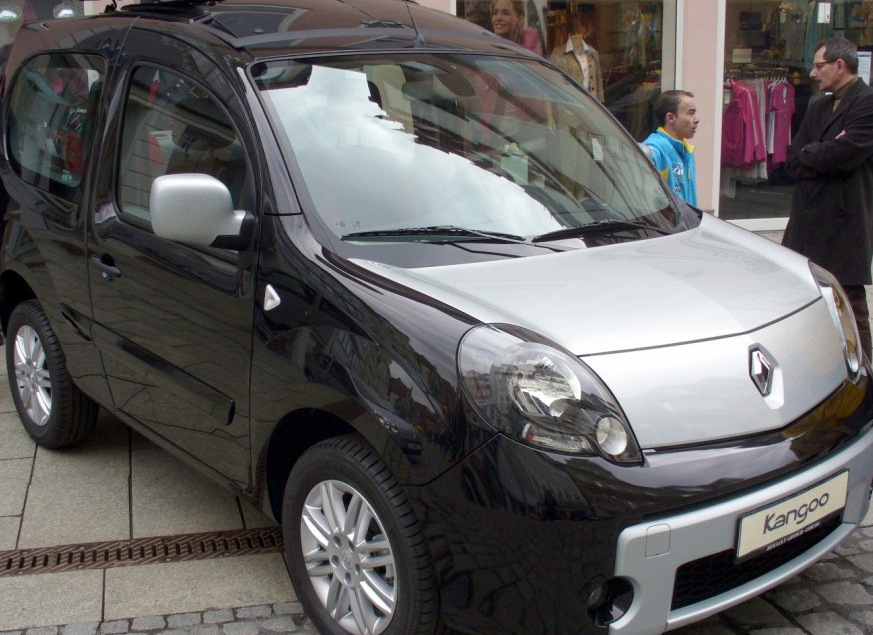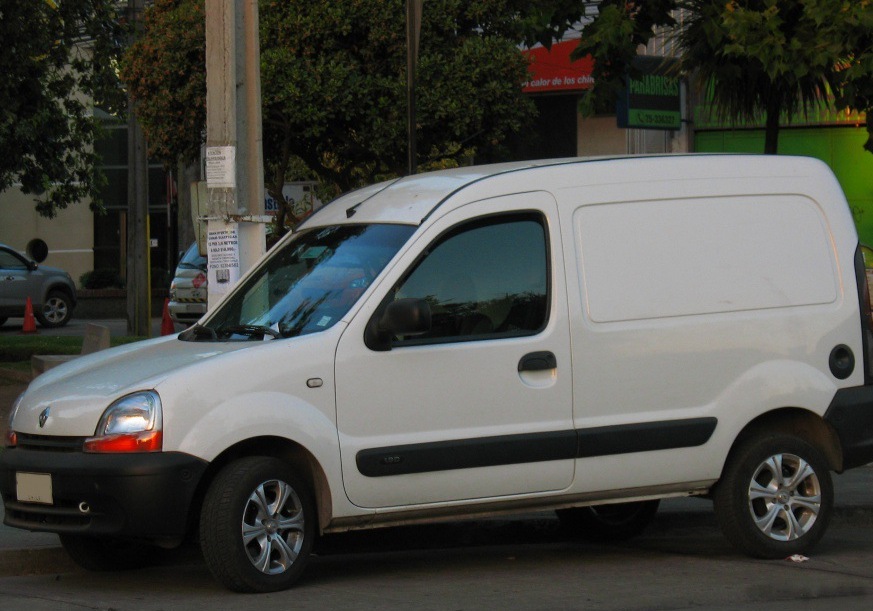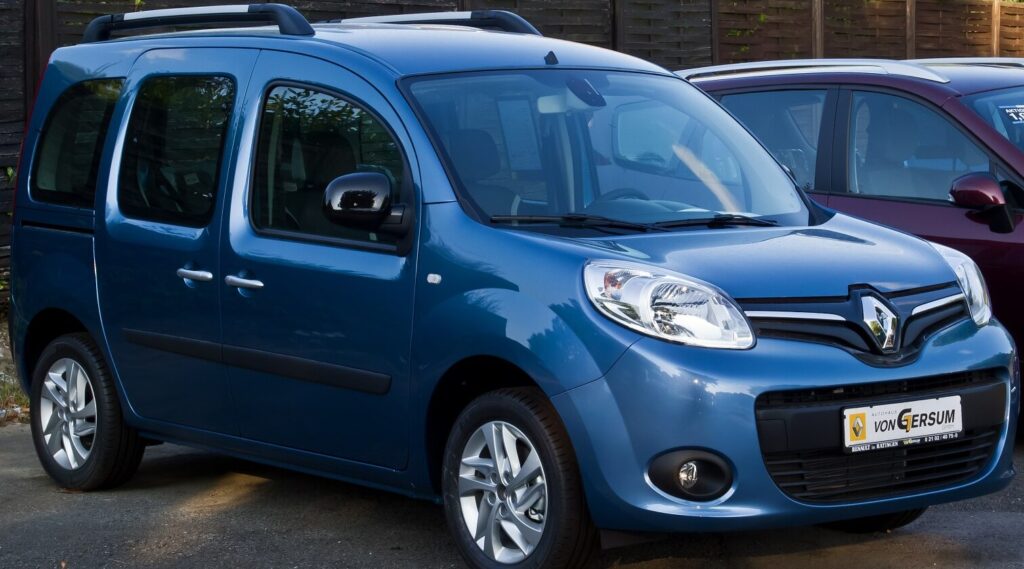
The Renault Kangoo II, particularly the facelifted version introduced in 2013, represented a significant evolution of Renault’s popular compact van. The 1.2 Energy TCe (115 hp) start&stop variant, produced from August 2015 to August 2018, occupied a key position in the Kangoo II lineup, offering a balance between fuel efficiency, practicality, and affordability. This version aimed to appeal to buyers seeking a versatile vehicle for both commercial and family use, bridging the gap between the base engine options and the more powerful, though often more expensive, alternatives. It was primarily marketed in Europe, where compact vans like the Kangoo are highly popular due to their adaptability and suitability for urban environments.
Technical Specifications
| Brand | Renault |
| Model | Kangoo |
| Generation | Kangoo II (facelift 2013) |
| Type (Engine) | 1.2 Energy TCe (115 Hp) start&stop |
| Start of production | August, 2015 |
| End of production | August, 2018 |
| Powertrain Architecture | Internal Combustion engine |
| Body type | Minivan |
| Seats | 5 |
| Doors | 5 |
| Fuel consumption (urban) | 7.2 l/100 km (32.7 US mpg, 39.2 UK mpg, 13.9 km/l) |
| Fuel consumption (extra urban) | 5.4 l/100 km (43.6 US mpg, 52.3 UK mpg, 18.5 km/l) |
| Fuel consumption (combined) | 6.1 l/100 km (38.6 US mpg, 46.3 UK mpg, 16.4 km/l) |
| CO2 emissions | 140 g/km |
| Fuel Type | Petrol (Gasoline) |
| Acceleration 0 – 100 km/h | 11.7 sec |
| Acceleration 0 – 62 mph | 11.7 sec |
| Acceleration 0 – 60 mph | 11.1 sec |
| Maximum speed | 173 km/h (107.5 mph) |
| Emission standard | Euro 5 |
| Weight-to-power ratio | 11.5 kg/Hp, 87.1 Hp/tonne |
| Weight-to-torque ratio | 6.9 kg/Nm, 143.9 Nm/tonne |
| Power | 115 Hp @ 4500 rpm |
| Power per litre | 96.1 Hp/l |
| Torque | 190 Nm @ 2000 rpm (140.14 lb.-ft. @ 2000 rpm) |
| Engine layout | Front, Transverse |
| Engine Model/Code | H5FT |
| Engine displacement | 1197 cm3 (73.05 cu. in.) |
| Number of cylinders | 4 |
| Engine configuration | Inline |
| Number of valves per cylinder | 4 |
| Fuel injection system | Direct injection |
| Engine aspiration | Turbocharger, Intercooler |
| Engine oil capacity | 4.2 l (4.44 US qt | 3.7 UK qt) |
| Coolant | 6.9 l (7.29 US qt | 6.07 UK qt) |
| Kerb Weight | 1320 kg (2910.1 lbs.) |
| Max. weight | 1920 kg (4232.88 lbs.) |
| Max load | 600 kg (1322.77 lbs.) |
| Trunk (boot) space – minimum | 660 l (23.31 cu. ft.) |
| Trunk (boot) space – maximum | 2600 l (91.82 cu. ft.) |
| Fuel tank capacity | 56 l (14.79 US gal | 12.32 UK gal) |
| Permitted trailer load with brakes (12%) | 1050 kg (2314.85 lbs.) |
| Permitted trailer load without brakes | 695 kg (1532.21 lbs.) |
| Length | 4282 mm (168.58 in.) |
| Width | 1805 mm (71.06 in.) |
| Width including mirrors | 2138 mm (84.17 in.) |
| Height | 1839 mm (72.4 in.) |
| Wheelbase | 2697 mm (106.18 in.) |
| Front track | 1521 mm (59.88 in.) |
| Rear (Back) track | 1533 mm (60.35 in.) |
| Front overhang | 875 mm (34.45 in.) |
| Rear overhang | 710 mm (27.95 in.) |
| Ride height (ground clearance) | 211-158 mm (8.31 – 6.22 in.) |
| Minimum turning circle (turning diameter) | 10.7 m (35.1 ft.) |
| Drivetrain Architecture | The Internal combustion engine (ICE) drives the front wheels of the vehicle. |
| Drive wheel | Front wheel drive |
| Number of gears and type of gearbox | 6 gears, manual transmission |
| Front suspension | Independent type McPherson |
| Rear suspension | Torsion |
| Front brakes | Ventilated discs |
| Rear brakes | Disc |
| Assisting systems | ABS (Anti-lock braking system) |
| Steering type | Steering rack and pinion |
| Power steering | Electric Steering |
| Tires size | 195/65 R15 |
| Wheel rims size | 15 |
INTRODUCTION
The Renault Kangoo II facelift, launched in 2013, brought with it updated styling, improved interior features, and a revised engine lineup. The 1.2 Energy TCe 115 hp variant, introduced in 2015, was a key component of this refresh. Powered by the H5FT engine, this version offered a compelling blend of performance and economy, making it a popular choice for families and businesses alike. The Kangoo II, built on the X0/B9 platform, was designed to be a practical and versatile vehicle, and this particular engine configuration aimed to enhance those qualities. It sat in the mid-range of the Kangoo II offerings, above the base diesel engines but below the more powerful petrol and diesel options.
Powertrain & Engine Architecture
The heart of this Kangoo variant is the Renault H5FT engine, a 1.2-liter turbocharged inline-four cylinder petrol engine. This engine utilizes direct fuel injection, a technology that improves fuel efficiency and reduces emissions by injecting fuel directly into the combustion chamber. The H5FT also features an intercooler, which cools the intake air, increasing its density and further enhancing performance. The engine produces 115 horsepower at 4500 rpm and 190 Nm (140.14 lb-ft) of torque at 2000 rpm. The engine’s start&stop system automatically shuts off the engine when the vehicle is stationary, such as at traffic lights, to conserve fuel. The engine is paired with a six-speed manual transmission, chosen for its efficiency and driver engagement. This transmission provides well-spaced gear ratios, contributing to both fuel economy and acceptable acceleration.
Driving Characteristics
The 1.2 Energy TCe 115 hp Kangoo offers a reasonably sprightly driving experience for a compact van. While not a performance vehicle, the turbocharger provides a noticeable boost in power, making overtaking and merging onto highways manageable. The six-speed manual transmission allows drivers to keep the engine in its optimal power band. Acceleration from 0-100 km/h (0-62 mph) takes around 11.7 seconds. Compared to the lower-powered diesel versions, the 1.2 TCe feels more responsive and refined. However, it doesn’t offer the same level of low-end torque as the diesel engines. Compared to higher-output petrol versions, the 115 hp engine provides a more balanced driving experience, prioritizing fuel economy over outright performance. The suspension is tuned for comfort, providing a reasonably smooth ride even on uneven surfaces.
Equipment & Trim Levels
The 1.2 Energy TCe 115 hp Kangoo typically came equipped with a decent level of standard features. These included air conditioning, power steering, electric front windows, a CD player with auxiliary input, and ABS brakes. Higher trim levels offered additional features such as alloy wheels, rear parking sensors, a touchscreen infotainment system with navigation, and cruise control. Interior upholstery was typically cloth, with options for upgraded materials on higher trims. The Kangoo II’s interior is known for its practicality, with numerous storage compartments and a flexible seating arrangement. The rear seats can be folded down or even removed completely to maximize cargo space.
Chassis & Braking
The Kangoo II utilizes a McPherson strut front suspension and a torsion beam rear suspension. This setup provides a good balance between ride comfort and handling. The front brakes are ventilated discs, while the rear brakes are discs. ABS (Anti-lock Braking System) is standard, enhancing safety by preventing wheel lockup during hard braking. The steering is electric power-assisted, providing light and precise steering feel. The Kangoo II’s chassis is designed to handle a substantial payload, making it suitable for both commercial and family use.
Market Reception & Comparison
The Renault Kangoo II 1.2 Energy TCe 115 hp received generally positive reviews from automotive critics. It was praised for its fuel efficiency, practicality, and comfortable ride. However, some critics noted that the engine could feel strained when fully loaded or driving uphill. Compared to the diesel versions, the 1.2 TCe offered a quieter and more refined driving experience, but with slightly higher fuel consumption. Compared to competitors like the Citroën Berlingo and Peugeot Partner, the Kangoo II was considered to be a well-rounded and competitive offering. Its fuel economy was generally comparable to its rivals, and its interior was praised for its practicality and versatility.
Legacy
The Renault Kangoo II 1.2 Energy TCe 115 hp has proven to be a relatively reliable powertrain. The H5FT engine, while not without its occasional issues (such as potential turbocharger wear), is generally considered to be durable and long-lasting. On the used car market, these Kangoos represent a good value proposition, offering a practical and versatile vehicle at an affordable price. Maintenance costs are generally reasonable, and parts are readily available. The Kangoo II continues to be a popular choice for those seeking a compact van that is both practical and economical.