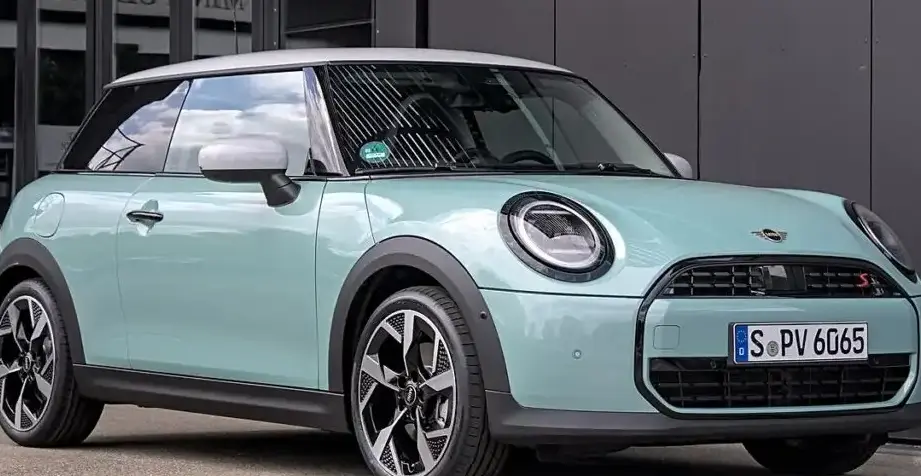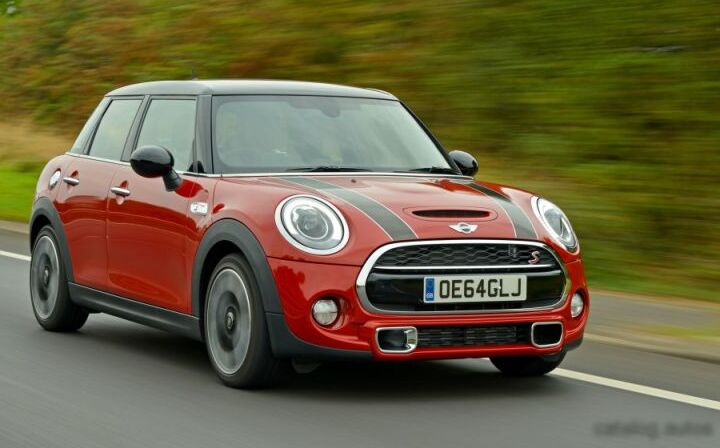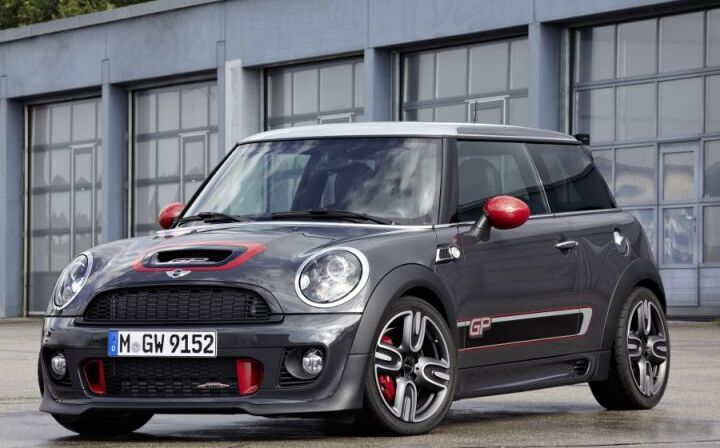
The Mini Hatch (R56) Cooper S 1.6 Automatic, produced between 2010 and 2012, represented a compelling blend of performance and convenience within the second generation of the modern Mini lineup. Positioned as a mid-range offering within the Cooper S variants, it catered to drivers seeking the sporty character of the ‘S’ model but preferring the ease of use of an automatic transmission. This model sat within the R56 chassis code generation, which was based on the BMW Group’s 1HX0/A3 platform, shared with the first generation BMW 1 Series. The introduction of the automatic option broadened the appeal of the Cooper S, making it accessible to a wider range of buyers in markets like the United States and Europe.
Technical Specifications
| Brand | Mini |
| Model | Hatch |
| Generation | Hatch (R56) |
| Type (Engine) | Cooper S 1.6 (184 Hp) Automatic |
| Start of production | 2010 |
| End of production | 2012 |
| Powertrain Architecture | Internal Combustion engine |
| Body type | Hatchback |
| Seats | 4 |
| Doors | 3 |
| Fuel consumption (urban) | 8.9 l/100 km (26.4 US mpg, 31.7 UK mpg, 11.2 km/l) |
| Fuel consumption (extra urban) | 5 l/100 km (47 US mpg, 56.5 UK mpg, 20 km/l) |
| Fuel consumption (combined) | 6.4 l/100 km (36.8 US mpg, 44.1 UK mpg, 15.6 km/l) |
| CO2 emissions | 149 g/km |
| Fuel Type | Petrol (Gasoline) |
| Acceleration 0 – 100 km/h | 7.2 sec |
| Acceleration 0 – 62 mph | 7.2 sec |
| Acceleration 0 – 60 mph | 6.8 sec |
| Maximum speed | 223 km/h (138.57 mph) |
| Emission standard | Euro 5 |
| Weight-to-power ratio | 6.3 kg/Hp, 159.3 Hp/tonne |
| Weight-to-torque ratio | 4.8 kg/Nm, 207.8 Nm/tonne |
| Power | 184 Hp @ 5500 rpm |
| Power per litre | 115.1 Hp/l |
| Torque | 240 Nm @ 1600-5000 rpm (177.01 lb.-ft. @ 1600-5000 rpm) |
| Engine layout | Front, Transverse |
| Engine Model/Code | N18B16A |
| Engine displacement | 1598 cm3 (97.52 cu. in.) |
| Number of cylinders | 4 |
| Engine configuration | Inline |
| Cylinder Bore | 77 mm (3.03 in.) |
| Piston Stroke | 85.8 mm (3.38 in.) |
| Compression ratio | 10.5:1 |
| Number of valves per cylinder | 4 |
| Fuel injection system | Multi-port manifold injection |
| Engine aspiration | Turbocharger, Intercooler |
| Engine oil capacity | 4.2 l (4.44 US qt | 3.7 UK qt) |
| Coolant | 7.5 l (7.93 US qt | 6.6 UK qt) |
| Kerb Weight | 1155 kg (2546.34 lbs.) |
| Max. weight | 1605 kg (3538.42 lbs.) |
| Max load | 450 kg (992.08 lbs.) |
| Trunk (boot) space – minimum | 160 l (5.65 cu. ft.) |
| Trunk (boot) space – maximum | 680 l (24.01 cu. ft.) |
| Fuel tank capacity | 50 l (13.21 US gal | 11 UK gal) |
| Length | 3714 mm (146.22 in.) |
| Width | 1683 mm (66.26 in.) |
| Height | 1407 mm (55.39 in.) |
| Wheelbase | 2467 mm (97.13 in.) |
| Front track | 1453 mm (57.2 in.) |
| Rear (Back) track | 1461 mm (57.52 in.) |
| Ride height (ground clearance) | 130 mm (5.12 in.) |
| Minimum turning circle | 10.7 m (35.1 ft.) |
| Drivetrain Architecture | The Internal combustion engine (ICE) drives the front wheels of the vehicle. |
| Drive wheel | Front wheel drive |
| Number of gears and type of gearbox | 6 gears, automatic transmission |
| Front suspension | Independent, type McPherson with coil spring and anti-roll bar |
| Rear suspension | Independent coil spring |
| Front brakes | Ventilated discs |
| Rear brakes | Disc |
| Assisting systems | ABS (Anti-lock braking system) |
| Steering type | Steering rack and pinion |
| Tires size | 195/55 R16 87V RSC |
| Wheel rims size | 6.5J x 16 LM |
Powertrain & Engine Architecture
At the heart of the Cooper S Automatic lay the N18B16A 1.6-liter inline-four cylinder engine. This engine was a significant upgrade over the earlier R53 Cooper S engine, featuring direct fuel injection, a twin-scroll turbocharger, and variable valve timing (Double VANOS). The N18 engine produced 184 horsepower at 5500 rpm and 240 Nm (177 lb-ft) of torque available from 1600 to 5000 rpm. The multi-port fuel injection system, while not as advanced as direct injection, contributed to the engine’s responsiveness. The turbocharger, coupled with an intercooler, minimized turbo lag and provided a broad torque curve. The automatic transmission was a six-speed unit, specifically designed to handle the engine’s output. It featured a torque converter and offered both manual shift modes and a fully automatic mode. The transmission’s programming was tuned to balance performance and fuel efficiency.
Driving Characteristics
The Cooper S Automatic offered a distinct driving experience compared to its manual counterpart and other trims. While the automatic transmission sacrificed some of the direct engagement of a manual, it provided smooth and effortless acceleration. The six-speed automatic was well-matched to the engine’s powerband, offering quick shifts and preventing the engine from feeling strained. Acceleration from 0 to 60 mph took approximately 6.8 seconds, slightly slower than the manual version, but still brisk for a small hatchback. The automatic transmission’s gear ratios were optimized for everyday driving, providing good low-end torque for city commutes and sufficient power for highway passing. Compared to the base Cooper models, the Cooper S Automatic felt significantly more powerful and responsive, offering a more engaging driving experience. However, it didn’t quite match the raw performance of the John Cooper Works (JCW) models.
Equipment & Trim Levels
The Cooper S Automatic typically came well-equipped, reflecting its mid-range positioning. Standard features included air conditioning, power windows and locks, a multi-function steering wheel, and a basic audio system. Interior upholstery was typically cloth, with options for leather upgrades. Dashboard trim could be customized with various finishes, including chrome and piano black. Optional extras included a panoramic sunroof, navigation system, upgraded audio system (Harman Kardon), sport seats, and parking sensors. The automatic transmission itself was often bundled with convenience packages that included features like cruise control and automatic headlights.
Chassis & Braking
The R56 Cooper S Automatic featured a McPherson strut front suspension and a multi-link rear suspension, providing a good balance of handling and ride comfort. Stabilizer bars were fitted front and rear to reduce body roll during cornering. Braking duties were handled by ventilated discs at the front and solid discs at the rear. Anti-lock braking system (ABS) was standard. The suspension was tuned to be slightly firmer than the base Cooper models, reflecting the Cooper S’s sporty character. The chassis was reinforced to handle the increased power output of the engine.
Market Reception & Comparison
The Cooper S Automatic was generally well-received by automotive critics. Reviewers praised its performance, handling, and overall refinement. The automatic transmission was noted for its smoothness and responsiveness. However, some critics felt that the automatic transmission dulled the driving experience slightly compared to the manual version. Fuel economy was respectable, averaging around 36.8 US mpg in combined driving. Reliability was generally good, although some owners reported issues with the turbocharger and fuel injectors. Compared to the base Cooper models, the Cooper S Automatic offered a significant performance upgrade, but at a higher price point. Compared to the JCW models, it offered a more balanced blend of performance and affordability.
Legacy
The N18 engine, found in the Cooper S Automatic, proved to be a relatively reliable powertrain. While not immune to issues, it generally held up well over time with proper maintenance. Today, the R56 Cooper S Automatic remains a popular choice in the used car market, appealing to buyers seeking a fun-to-drive and stylish hatchback. The combination of performance, convenience, and relatively good reliability has ensured its continued desirability. Parts availability is generally good, and the R56 platform is well-supported by aftermarket tuners and enthusiasts.