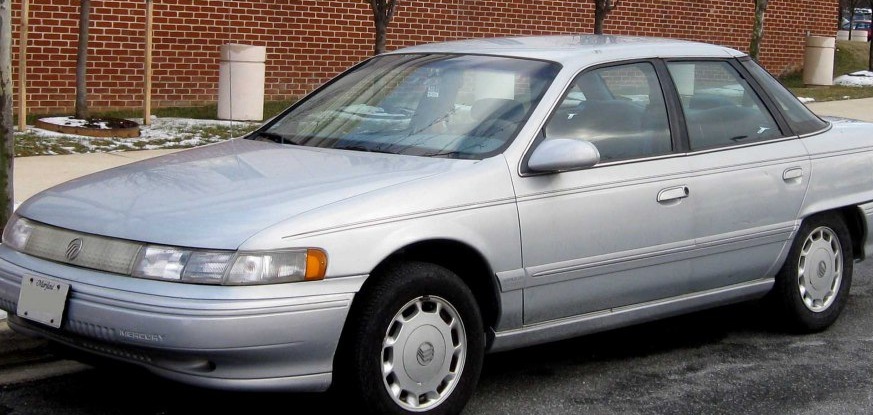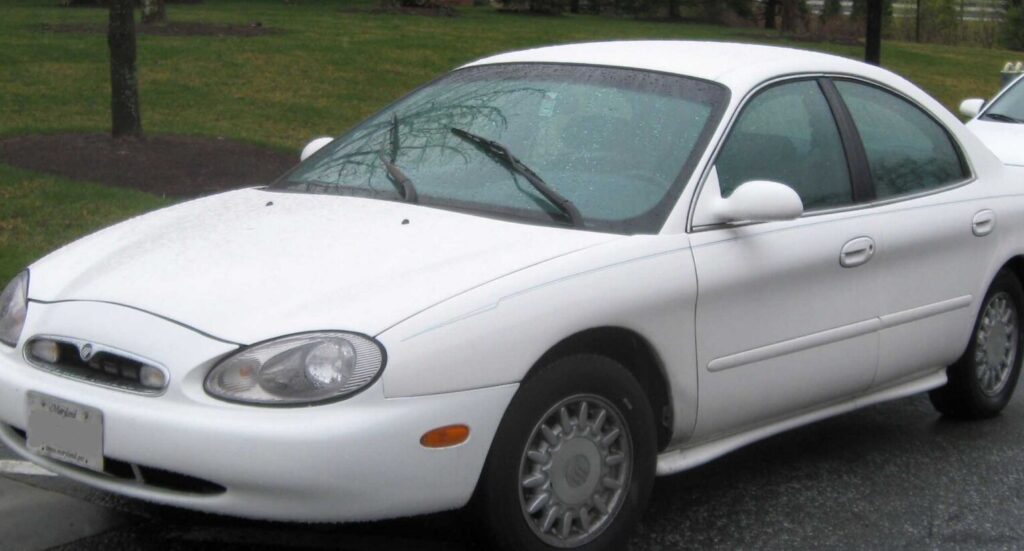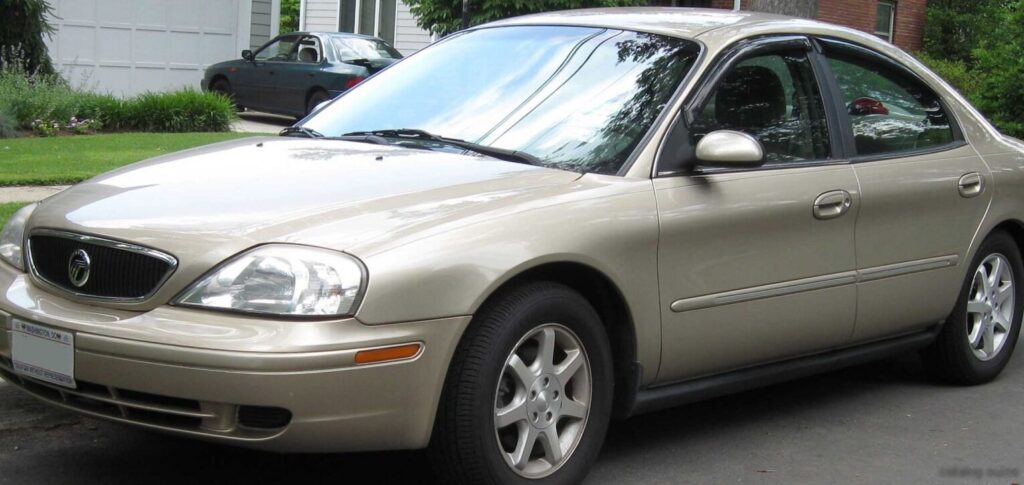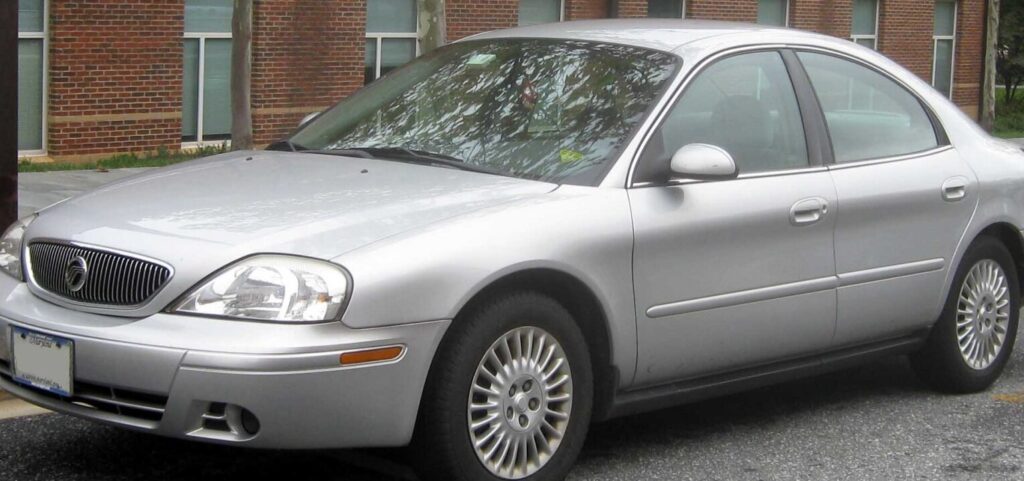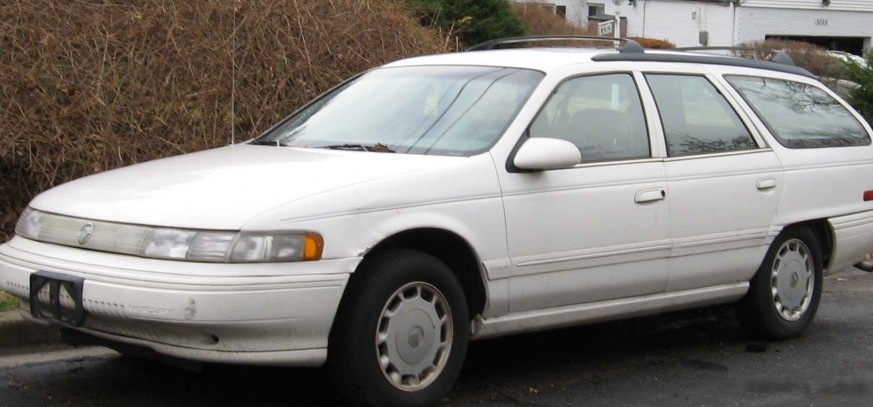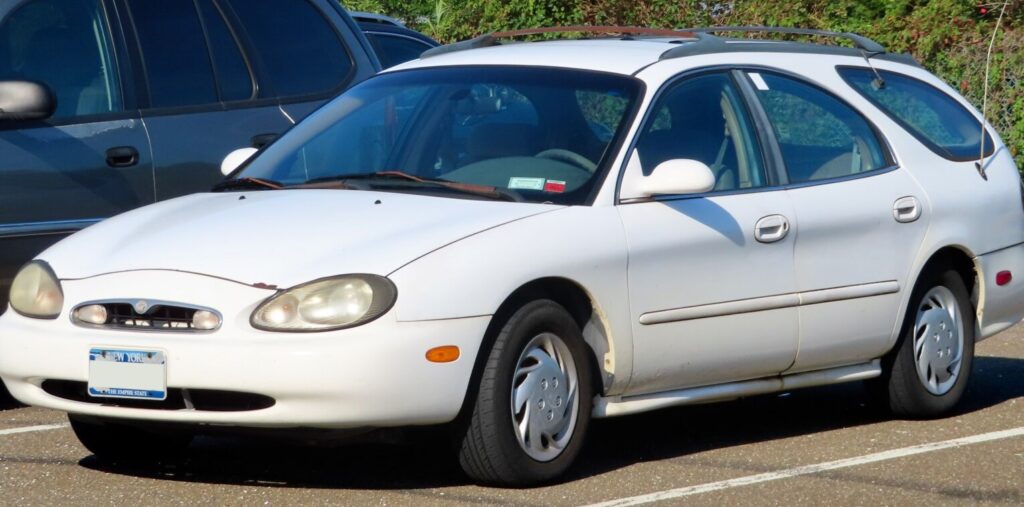
The Mercury Sable Station Wagon III, specifically the 3.0 V6 variant producing 147 horsepower, was a mainstay of the American family station wagon market from 1995 to 1999. Positioned as a comfortable and practical choice, it represented a mid-range offering within the Sable lineup, slotting between the base 2.5L inline-four and the more performance-oriented options. Built on the Ford MN12 platform (shared with the Ford Taurus and Mercury Grand Marquis), the Sable wagon aimed to provide ample space and convenience for families while maintaining a degree of driving refinement. This generation marked a significant redesign for the Sable, moving away from the more boxy styling of previous iterations towards a smoother, more aerodynamic profile.
Technical Specifications
| Brand | Mercury |
| Model | Sable |
| Generation | Sable Station Wagon III |
| Type (Engine) | 3.0 V6 (147 Hp) |
| Start of production | 1995 |
| End of production | 1999 |
| Powertrain Architecture | Internal Combustion engine |
| Body type | Station wagon (estate) |
| Seats | 5 |
| Doors | 5 |
| Fuel consumption (urban) | 13.1 l/100 km (18 US mpg, 21.6 UK mpg, 7.6 km/l) |
| Fuel consumption (extra urban) | 9 l/100 km (26.1 US mpg, 31.4 UK mpg, 11.1 km/l) |
| Fuel Type | Petrol (Gasoline) |
| Maximum speed | 185 km/h (114.95 mph) |
| Weight-to-power ratio | 10.9 kg/Hp, 91.6 Hp/tonne |
| Weight-to-torque ratio | 7 kg/Nm, 143.3 Nm/tonne |
| Power | 147 Hp @ 5250 rpm |
| Power per litre | 49.2 Hp/l |
| Torque | 230 Nm @ 3250 rpm (169.64 lb.-ft. @ 3250 rpm) |
| Engine layout | Front, Transverse |
| Engine Model/Code | Vulcan |
| Engine displacement | 2986 cm3 (182.22 cu. in.) |
| Number of cylinders | 6 |
| Engine configuration | V-engine |
| Cylinder Bore | 89 mm (3.5 in.) |
| Piston Stroke | 80 mm (3.15 in.) |
| Compression ratio | 9.3:1 |
| Number of valves per cylinder | 2 |
| Fuel injection system | Multi-port manifold injection |
| Engine aspiration | Naturally aspirated engine |
| Engine oil capacity | 4.25 l (4.49 US qt | 3.74 UK qt) |
| Coolant | 11 l (11.62 US qt | 9.68 UK qt) |
| Kerb Weight | 1605 kg (3538.42 lbs.) |
| Trunk (boot) space – minimum | 1290 l (45.56 cu. ft.) |
| Trunk (boot) space – maximum | 2290 l (80.87 cu. ft.) |
| Fuel tank capacity | 70 l (18.49 US gal | 15.4 UK gal) |
| Length | 5060 mm (199.21 in.) |
| Width | 1850 mm (72.83 in.) |
| Height | 1460 mm (57.48 in.) |
| Wheelbase | 2760 mm (108.66 in.) |
| Front track | 1560 mm (61.42 in.) |
| Rear (Back) track | 1570 mm (61.81 in.) |
| Drivetrain Architecture | The Internal combustion engine (ICE) drives the front wheels of the vehicle. |
| Drive wheel | Front wheel drive |
| Number of gears and type of gearbox | 4 gears, automatic transmission |
| Front suspension | Spring Strut |
| Rear suspension | Coil spring |
| Front brakes | Ventilated discs |
| Rear brakes | Disc |
| Assisting systems | ABS (Anti-lock braking system) |
| Steering type | Steering rack and pinion |
| Power steering | Hydraulic Steering |
| Tires size | 205/65 R15 |
Powertrain & Engine Architecture
The heart of this Sable variant is the Ford Vulcan V6 engine. This 3.0-liter, naturally aspirated engine, designated as the code series, is known for its durability and relatively simple design. It features a 90-degree V-configuration, two valves per cylinder, and a multi-port fuel injection system. The Vulcan engine was a workhorse for Ford, appearing in a variety of vehicles throughout the 1990s. The 147 horsepower output at 5250 rpm and 230 Nm (169.64 lb-ft) of torque at 3250 rpm were delivered through a four-speed automatic transmission. This transmission, while providing smooth shifts, wasn’t particularly advanced by contemporary standards and contributed to the Sable’s somewhat leisurely acceleration. The engine’s transverse mounting further optimized space within the front-wheel-drive configuration.
Driving Characteristics
The 3.0L V6 automatic Sable offered a comfortable, if not particularly sporty, driving experience. Acceleration was adequate for everyday driving, but the combination of the engine’s torque curve and the four-speed automatic meant it wasn’t as responsive as the manual transmission or higher-output versions. The automatic transmission’s gear ratios were geared towards fuel efficiency and smooth cruising rather than quick acceleration. Compared to the base 2.5L inline-four, the V6 provided a noticeable improvement in power and refinement. However, it lacked the punch of the optional engines available in other Sable trims. Steering was light and easy, making it well-suited for city driving and long highway trips.
Equipment & Trim Levels
The 3.0 V6 Sable typically came standard with features like air conditioning, power windows and locks, an AM/FM stereo, and cloth upholstery. Higher trim levels offered options such as leather upholstery, a power driver’s seat, upgraded sound systems, and alloy wheels. The Sable wagon, in general, prioritized practicality, offering a spacious interior and a large cargo area. The rear seats could be folded down to further expand cargo capacity. Safety features included standard anti-lock brakes (ABS).
Chassis & Braking
The Sable Station Wagon III utilized a front-wheel-drive layout with an independent front suspension featuring MacPherson struts and a coil-spring rear suspension. The braking system consisted of ventilated discs on the front wheels and solid discs on the rear. The suspension was tuned for comfort, providing a relatively soft ride. Stabilizer bars were included to reduce body roll during cornering, but the Sable was primarily designed for comfortable cruising rather than aggressive handling. The 205/65R15 tires were a common size for this vehicle, balancing ride comfort and handling.
Market Reception & Comparison
The Mercury Sable, and specifically the 3.0 V6 automatic variant, was generally well-received by consumers seeking a practical and comfortable family wagon. Critics praised its spacious interior, smooth ride, and relatively affordable price. However, some reviewers noted its lack of sporty handling and the somewhat dated technology of the four-speed automatic transmission. Compared to competitors like the Honda Accord Wagon or Toyota Camry Wagon, the Sable offered a more American-style driving experience, prioritizing comfort over outright performance. Fuel economy was average for the class, with the Sable achieving around 18 mpg in the city and 26 mpg on the highway.
Legacy
The Mercury Sable Station Wagon III 3.0 V6, while not a performance icon, has proven to be a relatively reliable vehicle. The Vulcan V6 engine is known for its longevity, and the four-speed automatic transmission, while not cutting-edge, is generally durable. Today, these Sables can be found in the used car market at affordable prices. They appeal to buyers looking for a spacious, comfortable, and reliable wagon for everyday use. Parts availability is generally good, thanks to the engine’s widespread use in other Ford and Mercury vehicles. While not highly sought after by collectors, the Sable wagon represents a significant chapter in the history of the American family station wagon.