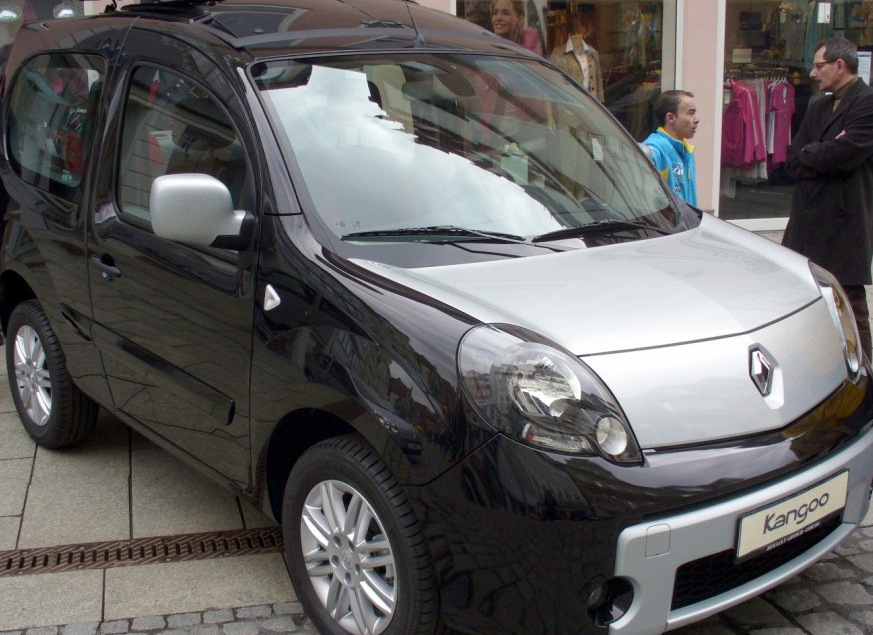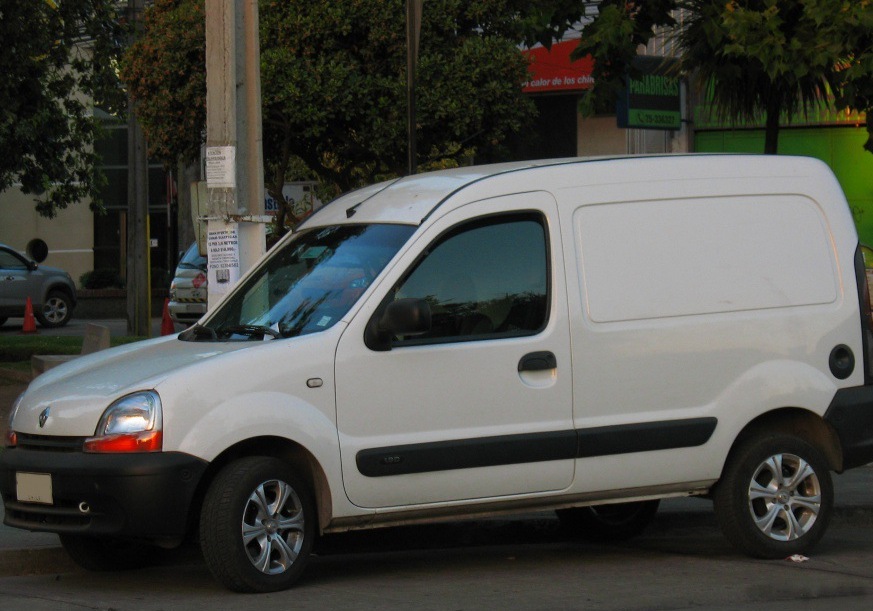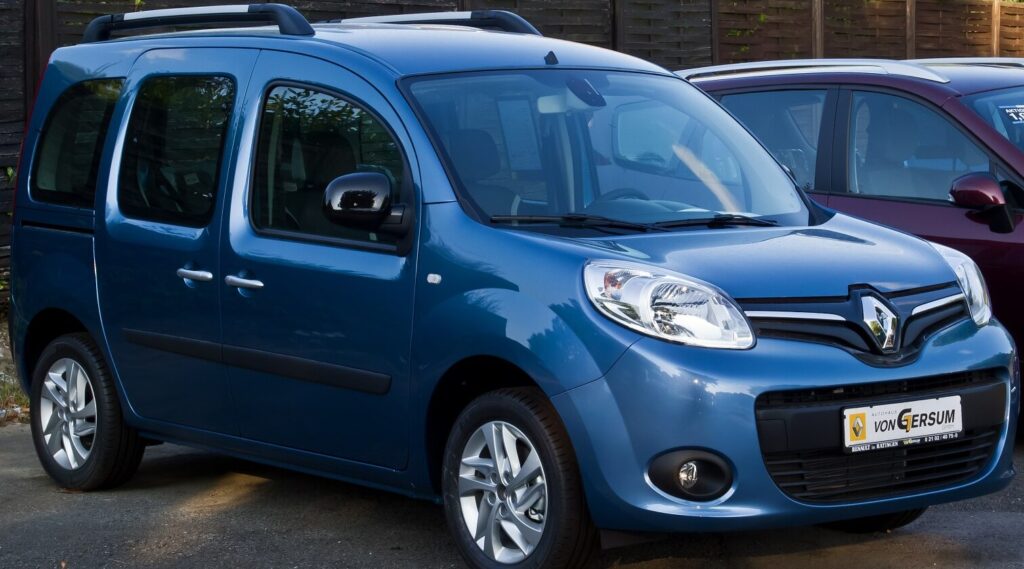
The Renault Kangoo II, particularly the facelifted version introduced in 2013, represented a significant evolution of Renault’s popular light commercial vehicle and passenger car blend. Production of the 1.5 Blue dCi (115 Hp) S&S variant ran from March 2019 to 2021. This version occupied a middle ground within the Kangoo II lineup, offering a balance between fuel efficiency, practicality, and a reasonable level of performance for everyday use. It was primarily marketed in Europe as a versatile vehicle for both commercial and family applications, capitalizing on the Kangoo’s reputation for spaciousness and adaptability. The “S&S” designation indicates the inclusion of Renault’s Start & Stop system, aimed at reducing fuel consumption in urban driving conditions.
Technical Specifications
| Brand | Renault |
| Model | Kangoo |
| Generation | Kangoo II (facelift 2013) |
| Type (Engine) | 1.5 Blue dCi (115 Hp) S&S |
| Start of production | March, 2019 |
| End of production | 2021 |
| Powertrain Architecture | Internal Combustion engine |
| Body type | Minivan |
| Seats | 5 |
| Doors | 5 |
| Fuel consumption (combined) | 5.6 l/100 km (42 US mpg, 50.4 UK mpg, 17.9 km/l) |
| CO2 emissions | 145 g/km |
| Fuel Type | Diesel |
| Acceleration 0 – 100 km/h | 11.2 sec |
| Acceleration 0 – 62 mph | 11.2 sec |
| Acceleration 0 – 60 mph | 10.6 sec |
| Maximum speed | 172 km/h (106.88 mph) |
| Emission standard | Euro 6d-Temp |
| Weight-to-power ratio | 11.7 kg/Hp, 85.4 Hp/tonne |
| Weight-to-torque ratio | 5.2 kg/Nm, 193.2 Nm/tonne |
| Power | 115 Hp @ 3750 rpm |
| Power per litre | 78.7 Hp/l |
| Torque | 260 Nm @ 1750 rpm (191.77 lb.-ft. @ 1750 rpm) |
| Engine layout | Front, Transverse |
| Engine Model/Code | K9K |
| Engine displacement | 1461 cm3 (89.16 cu. in.) |
| Number of cylinders | 4 |
| Engine configuration | Inline |
| Number of valves per cylinder | 2 |
| Fuel injection system | Diesel Commonrail |
| Engine aspiration | Turbocharger, Intercooler |
| Engine oil capacity | 5.7 l (6.02 US qt | 5.02 UK qt) |
| Kerb Weight | 1346 kg (2967.42 lbs.) |
| Max. weight | 2010 kg (4431.29 lbs.) |
| Max load | 664 kg (1463.87 lbs.) |
| Trunk (boot) space – minimum | 660 l (23.31 cu. ft.) |
| Trunk (boot) space – maximum | 2600 l (91.82 cu. ft.) |
| Fuel tank capacity | 60 l (15.85 US gal | 13.2 UK gal) |
| AdBlue tank | 17.4 l (4.6 US gal | 3.83 UK gal) |
| Permitted trailer load with brakes (12%) | 1350 kg (2976.24 lbs.) |
| Permitted trailer load without brakes | 740 kg (1631.42 lbs.) |
| Permitted towbar download | 75 kg (165.35 lbs.) |
| Length | 4282 mm (168.58 in.) |
| Width | 1829 mm (72.01 in.) |
| Width including mirrors | 2138 mm (84.17 in.) |
| Height | 1839 mm (72.4 in.) |
| Wheelbase | 2697 mm (106.18 in.) |
| Front track | 1521 mm (59.88 in.) |
| Rear (Back) track | 1533 mm (60.35 in.) |
| Front overhang | 875 mm (34.45 in.) |
| Rear overhang | 710 mm (27.95 in.) |
| Ride height (ground clearance) | 158-211 mm (6.22 – 8.31 in.) |
| Minimum turning circle | 10.7 m (35.1 ft.) |
| Drivetrain Architecture | The Internal combustion engine (ICE) drives the front wheels of the vehicle. |
| Drive wheel | Front wheel drive |
| Number of gears and type of gearbox | 6 gears, manual transmission |
| Front suspension | Independent type McPherson |
| Rear suspension | Torsion |
| Front brakes | Disc |
| Rear brakes | Disc |
| Assisting systems | ABS (Anti-lock braking system) |
| Steering type | Steering rack and pinion |
| Power steering | Electric Steering |
| Tires size | 195/65 R15; 205/55 R16 |
| Wheel rims size | 15; 16 |
Powertrain & Engine Architecture
The heart of the Kangoo II 1.5 Blue dCi (115 Hp) S&S is the K9K engine, a member of Renault’s widely used family of small-displacement diesel engines. This particular iteration features a 1.5-liter inline-four cylinder configuration, utilizing a turbocharger with intercooling to boost power output to 115 horsepower at 3750 rpm and 260 Nm (191.77 lb.-ft.) of torque at 1750 rpm. The engine employs a diesel commonrail direct injection system, ensuring precise fuel delivery for optimized combustion and reduced emissions. The engine’s two valves per cylinder configuration, while simple, contributes to its robustness and relatively low maintenance requirements. The “Blue dCi” designation signifies the engine’s compliance with stringent Euro 6 emissions standards, incorporating a diesel particulate filter (DPF) and selective catalytic reduction (SCR) system utilizing AdBlue. The engine is transversely mounted at the front of the vehicle, driving the front wheels. The six-speed manual transmission provides a good balance between fuel economy and drivability, with gear ratios tailored to maximize the engine’s torque output.
Driving Characteristics
The 115 hp output and 260 Nm of torque provide adequate performance for everyday driving scenarios. Acceleration from 0 to 100 km/h (0-62 mph) takes approximately 11.2 seconds, and the top speed is around 172 km/h (106.88 mph). While not a particularly sporty vehicle, the Kangoo II 1.5 Blue dCi offers sufficient power for overtaking maneuvers and maintaining comfortable cruising speeds on highways. The manual transmission allows for precise control over gear selection, enabling drivers to optimize fuel efficiency or extract maximum performance when needed. Compared to lower-powered versions of the Kangoo II, this variant provides a noticeable improvement in responsiveness and overall driving enjoyment. However, it doesn’t match the performance of higher-output engines, such as those found in sportier Renault models.
Equipment & Trim Levels
The 1.5 Blue dCi (115 Hp) S&S trim typically included standard features such as air conditioning, power windows, central locking, and an audio system with USB connectivity. Safety features included ABS, electronic brake-force distribution, and driver and passenger airbags. Higher trim levels offered optional extras such as alloy wheels, a navigation system, rear parking sensors, and cruise control. Interior upholstery was typically cloth, with a functional and durable design. The dashboard layout was straightforward and user-friendly, prioritizing practicality over luxury.
Chassis & Braking
The Kangoo II utilizes an independent McPherson strut suspension setup at the front, providing a comfortable ride and decent handling characteristics. The rear suspension employs a torsion beam, which is a cost-effective and space-saving solution. Disc brakes are fitted on all four wheels, providing adequate stopping power for the vehicle’s weight and performance. The electric power steering offers light and precise steering feel, making it easy to maneuver in urban environments.
Market Reception & Comparison
The Renault Kangoo II 1.5 Blue dCi (115 Hp) S&S was generally well-received by critics for its practicality, fuel efficiency, and versatility. It offered a compelling alternative to other small vans and MPVs in the European market. Compared to the lower-powered diesel variants, the 115 hp version provided a noticeable improvement in performance, making it more suitable for drivers who frequently carry passengers or cargo. Fuel economy was a strong point, with combined fuel consumption figures of around 5.6 l/100 km (42 US mpg). Reliability was generally good, although some owners reported issues with the DPF system, a common concern with modern diesel engines.
Legacy
The Renault Kangoo II 1.5 Blue dCi (115 Hp) S&S remains a popular choice in the used car market, particularly for those seeking a practical and fuel-efficient vehicle. The K9K engine is known for its durability, although regular maintenance is essential to ensure long-term reliability. The inclusion of the Start & Stop system and diesel particulate filter reflects Renault’s commitment to reducing emissions, making this variant a relatively environmentally friendly option. While newer Kangoo models offer more advanced features and technology, the Kangoo II 1.5 Blue dCi (115 Hp) S&S continues to represent a solid and dependable choice for a wide range of drivers.