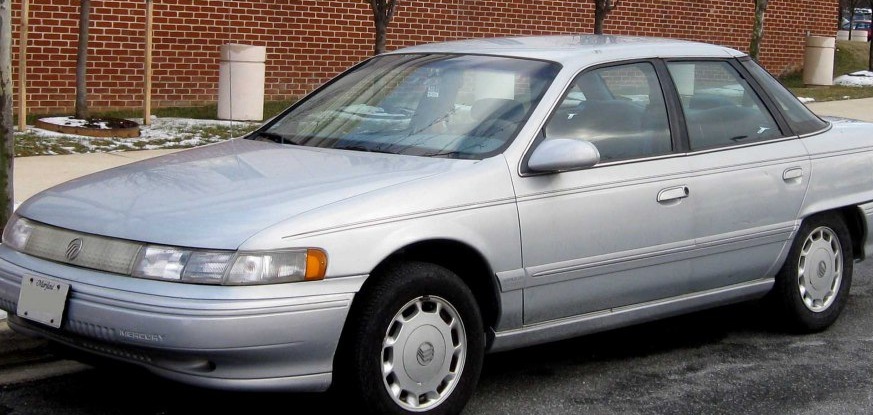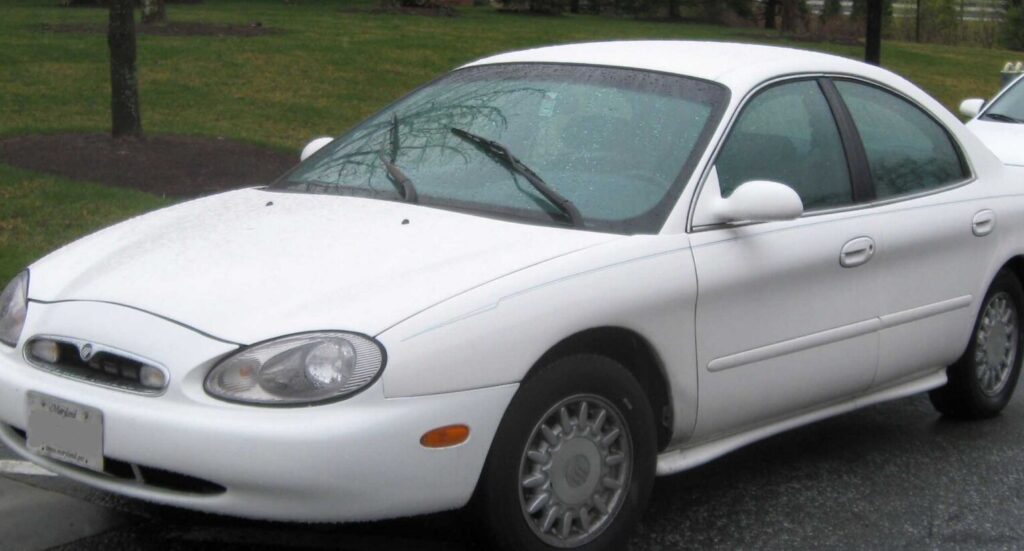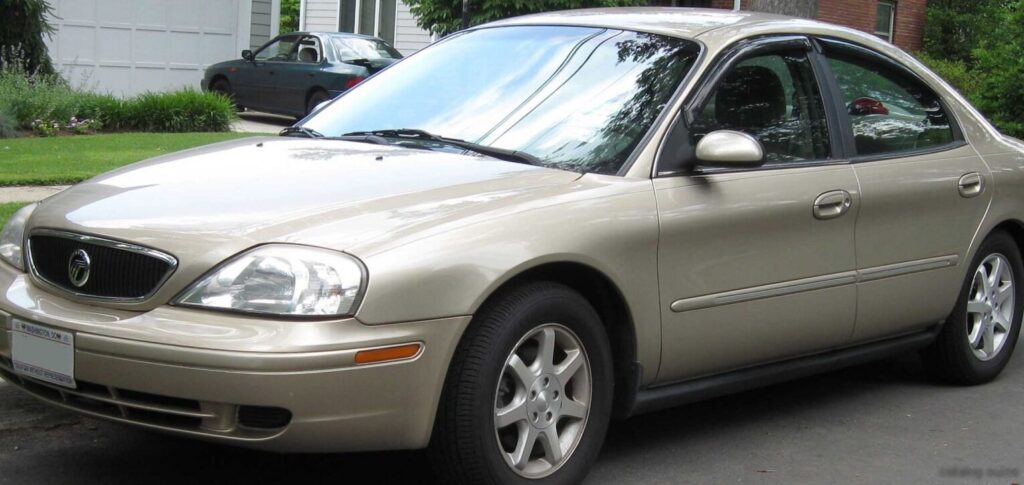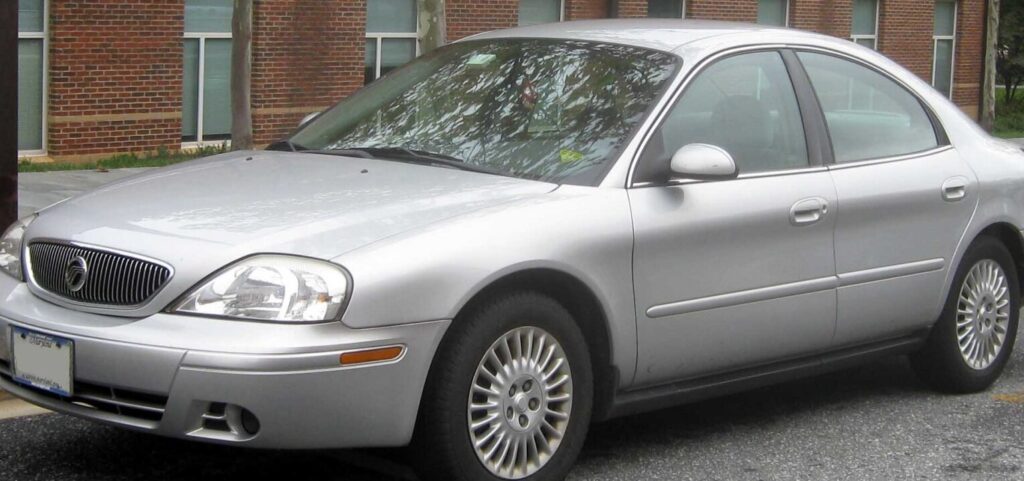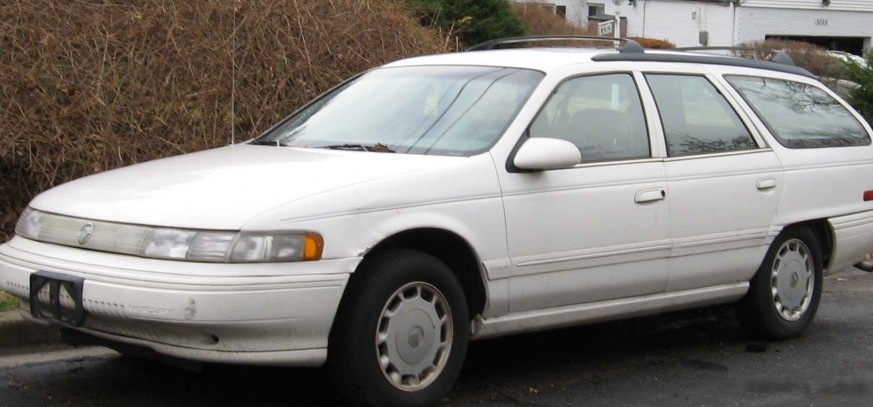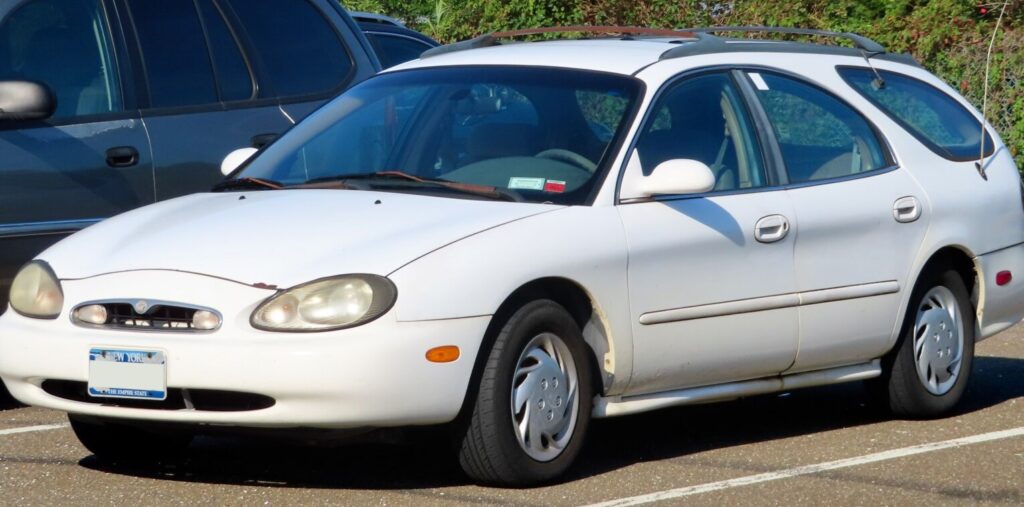
The Mercury Sable Station Wagon III, specifically the variant equipped with the 3.0-liter V6 engine producing 157 horsepower, was a mainstay of the American family station wagon market from 1995 to 1999. Positioned as a mid-range offering within the Sable lineup, it aimed to provide a balance between affordability, space, and reasonable performance. This generation of Sable, built on the Ford MN12 platform, represented a significant redesign from its predecessors, focusing on improved aerodynamics and interior space. It competed directly with other mid-size wagons like the Dodge Caravan, Ford Taurus wagon, and Chevrolet Malibu wagon.
Technical Specifications
| Brand | Mercury |
| Model | Sable |
| Generation | Sable Station Wagon III |
| Type (Engine) | 3.0 V6 (157 Hp) |
| Start of production | 1995 |
| End of production | 1999 |
| Powertrain Architecture | Internal Combustion engine |
| Body type | Station wagon (estate) |
| Seats | 5 |
| Doors | 5 |
| Fuel consumption (urban) | 13.1 l/100 km (18 US mpg, 21.6 UK mpg) |
| Fuel consumption (extra urban) | 9 l/100 km (26.1 US mpg, 31.4 UK mpg) |
| Fuel Type | Petrol (Gasoline) |
| Maximum speed | 185 km/h (114.95 mph) |
| Weight-to-power ratio | 10.2 kg/Hp, 97.8 Hp/tonne |
| Weight-to-torque ratio | 6.4 kg/Nm, 156.4 Nm/tonne |
| Power | 157 Hp @ 4900 rpm |
| Power per litre | 52.6 Hp/l |
| Torque | 251 Nm @ 3900 rpm (185.13 lb.-ft. @ 3900 rpm) |
| Engine layout | Front, Transverse |
| Engine Model/Code | Vulcan |
| Engine displacement | 2986 cm3 (182.22 cu. in.) |
| Number of cylinders | 6 |
| Engine configuration | V-engine |
| Cylinder Bore | 89 mm (3.5 in.) |
| Piston Stroke | 80 mm (3.15 in.) |
| Compression ratio | 9.7:1 |
| Number of valves per cylinder | 2 |
| Fuel injection system | Multi-port manifold injection |
| Engine aspiration | Naturally aspirated engine |
| Valvetrain | DOHC |
| Engine oil capacity | 4.25 l (4.49 US qt | 3.74 UK qt) |
| Coolant | 11 l (11.62 US qt | 9.68 UK qt) |
| Kerb Weight | 1605 kg (3538.42 lbs.) |
| Trunk (boot) space – minimum | 1290 l (45.56 cu. ft.) |
| Trunk (boot) space – maximum | 2290 l (80.87 cu. ft.) |
| Fuel tank capacity | 68 l (17.96 US gal | 14.96 UK gal) |
| Length | 5060 mm (199.21 in.) |
| Width | 1850 mm (72.83 in.) |
| Height | 1460 mm (57.48 in.) |
| Wheelbase | 2760 mm (108.66 in.) |
| Front track | 1560 mm (61.42 in.) |
| Rear (Back) track | 1570 mm (61.81 in.) |
| Drivetrain Architecture | The Internal combustion engine (ICE) drives the front wheels of the vehicle. |
| Drive wheel | Front wheel drive |
| Number of gears and type of gearbox | 4 gears, automatic transmission |
| Front suspension | Spring Strut |
| Rear suspension | Coil spring |
| Front brakes | Ventilated discs |
| Rear brakes | Drum |
| Assisting systems | ABS (Anti-lock braking system) |
| Steering type | Steering rack and pinion |
| Power steering | Hydraulic Steering |
| Tires size | 215/60 R16 |
INTRODUCTION
The Mercury Sable Station Wagon III, with the 3.0-liter V6 and automatic transmission, represented a practical choice for families seeking a spacious and comfortable vehicle. Produced between 1995 and 1999, this variant occupied a middle ground in the Sable lineup, offering more power than the base 2.5-liter four-cylinder models but remaining more affordable than the higher-trim versions. It was a key part of Mercury’s attempt to maintain relevance in a market increasingly dominated by SUVs and minivans. The Sable, and this variant specifically, aimed to provide the utility of a wagon with the comfort and features expected of a mid-size American car.
Powertrain & Engine Architecture
At the heart of this Sable variant lies the Ford Vulcan 3.0-liter V6 engine. This engine, designated as the code name “Vulcan”, is a 60-degree V6 known for its durability and relatively simple design. It utilizes a multi-port fuel injection system, delivering fuel directly to each intake port for improved efficiency and power delivery. The engine features a double overhead camshaft (DOHC) valvetrain, operating two valves per cylinder. The 4-speed automatic transmission, a Ford-built unit, was the sole transmission option for this configuration. This transmission was designed for smooth operation and reliability, prioritizing comfort over outright performance. The transmission’s gear ratios were tuned for everyday driving, emphasizing fuel economy and ease of use rather than aggressive acceleration.
Driving Characteristics
The 157-horsepower, 3.0-liter V6 paired with the 4-speed automatic provided adequate, but not exhilarating, performance. Acceleration was sufficient for merging onto highways and passing slower traffic, but it wasn’t a particularly sporty vehicle. The automatic transmission, while smooth, contributed to a somewhat leisurely driving experience. Compared to the manual transmission options available in other Sable trims, this variant felt noticeably less responsive. The gear ratios were optimized for cruising, making it a comfortable highway vehicle, but less engaging on winding roads. The weight of the station wagon body style further impacted performance, making it feel heavier than its sedan counterpart.
Equipment & Trim Levels
The 3.0 V6 automatic Sable typically came standard with features like air conditioning, power windows and locks, an AM/FM stereo, and cloth upholstery. Higher trim levels offered upgrades such as leather seats, a power sunroof, upgraded sound systems, and alloy wheels. The interior design was typical of American cars of the era, prioritizing spaciousness and comfort. Optional extras included a CD player, cruise control, and a rear window defroster. The dashboard layout was straightforward and functional, with easy-to-read gauges and logically placed controls.
Chassis & Braking
The Sable Station Wagon III utilized a front-wheel-drive layout with an independent front suspension featuring MacPherson struts and a coil-spring rear suspension. This setup provided a comfortable ride, absorbing bumps and imperfections in the road effectively. The front brakes were ventilated discs, offering good stopping power, while the rear brakes were drums, a cost-saving measure common in this class of vehicle. An anti-lock braking system (ABS) was standard, enhancing safety by preventing wheel lockup during hard braking. The steering was rack-and-pinion with hydraulic power assist, providing light and easy steering feel.
Market Reception & Comparison
Critics generally viewed the 3.0-liter V6 Sable as a competent and practical family vehicle. However, it wasn’t often praised for its performance or handling. Fuel economy was considered average for the time, falling in line with other mid-size wagons. Compared to the base 2.5-liter four-cylinder Sable, the V6 offered a noticeable improvement in power and refinement. However, the V6 was more expensive to purchase and maintain. Reliability was generally good, with the Vulcan V6 engine being known for its longevity. The Sable faced stiff competition from other wagons and the rapidly growing SUV segment, which ultimately contributed to its declining sales.
Legacy
The Mercury Sable Station Wagon III 3.0 V6 automatic, while not a standout performer, remains a reasonably reliable and affordable used car option today. The Vulcan V6 engine is known for its durability, and parts availability is generally good. However, like many vehicles of this era, age and mileage can lead to issues with suspension components, rust, and electrical systems. The Sable’s spacious interior and comfortable ride continue to appeal to those seeking a practical and affordable family vehicle. While it may not be a collector’s item, it represents a significant chapter in the history of the American station wagon.