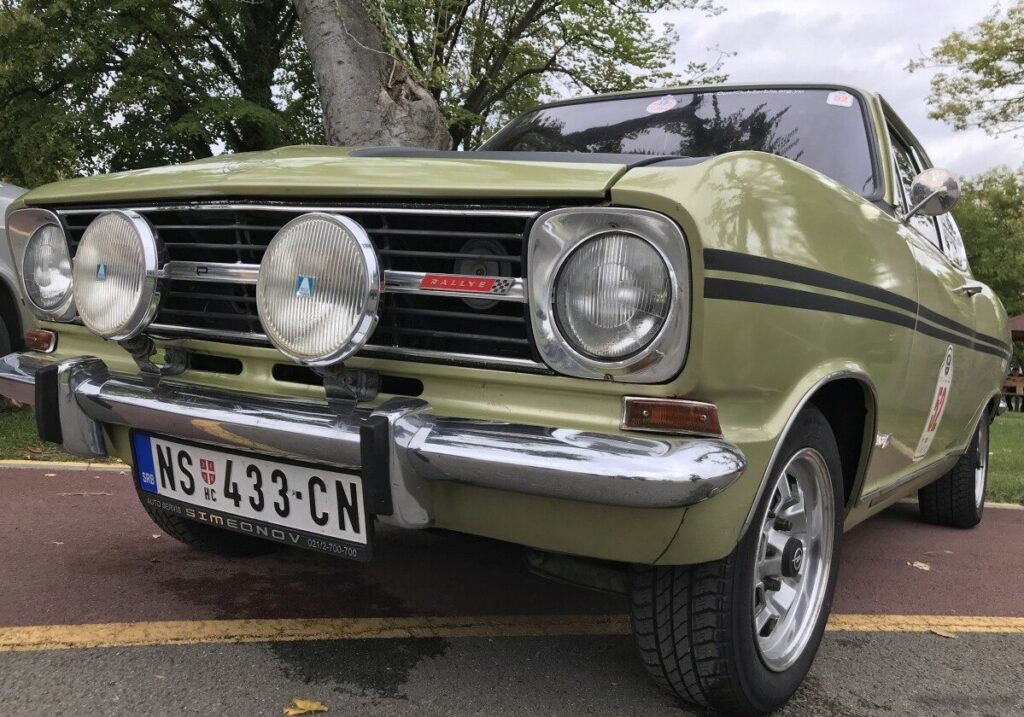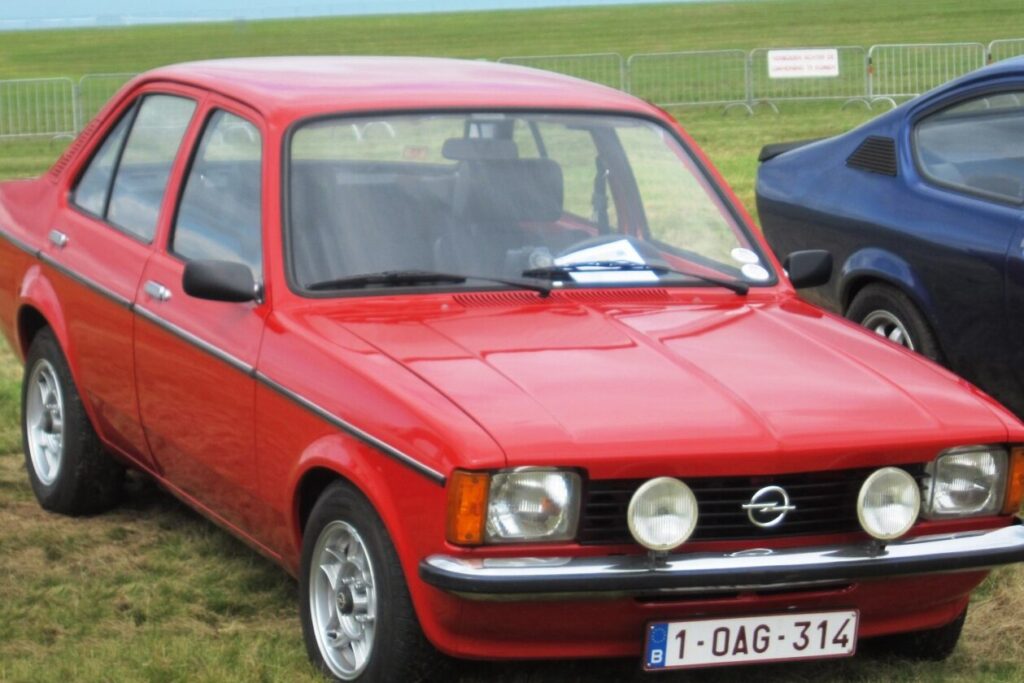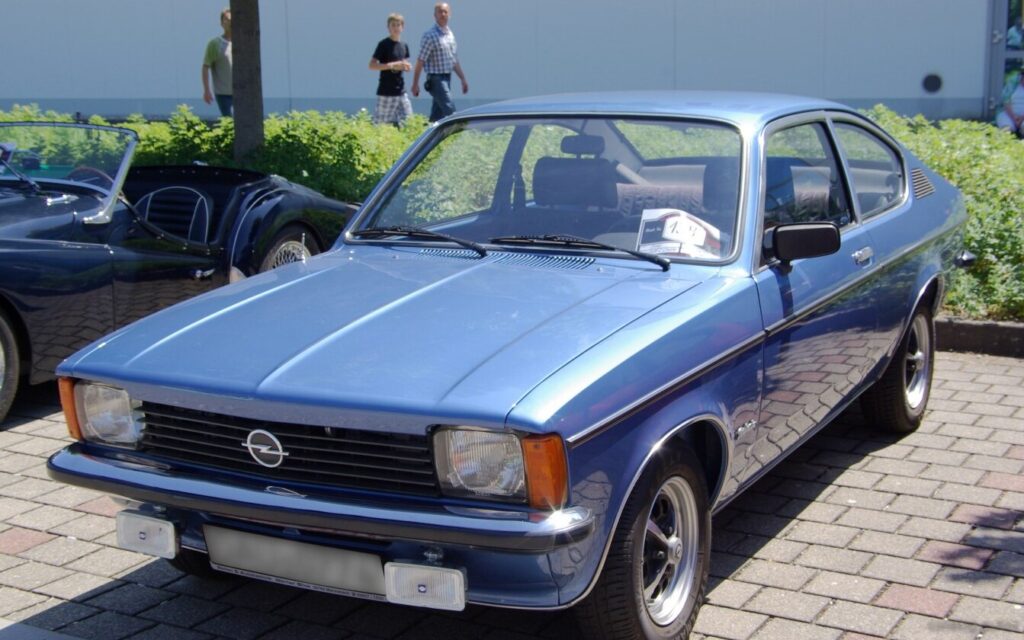
The Opel Kadett C Coupe 2.0 GT/E, produced between 1977 and 1979, represented the performance pinnacle of the Kadett C Coupe range. Positioned as the flagship model, it aimed to deliver a sporty driving experience within the compact coupe segment. This variant was a key part of Opel’s strategy to offer a more engaging alternative to mainstream family cars in Europe, capitalizing on the growing demand for affordable, yet stylish, performance vehicles. The Kadett C, overall, was a significant model for Opel, selling over 1.7 million units during its production run, and the Coupe version, particularly the GT/E, became a sought-after enthusiast’s choice.
Technical Specifications
| Brand | Opel |
| Model | Kadett |
| Generation | Kadett C Coupe |
| Type (Engine) | 2.0 GT/E (115 Hp) |
| Start of production | 1977 |
| End of production | 1979 |
| Powertrain Architecture | Internal Combustion engine |
| Body type | Coupe |
| Seats | 5 |
| Doors | 2 |
| Fuel Type | Petrol (Gasoline) |
| Acceleration 0 – 100 km/h | 8.5 sec |
| Acceleration 0 – 62 mph | 8.5 sec |
| Acceleration 0 – 60 mph | 8.1 sec |
| Maximum speed | 190 km/h (118.06 mph) |
| Weight-to-power ratio | 8 kg/Hp, 125 Hp/tonne |
| Weight-to-torque ratio | 5.8 kg/Nm, 172.8 Nm/tonne |
| Power | 115 Hp @ 5600 rpm |
| Power per litre | 58.1 Hp/l |
| Torque | 159 Nm @ 3000 rpm (117.27 lb.-ft. @ 3000 rpm) |
| Engine layout | Front, Longitudinal |
| Engine Model/Code | 20E |
| Engine displacement | 1979 cm3 (120.77 cu. in.) |
| Number of cylinders | 4 |
| Engine configuration | Inline |
| Cylinder Bore | 95 mm (3.74 in.) |
| Piston Stroke | 69.8 mm (2.75 in.) |
| Compression ratio | 9.6:1 |
| Number of valves per cylinder | 2 |
| Fuel injection system | Multi-port manifold injection |
| Engine aspiration | Naturally aspirated engine |
| Valvetrain | SOHC |
| Engine oil capacity | 3.8 l (4.02 US qt | 3.34 UK qt) |
| Coolant | 6.6 l (6.97 US qt | 5.81 UK qt) |
| Kerb Weight | 920 kg (2028.25 lbs.) |
| Max. weight | 1295 kg (2854.99 lbs.) |
| Max load | 375 kg (826.73 lbs.) |
| Length | 4127 mm (162.48 in.) |
| Width | 1580 mm (62.2 in.) |
| Height | 1340 mm (52.76 in.) |
| Wheelbase | 2395 mm (94.29 in.) |
| Front track | 1300 mm (51.18 in.) |
| Rear (Back) track | 1299 mm (51.14 in.) |
| Minimum turning circle | 9.2 m (30.18 ft.) |
| Drivetrain Architecture | Rear wheel drive |
| Number of gears | 5 gears, manual transmission |
| Front brakes | Disc |
| Rear brakes | Drum |
Powertrain & Engine Architecture
The heart of the Kadett C Coupe 2.0 GT/E was the 20E engine, a 1979cc inline-four cylinder unit. This engine featured a single overhead camshaft (SOHC) valvetrain operating two valves per cylinder. Crucially, it employed Bosch K-Jetronic multi-port fuel injection, a sophisticated system for its time that significantly improved fuel efficiency and power delivery compared to carbureted engines. The 20E produced 115 horsepower at 5600 rpm and 159 Nm (117.27 lb-ft) of torque at 3000 rpm. The engine was mounted longitudinally in the front of the vehicle, driving the rear wheels. The five-speed manual transmission was specifically chosen to complement the engine’s power characteristics, offering precise gear changes and enhancing the sporty driving experience.
Driving Characteristics
The 2.0 GT/E offered a noticeable step up in performance compared to the standard Kadett C Coupes. The 0-60 mph time of around 8.1 seconds was respectable for the late 1970s, and the top speed of 118 mph made it a genuinely quick car. The five-speed gearbox allowed the driver to keep the engine in its optimal power band, providing responsive acceleration. While not a raw, visceral sports car, the GT/E offered a balanced and enjoyable driving experience. Compared to the lower-powered Kadett variants, the 2.0 GT/E felt significantly more capable on winding roads and during highway overtaking. The rear-wheel-drive layout contributed to a more engaging driving feel, although it also required more careful throttle control in slippery conditions.
Equipment & Trim Levels
The GT/E trim level was well-equipped for its era. Standard features included a sporty interior with bolstered seats, a three-spoke steering wheel, and a comprehensive instrument cluster. Exterior features included distinctive GT/E badging, a rear spoiler, and often, alloy wheels. Optional extras included a sunroof, upgraded audio systems, and metallic paint finishes. The interior trim was typically finished in dark colors, with a focus on providing a sporty and functional environment. The GT/E was positioned as the premium Kadett Coupe, offering a higher level of comfort and refinement than the base models.
Chassis & Braking
The Kadett C Coupe utilized a relatively simple, yet effective, chassis design. It featured independent front suspension with MacPherson struts and a rigid rear axle with trailing arms. The GT/E variant benefited from a slightly stiffer suspension setup compared to the standard Coupes, improving handling and reducing body roll. Braking was handled by disc brakes on the front wheels and drum brakes on the rear. While adequate for normal driving, the braking system wasn’t particularly powerful by modern standards. The GT/E also featured a thicker front stabilizer bar to further enhance handling stability.
Market Reception & Comparison
The Kadett C Coupe 2.0 GT/E was generally well-received by automotive critics. It was praised for its sporty handling, responsive engine, and attractive styling. However, some critics noted that the interior was somewhat basic and that the rear seats were cramped. Compared to other coupes in its class, such as the Ford Capri, the Kadett GT/E offered a more affordable and fuel-efficient alternative. The 2.0 GT/E was a more focused performance model than the more comfort-oriented Kadett C Berlina or the more economical base models. Its fuel economy was reasonable for a performance car of the time, but it was slightly lower than the less powerful Kadett variants.
Legacy
The Opel Kadett C Coupe 2.0 GT/E has become a popular classic car among enthusiasts. The 20E engine is known for its reliability and relatively straightforward maintenance. However, finding parts can sometimes be challenging, as the Kadett C is now a relatively rare vehicle. The GT/E’s rear-wheel-drive layout and sporty character have made it a favorite for classic car rallies and track days. Today, well-maintained examples command a premium in the used car market, reflecting their desirability and historical significance. The Kadett C Coupe 2.0 GT/E remains a testament to Opel’s ability to create affordable and engaging performance cars.