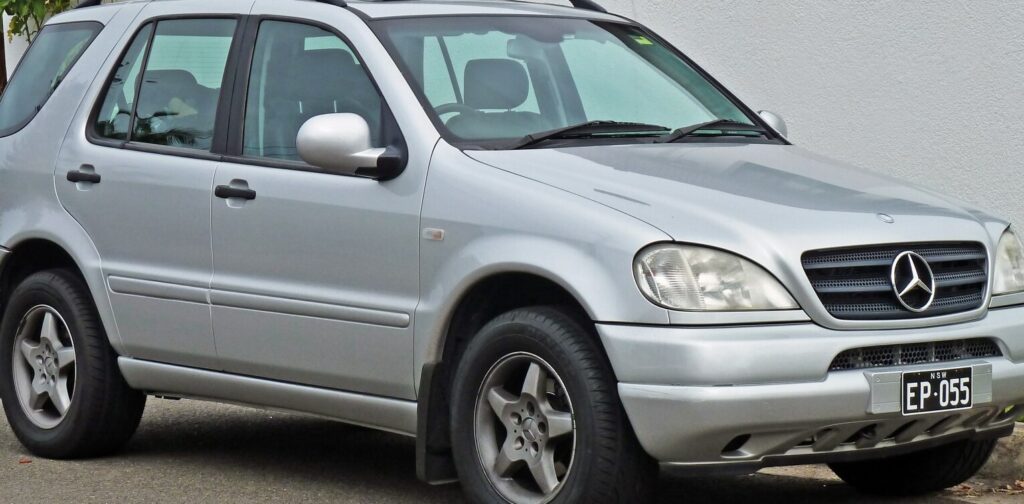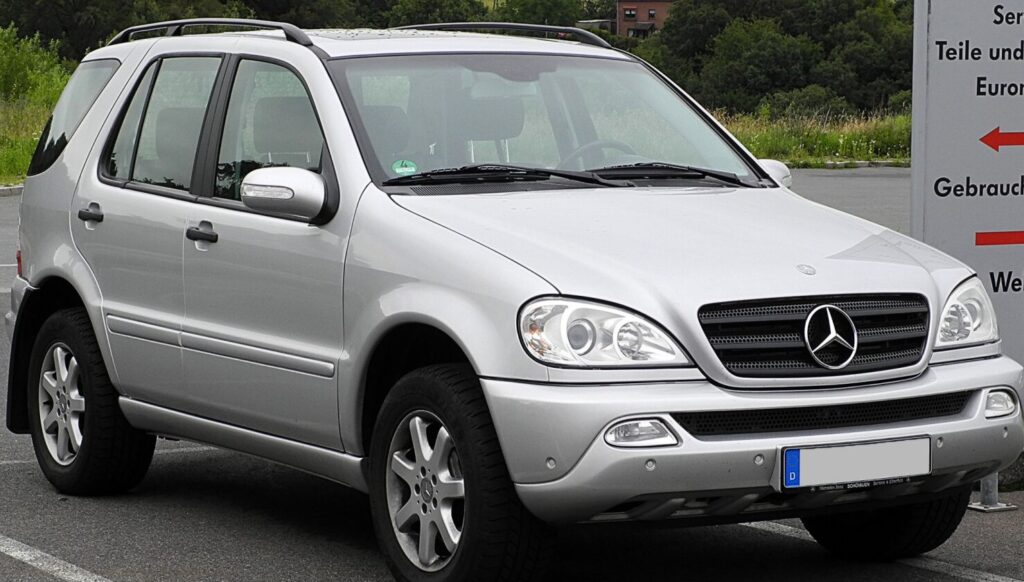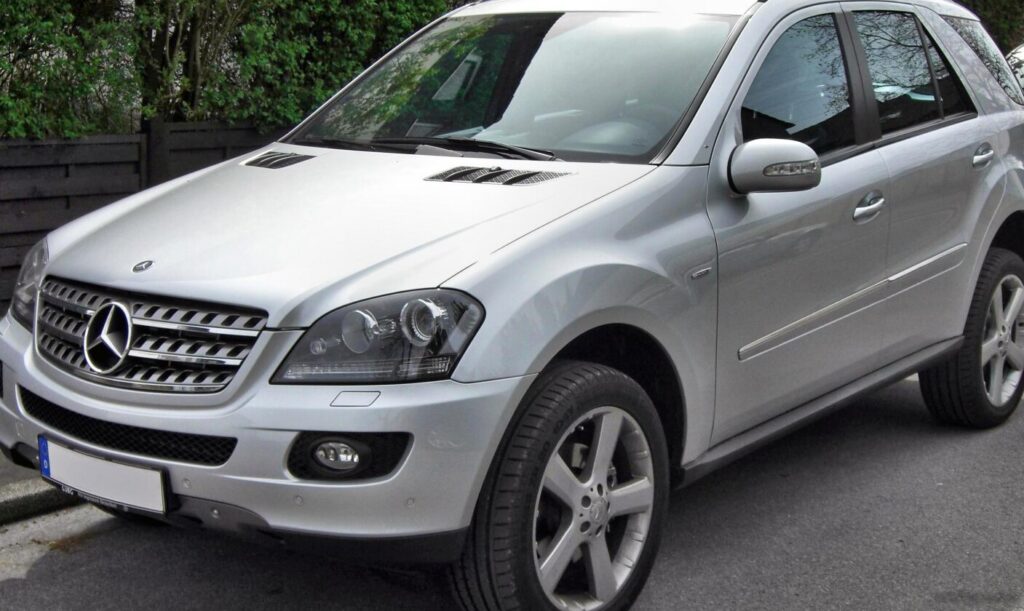
The Mercedes-Benz M-Class (W164) ML 350 4MATIC, produced from 2005 to 2008, represented a significant step forward for Mercedes-Benz in the burgeoning mid-size luxury SUV segment. Positioned as a core model within the W164 series, the ML 350 offered a balance between performance, luxury, and practicality, appealing to a broad range of buyers. It served as a crucial bridge between the entry-level ML 300 and the higher-performance ML 500, offering a compelling alternative for those seeking a refined driving experience without the top-tier price tag. This variant was primarily sold in North America, Europe, and other key global markets, establishing the M-Class as a strong competitor against rivals like the BMW X5 and the Acura MDX.
Technical Specifications
| Brand | Mercedes-Benz |
| Model | M-Class |
| Generation | M-Class (W164) |
| Type | ML 350 V6 (272 Hp) 4MATIC 7G-TRONIC |
| Start of production | 2005 |
| End of production | 2008 |
| Powertrain Architecture | Internal Combustion engine |
| Body type | SUV |
| Seats | 5 |
| Doors | 5 |
| Fuel consumption (urban) | 15.2-15.4 l/100 km (15.5 – 15.3 US mpg, 18.6 – 18.3 UK mpg, 6.6 – 6.5 km/l) |
| Fuel consumption (extra urban) | 9.4-9.6 l/100 km (25 – 24.5 US mpg, 30.1 – 29.4 UK mpg, 10.6 – 10.4 km/l) |
| Fuel consumption (combined) | 11.5-11.7 l/100 km (20.5 – 20.1 US mpg, 24.6 – 24.1 UK mpg, 8.7 – 8.5 km/l) |
| CO2 emissions | 275-279 g/km |
| Fuel Type | Petrol (Gasoline) |
| Acceleration 0 – 100 km/h | 8.4 sec |
| Acceleration 0 – 62 mph | 8.4 sec |
| Acceleration 0 – 60 mph | 8 sec |
| Maximum speed | 215 km/h (133.59 mph) |
| Weight-to-power ratio | 7.6 kg/Hp, 132 Hp/tonne |
| Weight-to-torque ratio | 5.9 kg/Nm, 169.9 Nm/tonne |
| Power | 272 Hp |
| Power per litre | 77.8 Hp/l |
| Torque | 350 Nm @ 2400 rpm (258.15 lb.-ft. @ 2400 rpm) |
| Engine layout | Front, Longitudinal |
| Engine Model/Code | M 272.967 |
| Engine displacement | 3498 cm3 (213.46 cu. in.) |
| Number of cylinders | 6 |
| Engine configuration | V-engine |
| Cylinder Bore | 92.9 mm (3.66 in.) |
| Piston Stroke | 86 mm (3.39 in.) |
| Compression ratio | 10.7:1 |
| Number of valves per cylinder | 4 |
| Fuel injection system | Multi-port manifold injection |
| Engine aspiration | Naturally aspirated engine |
| Engine oil capacity | 8 l (8.45 US qt | 7.04 UK qt) |
| Coolant | 9.5 l (10.04 US qt | 8.36 UK qt) |
| Kerb Weight | 2060 kg (4541.52 lbs.) |
| Max. weight | 2830 kg (6239.08 lbs.) |
| Max load | 770 kg (1697.56 lbs.) |
| Trunk (boot) space – minimum | 551 l (19.46 cu. ft.) |
| Trunk (boot) space – maximum | 2050 l (72.4 cu. ft.) |
| Fuel tank capacity | 95 l (25.1 US gal | 20.9 UK gal) |
| Length | 4780 mm (188.19 in.) |
| Width | 1911 mm (75.24 in.) |
| Height | 1815 mm (71.46 in.) |
| Wheelbase | 2915 mm (114.76 in.) |
| Front track | 1627 mm (64.06 in.) |
| Rear (Back) track | 1629 mm (64.13 in.) |
| Drive wheel | All wheel drive (4×4) |
| Number of gears and type of gearbox | 7 gears, automatic transmission |
| Front suspension | Double wishbone |
| Rear suspension | Spring Strut |
| Front brakes | Ventilated discs |
| Rear brakes | Disc |
| Assisting systems | ABS (Anti-lock braking system) |
| Steering type | Steering rack and pinion |
| Tires size | 235/65 R17 |
| Wheel rims size | 7.5J x 17 |
Powertrain & Engine Architecture
The ML 350 was powered by the M272.967 3.5-liter naturally aspirated V6 engine. This engine, a cornerstone of Mercedes-Benz’s powertrain lineup during the mid-2000s, featured a three-valve per cylinder design (two intake, one exhaust) and a relatively high 10.7:1 compression ratio. Fuel delivery was handled by a multi-port fuel injection system, providing precise fuel metering for optimal combustion. The engine produced 272 horsepower and 350 Nm (258 lb-ft) of torque at 2400 rpm. Paired with the engine was the 7G-TRONIC seven-speed automatic transmission, a sophisticated unit known for its smooth shifting and efficiency. This transmission offered a wide range of gear ratios, contributing to both fuel economy and responsive acceleration. The 4MATIC all-wheel-drive system distributed power between the front and rear axles, enhancing traction and stability in various driving conditions.
Driving Characteristics
The ML 350 4MATIC offered a comfortable and composed driving experience. While not overtly sporty, the 3.5-liter V6 provided adequate power for everyday driving and highway cruising. Acceleration from 0 to 60 mph took approximately 8 seconds, which was competitive for the segment at the time. The 7G-TRONIC transmission played a key role in maximizing the engine’s output, providing seamless gear changes and keeping the engine in its optimal power band. Compared to the more powerful ML 500, the ML 350 felt less urgent in its acceleration, but it offered a more relaxed and fuel-efficient driving experience. Against the diesel-powered ML 320 CDI, the ML 350 traded some low-end torque for a smoother, quieter engine character. The 4MATIC system provided confident handling in inclement weather, making it a practical choice for drivers in regions with harsh winters.
Equipment & Trim Levels
The ML 350 typically came standard with a generous array of features, including leather upholstery, dual-zone automatic climate control, a premium audio system, and power-adjustable front seats. Optional extras included a sunroof, navigation system, heated seats, and a rear-seat entertainment system. Trim levels were relatively straightforward, with most customization options available as individual add-ons rather than distinct packages. Interior color schemes were typically conservative, with shades of gray, beige, and black dominating the options list. The dashboard layout was functional and well-designed, emphasizing ease of use and a sense of luxury.
Chassis & Braking
The W164 M-Class featured a robust chassis with a double wishbone front suspension and a spring strut rear suspension. This setup provided a good balance between ride comfort and handling precision. The ML 350 was equipped with ventilated disc brakes at the front and solid disc brakes at the rear. Anti-lock braking system (ABS) was standard, enhancing braking performance and stability. The steering system utilized a rack-and-pinion setup, providing responsive and accurate steering feel. The standard tire size was 235/65 R17, mounted on 7.5J x 17 inch alloy wheels.
Market Reception & Comparison
The ML 350 was generally well-received by automotive critics. It was praised for its comfortable ride, spacious interior, and refined powertrain. However, some reviewers noted that its acceleration was not as brisk as some of its competitors. Fuel economy, while reasonable for a luxury SUV, was not a standout feature. Compared to the ML 320 CDI, the ML 350 offered a more refined engine experience but sacrificed some fuel efficiency and low-end torque. Against the ML 500, it provided a more affordable entry point into the M-Class lineup, albeit with less power.
Legacy
The M-Class (W164) ML 350 has proven to be a relatively reliable vehicle in the used car market. The M272 engine, while requiring regular maintenance, is generally considered durable. Common issues include oil leaks and occasional problems with the electronic systems. The 7G-TRONIC transmission is also generally reliable, but fluid changes are crucial for maintaining its performance. Today, the W164 ML 350 represents a good value proposition for buyers seeking a comfortable and capable luxury SUV at an affordable price point. Its blend of practicality, luxury, and reliability has ensured its continued popularity among used car shoppers.